
Residential Rental Application - Standard Template for Screening the Prospective Tenant Applicant
Property managers frequently struggle with incomplete tenant histories and unreliable self-reported data during the vetting process. While traditional credit bureaus and basic employment references offer a standard starting point, they often fail to capture the comprehensive behavioral insights needed for secure leasing.
To bridge this gap, integrating a dedicated applicant power tool grants landlords unprecedented predictive clarity. Under strict FCRA compliance stipulations, these assessment tools must always balance deep-dive background screening with fair housing laws. Utilizing concrete verification metrics, such as real-time income-to-rent ratios and nationwide eviction database sweeps, ensures objective tenant selection. Below, we outline how our standard residential rental application template incorporates these powerful screening mechanisms to streamline your onboarding workflow.
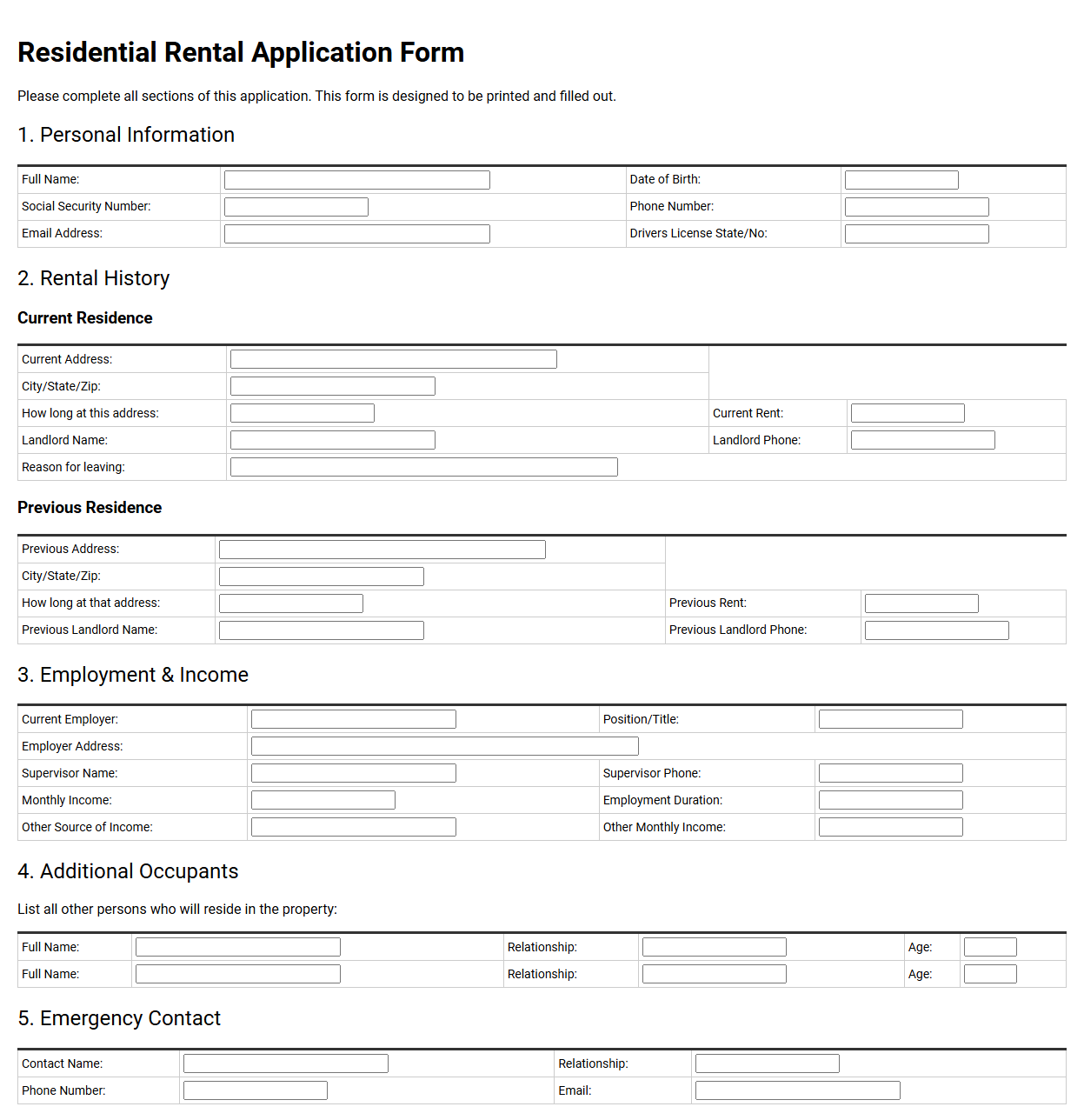
Residential Rental Application Form
💾 Residential Rental Application Form .pdf
A residential rental application form is a crucial document used by landlords to screen prospective tenants. It collects vital information, including employment history, monthly income, credit backgrounds, and rental references. This tool helps property managers assess applicant reliability, ensuring they find responsible residents who can consistently pay rent on time.
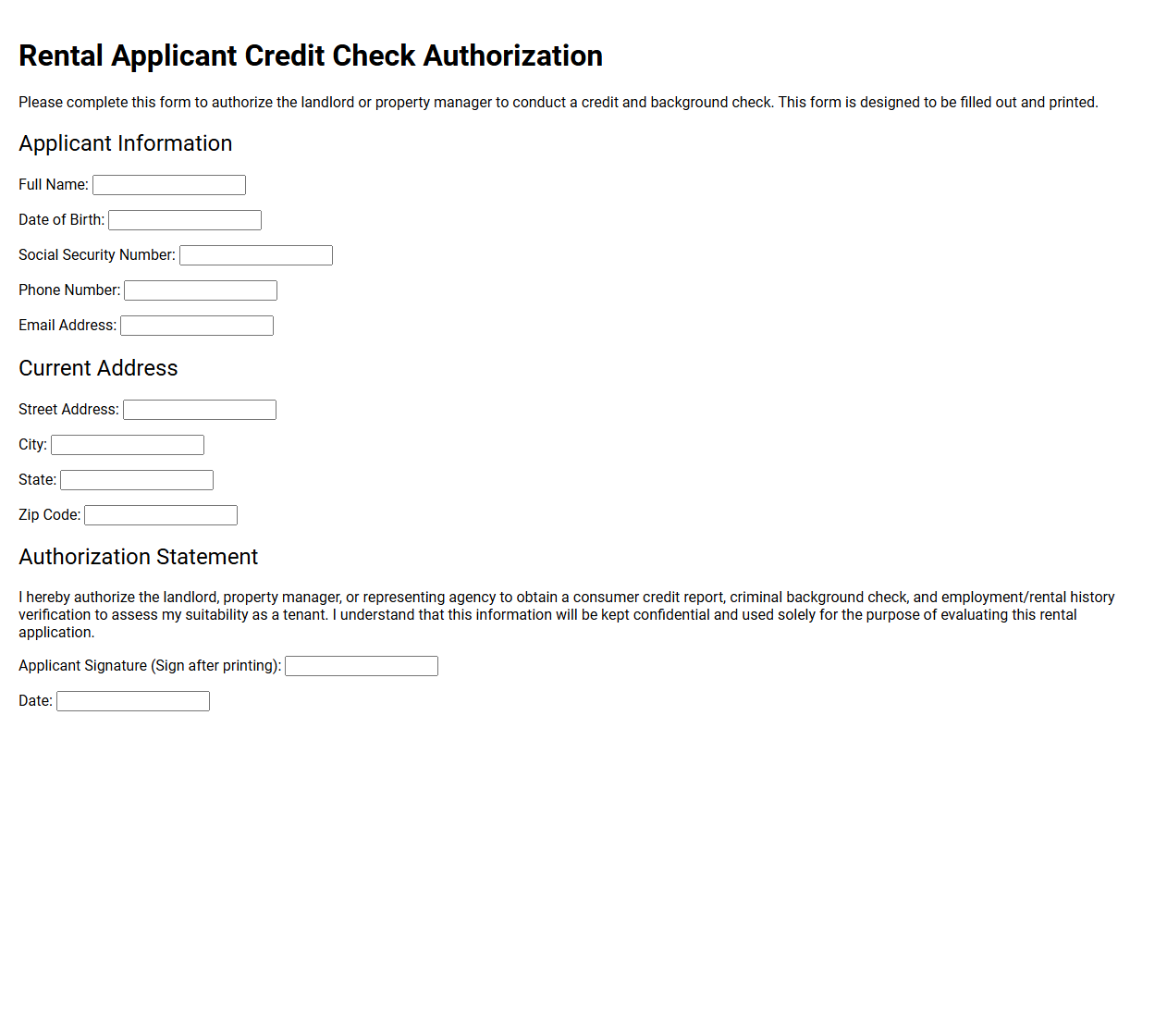
Rental Applicant Credit Check Authorization
💾 Rental Applicant Credit Check Authorization .pdf
A rental applicant credit check authorization is a standard document granting landlords legal permission to review a prospective tenant's credit history. This form enables property managers to evaluate financial reliability, payment history, and background records, helping them make informed leasing decisions. Signing this release is a routine step in the leasing process.
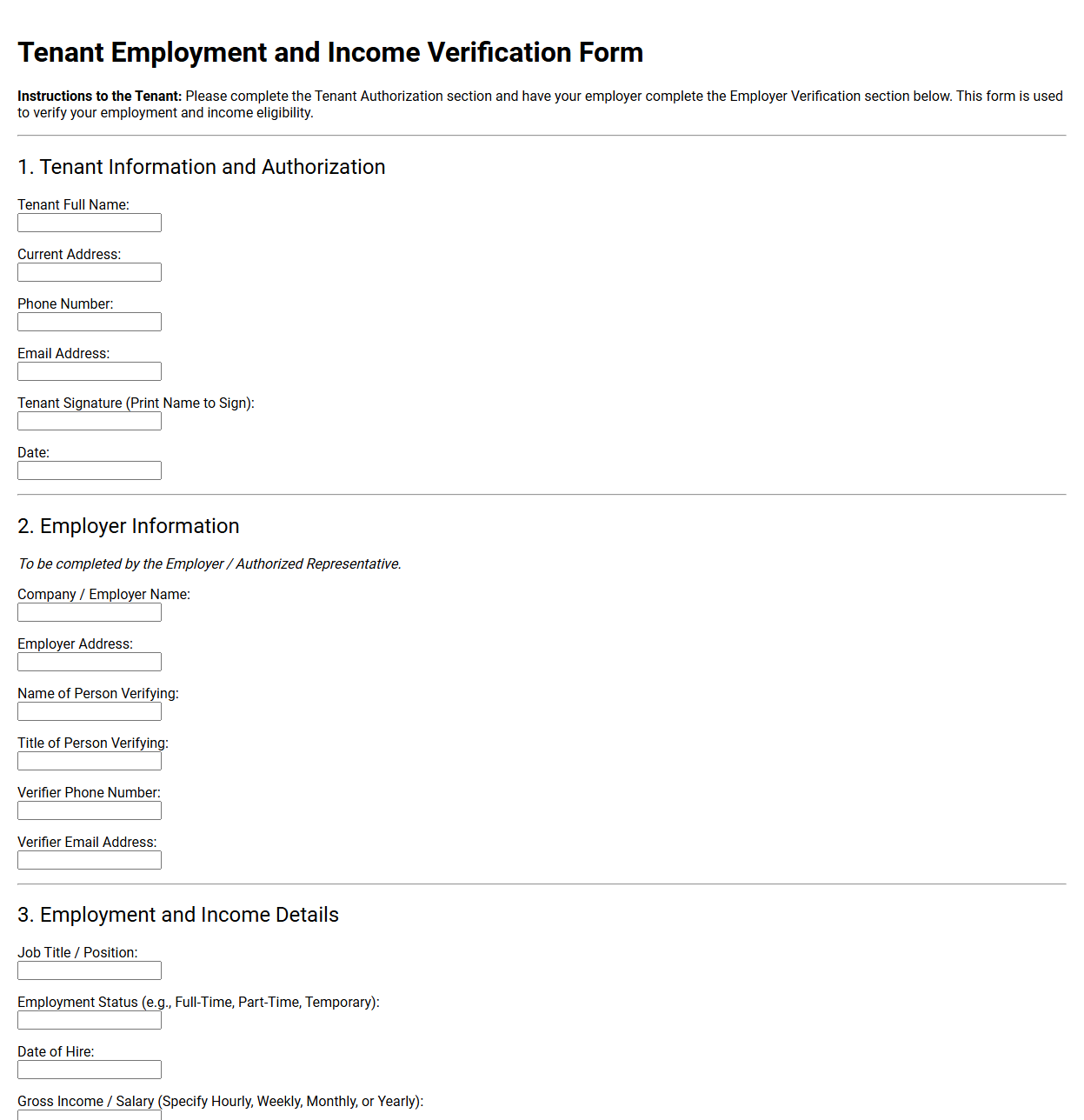
Tenant Employment and Income Verification Form
💾 Tenant Employment and Income Verification Form .pdf
A tenant employment and income verification form is a standard document used by landlords to confirm a rental applicant's financial stability. It authorizes employers to release salary history, job title, and employment status. This process helps property managers assess if the applicant can consistently afford monthly rent payments.
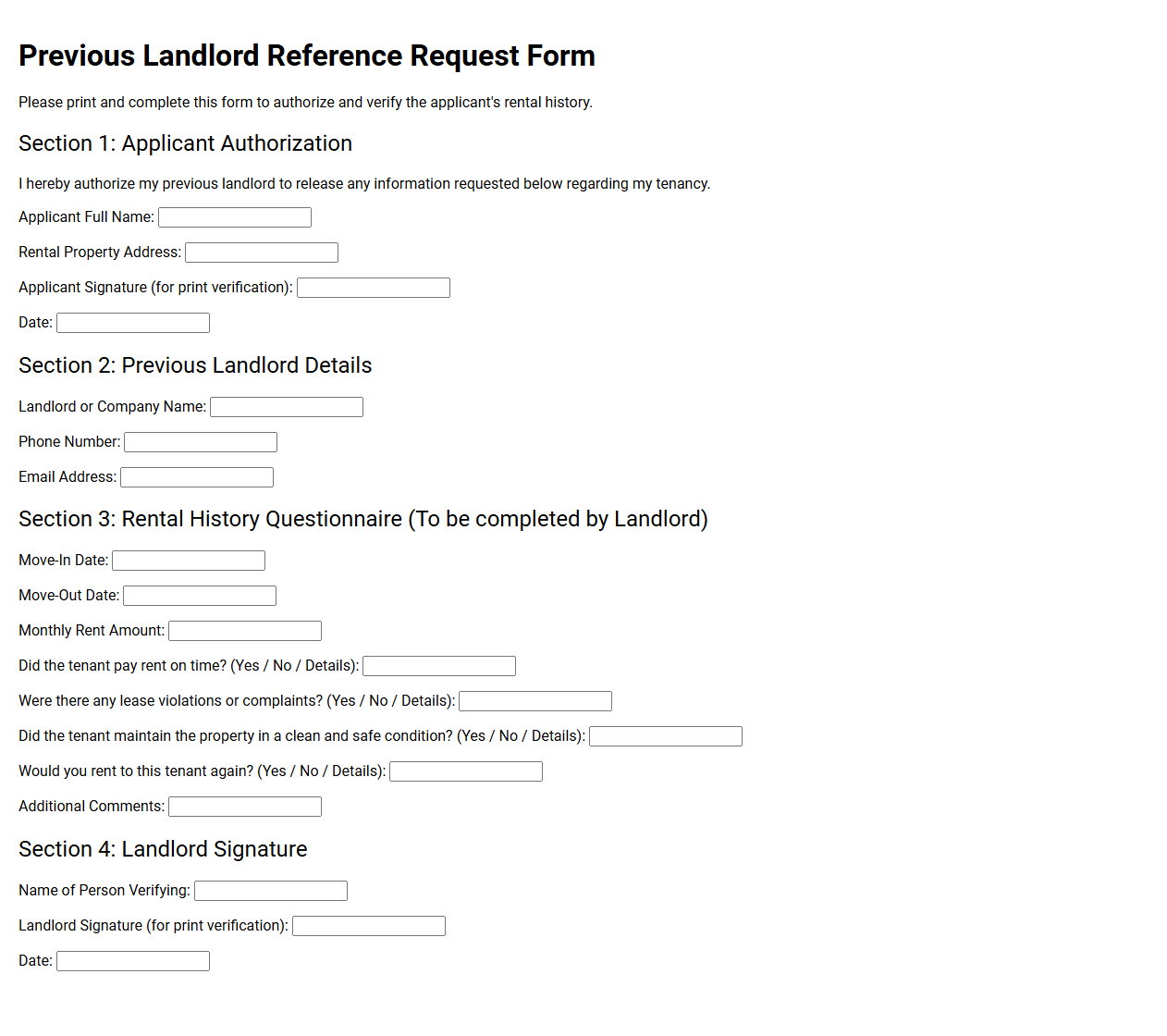
Previous Landlord Reference Request Form
💾 Previous Landlord Reference Request Form .pdf
A previous landlord reference request form is a document used by property managers to verify a prospective tenant's rental history. It gathers details on past payment punctuality, property care, and policy compliance. This authorization allows landlords to share rental records, helping housing providers make informed leasing decisions.
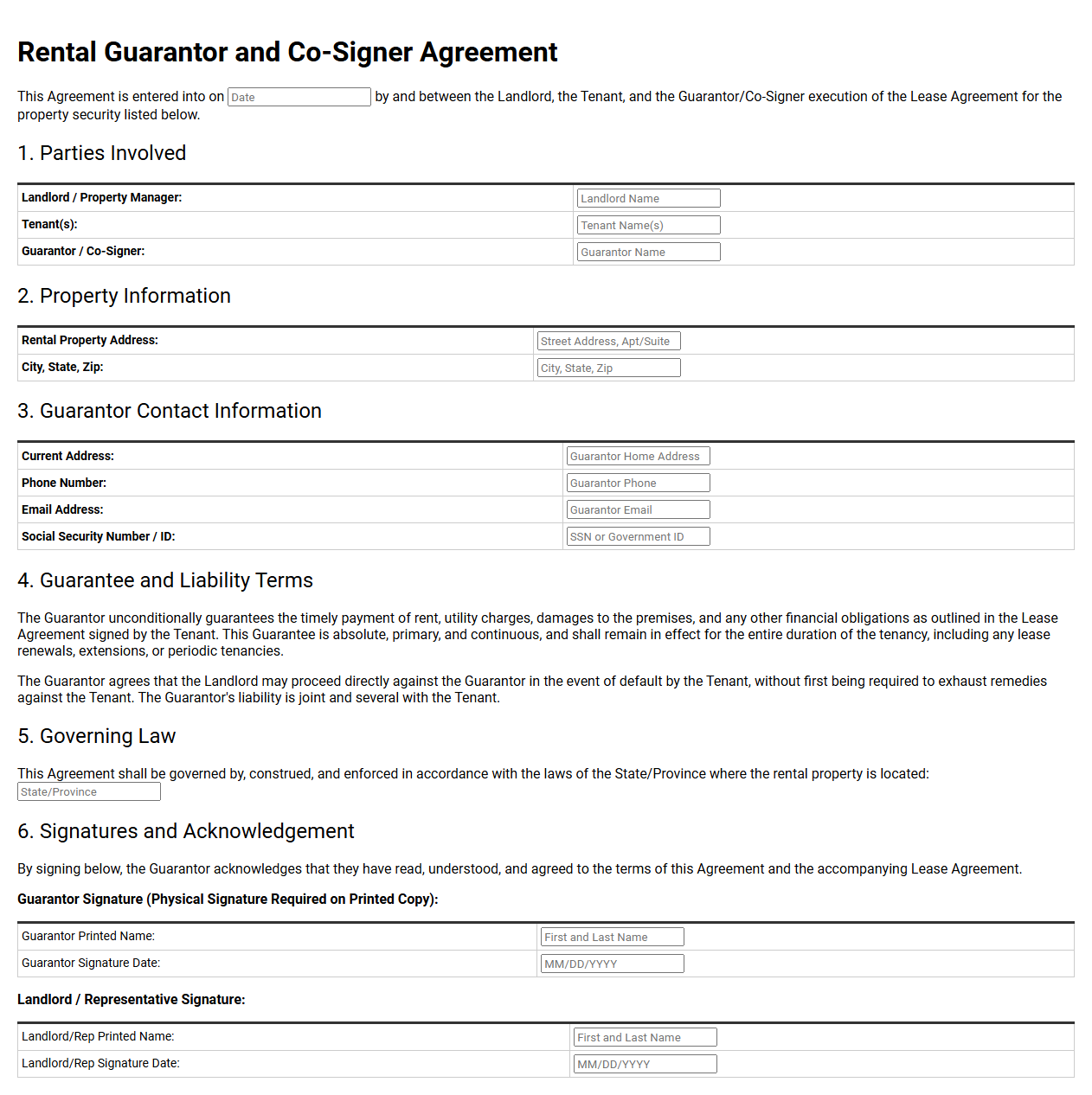
Rental Guarantor and Co-Signer Agreement
💾 Rental Guarantor and Co-Signer Agreement .pdf
A rental guarantor and co-signer agreement is a legally binding contract linking a third party to a lease. This document secures financial accountability, requiring the signatory to cover rent payments or damages if the tenant defaults. Landlords use this instrument to minimize risk when leasing to individuals with limited credit history.
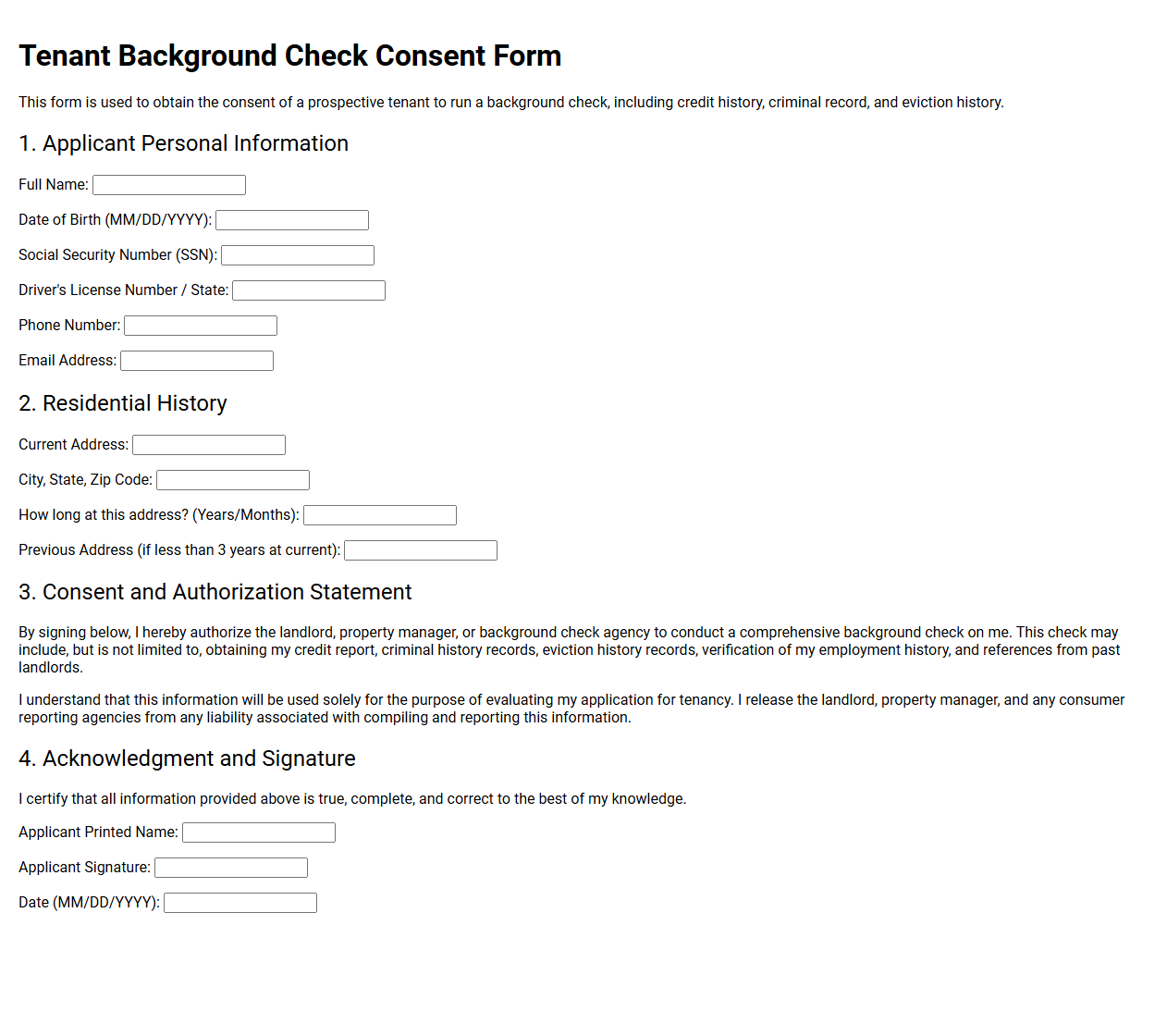
Tenant Background Check Consent Form
💾 Tenant Background Check Consent Form .pdf
A tenant background check consent form is a vital legal document used by landlords to obtain written permission from applicants. This authorization allows property managers to screen credit histories, criminal records, and past rental backgrounds. It protects applicant privacy rights while enabling property owners to make secure, informed leasing decisions.
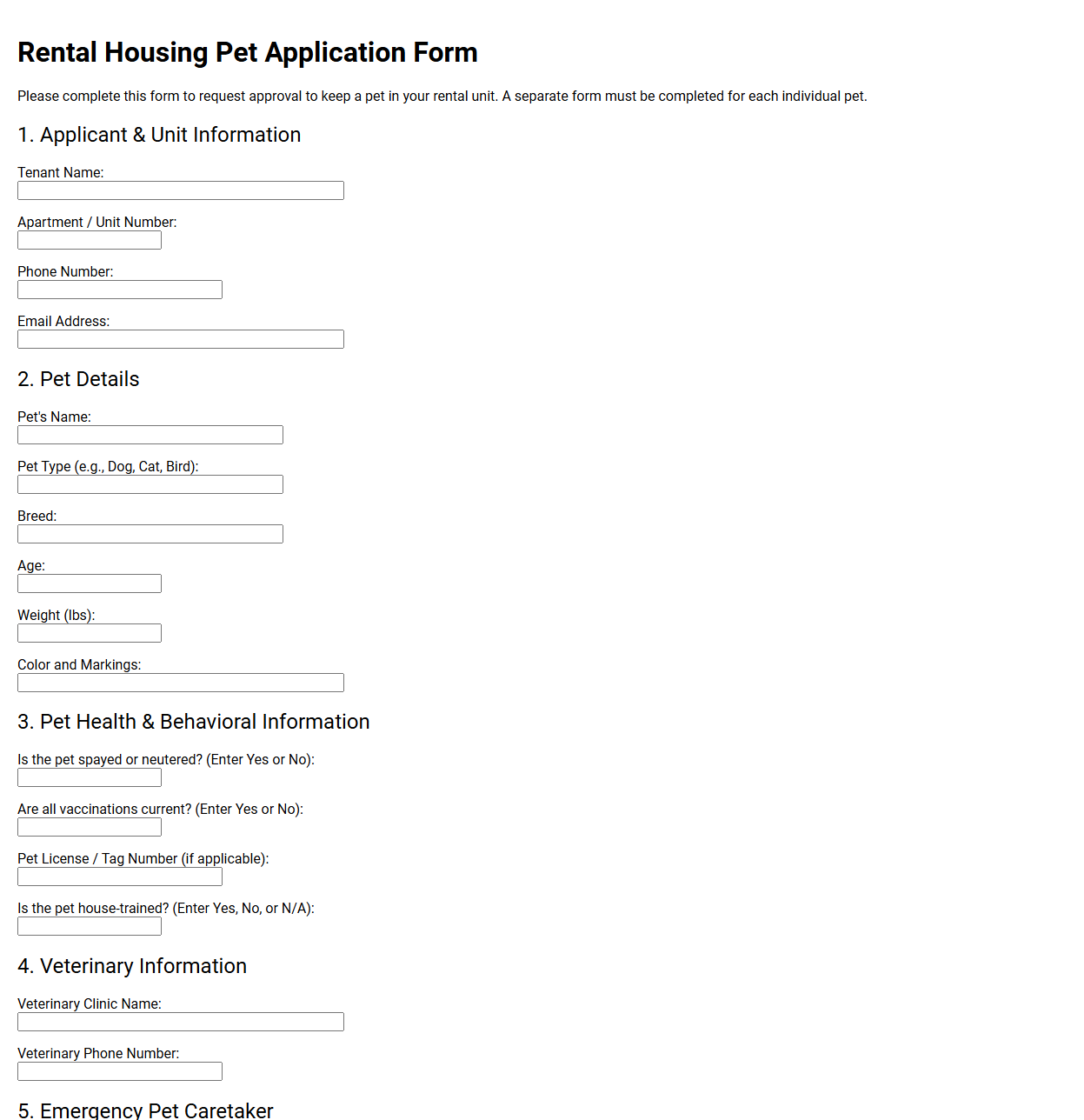
Rental Housing Pet Application Form
💾 Rental Housing Pet Application Form .pdf
A rental housing pet application form is a crucial document used by landlords to assess pets before tenancy. It collects vital details about the animal, including breed, age, weight, and vaccination status. This paperwork helps property managers evaluate potential risks, ensure policy compliance, and maintain a safe community for all residents.
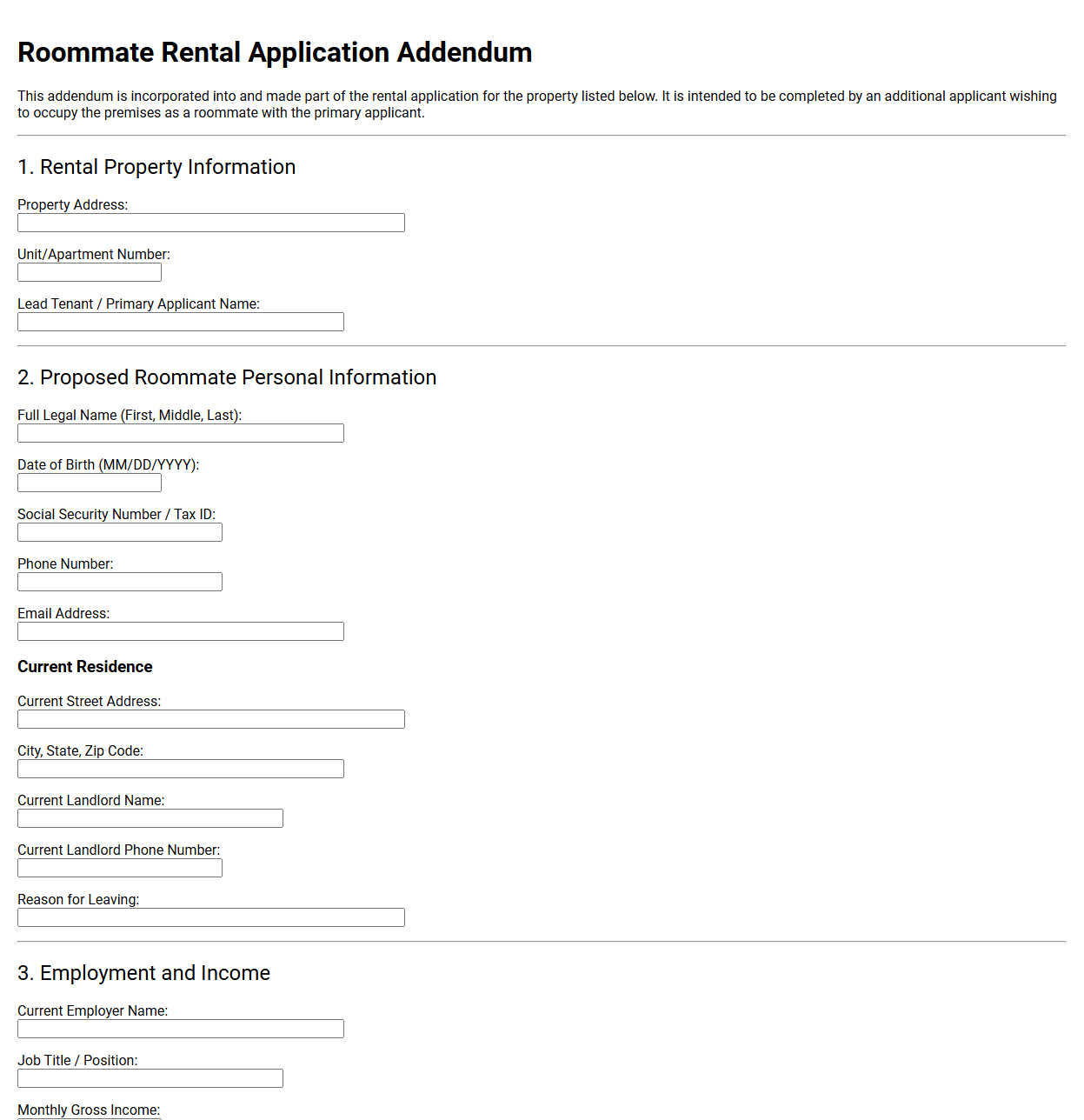
Roommate Rental Application Addendum
💾 Roommate Rental Application Addendum .pdf
A roommate rental application addendum is a supplemental document used to screen a new co-tenant joining an existing lease. This form collects vital background information, credit history, and employment details of the incoming applicant, ensuring they meet the landlord's criteria while establishing shared financial liability among all current household occupants.
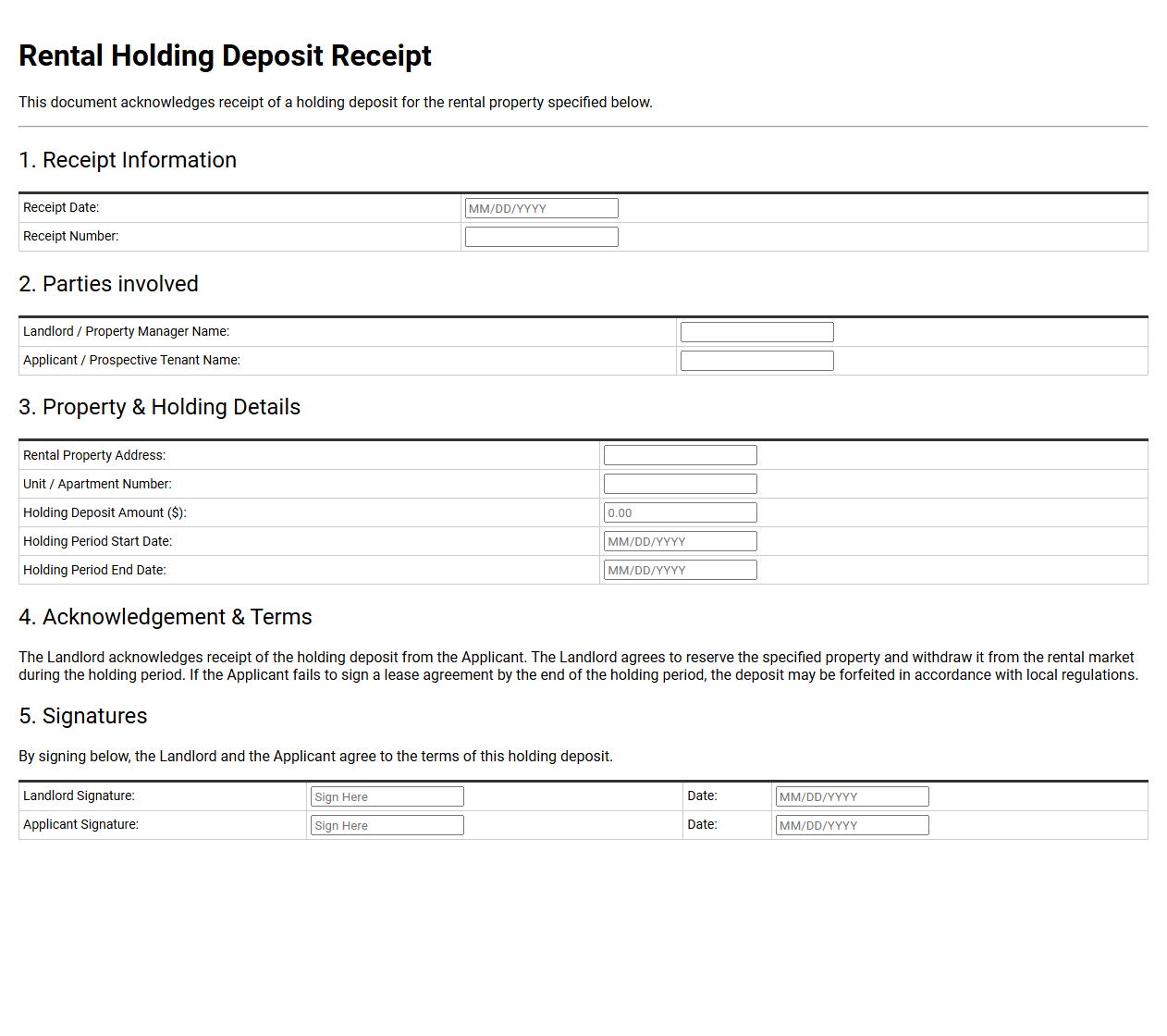
Rental Holding Deposit Receipt Form
💾 Rental Holding Deposit Receipt Form .pdf
A rental holding deposit receipt form acknowledges a prospective tenant's payment to secure a property temporarily. This document outlines the deposit amount, property address, and conditions for refunding or applying the funds toward the security deposit. It protects both parties by formalizing the agreement during the application screening process.
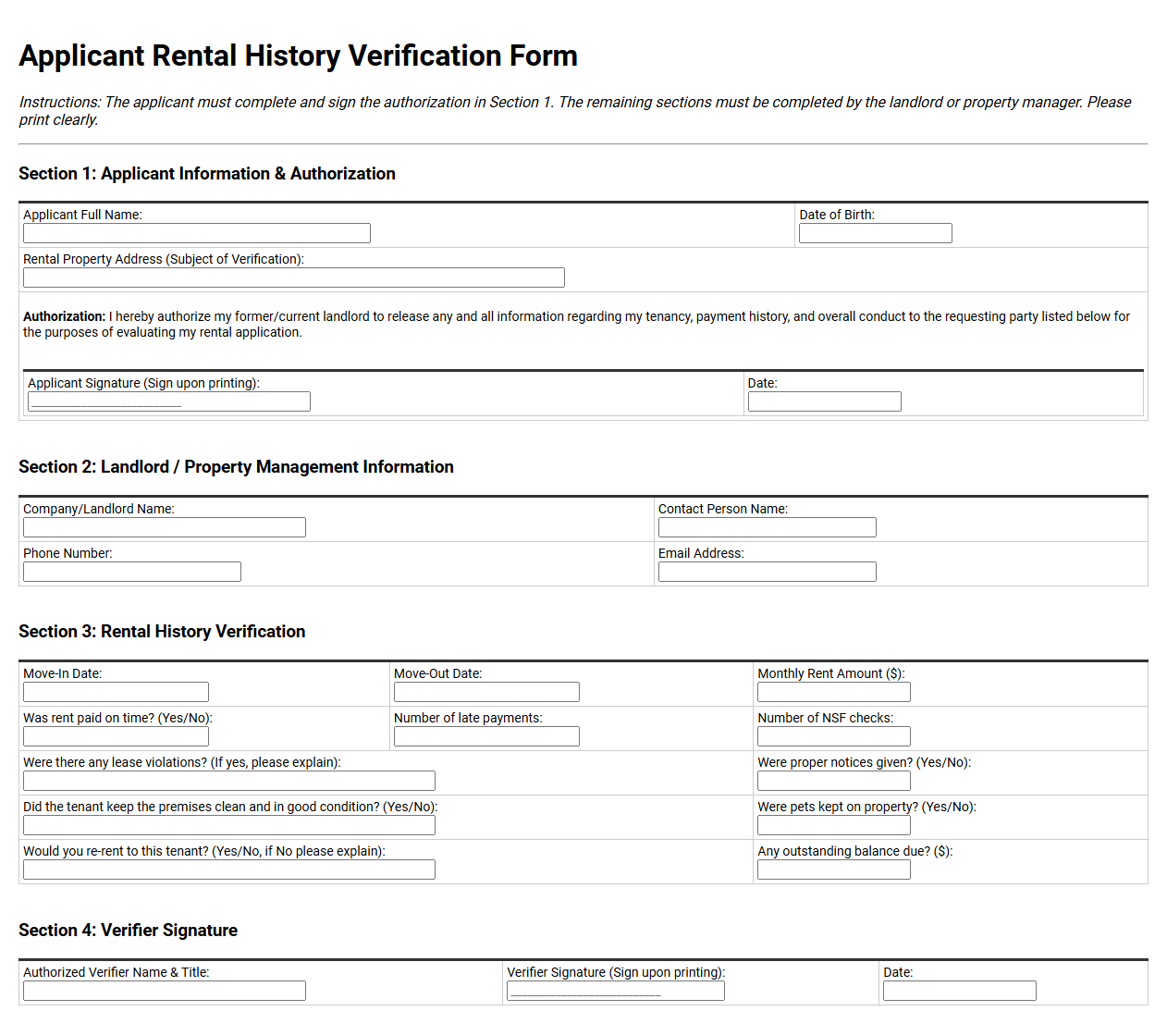
Applicant Rental History Verification Form
💾 Applicant Rental History Verification Form .pdf
An applicant rental history verification form is a crucial document used by landlords to confirm a prospective tenant's past rental behavior. This screening tool authorizes the release of information regarding prior lease compliance, payment punctuality, and property care, helping property managers make informed decisions regarding new rental applications.
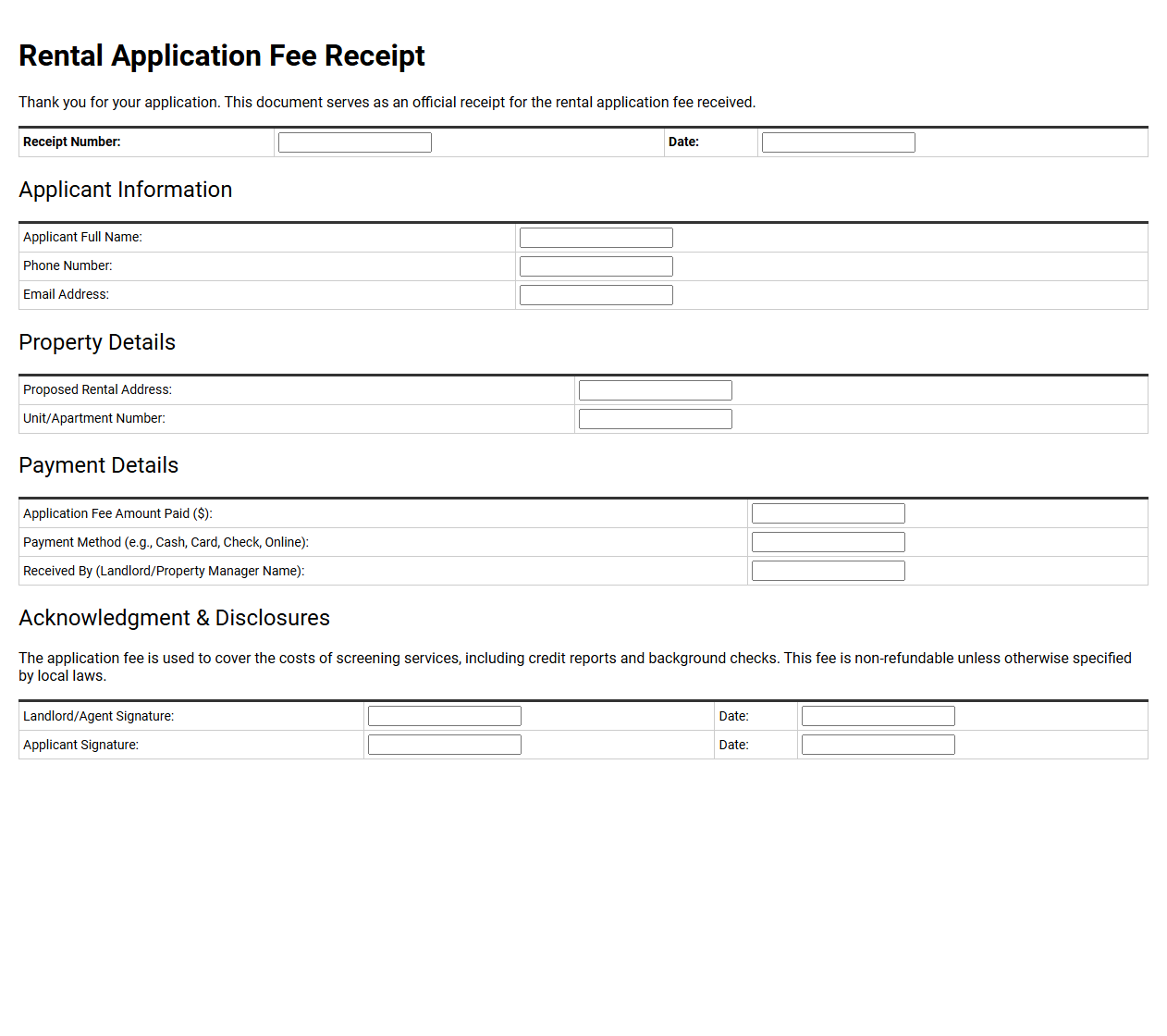
Rental Application Fee Receipt Template
💾 Rental Application Fee Receipt Template .pdf
A rental application fee receipt template provides landlords with a structured format to acknowledge payments received for background checks. This document typically records the applicant's name, payment date, fee amount, and property address. It serves as crucial financial proof, ensuring transparency and legal protection for both parties during the screening process.
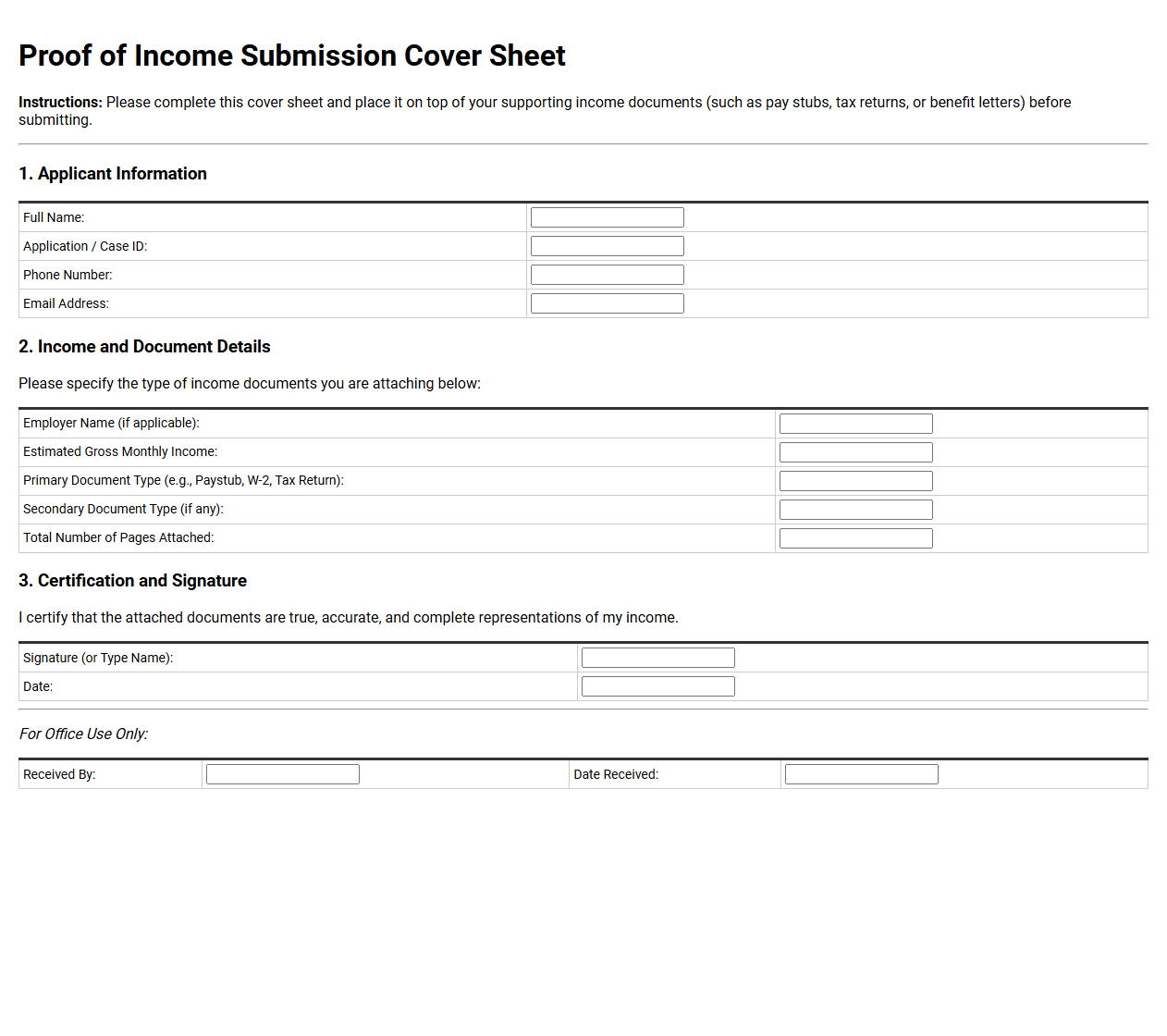
Proof of Income Submission Cover Sheet
💾 Proof of Income Submission Cover Sheet .pdf
A proof of income submission cover sheet organizes financial documents for verification. It lists applicant details, contact information, and the enclosed items, such as pay stubs or tax returns. This simple document ensures clear communication and speeds up processing times for loan applications, rental agreements, or official financial assistance reviews.
Applicant Rental Housing FAQ
What is the primary purpose of a rental housing application?
A rental housing application acts as a screening tool for landlords to evaluate a prospective tenant's financial stability, creditworthiness, and rental history. It gathers essential background information to ensure the applicant can consistently afford the rent and will respect the property and community guidelines.
When is a co-signer or guarantor required for a rental application?
Landlords typically require a co-signer or guarantor if the applicant has insufficient income, a limited credit history, or previous rental issues. The co-signer signs the lease agreement and assumes full financial responsibility for the rent and any property damages if the primary tenant defaults on payments.
What legal regulations govern the tenant screening process?
Tenant screening is heavily regulated by the Fair Credit Reporting Act (FCRA) and the Fair Housing Act. These federal laws ensure that background checks are conducted with the applicant's consent and protect applicants from discrimination based on race, color, religion, national origin, sex, disability, or familial status.
What is the difference between a holding deposit and a security deposit?
A holding deposit secures the rental unit while the application is being processed, preventing the landlord from leasing it to others. Once approved, this fee often rolls into the security deposit, which is held throughout the tenancy to cover potential property damages or unpaid rent upon move-out.
Why do landlords require specific proof of income during the application process?
Landlords require proof of income to verify that an applicant's gross monthly earnings meet the standard industry benchmark, which is typically three times the monthly rent. This verification process mitigates the risk of late payments and ensures the tenant has the financial capacity to sustain the lease.
Disclaimer:
The documents and templates provided on this page are for informational and illustrative purposes only. They do not constitute professional, legal, or financial advice, and should not be relied upon as such. Because individual circumstances and regulatory requirements vary, these materials may not be suitable for your specific needs. We recommend consulting with a qualified professional before adapting or using any of these examples for official or commercial purposes.