
Visitor Site Induction Form Template - Standardizing Safety Compliance and Access Authorization for External Visitors
Managing external visitor compliance often creates significant administrative friction and liability risks for safety officers. While facilities typically rely on standard operational safety budgets or capital expenditure funding to address these security gaps, utilizing a dedicated digital tool like Visitor grants managers instant, centralized oversight of contractor risk.
Stipulation: This template serves as a baseline framework; organizations must adapt specific clauses to meet regional legal mandates. Proven highly effective in heavy manufacturing plants, this article will outline how the Visitor Site Induction Form Template standardizes access authorization and elevates on-site safety compliance.
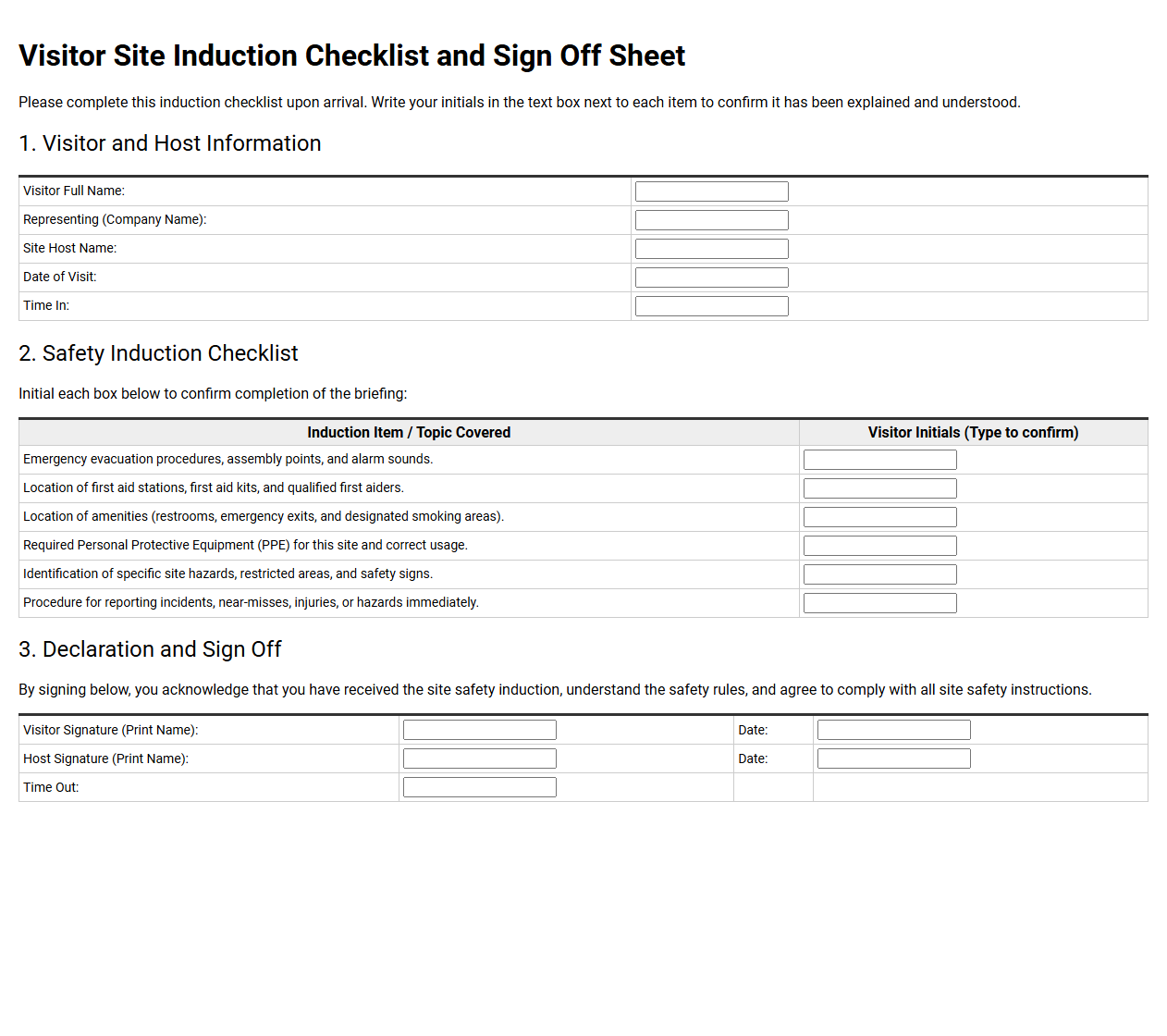
Visitor Site Induction Checklist and Sign Off Sheet
💾 Visitor Site Induction Checklist and Sign Off Sheet .pdf
A visitor site induction checklist and sign off sheet is a crucial safety document. It outlines key hazard protocols, emergency exit locations, and site rules for guests. By signing this record, visitors confirm they understand the safety brief, ensuring regulatory compliance and protecting everyone on the premises during their stay.
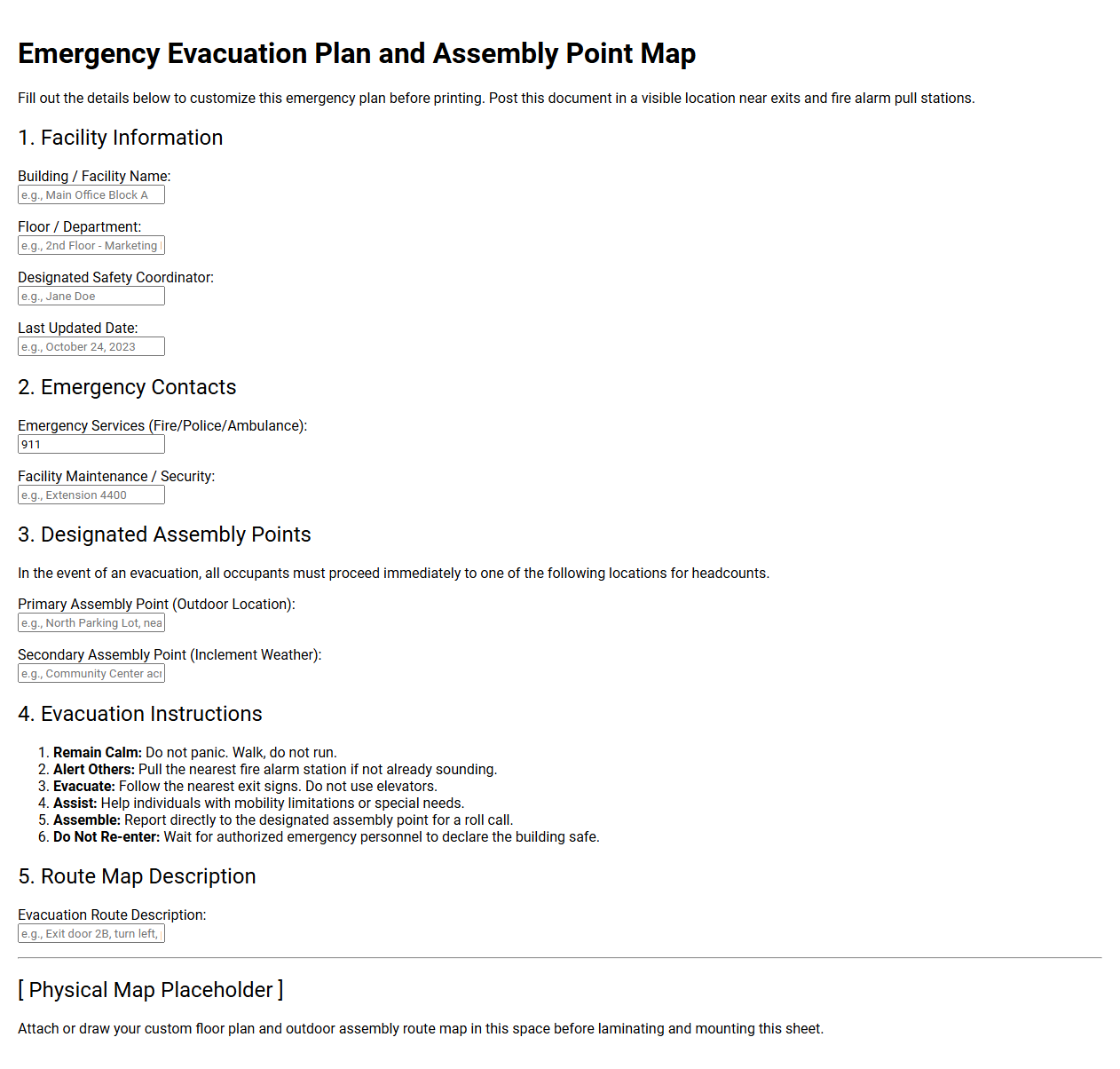
Emergency Evacuation Plan and Assembly Point Map
💾 Emergency Evacuation Plan and Assembly Point Map .pdf
This safety document outlines emergency evacuation routes and designates safe assembly points. It features clear, color-coded floor plans showing exits, fire extinguisher locations, and first aid stations. Occupants can quickly identify their current position and follow the designated paths to secure outdoor zones during any building crisis.
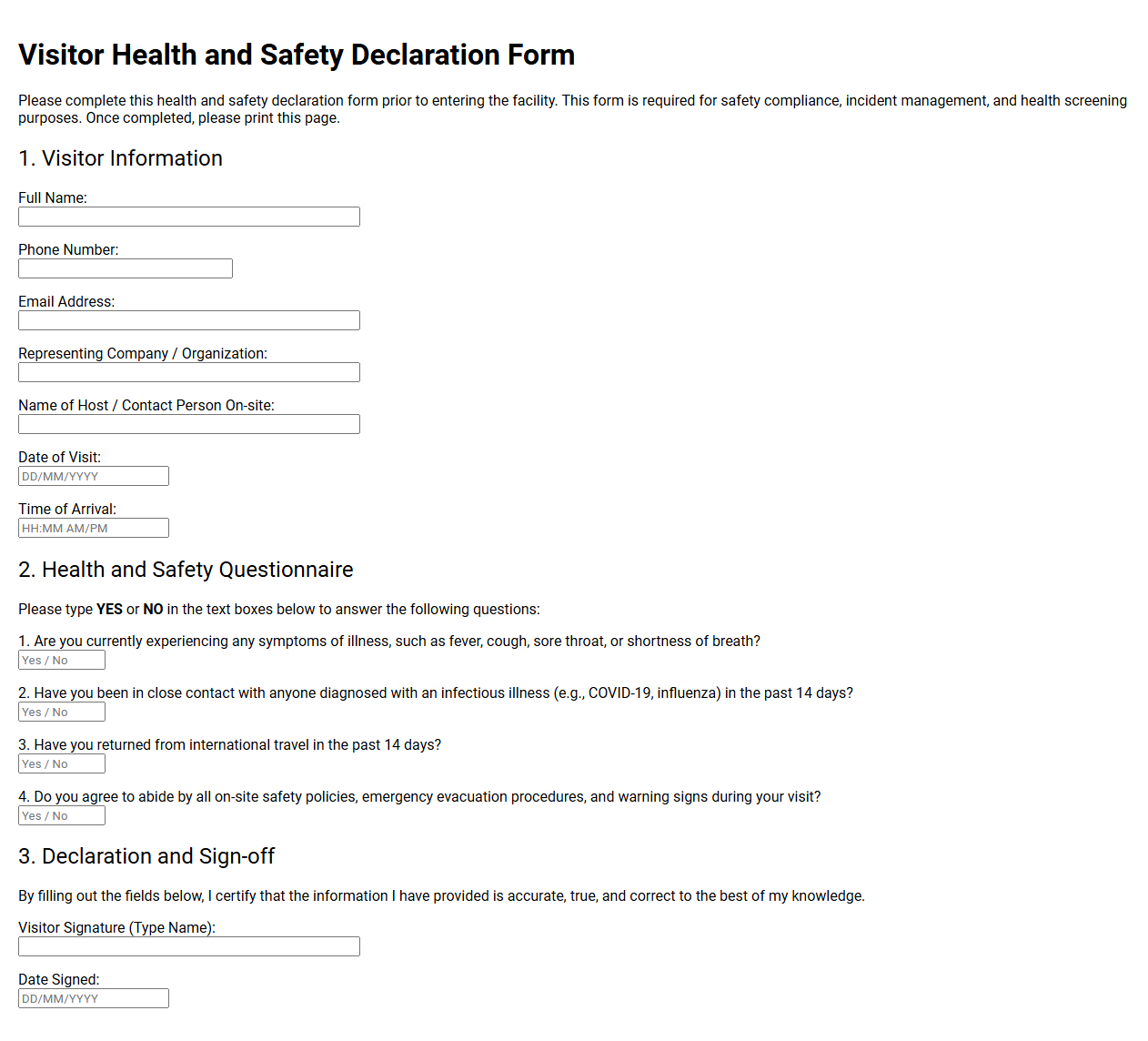
Visitor Health and Safety Declaration Form
💾 Visitor Health and Safety Declaration Form .pdf
A Visitor Health and Safety Declaration Form is a standard screening document implemented by organizations to manage on-site risks. This questionnaire collects vital health status details, recent travel history, and emergency contacts. By signing, guests acknowledge compliance with workplace safety protocols, helping maintain a secure environment for all personnel.
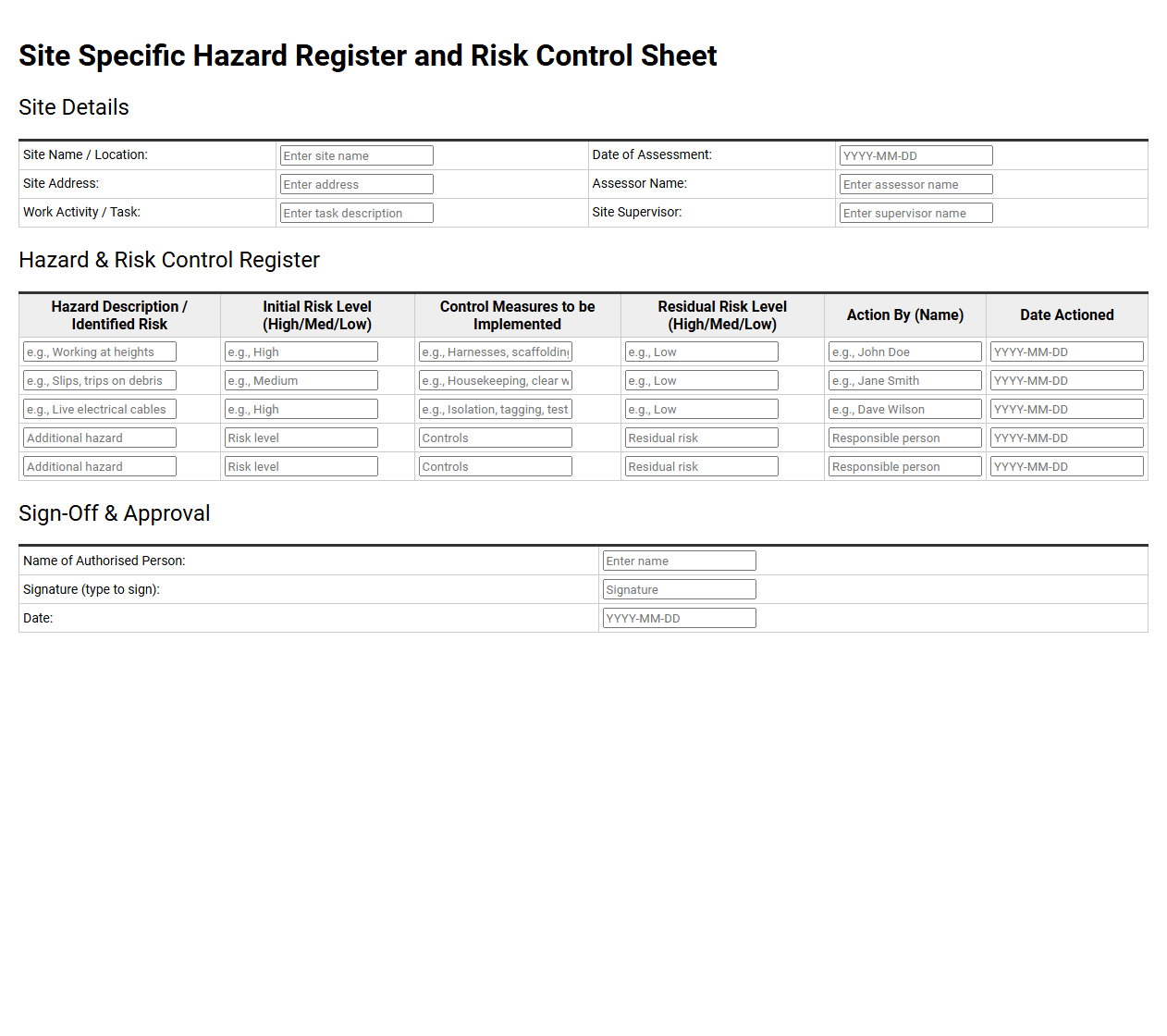
Site Specific Hazard Register and Risk Control Sheet
💾 Site Specific Hazard Register and Risk Control Sheet .pdf
The site specific hazard register and risk control sheet is a crucial document for safety. It identifies unique local dangers and outlines targeted control measures. Teams use this log to record potential threats, assess risks, and implement safety protocols, ensuring all personnel remain protected during daily project work site operations.
Personal Protective Equipment Acknowledgement and Issue Form
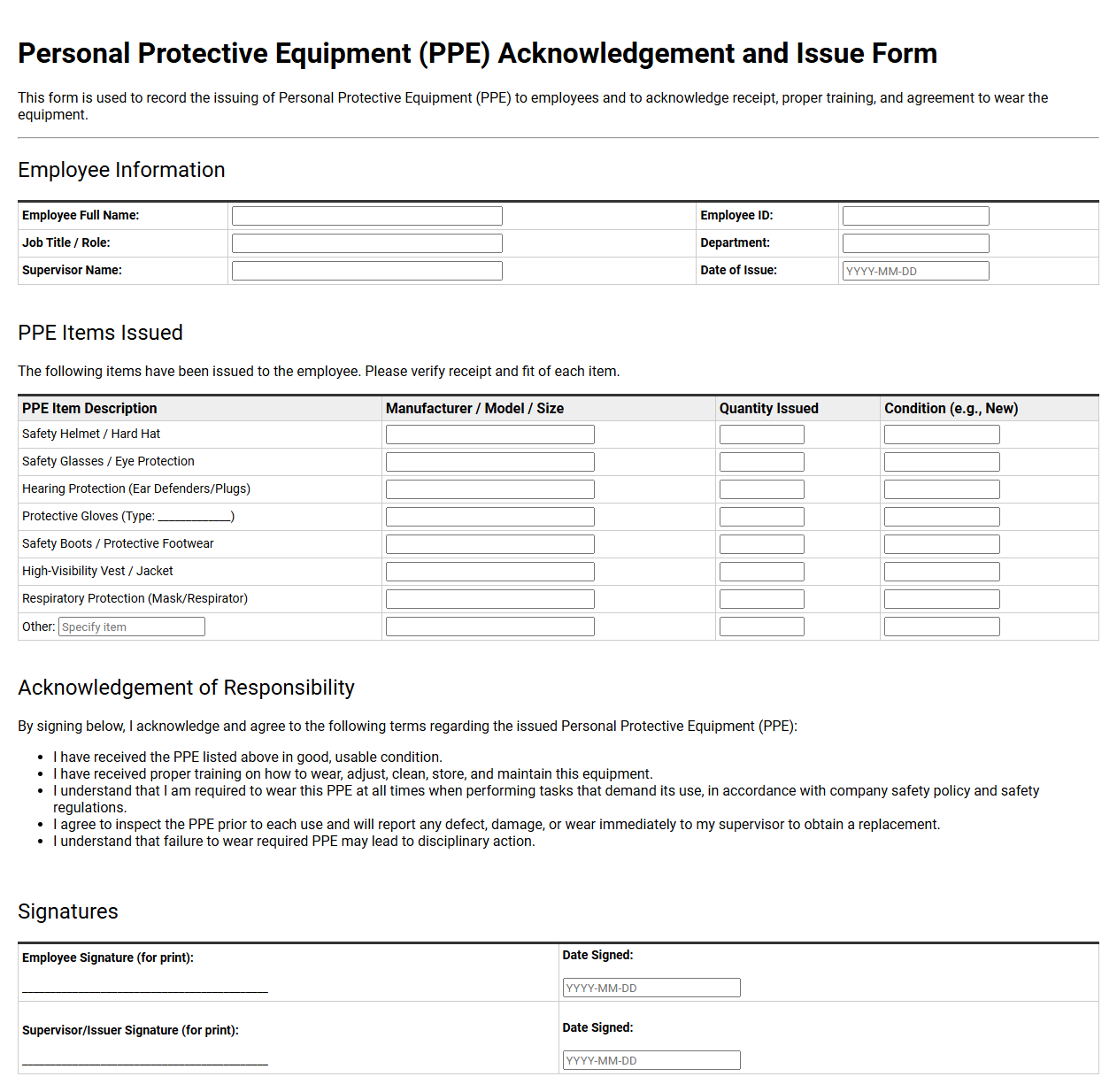
💾 Personal Protective Equipment Acknowledgement and Issue Form .pdf
A Personal Protective Equipment Acknowledgement and Issue Form records the distribution of safety gear to employees. This document confirms that workers received necessary protective items and understand proper usage policies. By signing, individuals accept responsibility for maintaining their equipment, ensuring workplace compliance and fostering a secure, hazard-free environment.
Visitor Code of Conduct and Site Rules Agreement
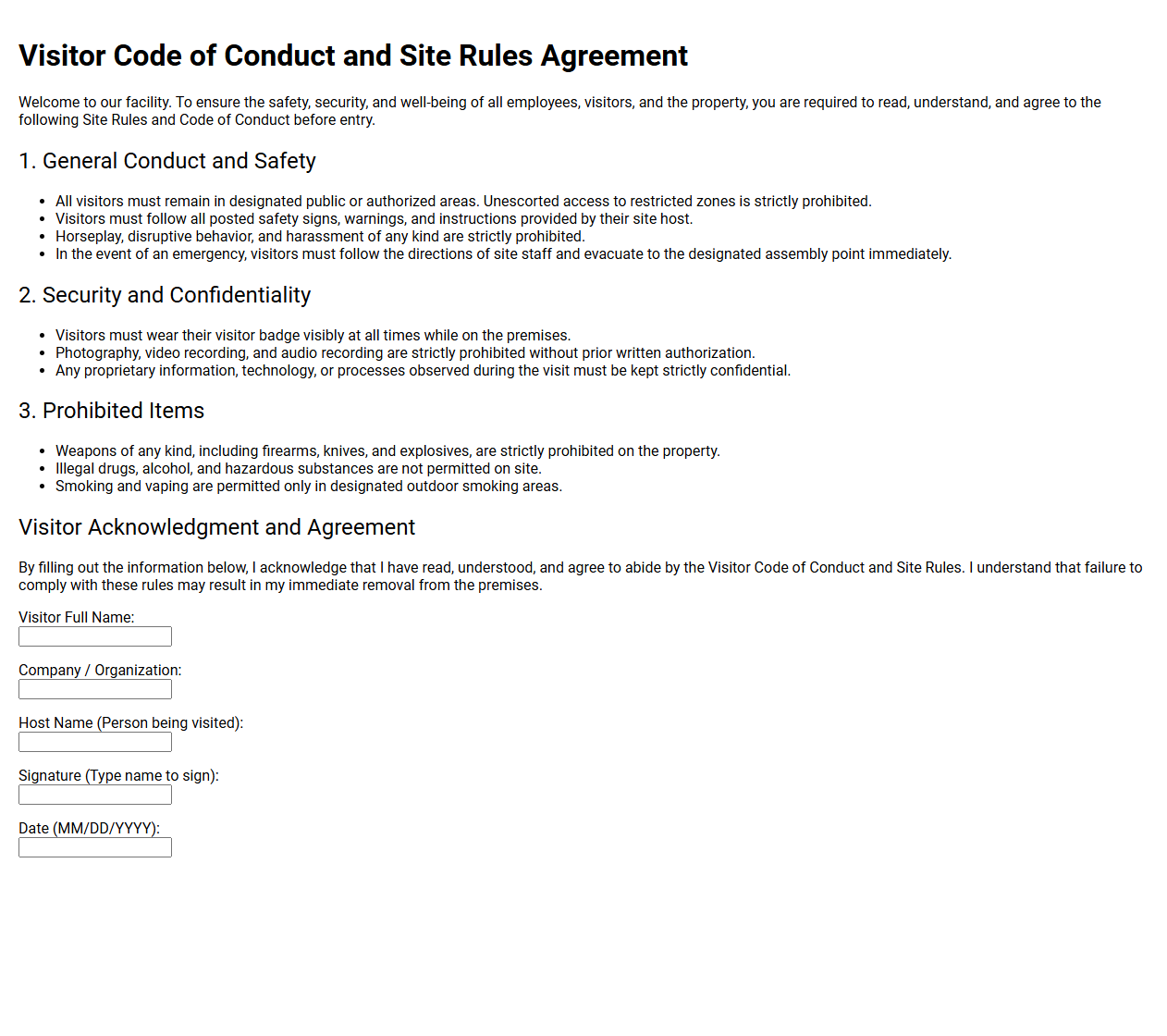
💾 Visitor Code of Conduct and Site Rules Agreement .pdf
This standard document outlines expected behaviors and safety policies for individuals accessing a facility. It establishes clear guidelines regarding safety protocols, respectful interactions, and property protection. By signing, guests acknowledge these terms, helping hosts maintain a secure, orderly, and productive environment for all present on the premises.
Emergency Contact Information and First Aid Register
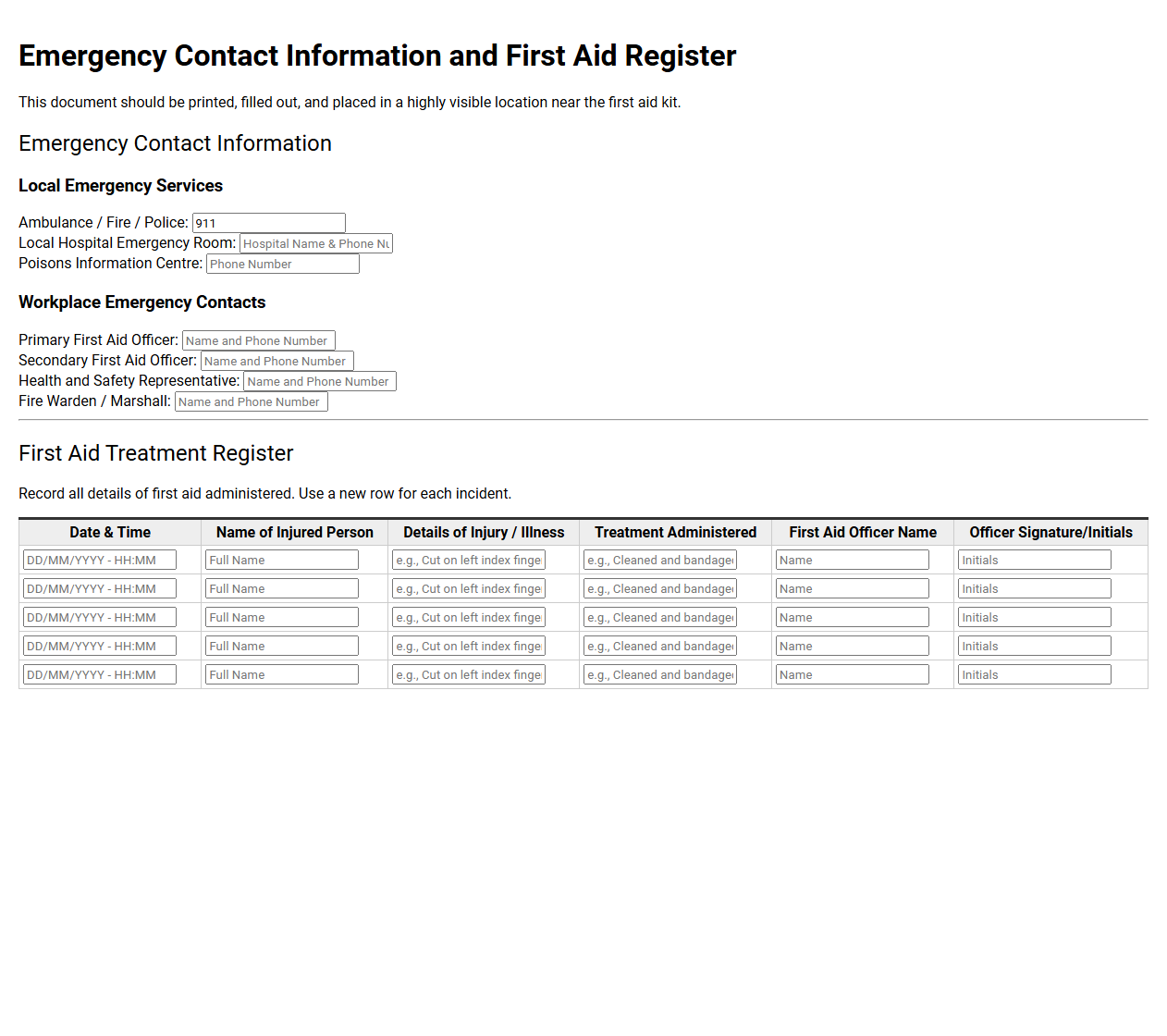
💾 Emergency Contact Information and First Aid Register .pdf
This critical document consolidates vital emergency numbers and tracks workplace injuries. It lists medical contacts, designated first responders, and emergency services. Additionally, the register records all administered treatments, incident dates, and outcomes. Keeping this log updated secures rapid response and maintains regulatory safety standards for everyone on-site.
Visitor Non Disclosure and Confidentiality Agreement
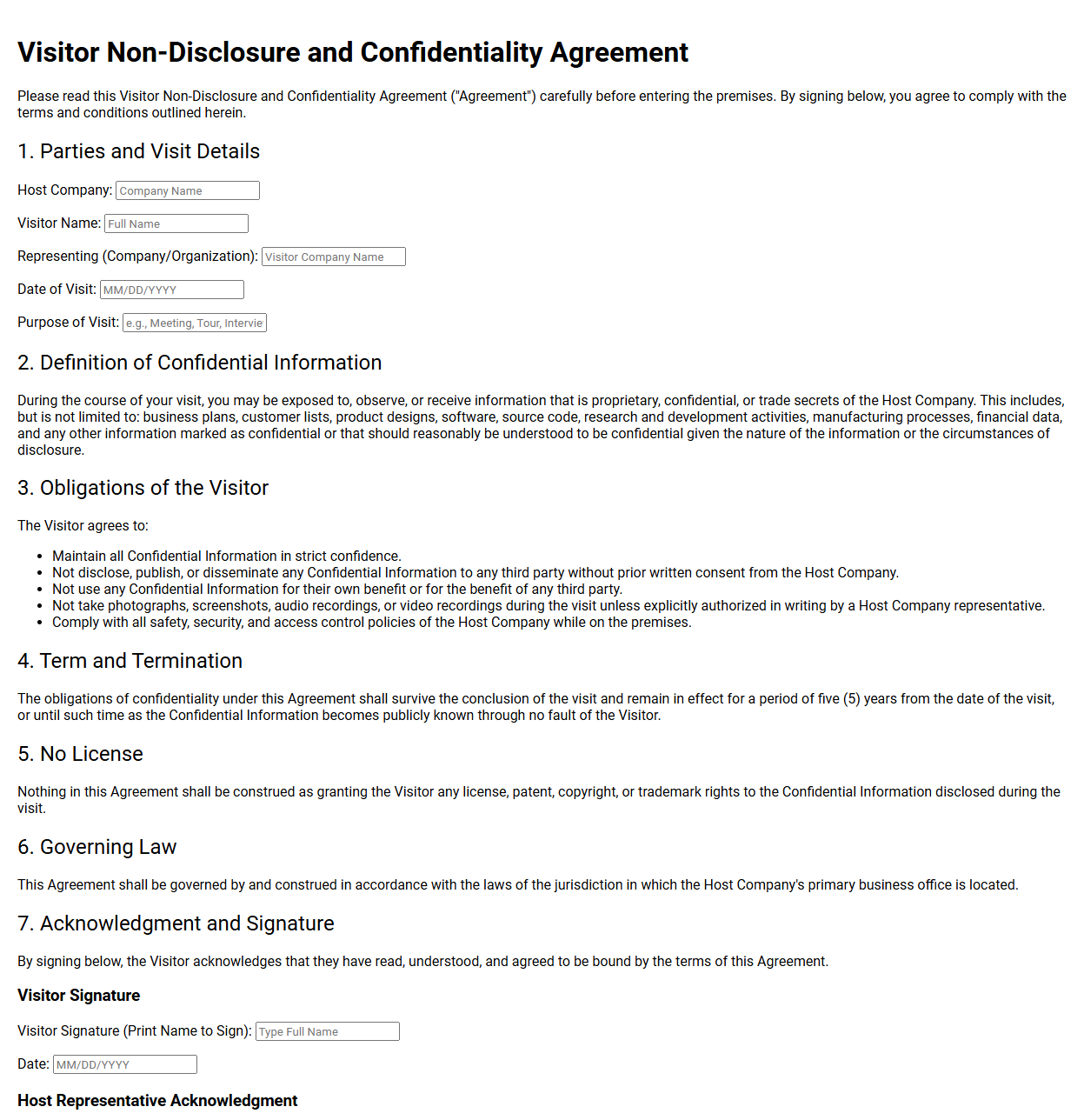
💾 Visitor Non Disclosure and Confidentiality Agreement .pdf
A Visitor Non-Disclosure and Confidentiality Agreement protects proprietary information when guests enter a secure facility. This legal document safeguards trade secrets, intellectual property, and sensitive data from unauthorized disclosure. By signing, visitors agree to keep all observed or shared information private, ensuring business operations remain secure and protected.
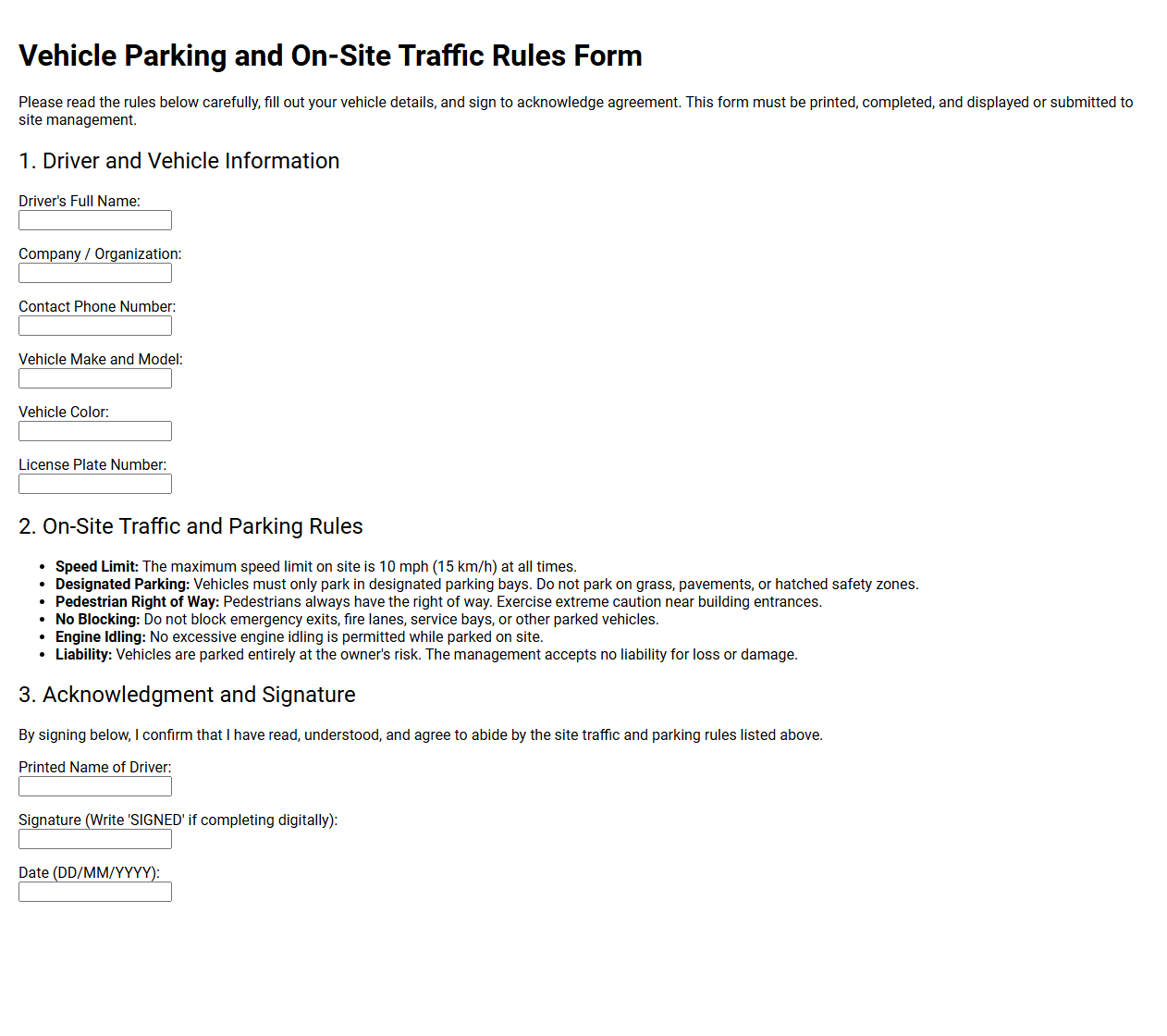
Vehicle Parking and On Site Traffic Rules Form
💾 Vehicle Parking and On Site Traffic Rules Form .pdf
This document outlines critical guidelines for operating and storing vehicles within facility boundaries. It establishes speed limits, designated parking zones, and safety protocols for employees and visitors. By signing, drivers acknowledge responsibility for complying with these traffic regulations, ensuring a secure environment for pedestrians and reducing on-site transit risks.
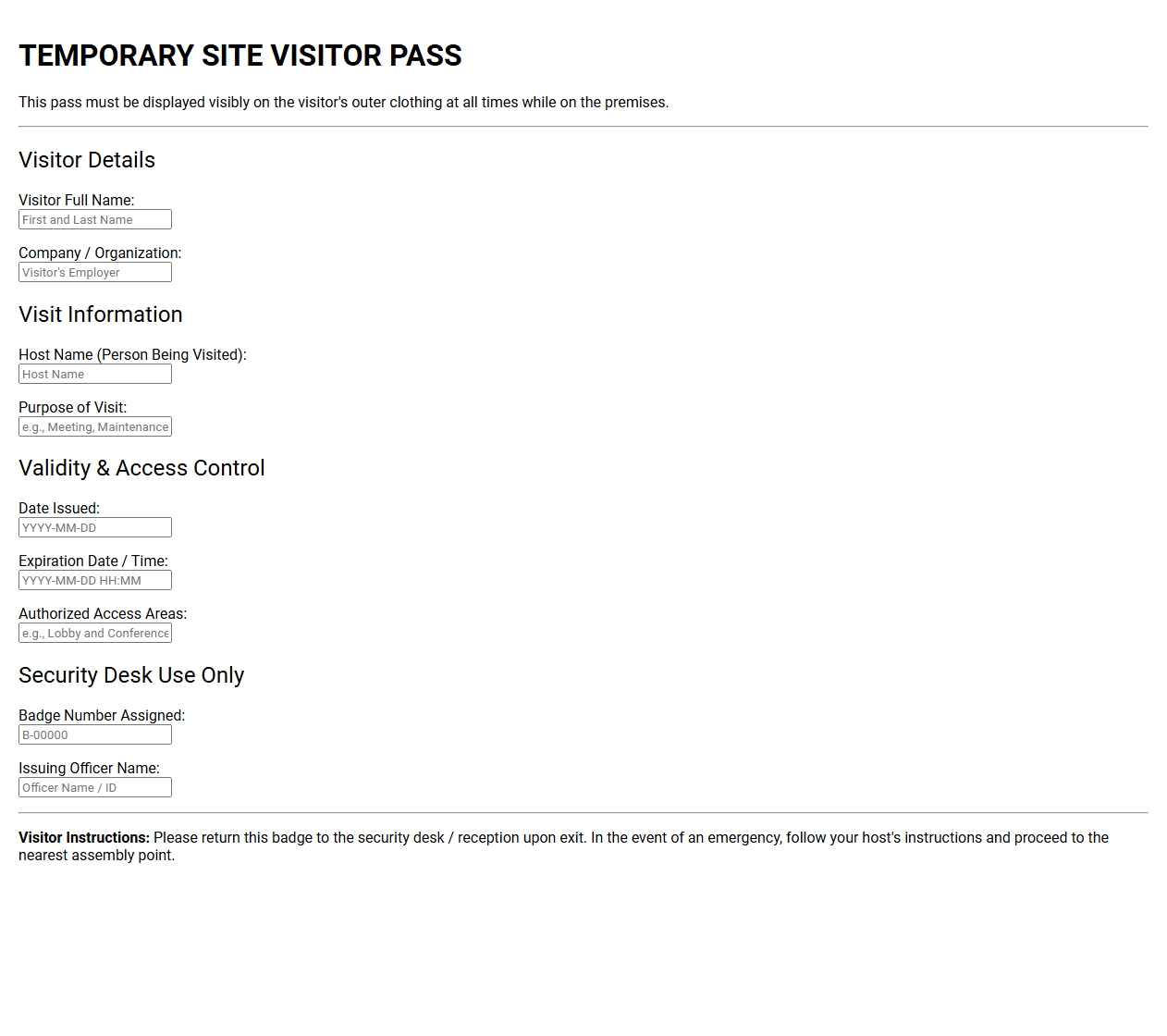
Temporary Site Visitor Pass and Badge Template
💾 Temporary Site Visitor Pass and Badge Template .pdf
A temporary site visitor pass and badge template provides a structured format to grant guests access to secure facilities. This document typically features fields for the visitor's name, host name, date, and authorized areas. It ensures clear identification, enhances security protocols, and helps facilities track non-employee movement efficiently.
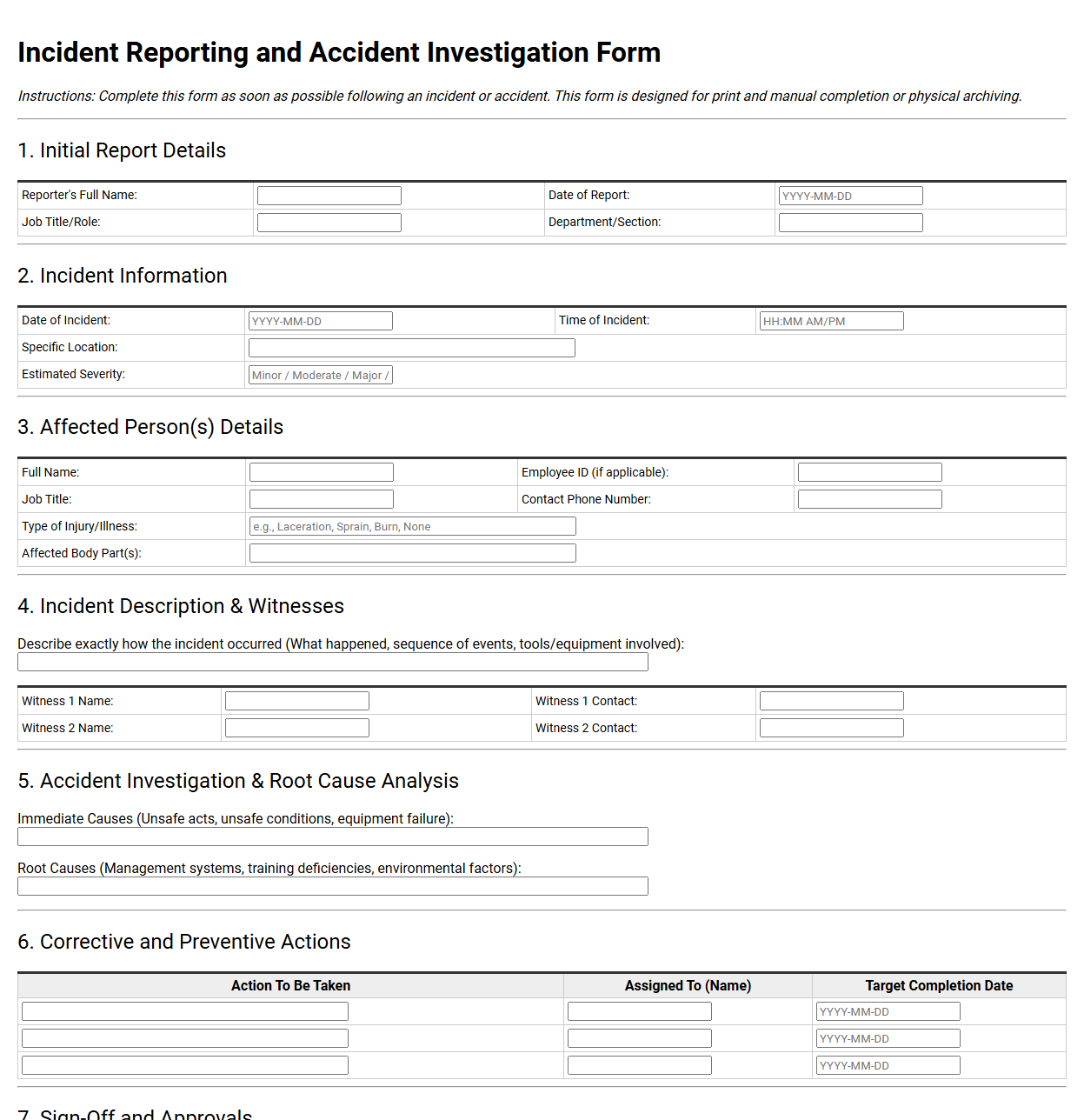
Incident Reporting and Accident Investigation Form
💾 Incident Reporting and Accident Investigation Form .pdf
An incident reporting and accident investigation form is a crucial safety document used by organizations. It systematically records the details of workplace mishaps, near misses, or injuries. By capturing information on what occurred, contributing factors, and corrective actions, it helps prevent future hazards and ensures regulatory compliance.
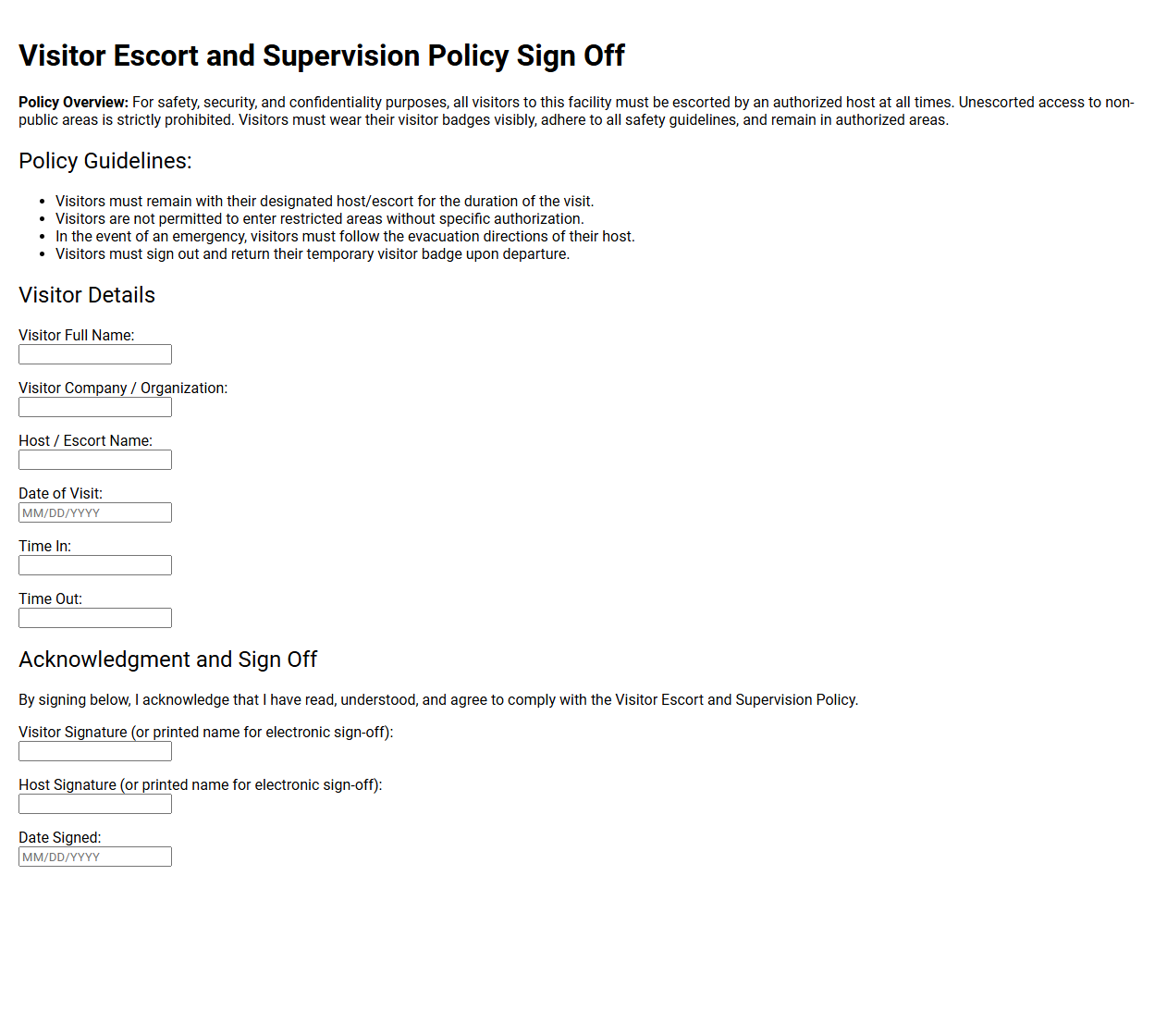
Visitor Escort and Supervision Policy Sign Off
💾 Visitor Escort and Supervision Policy Sign Off .pdf
This policy sign-off serves as a formal agreement confirming that personnel understand their duty to accompany guests at all times. By signing, employees acknowledge their responsibility to maintain security protocols and safety standards. This process guarantees active oversight, effectively preventing unauthorized access and protecting sensitive operational areas throughout the facility.
Environmental Management and Waste Disposal Site Policy
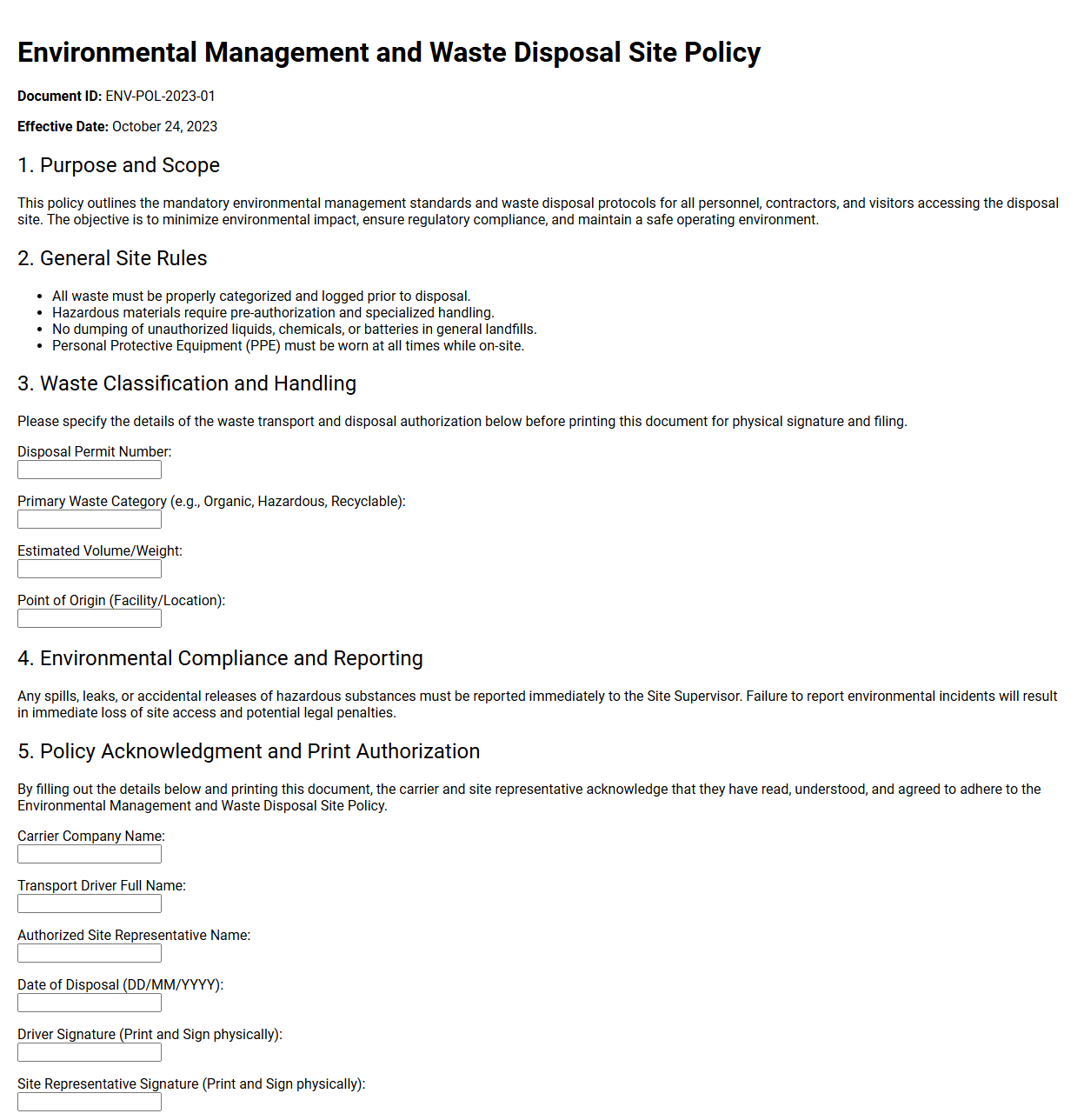
💾 Environmental Management and Waste Disposal Site Policy .pdf
This policy document outlines the regulatory compliance frameworks, waste segregation protocols, and safety standards for the disposal facility. It establishes clear guidelines for managing hazardous materials, minimizing ecological impact, and monitoring soil or water contamination. Operators must follow these procedures to maintain environmental integrity and protect local communities.
Visitor Feedback and Site Safety Exit Survey
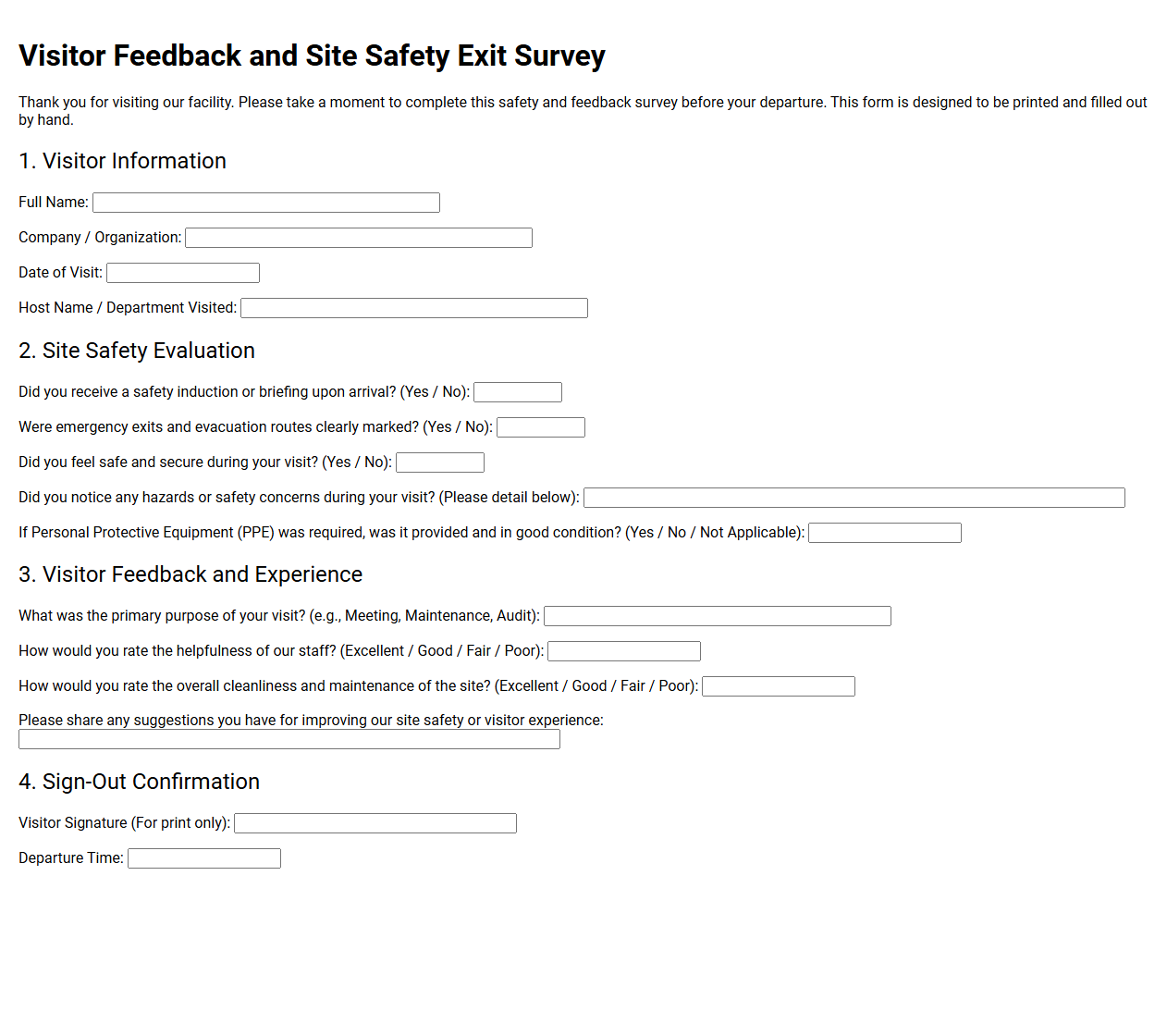
💾 Visitor Feedback and Site Safety Exit Survey .pdf
This standard questionnaire gathers crucial observations from departing guests regarding physical hazards, facility accessibility, and overall operational security.
By documenting real-time experiences, organizations can quickly identify potential risks, improve emergency response protocols, and maintain a secure environment. It serves as a vital tool for ongoing hazard mitigation and compliance.
Visitor Site Induction FAQ
What is the primary purpose of a visitor site induction?
A visitor site induction ensures that external guests understand key safety protocols, emergency evacuation procedures, and localized hazards before entering a facility. This essential process minimizes workplace accidents, maintains regulatory compliance, and protects both the visitors and the host organization from operational risks.
Who is required to undergo a visitor site induction?
Anyone who is not a permanent, fully trained employee must undergo this induction. This includes clients, contractors, delivery personnel, and regulatory inspectors. Tailoring the induction depth to the visitor's exposure level ensures everyone on-site remains safe and aware of relevant operational boundaries.
How does a site induction support workplace safety compliance?
Site inductions are vital for meeting occupational health and safety regulations. By formally communicating emergency routes, hazard zones, and safety requirements, organizations demonstrate due diligence. This documented briefing serves as proof that the employer has actively taken necessary steps to prevent workplace injuries.
What role does Personal Protective Equipment play in site inductions?
Personal Protective Equipment (PPE) requirements are a critical component of site inductions. The induction identifies specific areas where gear like safety glasses, hard hats, or high-visibility vests is mandatory. This ensures visitors are properly equipped to safely navigate active, hazardous environments.
Why do visitor site inductions have an expiration period?
Inductions expire because industrial sites, technology, and emergency protocols constantly evolve. Periodic re-induction ensures that returning visitors are updated on physical layout changes, new hazards, and revised safety policies, maintaining a consistently high standard of situational awareness and safety compliance.
Disclaimer:
The documents and templates provided on this page are for informational and illustrative purposes only. They do not constitute professional, legal, or financial advice, and should not be relied upon as such. Because individual circumstances and regulatory requirements vary, these materials may not be suitable for your specific needs. We recommend consulting with a qualified professional before adapting or using any of these examples for official or commercial purposes.