
Legacy Giving Form Template - Securing Future Non-Profit Support Through Donor Planned Giving
Non-profit organizations constantly struggle to secure predictable, long-term funding. While annual galas and monthly giving campaigns provide essential immediate relief, they rarely guarantee decades of organizational sustainability. Unlocking the "donor power tool" of planned giving, however, grants organizations an unprecedented financial runway.
While establishing this framework requires precise structural alignment to manage complex donor tax expectations, utilizing structured vehicles like charitable bequests can transform modest annual supporters into historic benefactors. Below, we explore how our Legacy Giving Form Template simplifies this onboarding process, helping your organization secure future support seamlessly.
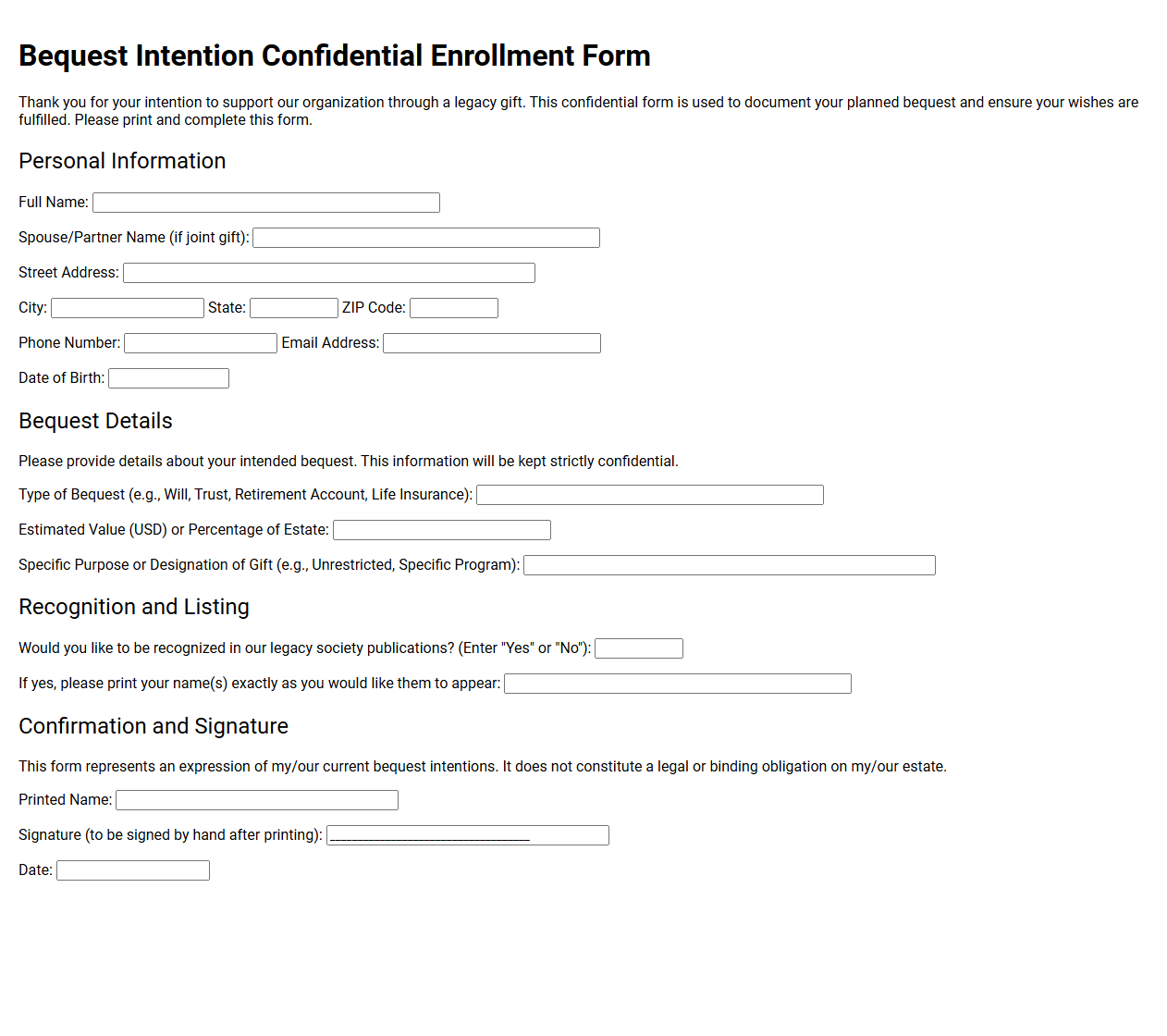
Bequest Intention Confidential Enrollment Form
💾 Bequest Intention Confidential Enrollment Form .pdf
The Bequest Intention Confidential Enrollment Form allows donors to officially register their future estate gifts. This document records philanthropic goals, ensuring the organization honors the donor's wishes. It maintains strict privacy regarding the legacy gift details, helping institutions plan long-term funding while recognizing supporters during their lifetime.
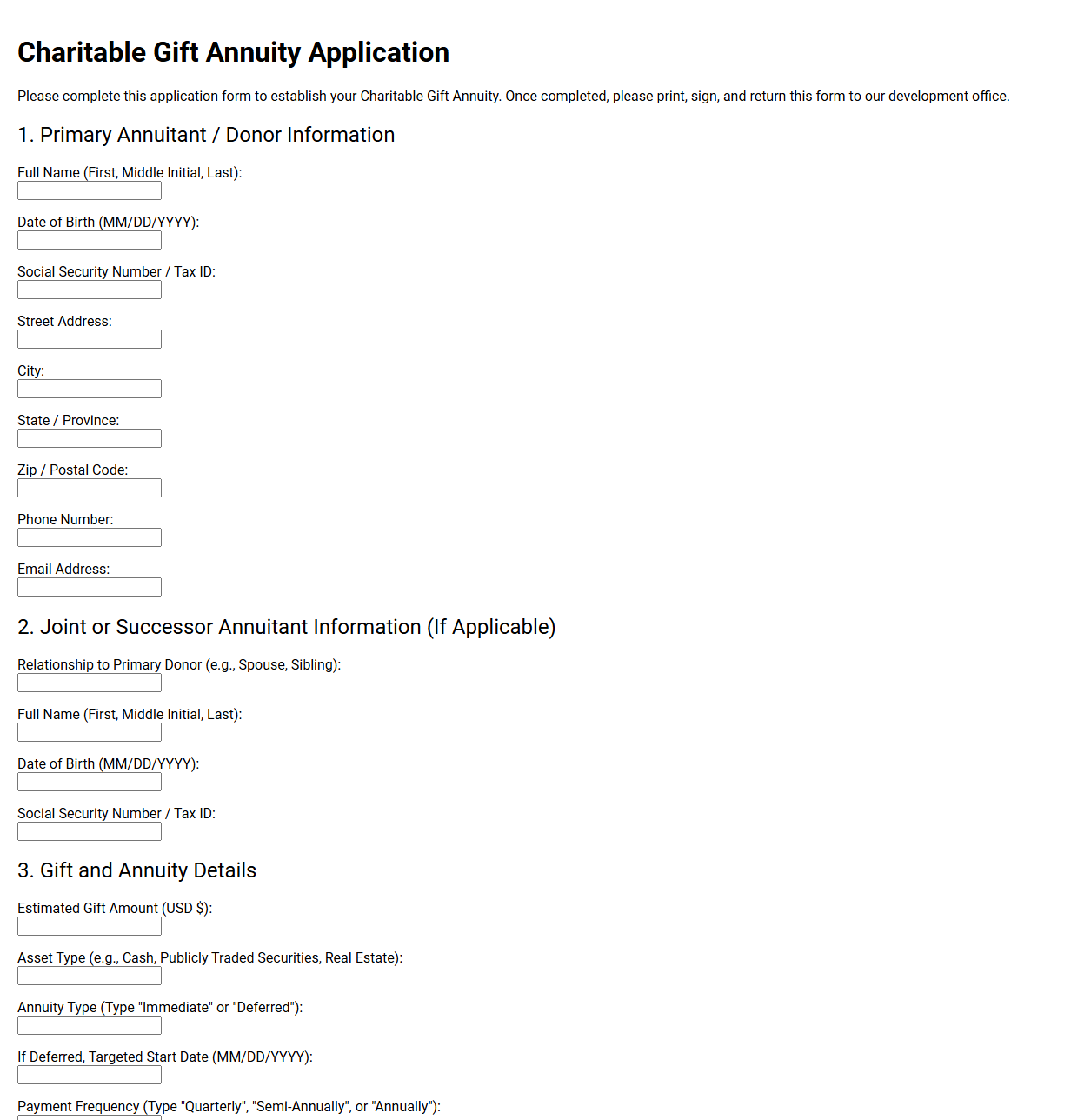
Charitable Gift Annuity Application Template
💾 Charitable Gift Annuity Application Template .pdf
A charitable gift annuity application template streamlines the process of establishing a lifetime income stream. This structured document captures donor details, contribution amounts, payout rates, and beneficiary designations. It serves as a formal request, guiding supporters and nonprofit organizations through the financial and legal setup of their philanthropic investment.
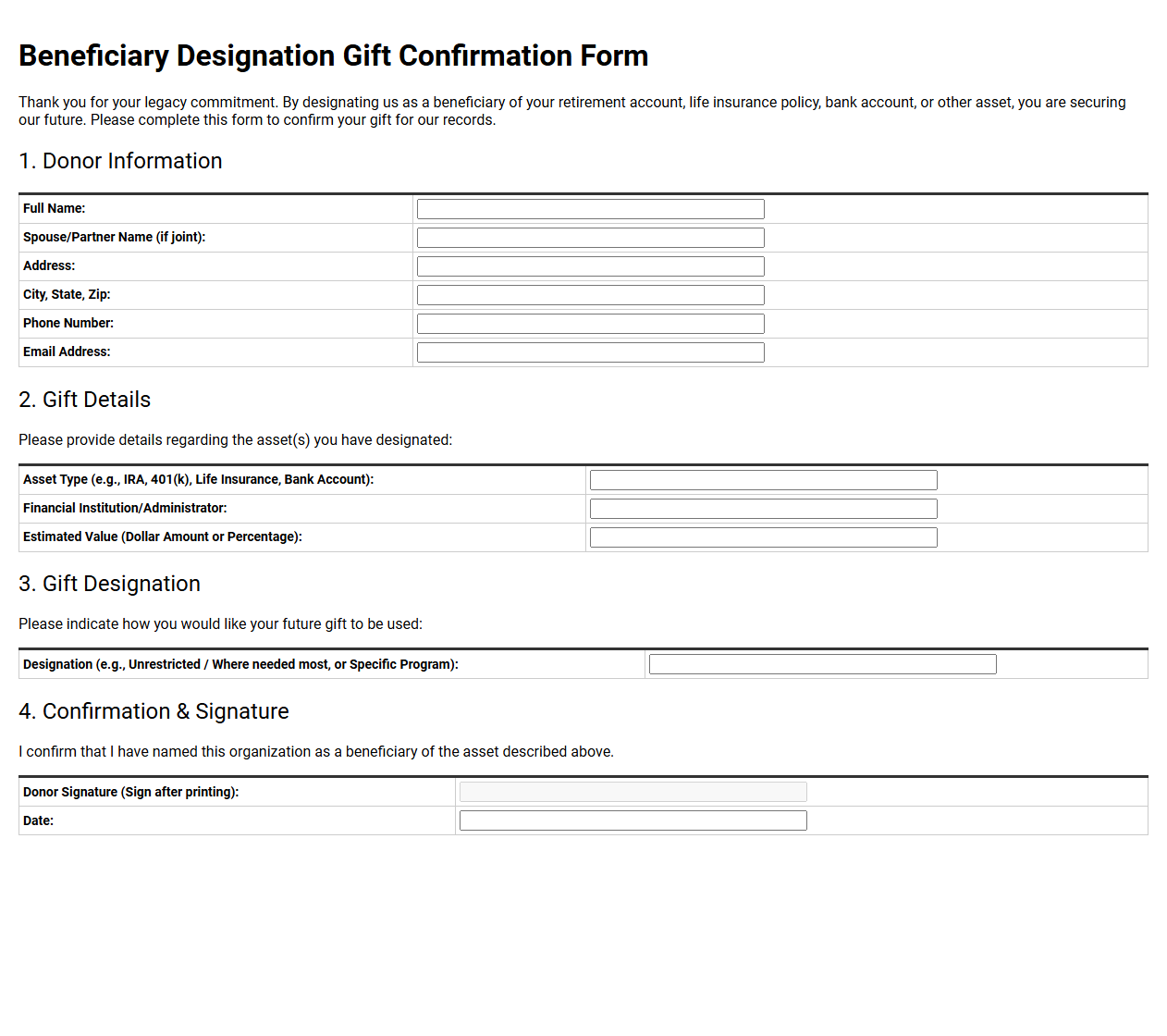
Beneficiary Designation Gift Confirmation Form
💾 Beneficiary Designation Gift Confirmation Form .pdf
A Beneficiary Designation Gift Confirmation Form is a vital document used by donors to notify an organization of a future legacy gift. This form records details of assets, such as retirement accounts or life insurance policies, designated to the charity, ensuring your philanthropic intentions are clearly documented and properly honored.
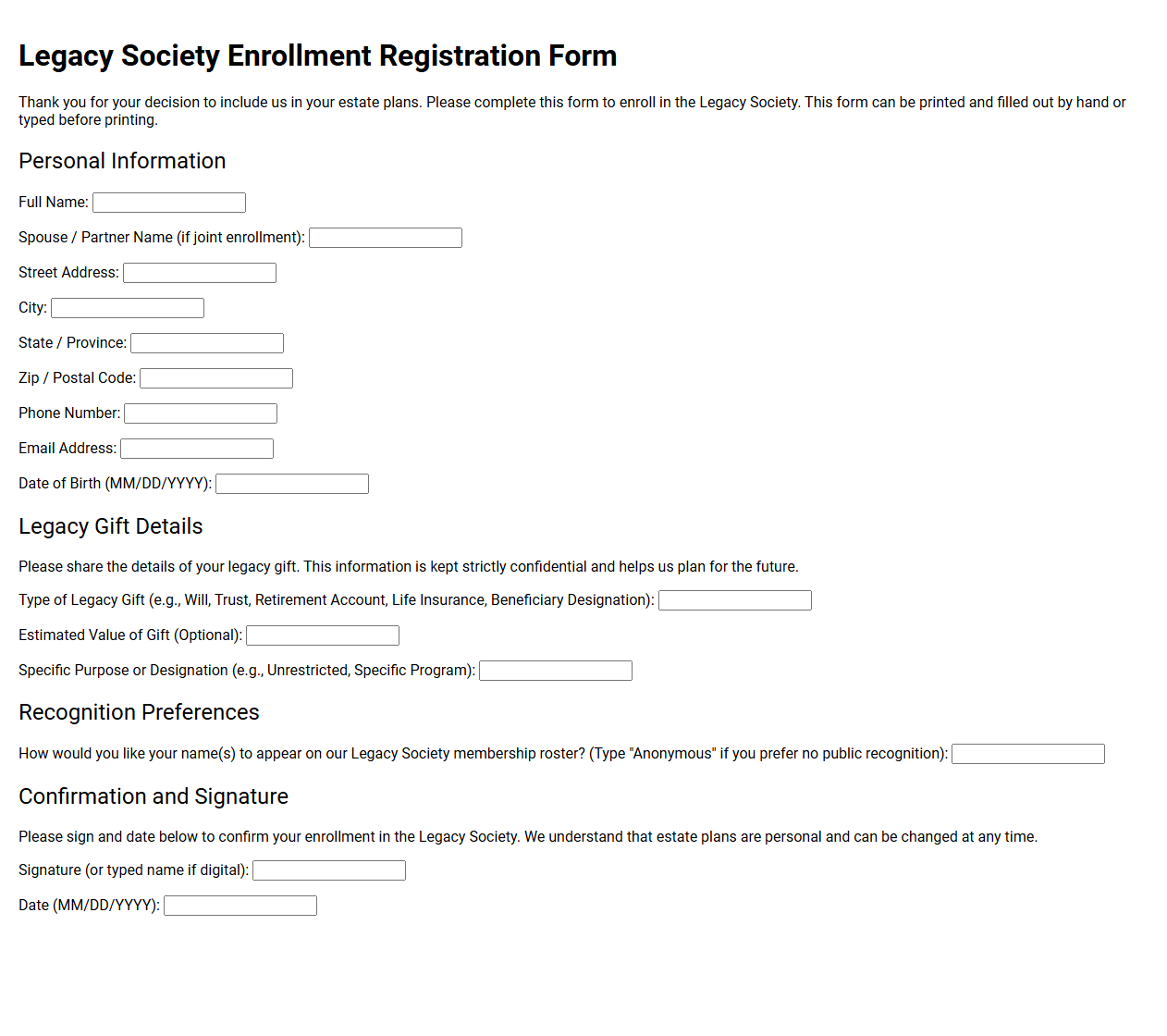
Legacy Society Enrollment Registration Form
💾 Legacy Society Enrollment Registration Form .pdf
A Legacy Society Enrollment Registration Form is a formal document used by non-profit organizations to officially record a donor's commitment to making a planned gift. This form captures vital details regarding bequest intentions, future estate plans, and preferred recognition options, ensuring the donor's philanthropic wishes are accurately documented and honored.
Endowment Fund Agreement Document Template
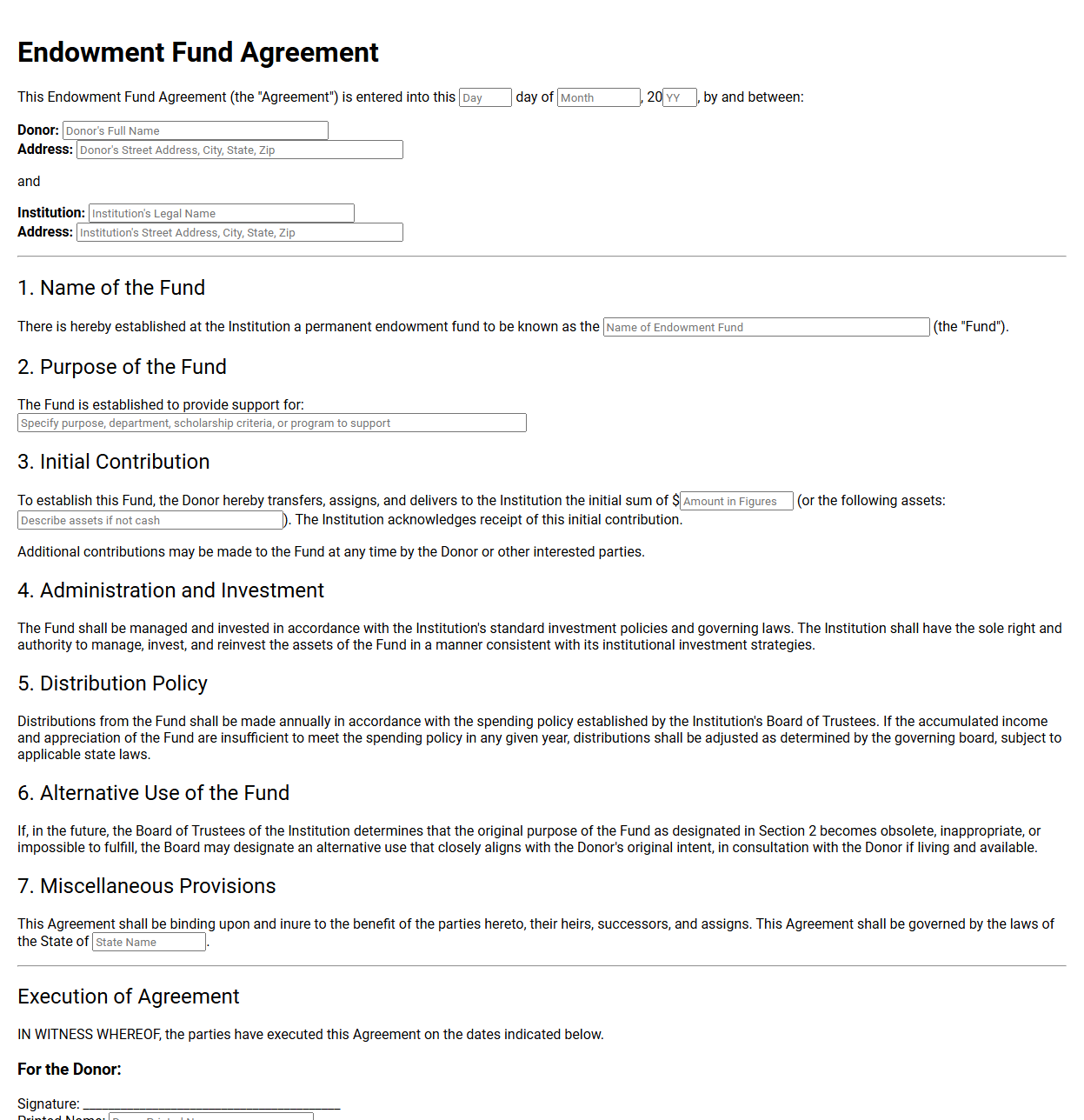
💾 Endowment Fund Agreement Document Template .pdf
An endowment fund agreement template establishes a permanent financial legacy for non-profit organizations. This legal document outlines how donors invest capital, detailing specific restrictions on spending investment earnings.
It defines the fund's purpose, administrative fees, investment strategies, and reporting requirements, ensuring long-term financial stewardship and donor intent protection.
Letter of Intent for Future Estate Gift
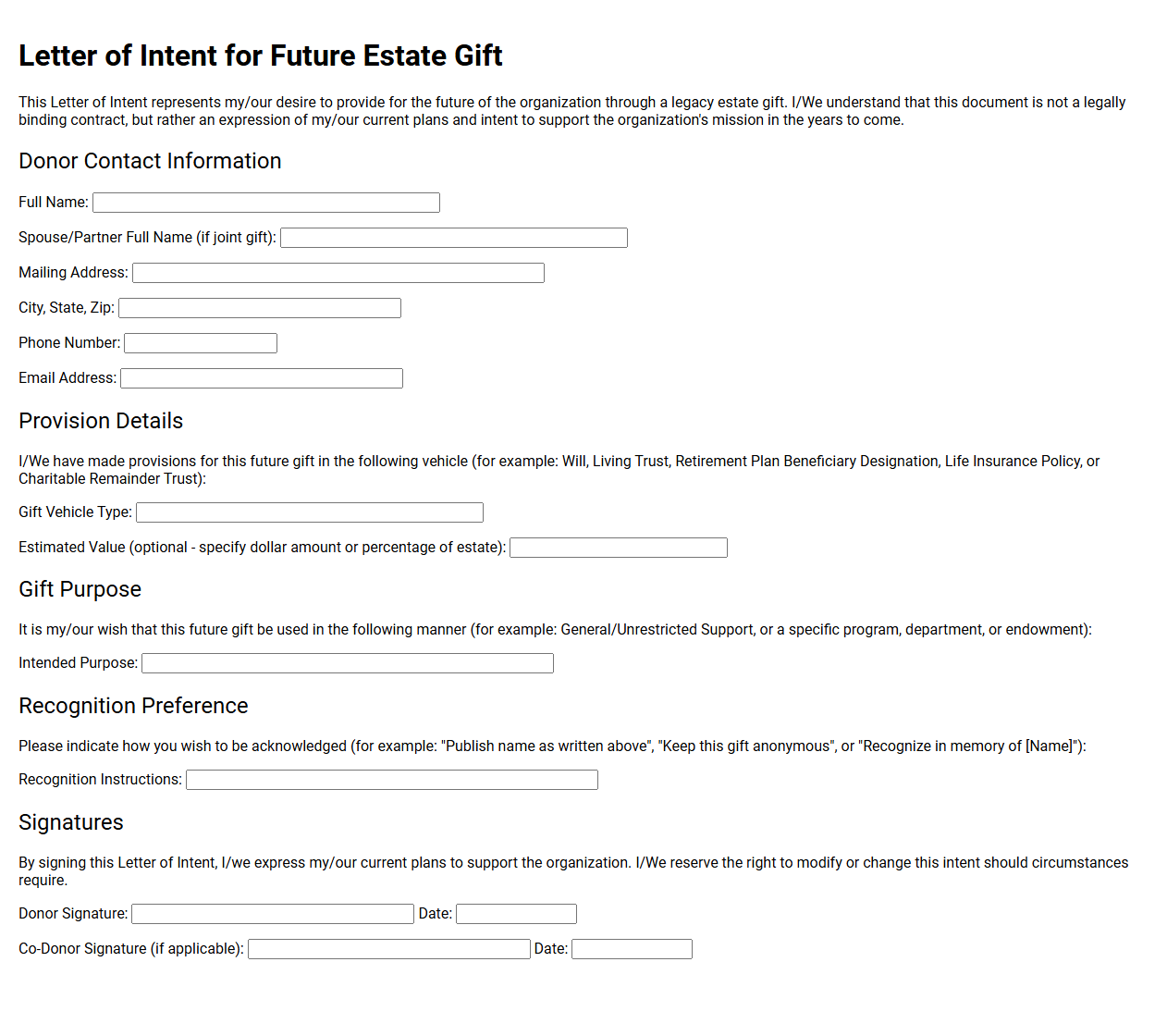
💾 Letter of Intent for Future Estate Gift .pdf
A Letter of Intent for a future estate gift is a voluntary document outlining a donor's philanthropic goals. It informs a chosen organization of a planned bequest, helping them prepare for future operations. This meaningful communication ensures your legacy wishes are understood, though it does not legally bind your estate.
Securities and Stock Transfer Authorization Form
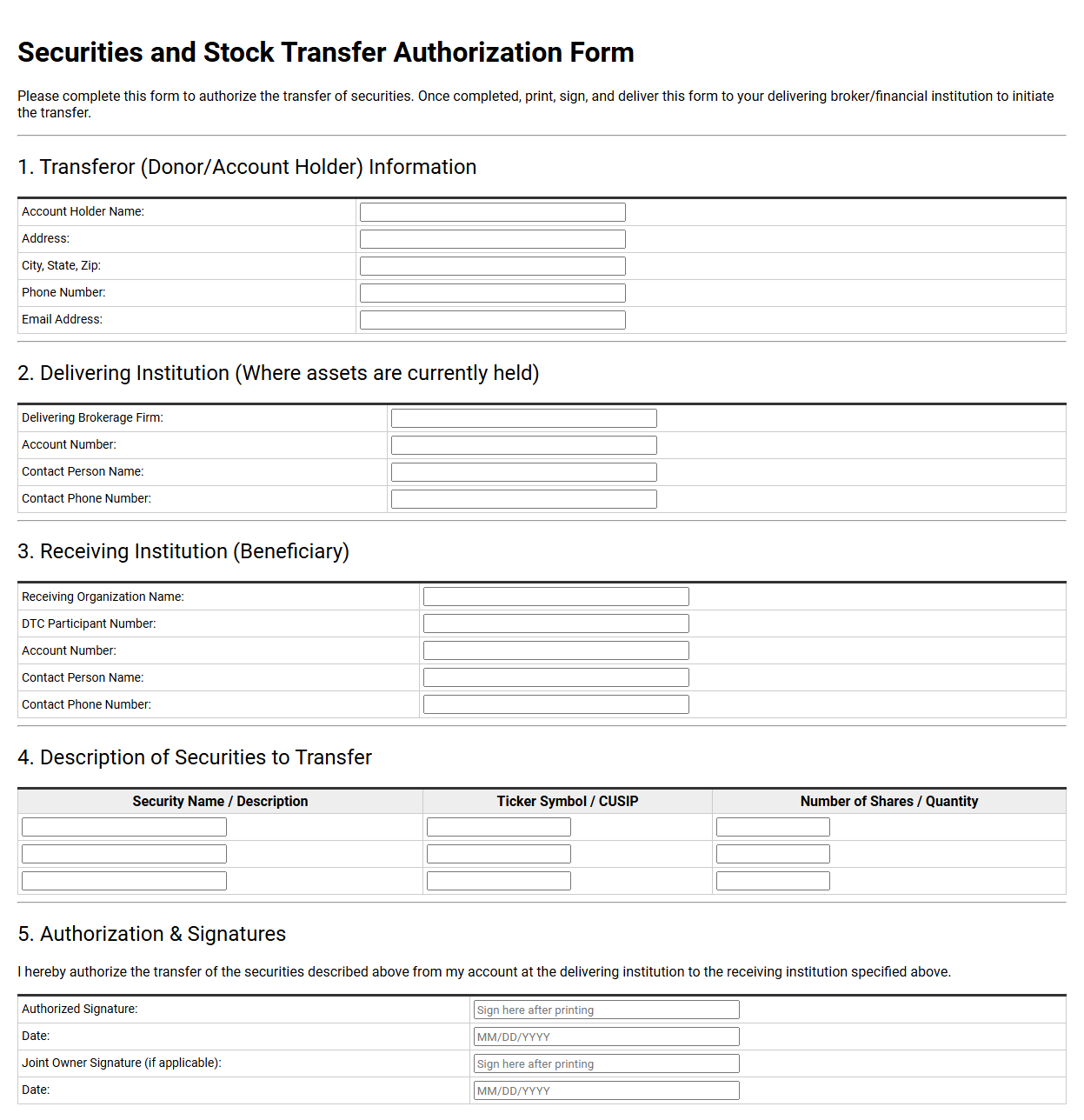
💾 Securities and Stock Transfer Authorization Form .pdf
A Securities and Stock Transfer Authorization Form legalizes the transfer of stock ownership from a seller to a buyer. This document requires detailed information about the security, including share quantities, company name, and account numbers. Financial institutions use this authorized record to execute ownership changes securely and accurately.
Charitable Remainder Trust Information Sheet
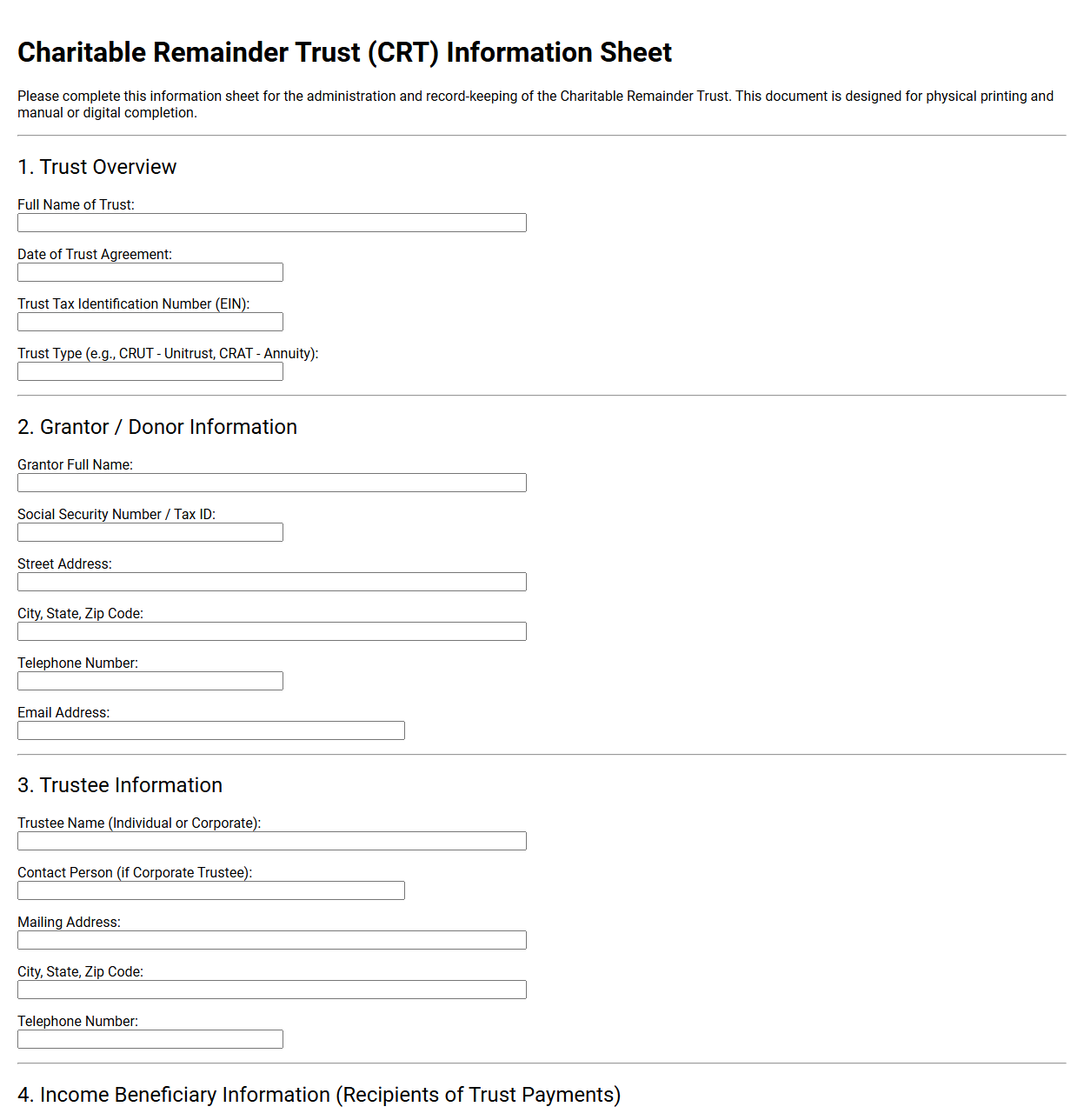
💾 Charitable Remainder Trust Information Sheet .pdf
A Charitable Remainder Trust information sheet outlines key mechanisms of this financial planning tool. It explains how donors transfer assets into an irrevocable trust, secure a predictable income stream for themselves or beneficiaries, and distribute the remaining assets to chosen charities, while detailing critical tax benefits and administrative guidelines.
Real Estate Legacy Gift Proposal Form
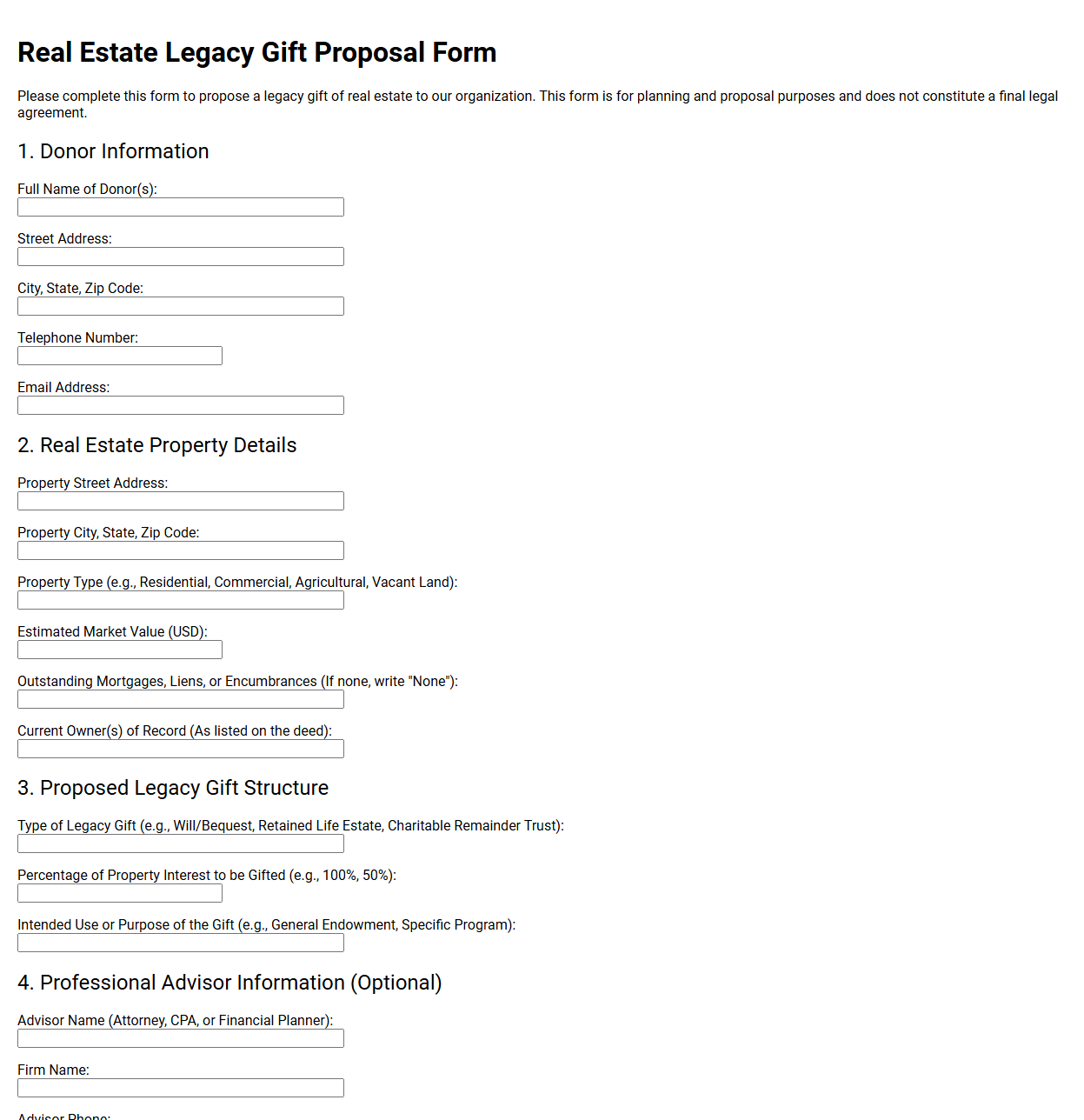
💾 Real Estate Legacy Gift Proposal Form .pdf
A Real Estate Legacy Gift Proposal Form allows donors to formalize their intention of bequeathing property to a charitable organization. This document captures critical details regarding the property's value, location, and legal status. It helps charities evaluate the contribution and align it with their long-term philanthropic goals.
Retirement Plan Beneficiary Designation Form
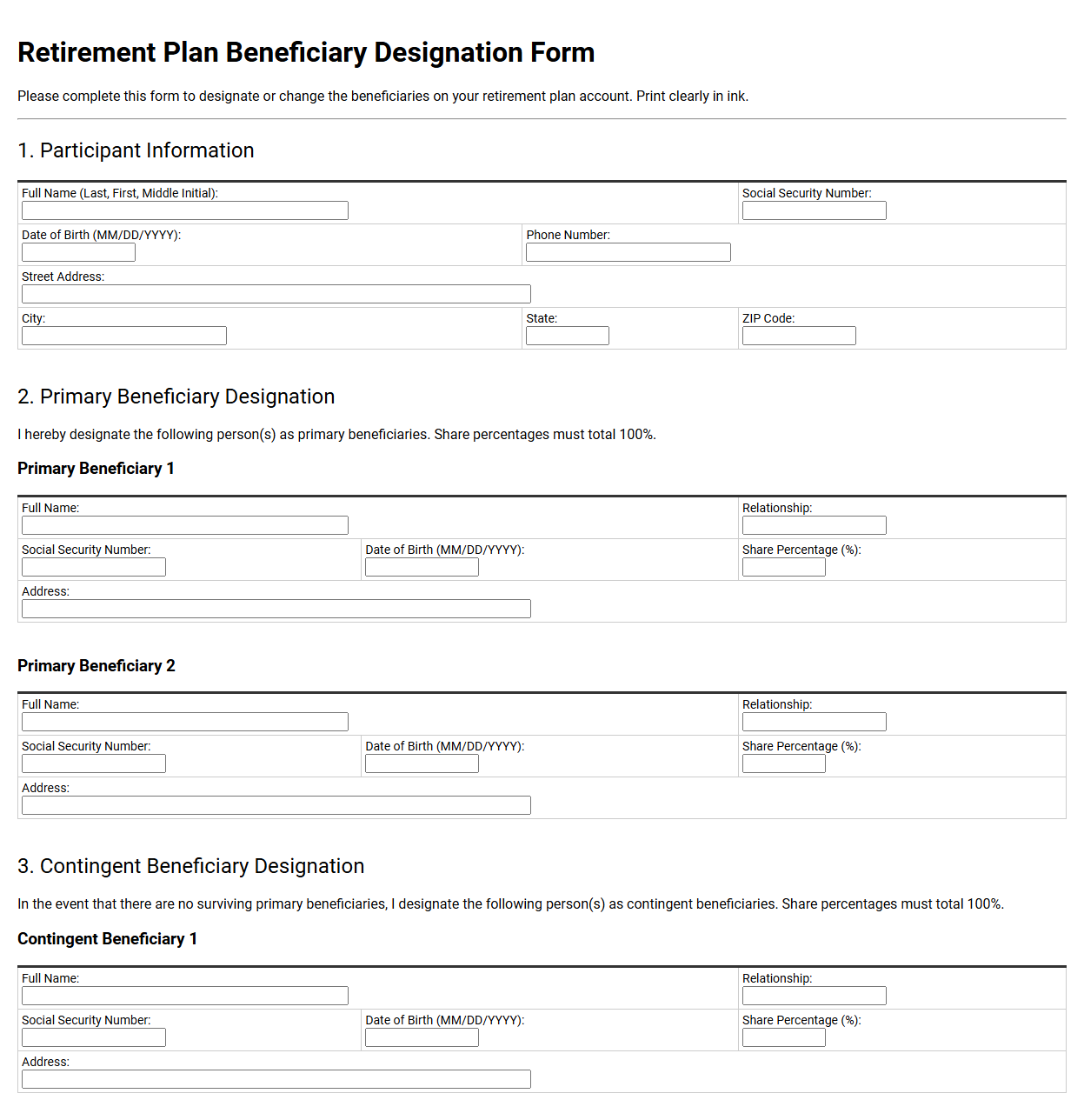
💾 Retirement Plan Beneficiary Designation Form .pdf
A retirement plan beneficiary designation form is a legal document used to name specific individuals or entities to receive your retirement assets upon your death. This vital form directly guides the distribution of accumulated funds, bypassing probate. It overrides instructions in a will, making regular updates critical after life events.
Life Insurance Policy Gift Agreement
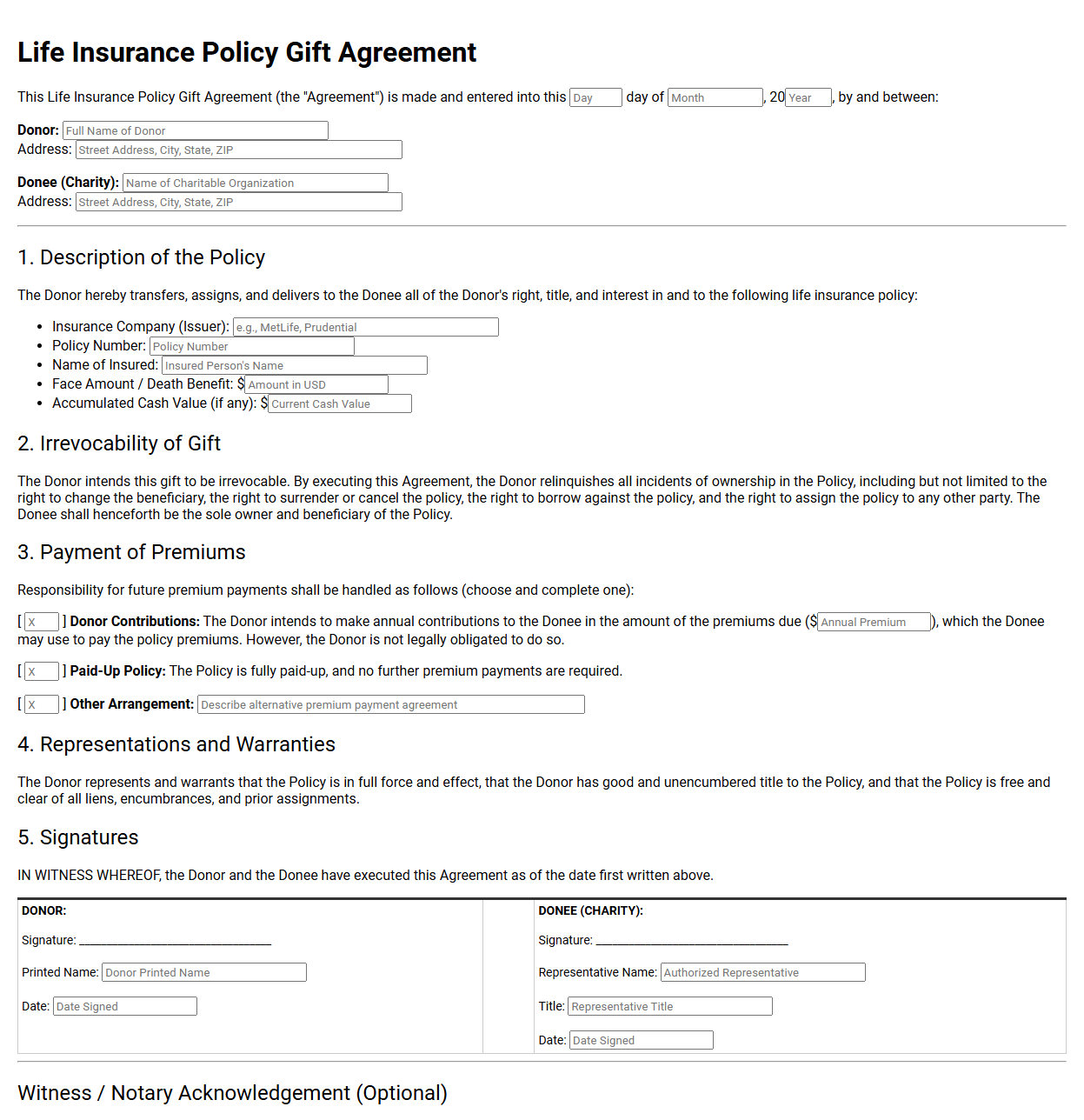
💾 Life Insurance Policy Gift Agreement .pdf
A Life Insurance Policy Gift Agreement is a legal contract transferring policy ownership from a donor to a charity or beneficiary. This document outlines premium payment responsibilities, transfer terms, and tax deduction details. It establishes a lasting legacy for the recipient organization while offering valuable tax benefits to the donor.
Charitable Lead Trust Donor Intake Form
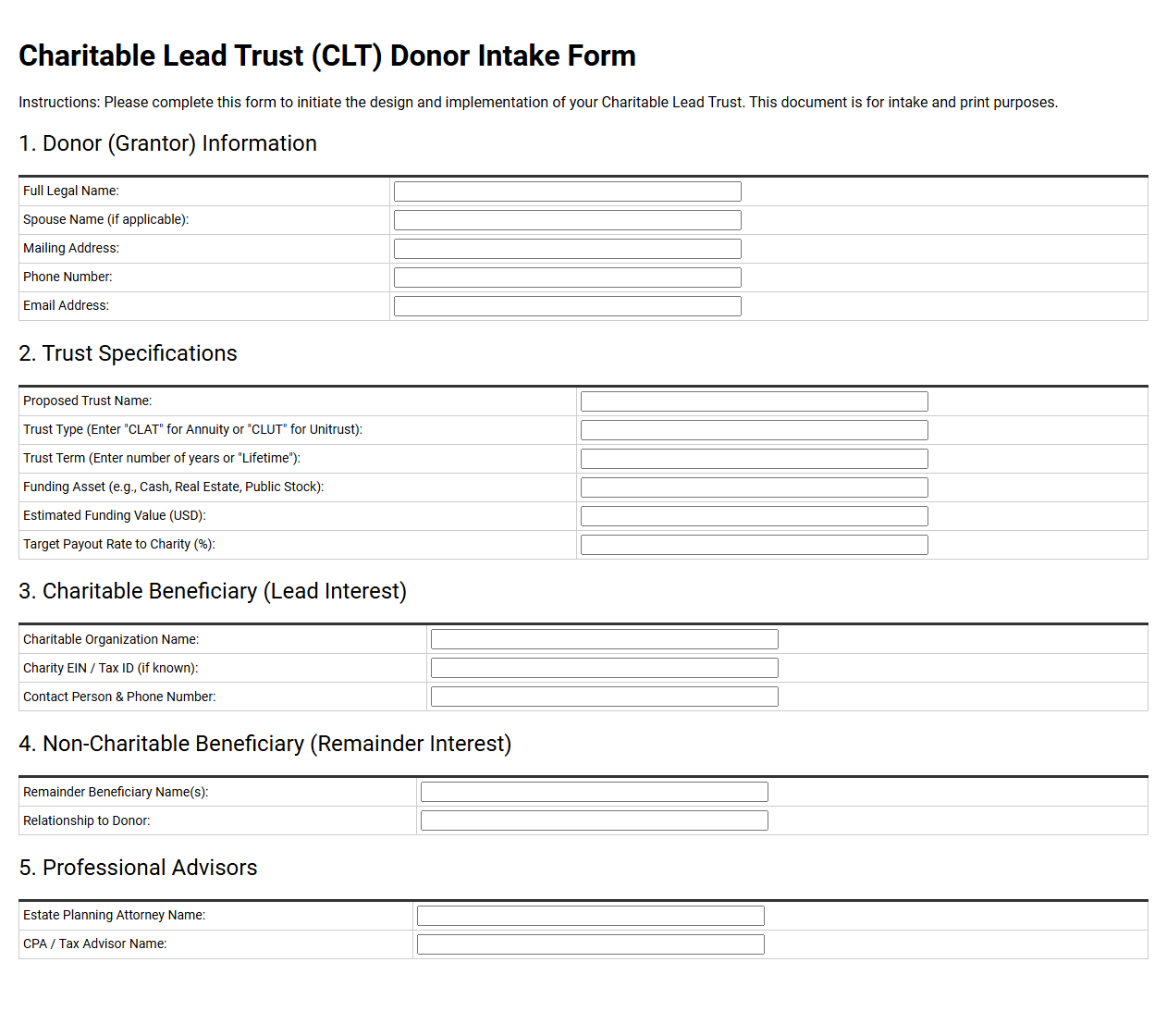
💾 Charitable Lead Trust Donor Intake Form .pdf
A Charitable Lead Trust donor intake form gathers critical information to establish a trust. It collects donor details, designated charity beneficiaries, asset funding specifications, and payout terms. This document streamlines the onboarding process, ensuring legal compliance and precise execution of the donor's philanthropic goals and financial planning strategies.
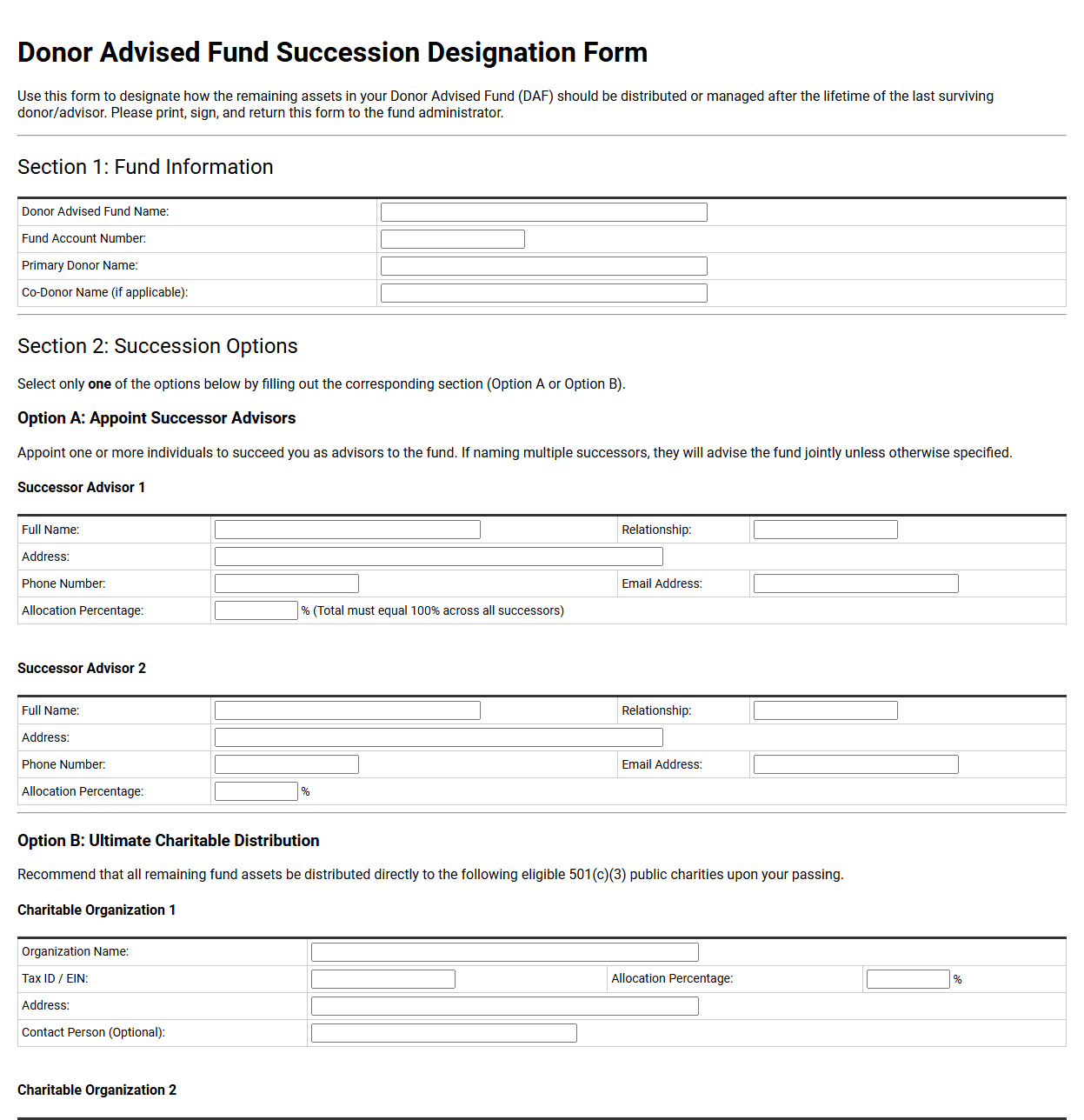
Donor Advised Fund Succession Designation Form
💾 Donor Advised Fund Succession Designation Form .pdf
A Donor Advised Fund Succession Designation Form allows donors to name successors or charitable beneficiaries for their fund. This document outlines how remaining assets are distributed or managed after the primary donor passes away. It ensures your philanthropic legacy continues smoothly, directing future grants according to your final wishes.
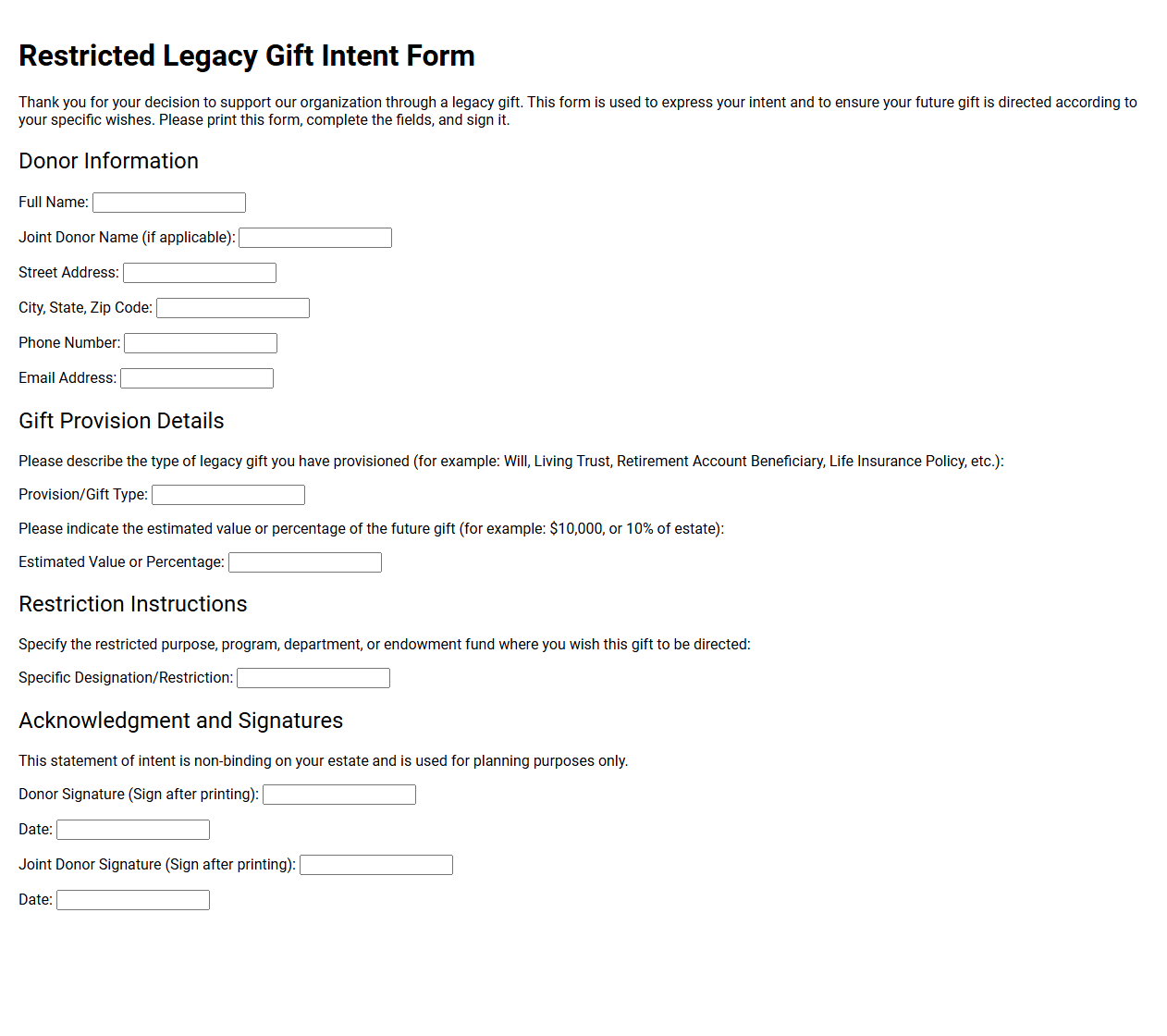
Restricted Legacy Gift Intent Form
💾 Restricted Legacy Gift Intent Form .pdf
A Restricted Legacy Gift Intent Form is a non-binding document outlining a donor's future estate plans. It directs specific assets toward designated programs, scholarships, or capital projects. This paperwork clarifies philanthropic goals, ensuring the receiving organization honors the donor's exact wishes while managing future restricted funds effectively.
Donor Planned Giving FAQ
What is donor planned giving?
Planned giving, also known as legacy giving, allows donors to make major gifts to non-profit organizations as part of their overall financial or estate planning. Unlike immediate cash donations, these gifts are deferred and typically distributed after the donor's lifetime, ensuring long-term support for the charity's mission.
What are the most common types of planned gifts?
Common planned gifts include bequests in wills or trusts, charitable gift annuities, and charitable remainder trusts. Donors can also designate a non-profit as a beneficiary of their life insurance policies or retirement accounts, providing flexible options to align with their financial goals and philanthropic vision.
Do planned gifts offer tax benefits for donors?
Yes, planned giving often provides significant tax advantages. Depending on the gift structure, donors may receive immediate income tax deductions, reduce or eliminate capital gains taxes on appreciated assets, and significantly lower estate taxes, allowing them to maximize the impact of their contribution to the organization.
Can a planned gift commitment be changed or revoked?
Many planned gifts, such as charitable bequests in a will or beneficiary designations, are fully revocable and can be updated at any time if your circumstances change. However, certain structures like charitable trusts or gift annuities are irrevocable, offering different tax advantages in exchange for a permanent commitment.
What assets can be used for planned giving?
Planned gifts can be funded using various assets beyond cash. This includes appreciated securities (stocks and bonds), real estate, retirement plan assets (like IRAs), life insurance policies, and tangible personal property. Utilizing these non-cash assets often yields highly favorable tax benefits for the donor while supporting the charity.
Disclaimer:
The documents and templates provided on this page are for informational and illustrative purposes only. They do not constitute professional, legal, or financial advice, and should not be relied upon as such. Because individual circumstances and regulatory requirements vary, these materials may not be suitable for your specific needs. We recommend consulting with a qualified professional before adapting or using any of these examples for official or commercial purposes.