
Resident Feedback and Satisfaction Survey Template - Evaluating Resident and Occupant Experience Metrics
Housing providers often struggle to capture objective, actionable data on resident satisfaction, leaving long-term property performance to guesswork. While standard capital reserves and federal housing grants typically fund physical building improvements, aligning these expenditures with actual occupant needs remains a persistent challenge.
Utilizing a standardized evaluation tool grants operators the precise insights needed to optimize retention and asset value. However, a key stipulation remains: feedback mechanisms must be scientifically structured to ensure statistical validity. For instance, measuring perceived comfort after major HVAC or green retrofits provides the concrete data required to justify future investments. Below, we introduce our Resident Feedback and Satisfaction Survey Template and outline the key metrics for evaluating the occupant experience.
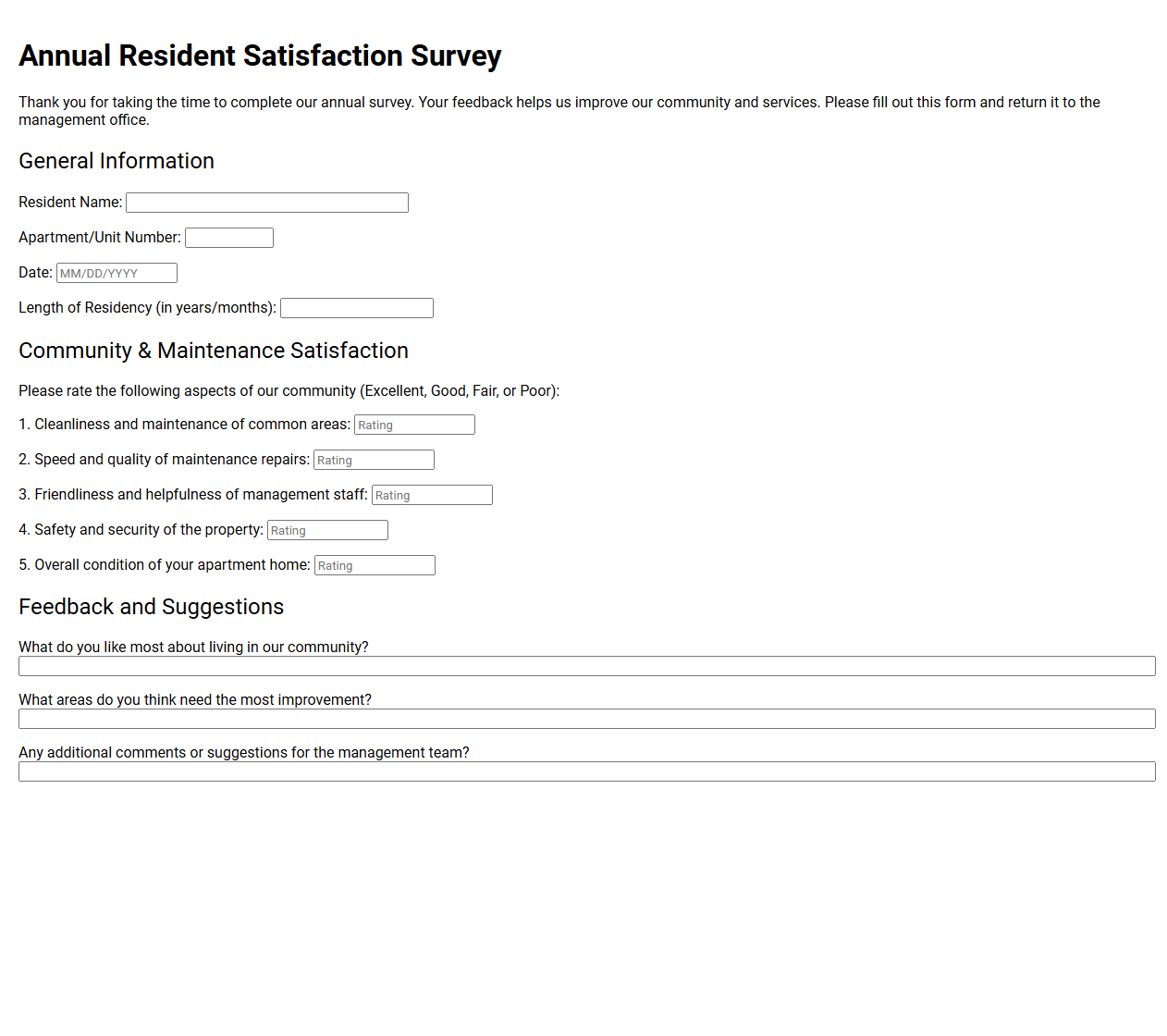
Annual Resident Satisfaction Survey Form
💾 Annual Resident Satisfaction Survey Form .pdf
The Annual Resident Satisfaction Survey Form is a crucial feedback tool used by property managers to evaluate community happiness. This document gathers feedback on maintenance response times, staff professionalism, amenities, and overall living conditions, helping management identify areas for improvement and implement targeted upgrades to enhance the neighborhood living experience.
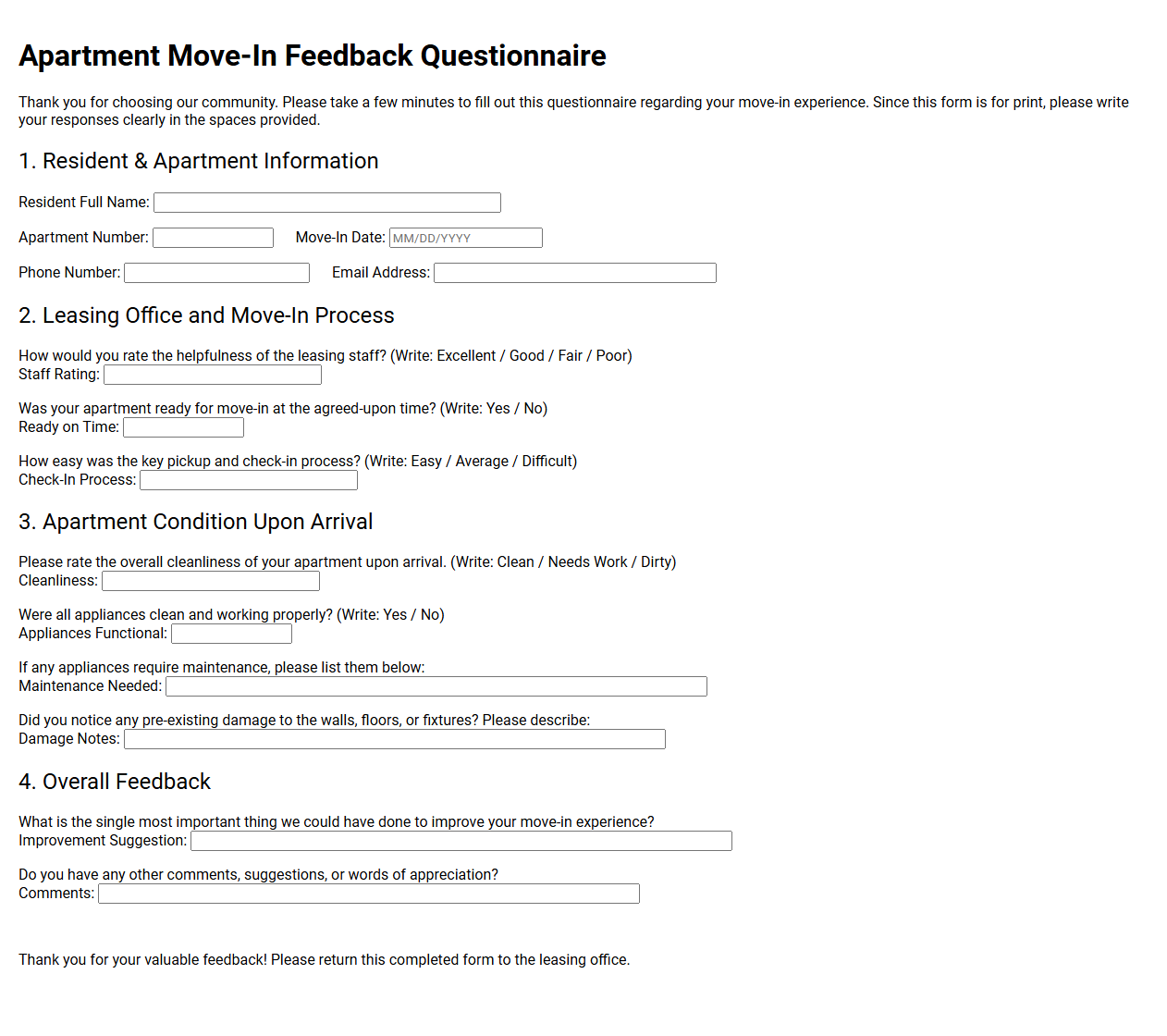
Apartment Move-In Feedback Questionnaire
💾 Apartment Move-In Feedback Questionnaire .pdf
An apartment move-in feedback questionnaire is a standard tool used by property managers to assess a new tenant's transition. It gathers initial impressions regarding unit cleanliness, appliance functionality, and staff responsiveness. This document helps landlords address maintenance issues quickly, ensuring high tenant satisfaction from the very first day of occupancy.
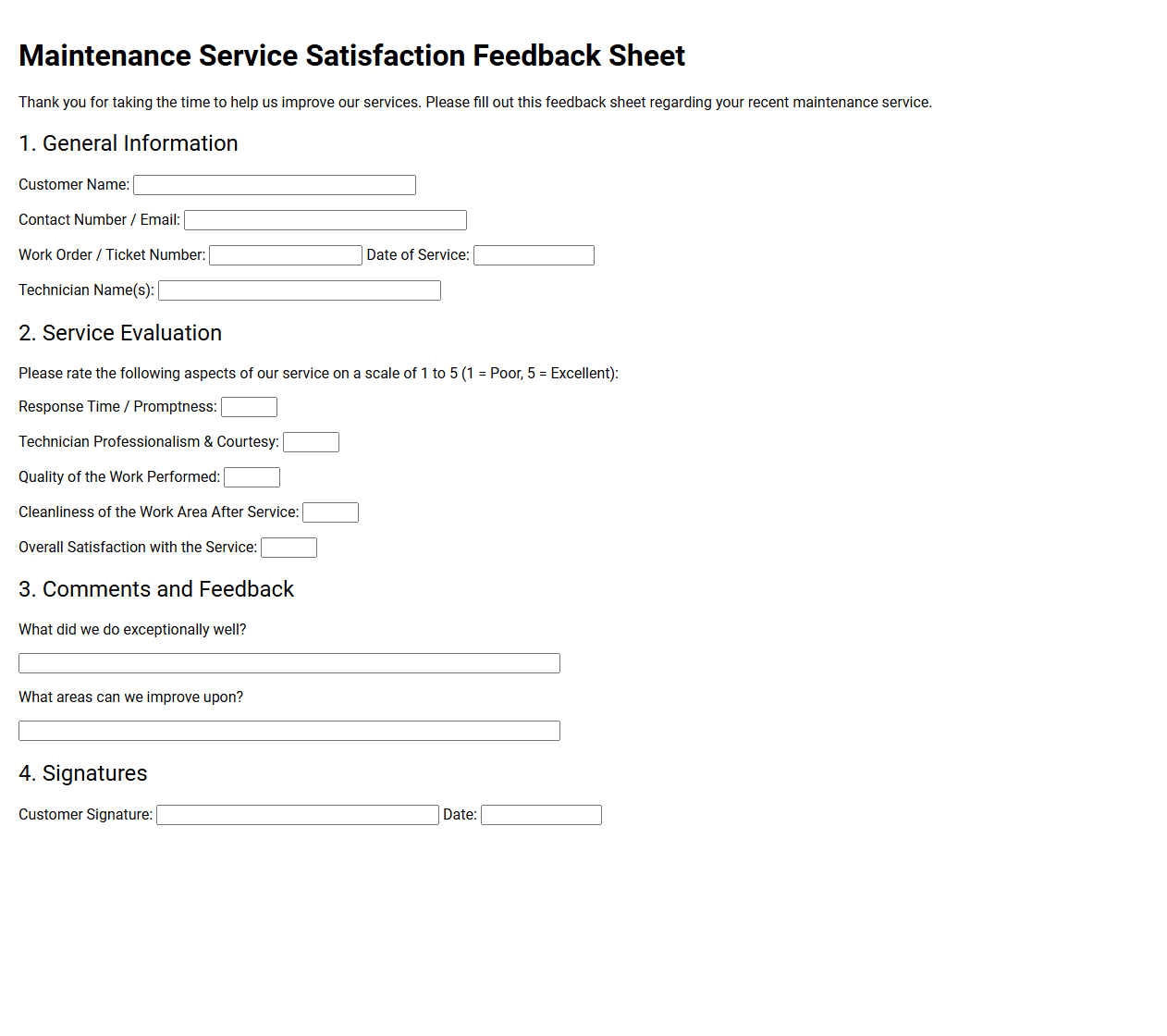
Maintenance Service Satisfaction Feedback Sheet
💾 Maintenance Service Satisfaction Feedback Sheet .pdf
A maintenance service satisfaction feedback sheet evaluates the quality of completed repairs and upkeep tasks. This document gathers vital client opinions regarding technician professionalism, punctuality, and overall work standards. Organizations analyze these responses to improve operational efficiency, resolve recurring issues, and ensure long-term client happiness with the provided services.
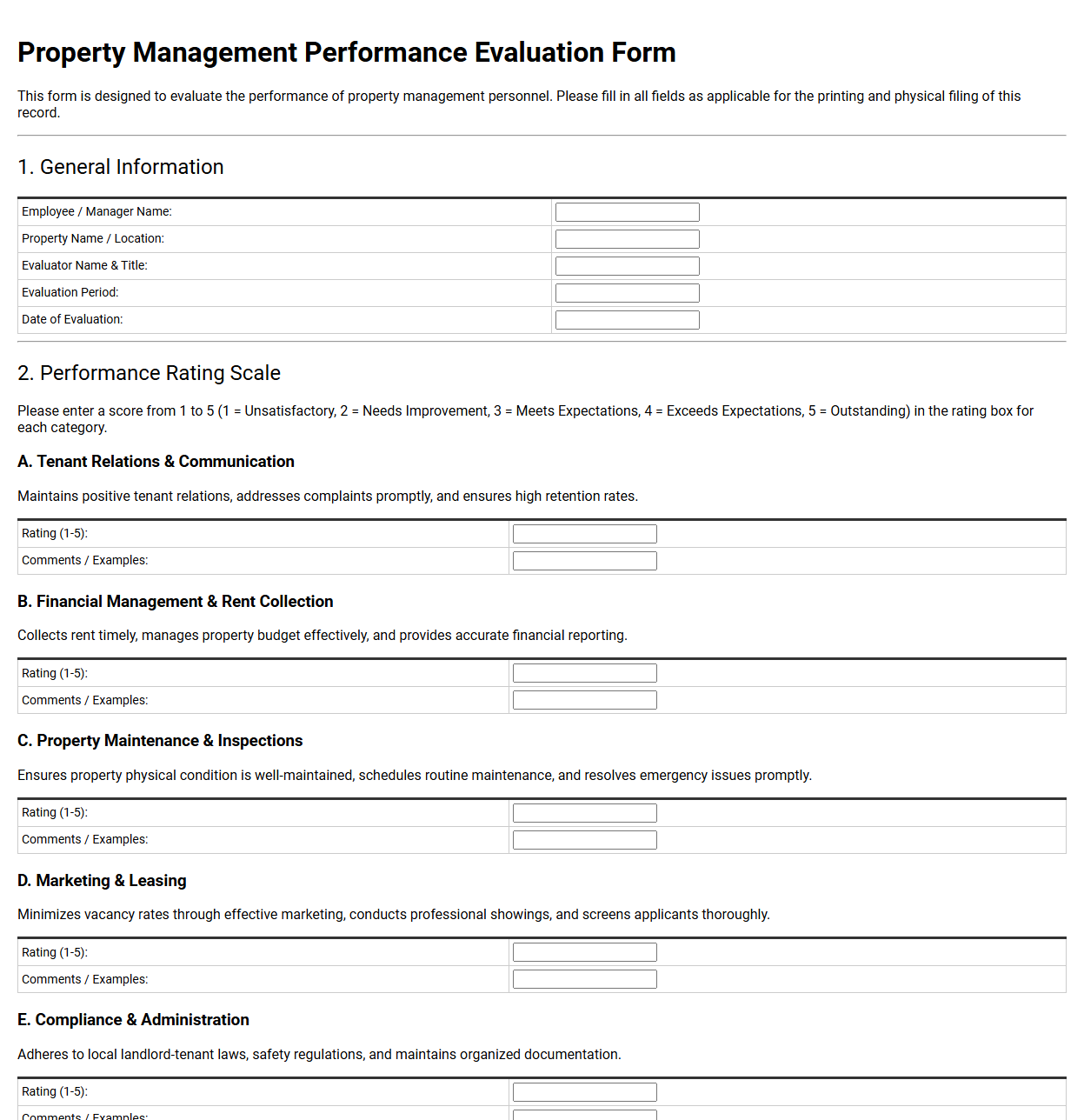
Property Management Performance Evaluation Form
💾 Property Management Performance Evaluation Form .pdf
A property management performance evaluation form assesses the efficiency of property managers. It rates key areas like tenant relations, maintenance oversight, financial reporting, and policy compliance. This structured assessment helps property owners identify operational strengths, address administrative gaps, and ensure the real estate asset remains highly profitable through objective grading.
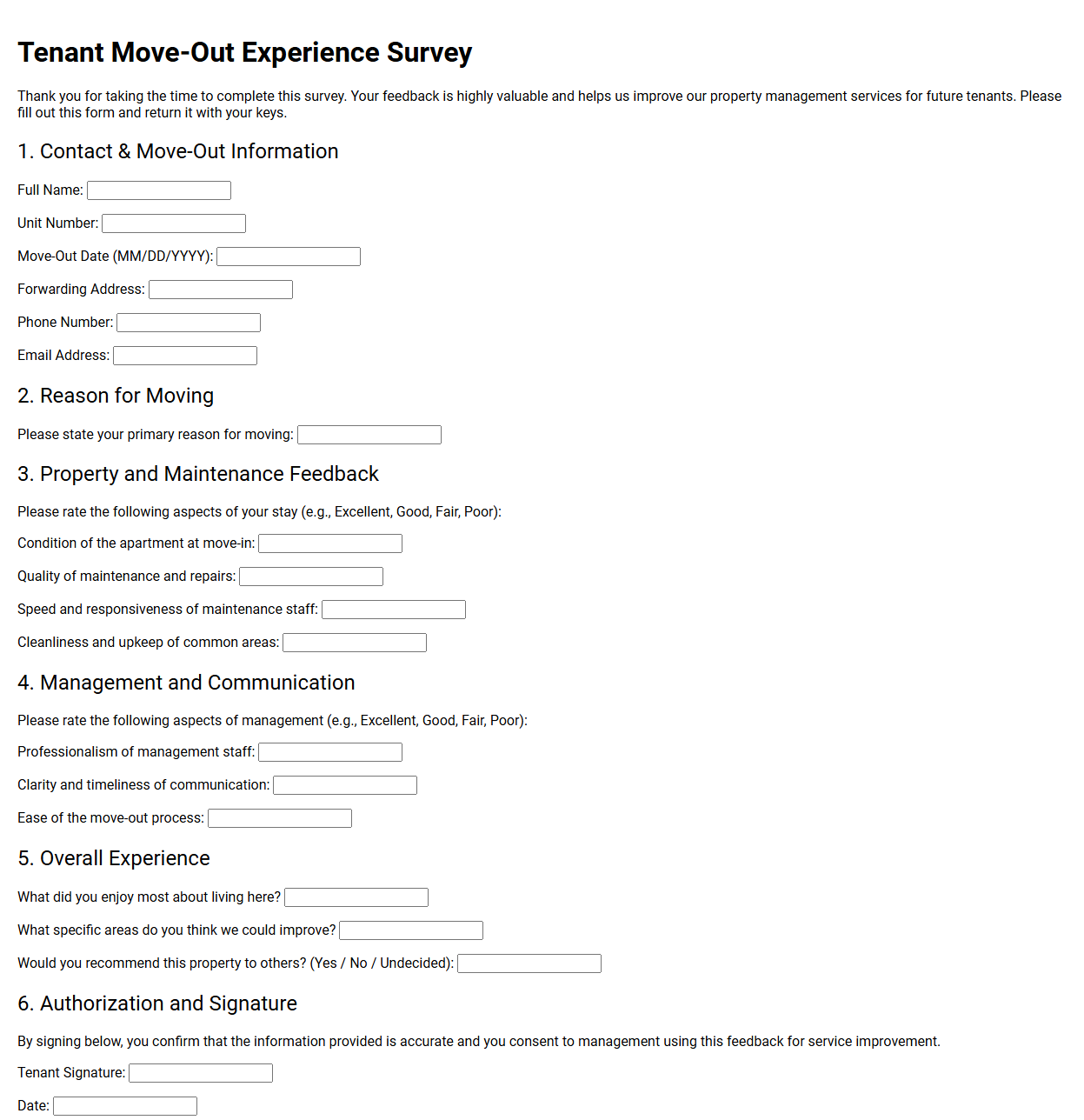
Tenant Move-Out Experience Survey
💾 Tenant Move-Out Experience Survey .pdf
A tenant move-out experience survey is a valuable feedback tool used by property managers. It gathers insights on the moving process, property condition, and staff interaction. This document helps landlords identify key areas for operational improvement, ensuring better services and higher satisfaction for future residents during their final departure.
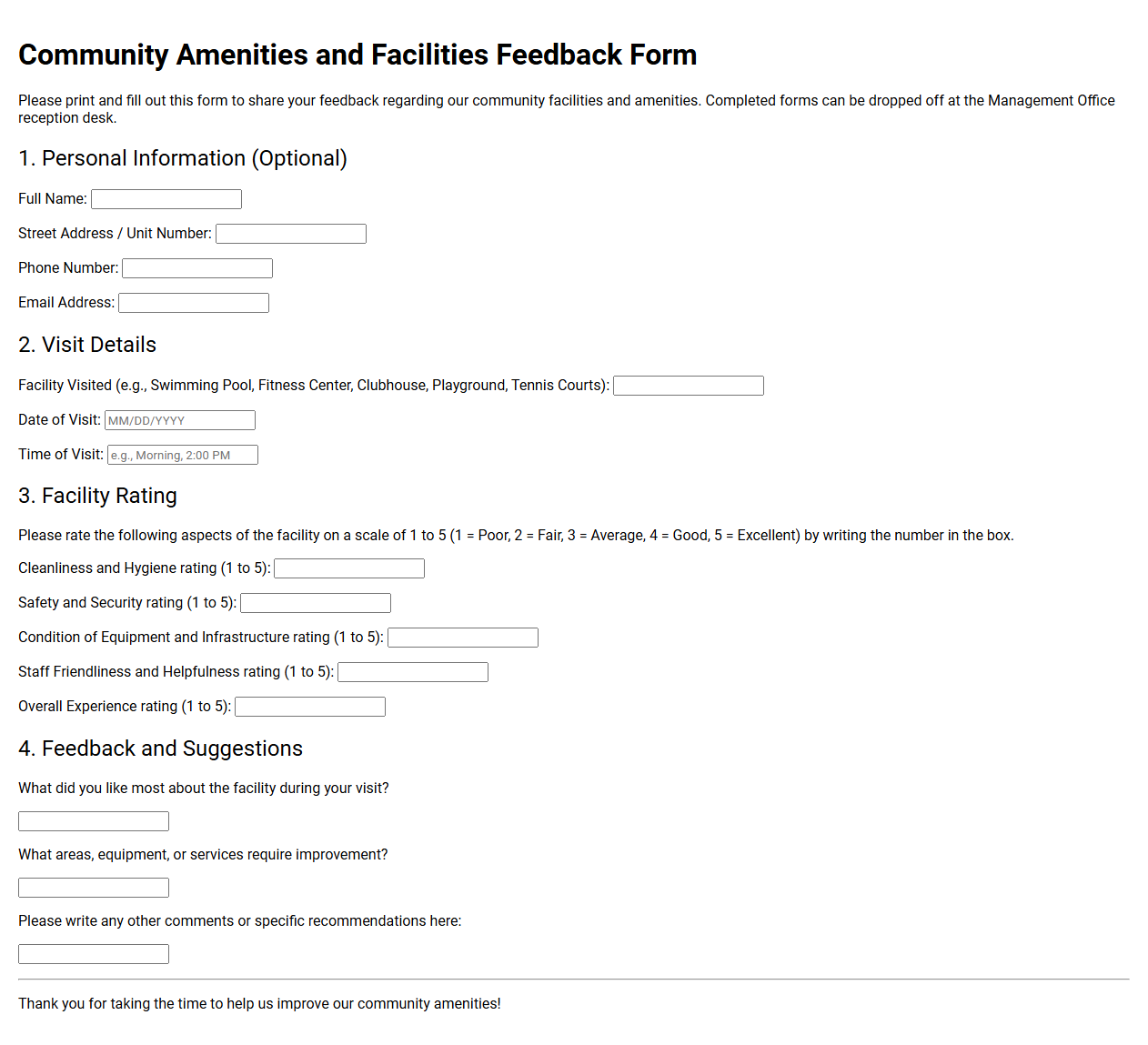
Community Amenities and Facilities Feedback Form
💾 Community Amenities and Facilities Feedback Form .pdf
A community amenities and facilities feedback form is a structured document used by neighborhood associations to gather resident input regarding shared spaces. It collects evaluations on maintenance, safety, and accessibility of parks, pools, or fitness centers. These insights guide management in prioritizing repairs and planning future upgrades for the neighborhood.
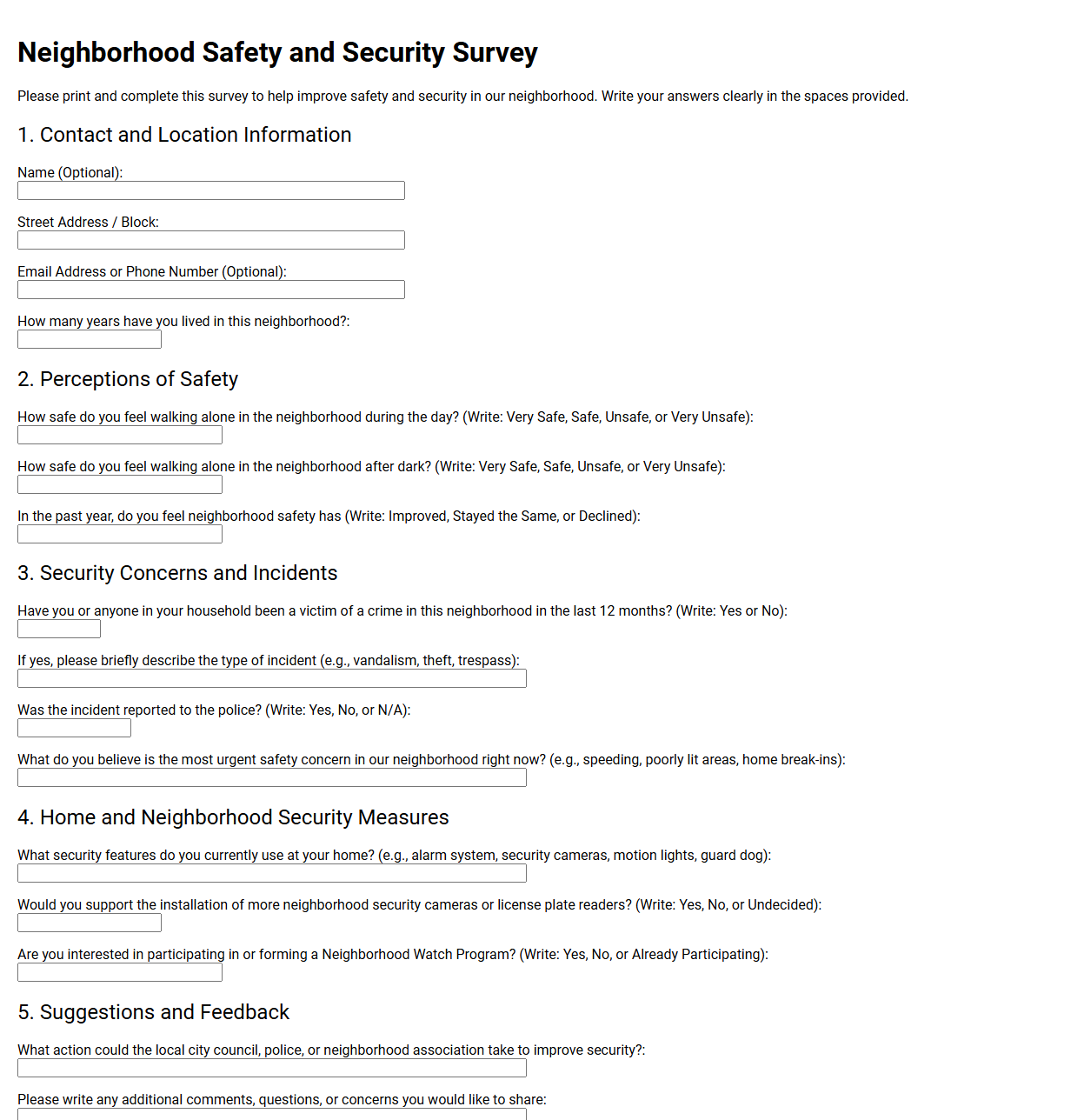
Neighborhood Safety and Security Survey
💾 Neighborhood Safety and Security Survey .pdf
This structured assessment gathers resident feedback regarding local crime concerns, street lighting, and emergency preparedness. It helps community leaders identify vulnerable areas, evaluate policing effectiveness, and implement targeted safety improvements. By collecting anonymous perspectives on daily security experiences, the document fosters collaborative efforts to build a safer, more resilient environment.
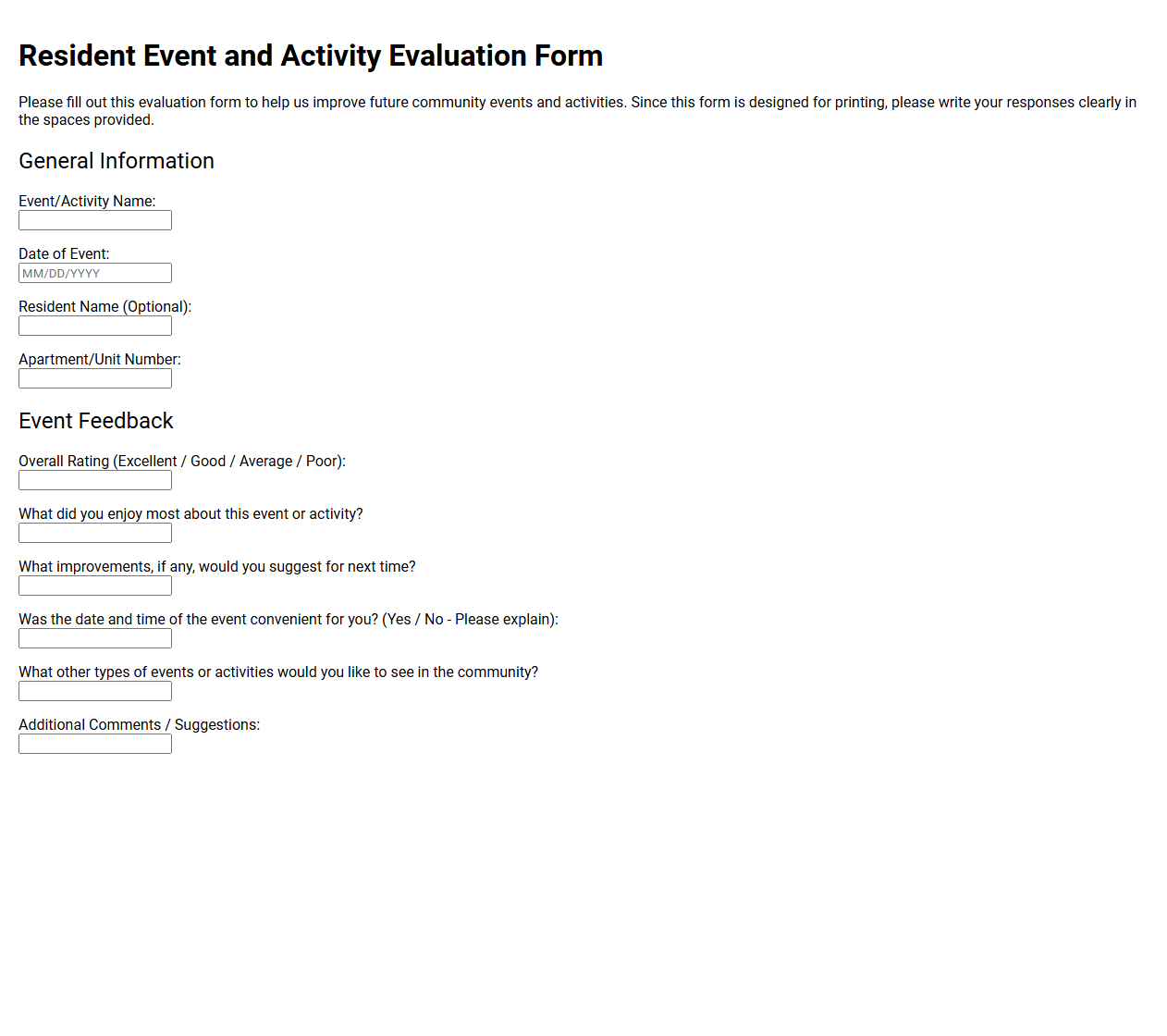
Resident Event and Activity Evaluation Form
💾 Resident Event and Activity Evaluation Form .pdf
A resident event and activity evaluation form gathers valuable feedback from community members after gatherings or programs. This document typically assesses participant satisfaction, collects suggestions for future entertainment, and rates venue quality. Property managers use this data to improve community engagement and plan successful future social gatherings.
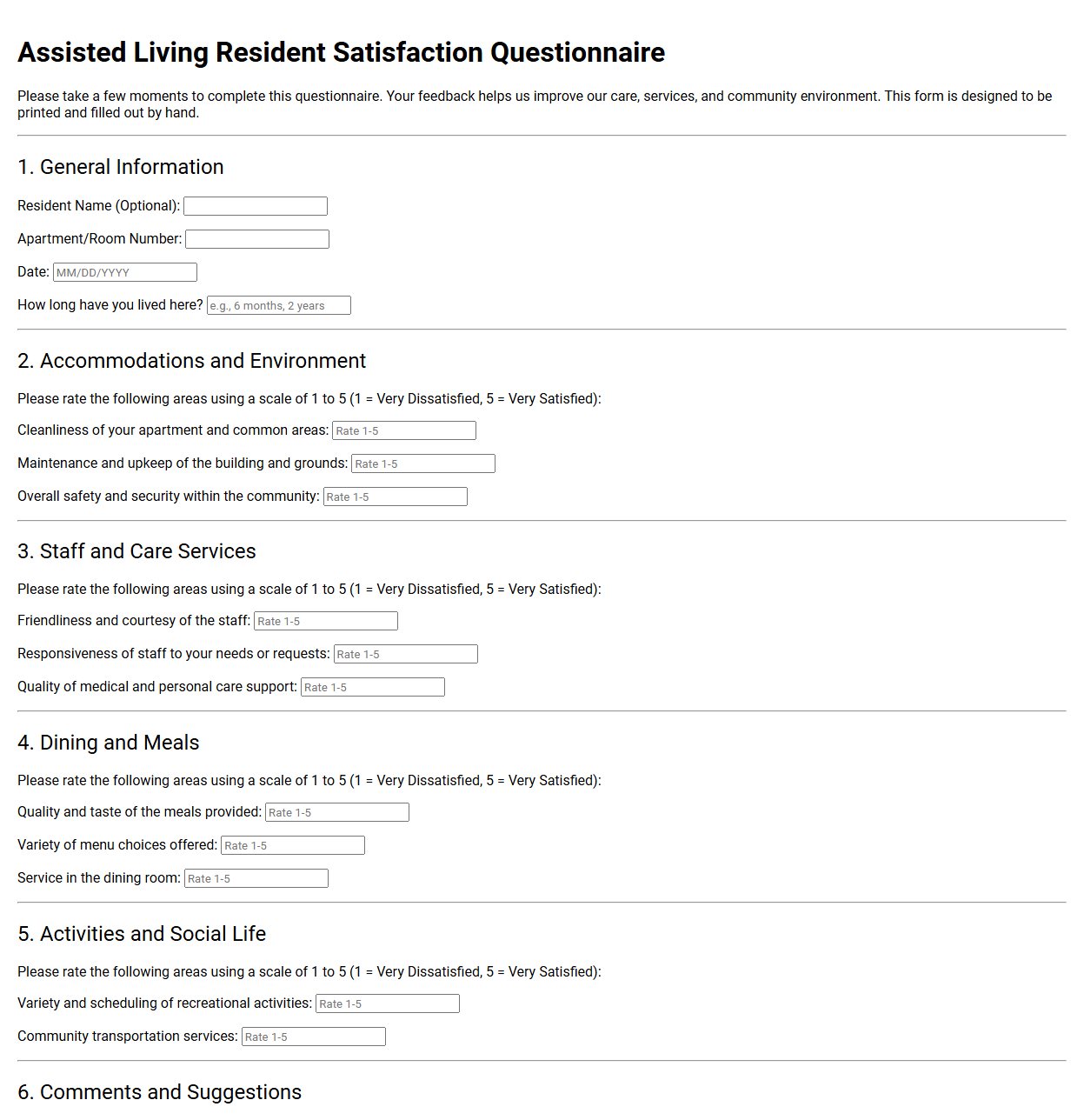
Assisted Living Resident Satisfaction Questionnaire
💾 Assisted Living Resident Satisfaction Questionnaire .pdf
An assisted living resident satisfaction questionnaire gathers feedback regarding daily care, dining quality, safety, and recreational activities. This valuable tool helps administrators evaluate staff performance and facility amenities, ensuring quality support. By identifying areas needing improvement, these surveys help enhance the overall health and happiness of all seniors in care.
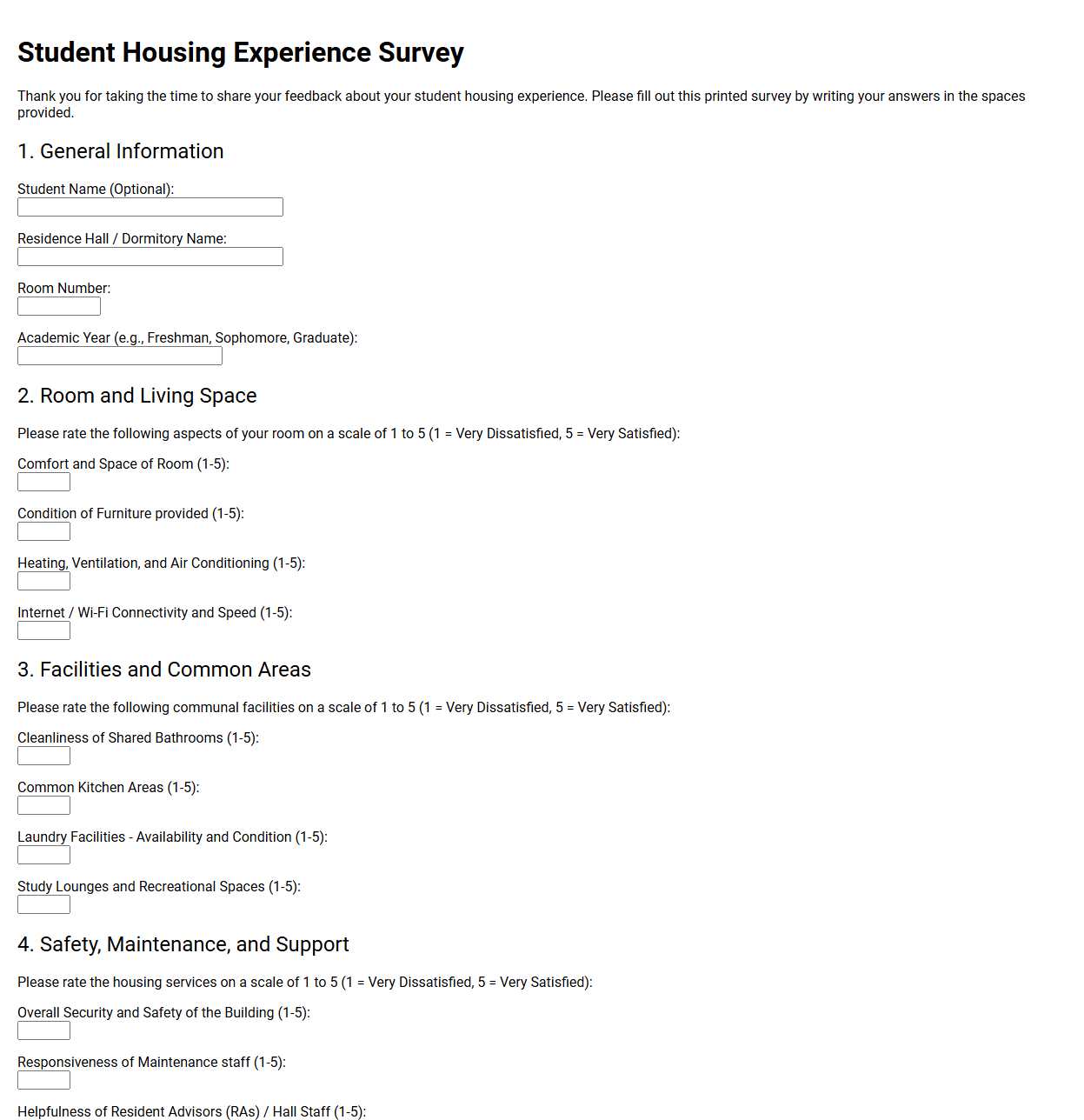
Student Housing Experience Survey Template
💾 Student Housing Experience Survey Template .pdf
A student housing experience survey template helps universities evaluate residential life. It gathers feedback on facilities, roommates, staff responsiveness, and safety. This tool identifies areas needing improvement, ensuring campuses maintain comfortable, supportive living environments. Administering this questionnaire aids in making data-driven decisions for future accommodation upgrades and services.
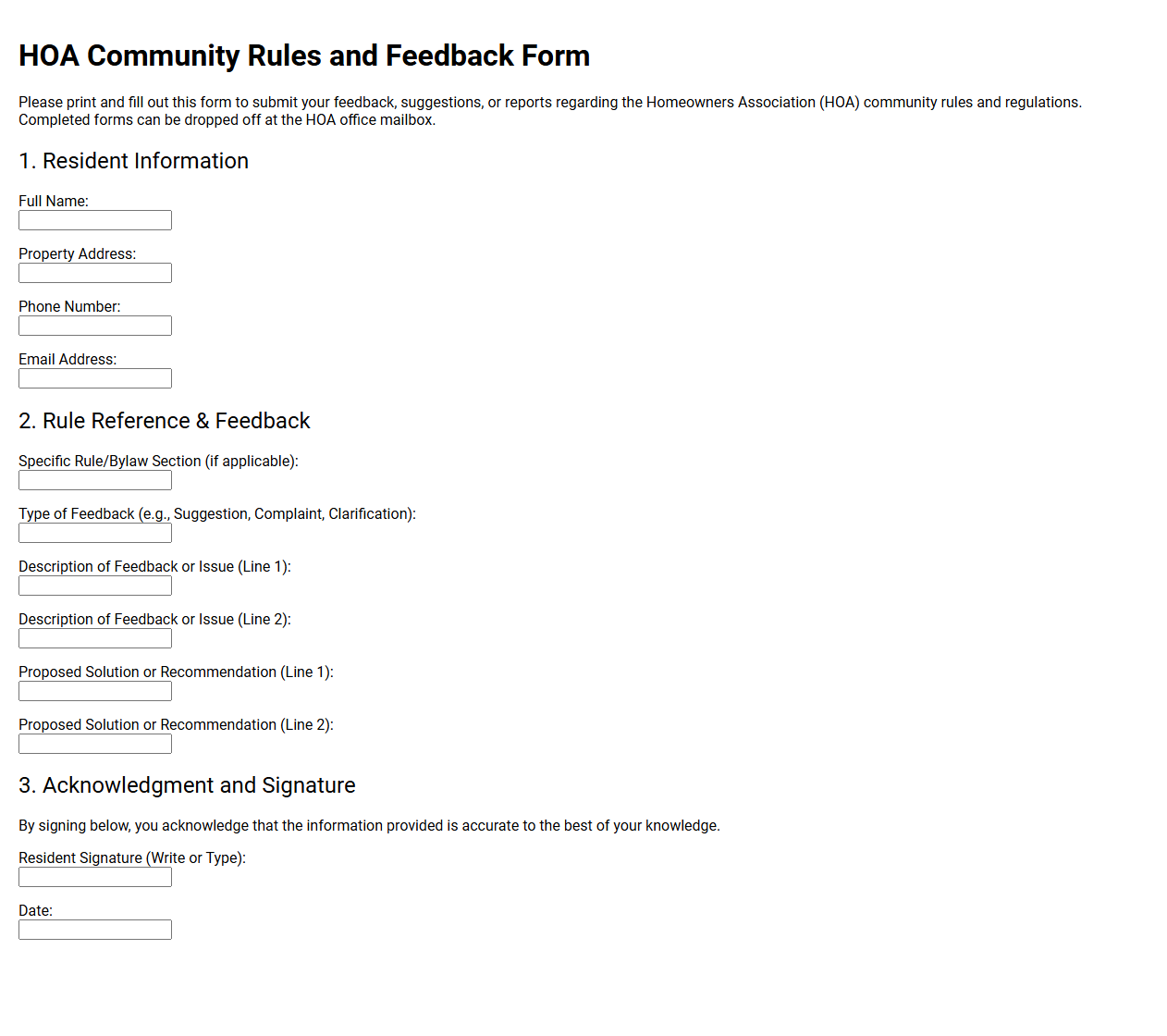
HOA Community Rules and Feedback Form
💾 HOA Community Rules and Feedback Form .pdf
This document outlines neighborhood guidelines, covering parking, landscaping, and noise regulations to maintain property values. It includes a structured questionnaire where residents share input, report violations, or suggest amendments. Board members review these submissions during monthly meetings to ensure policies reflect community needs and foster a harmonious living environment.
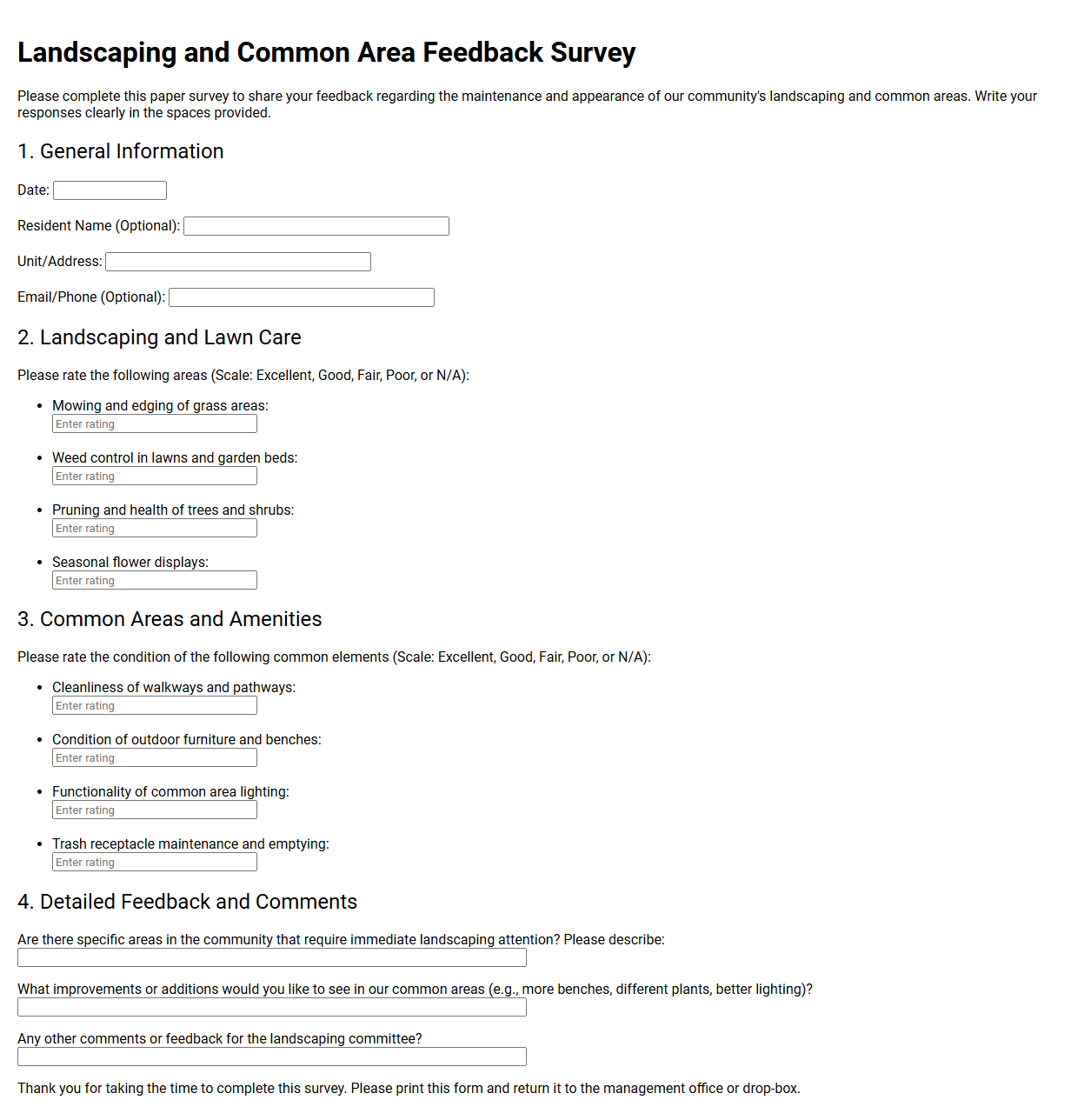
Landscaping and Common Area Feedback Survey
💾 Landscaping and Common Area Feedback Survey .pdf
This comprehensive survey gathers resident feedback regarding neighborhood upkeep, green spaces, and shared facilities. It evaluates maintenance standards, lighting, safety, and recreational areas. Property managers analyze this valuable data to prioritize future budget allocations, schedule repairs, and ultimately enhance overall community satisfaction across all common outdoor and indoor environments.
Parking and Vehicle Policy Satisfaction Form
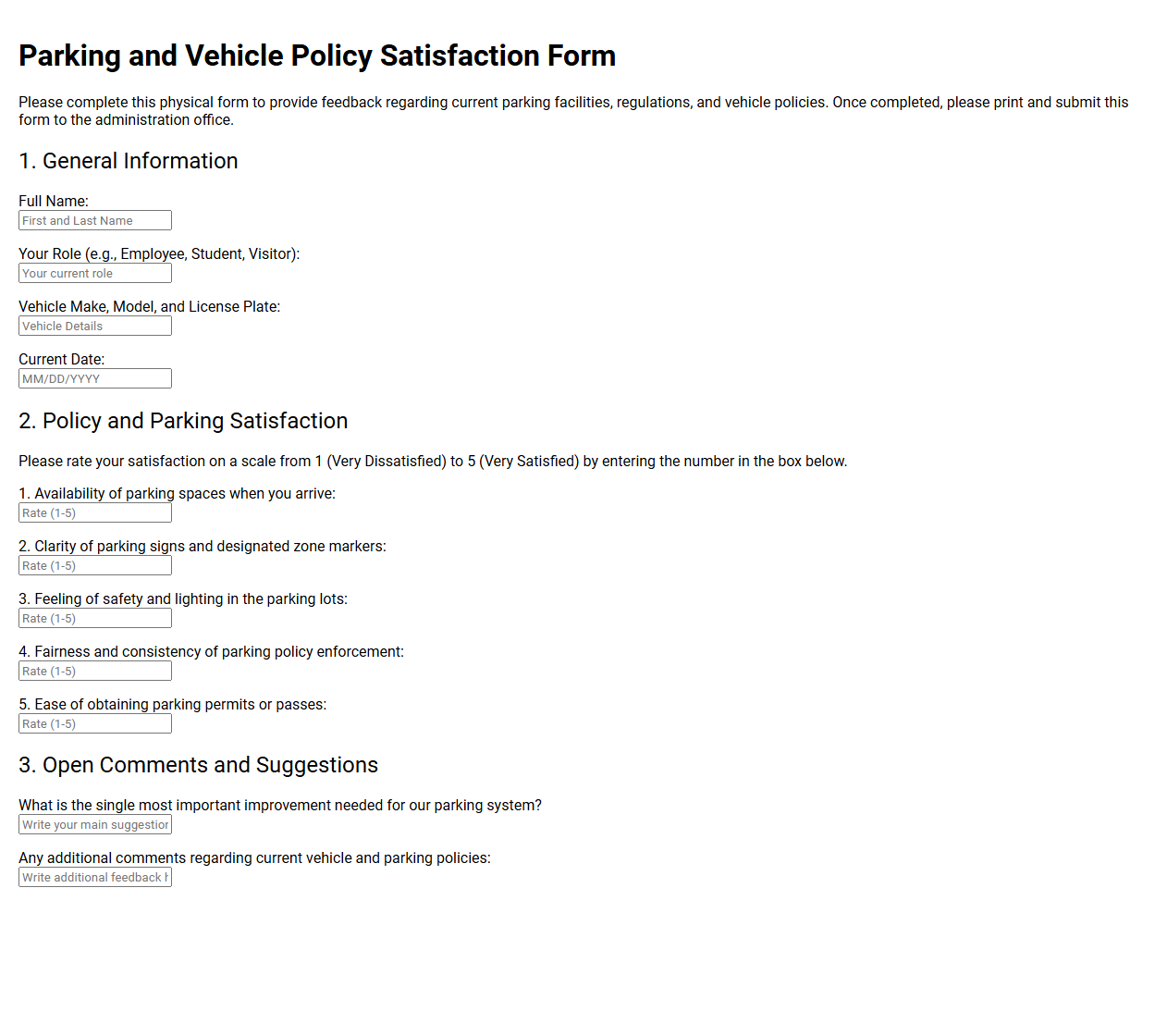
💾 Parking and Vehicle Policy Satisfaction Form .pdf
This evaluation tool gathers employee or resident feedback regarding onsite parking regulations, permit distribution, and lot conditions. It helps management assess safety, spacing, and policy clarity. Collecting this structured data allows organizations to identify key areas for improvement, adjust enforcement practices, and successfully enhance the overall daily experience for all commuters.
Resident Feedback and Satisfaction Survey FAQ
What is the primary purpose of a Resident Feedback and Satisfaction Survey?
This survey is a strategic tool designed to gauge community satisfaction regarding property management, amenities, maintenance, and overall living conditions. It helps housing administrators identify areas of improvement, foster community engagement, and make data-driven decisions to enhance the quality of life for all residents.
How does collecting resident feedback benefit property management?
Gathering structured resident feedback allows property managers to proactively address tenant concerns before they escalate. It provides actionable insights into community sentiment, helps prioritize capital improvement projects, measures staff performance, and ultimately increases tenant retention rates by demonstrating that management values resident opinions and experiences.
What key areas of residential living are typically assessed in this satisfaction survey?
The survey comprehensively evaluates several core dimensions of the resident experience. These typically include the responsiveness and quality of maintenance services, the cleanliness and safety of common areas, the friendliness of administrative staff, the utility of community amenities, and overall satisfaction with neighborhood quietness and security.
Why is anonymity important in a resident satisfaction survey?
Anonymity encourages residents to provide honest, candid, and unbiased feedback without fear of retaliation or awkward interactions with property staff. It increases response rates and ensures the collected data accurately reflects genuine community sentiment, which is vital for making authentic, impactful improvements to the residential environment.
How are the results of a resident satisfaction survey typically utilized?
Property administrators analyze the compiled survey data to identify trends, benchmark performance, and allocate budgets effectively. The findings serve as a roadmap for operational upgrades, staff training programs, and community policy adjustments, ensuring that future management efforts align directly with the expressed needs and preferences of the residents.
Disclaimer:
The documents and templates provided on this page are for informational and illustrative purposes only. They do not constitute professional, legal, or financial advice, and should not be relied upon as such. Because individual circumstances and regulatory requirements vary, these materials may not be suitable for your specific needs. We recommend consulting with a qualified professional before adapting or using any of these examples for official or commercial purposes.