
Complaint and Feedback Resolution Form Template - Standardizing Issue Management for Clients and End-Users
Managing disorganized client feedback often paralyzes support teams, leaving them reacting to chaos rather than resolving systematic issues. While standard funding sources and capital budgets prioritize client acquisition, the operational infrastructure for retention is frequently underfunded. Implementing a standardized intake mechanism grants organizations immediate operational clarity and safeguards client relationships. However, a key stipulation remains: these tools must systematically categorize data to prevent administrative bottlenecks. Utilizing frameworks aligned with ISO 10002 quality management standards ensures your process meets global benchmarks. Below, we introduce our Complaint and Feedback Resolution Form Template, detailing its structure, deployment, and integration strategies.
Client Complaint Intake Form
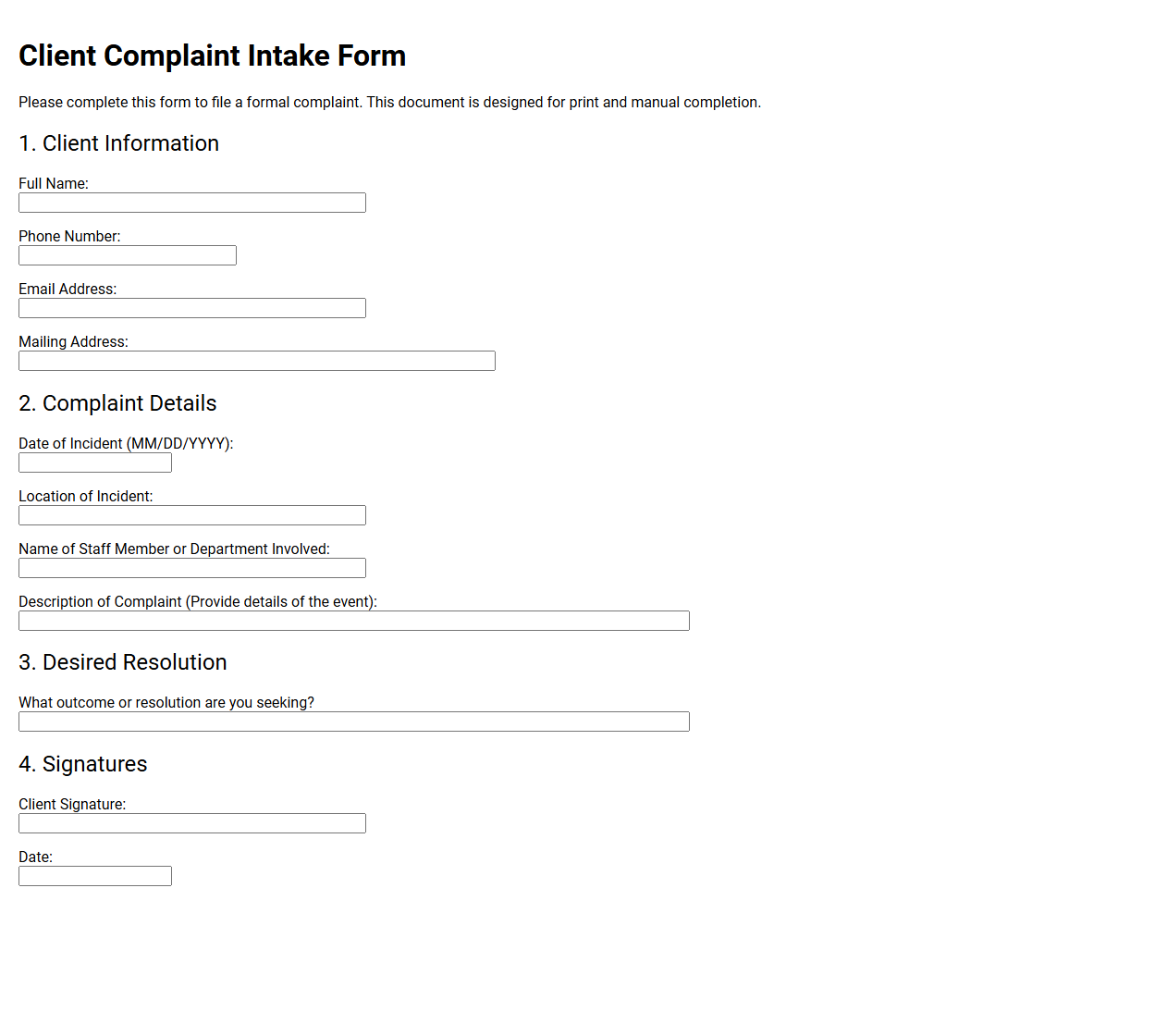
💾 Client Complaint Intake Form .pdf
A client complaint intake form systematically records customer grievances. This document captures vital contact details, specific incident descriptions, and desired resolutions. It serves as a structured tool for support teams to track, investigate, and resolve issues promptly, ensuring consistent service recovery and helping organizations improve overall customer satisfaction.
Customer Feedback Submission Form
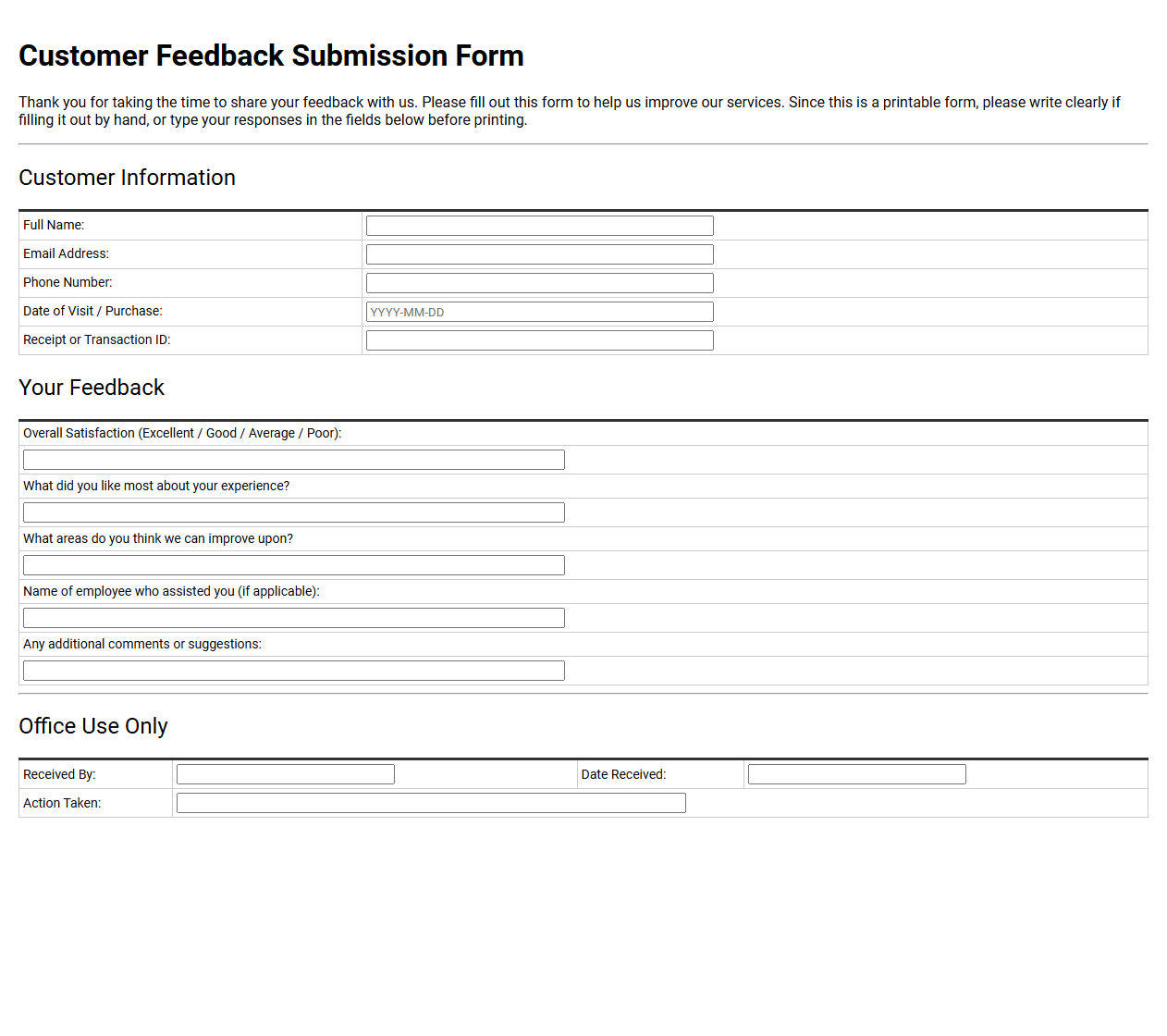
💾 Customer Feedback Submission Form .pdf
A customer feedback submission form is a vital tool used by businesses to gather insights directly from consumers. This structured document collects user ratings, written suggestions, and contact information. Organizations analyze this valuable data to improve services, refine products, and resolve customer issues, ultimately enhancing overall satisfaction and brand loyalty.
Complaint Investigation Worksheet Template
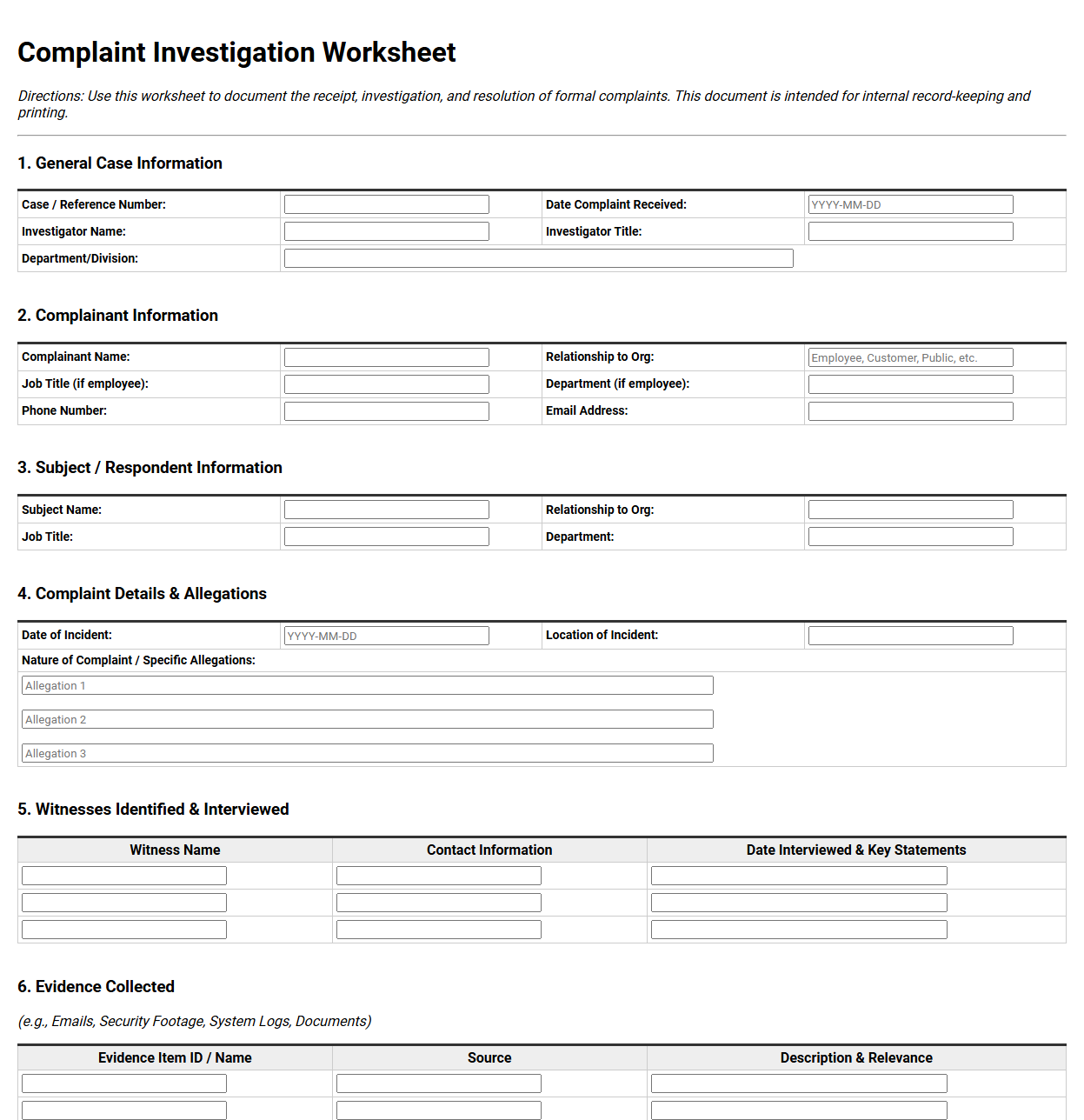
💾 Complaint Investigation Worksheet Template .pdf
A complaint investigation worksheet template provides a structured framework for organizations to document, analyze, and resolve grievances. This critical tool guides investigators through recording incident details, gathering evidence, interviewing witnesses, and establishing root causes. It ensures consistent tracking and thorough resolution of issues to maintain compliance and improve internal operations.
Feedback Resolution Action Plan
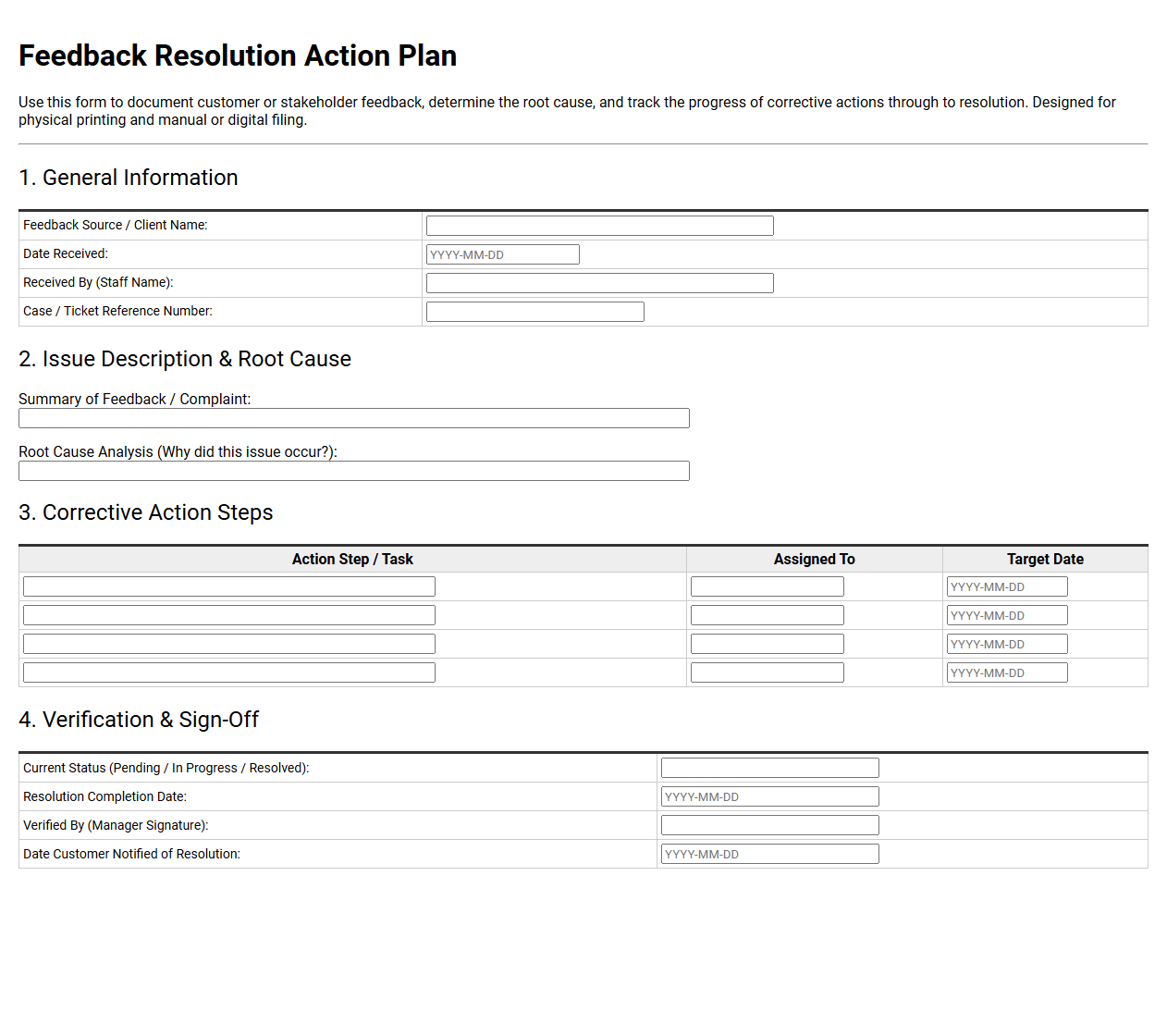
💾 Feedback Resolution Action Plan .pdf
A Feedback Resolution Action Plan is a structured document used by organizations to address, track, and resolve stakeholder inputs. It outlines corrective measures, assigns responsibilities, establishes timelines, and defines success metrics. This systematic tool guides teams to transform criticisms into actionable improvements, fostering trust and securing long-term operational success.
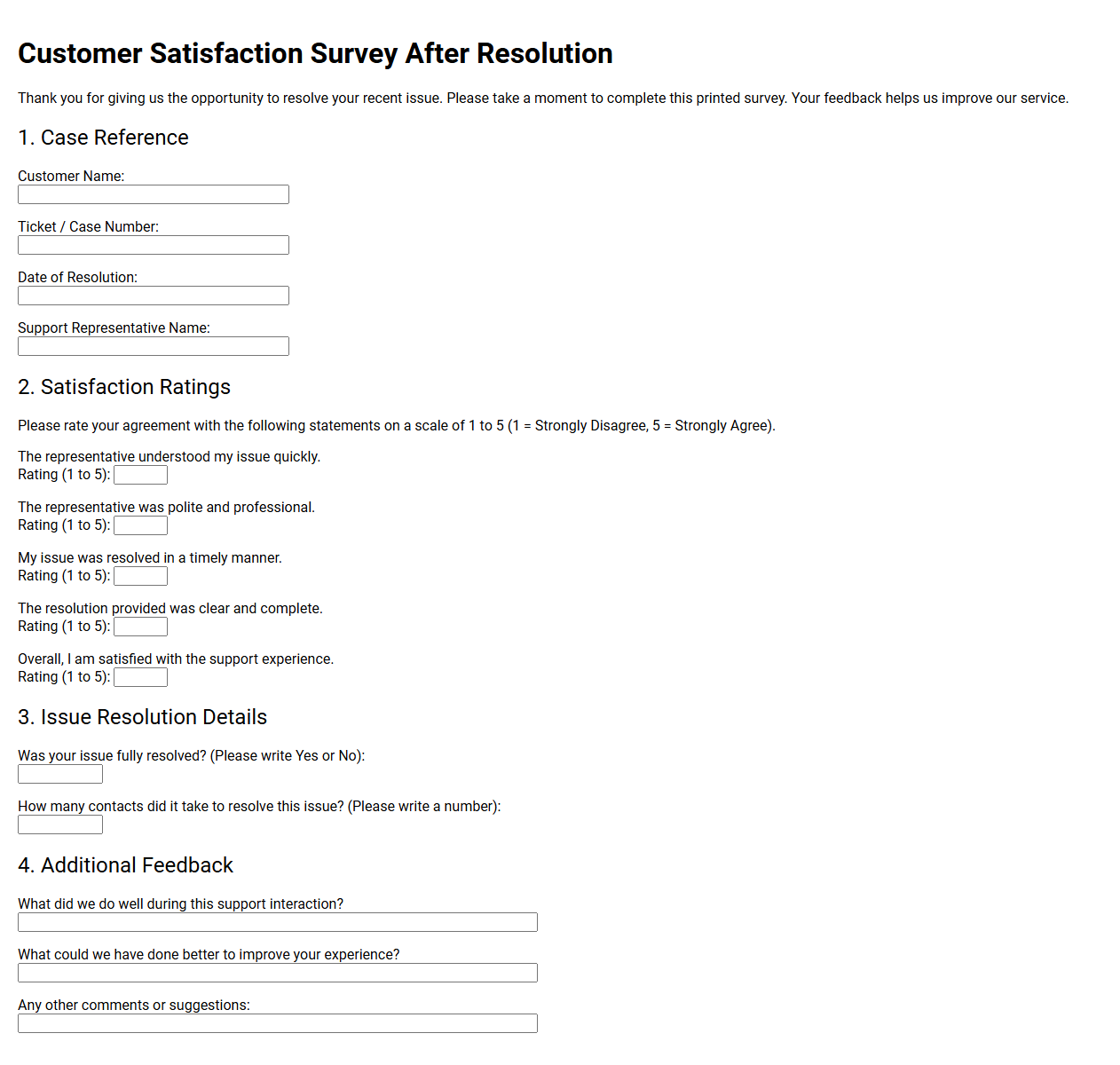
Customer Satisfaction Survey After Resolution
💾 Customer Satisfaction Survey After Resolution .pdf
A customer satisfaction survey after resolution evaluates the support experience once an issue is successfully closed. This standard document gathers direct feedback on agent performance, resolution speed, and overall quality. Businesses use these valuable insights to refine service workflows, identify training needs, and ensure long-term customer loyalty.
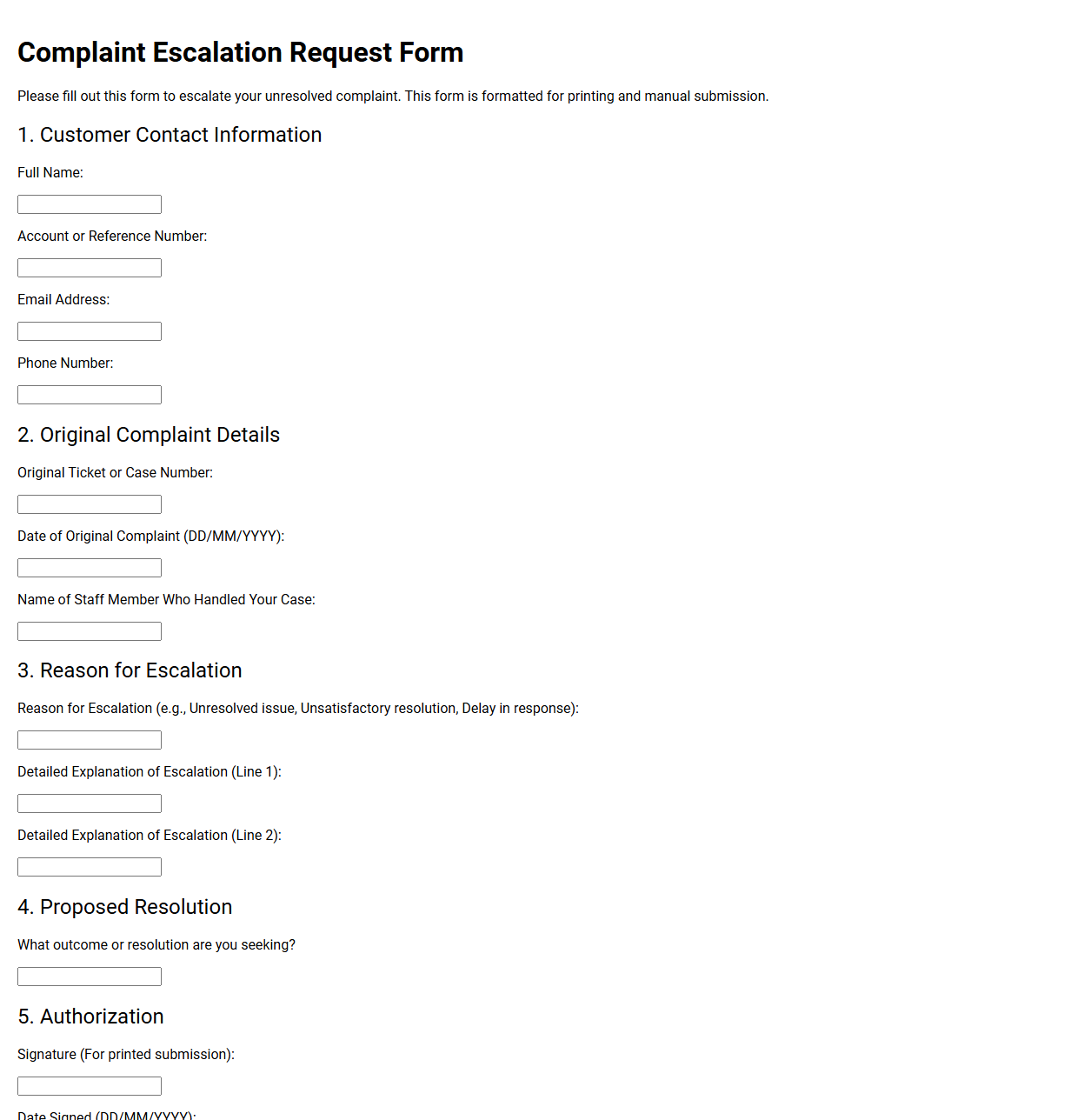
Complaint Escalation Request Form
💾 Complaint Escalation Request Form .pdf
A complaint escalation request form is a formal document used to submit unresolved grievances to higher management. It captures crucial details, including the original ticket number, customer contact information, and a summary of prior resolution attempts. This structured record ensures your issue receives a thorough, secondary review for fair resolution.
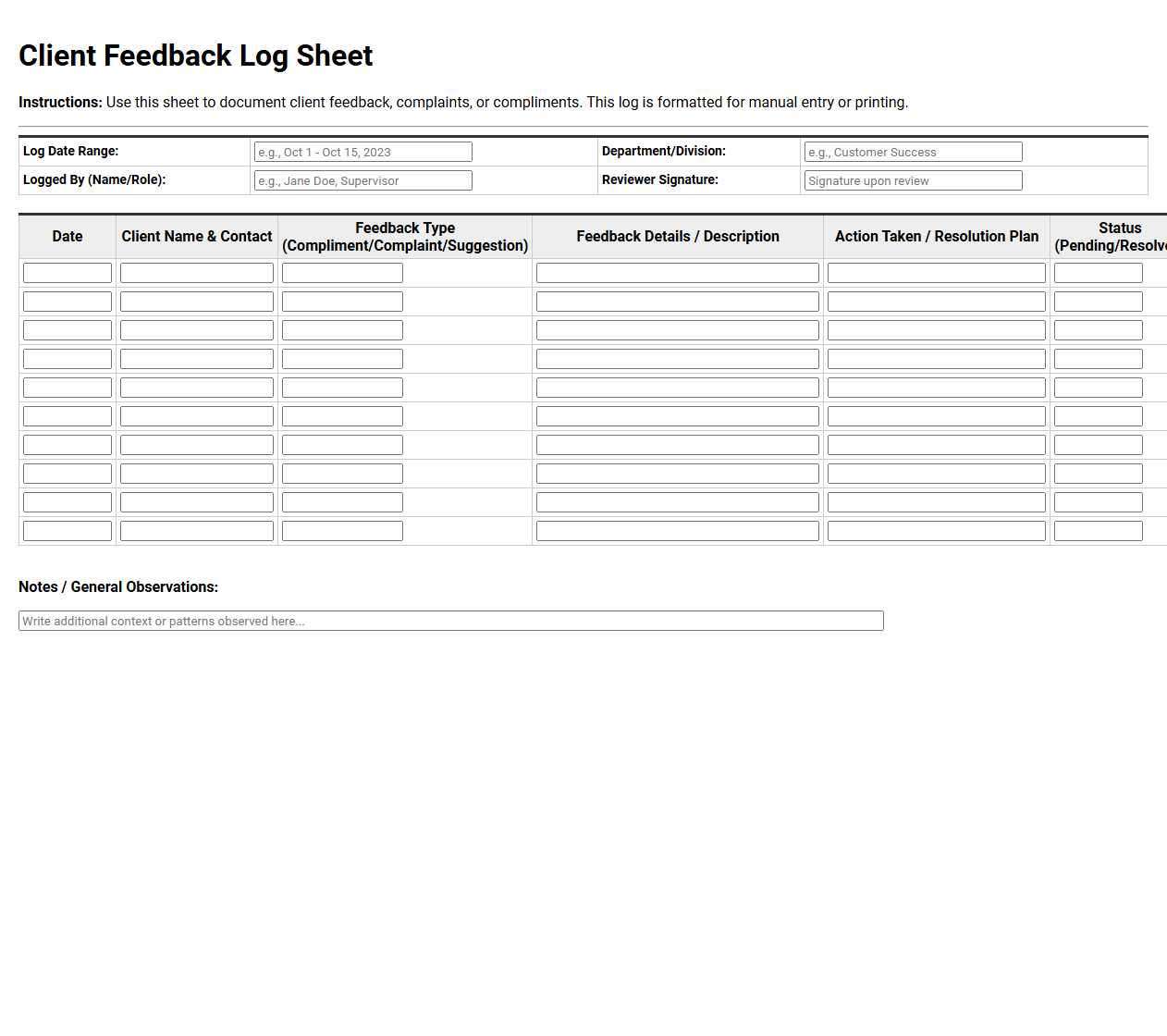
Client Feedback Log Sheet
💾 Client Feedback Log Sheet .pdf
A client feedback log sheet is a structured document used by businesses to record, track, and analyze customer inputs. It typically captures the date, client name, feedback details, assigned action items, and resolution status. This tracking tool helps teams systematically resolve complaints, implement suggestions, and continuously improve overall service quality.
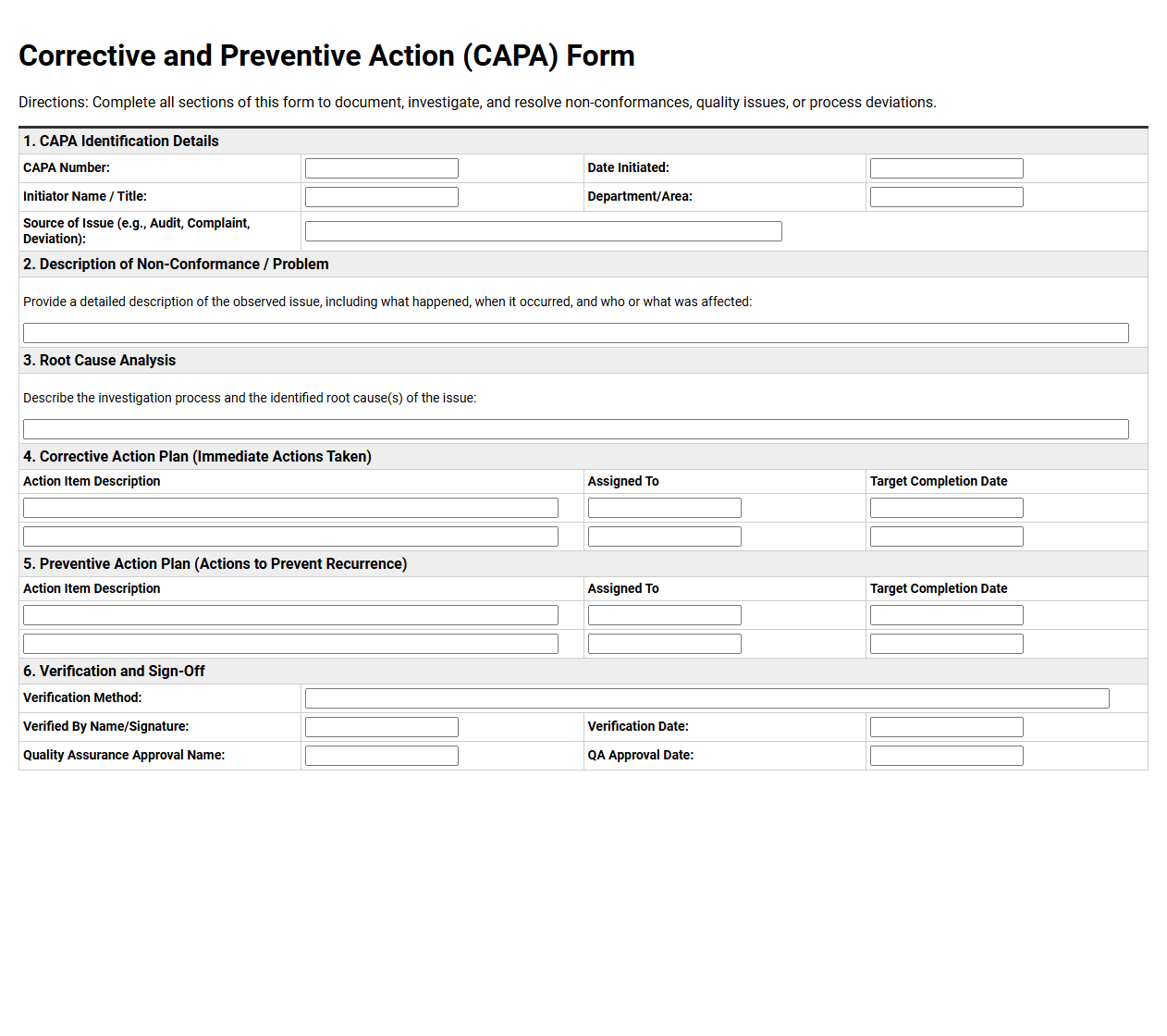
Corrective and Preventive Action Form
💾 Corrective and Preventive Action Form .pdf
A Corrective and Preventive Action (CAPA) form is a structured document used in quality management systems. It records identified non-conformances, details root-cause investigations, and outlines specific systemic corrections. By documenting these actions, organizations track improvements and verify that implemented solutions successfully mitigate risks and prevent future occurrences of issues.
Client Dispute Resolution Agreement
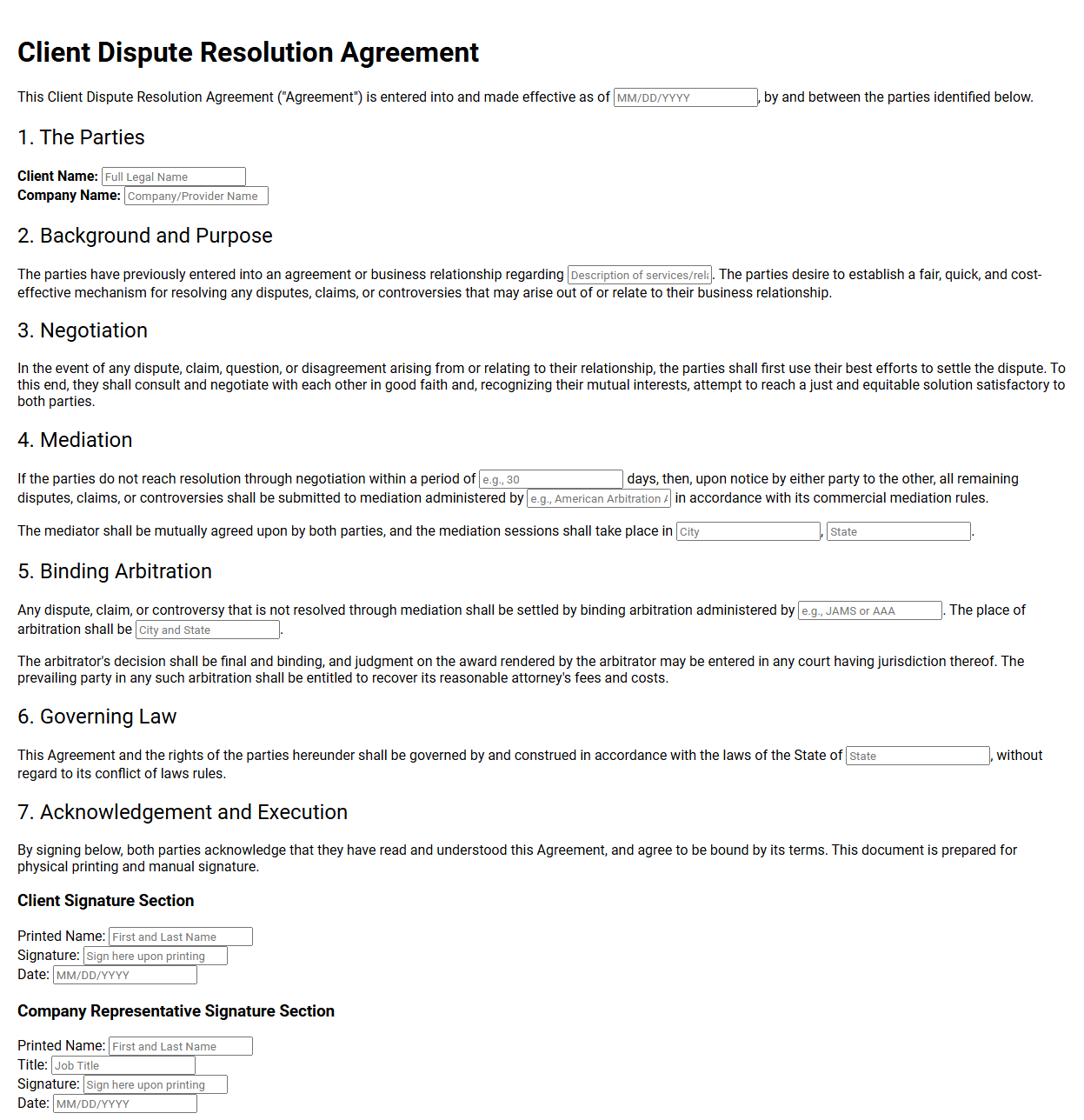
💾 Client Dispute Resolution Agreement .pdf
A Client Dispute Resolution Agreement outlines how a business and its client handle disagreements. It establishes structured pathways like mediation or arbitration to resolve conflicts out of court, saving time and resources. This document defines the governing law and specifies steps parties must take to reach a fair, mutual settlement.
Complaint Acknowledgment Letter Template
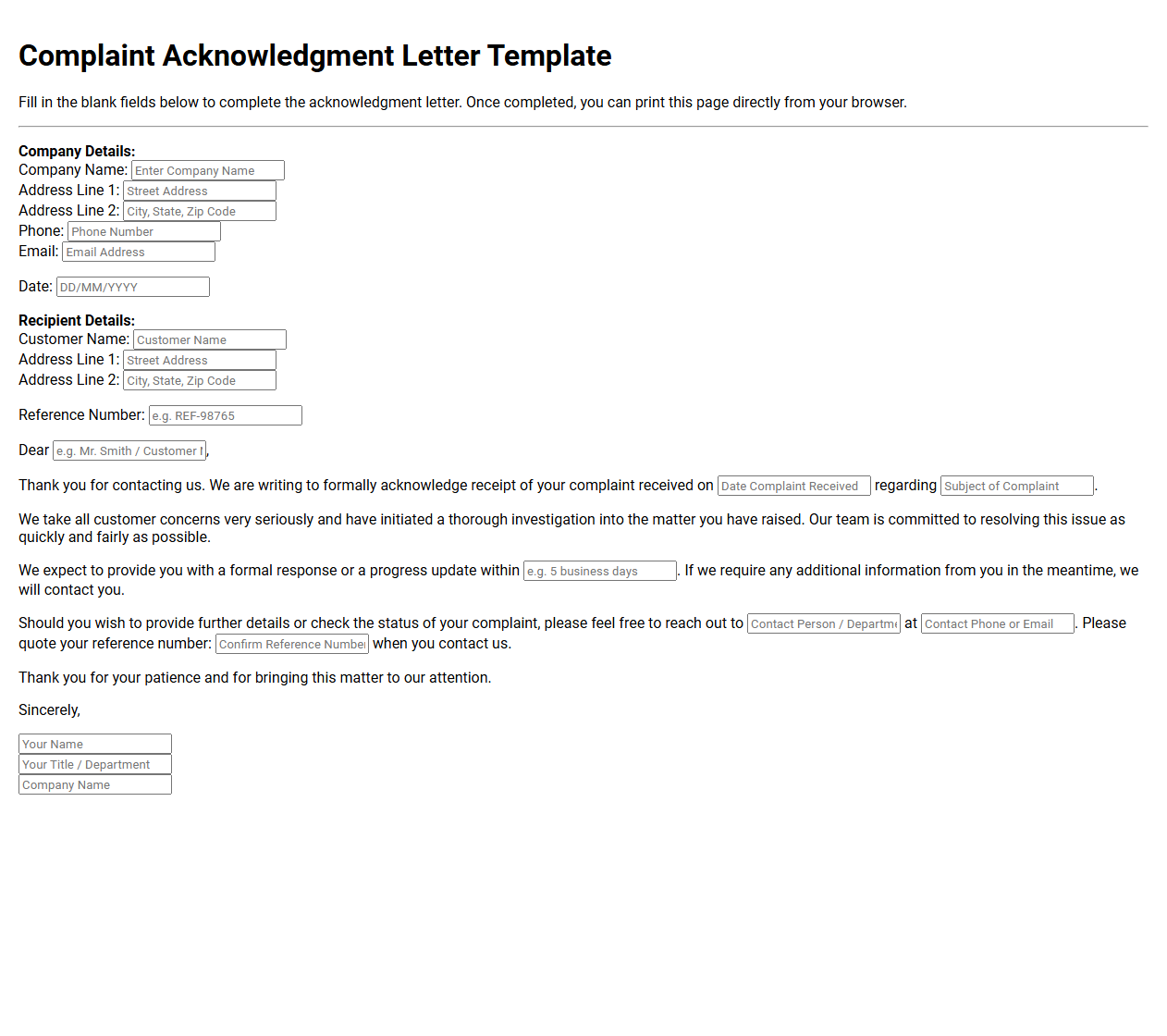
💾 Complaint Acknowledgment Letter Template .pdf
A complaint acknowledgment letter template helps businesses formally recognize customer grievances. This standard document confirms receipt of an issue, outlines the investigation timeline, and reassures the client of a prompt resolution. It maintains professionalism, fosters brand loyalty, and ensures consistent, clear communication during the dispute resolution process.
Internal Complaint Review Checklist
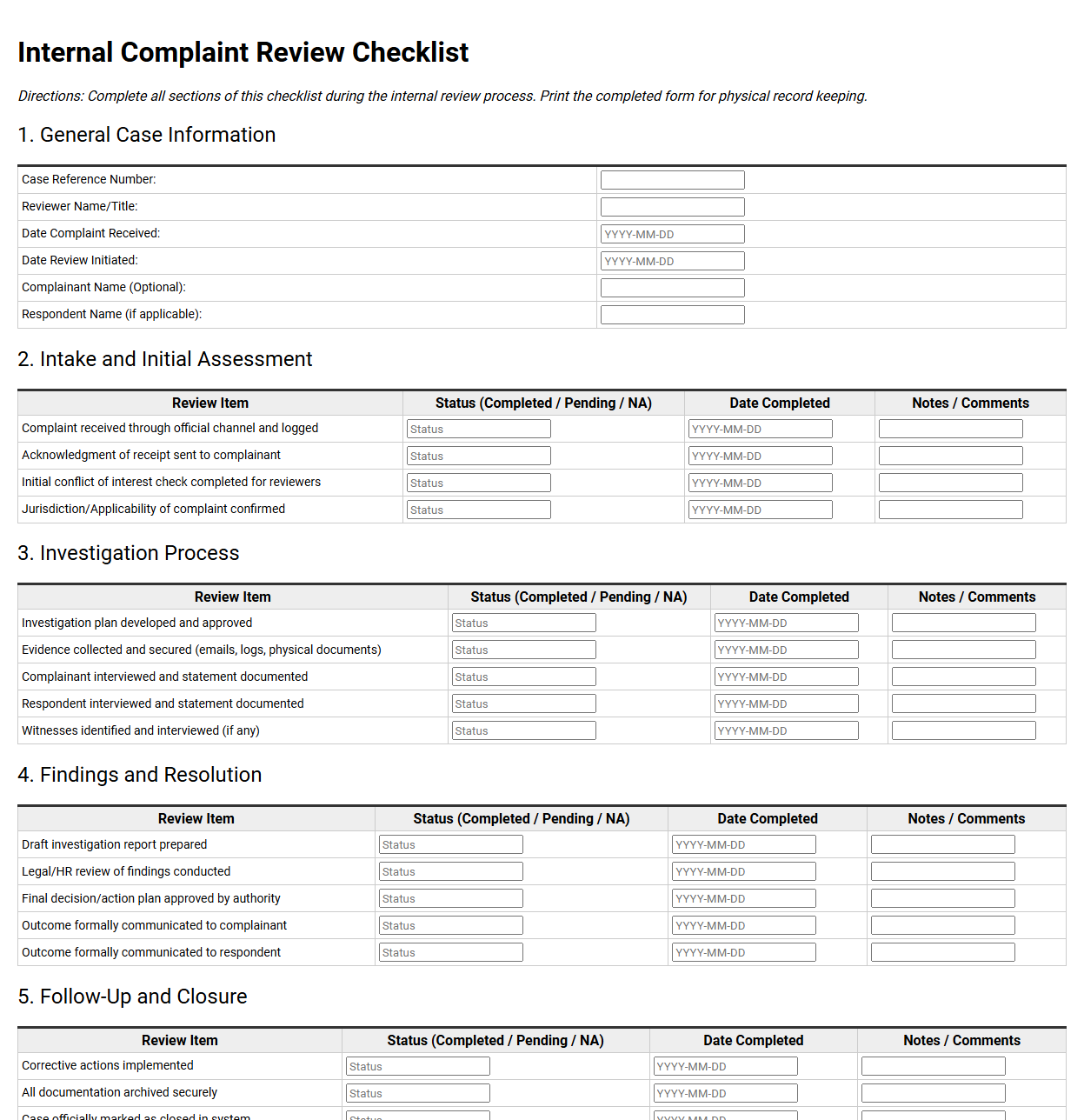
💾 Internal Complaint Review Checklist .pdf
An internal complaint review checklist serves as a structured guide for HR departments. It ensures systematic investigation of workplace grievances. This document outlines critical steps, including gathering evidence, interviewing witnesses, and documenting findings impartially. Utilizing this tool helps organizations maintain legal compliance, guarantee procedural fairness, and resolve internal conflicts efficiently.
Client Compensation and Refund Request Form
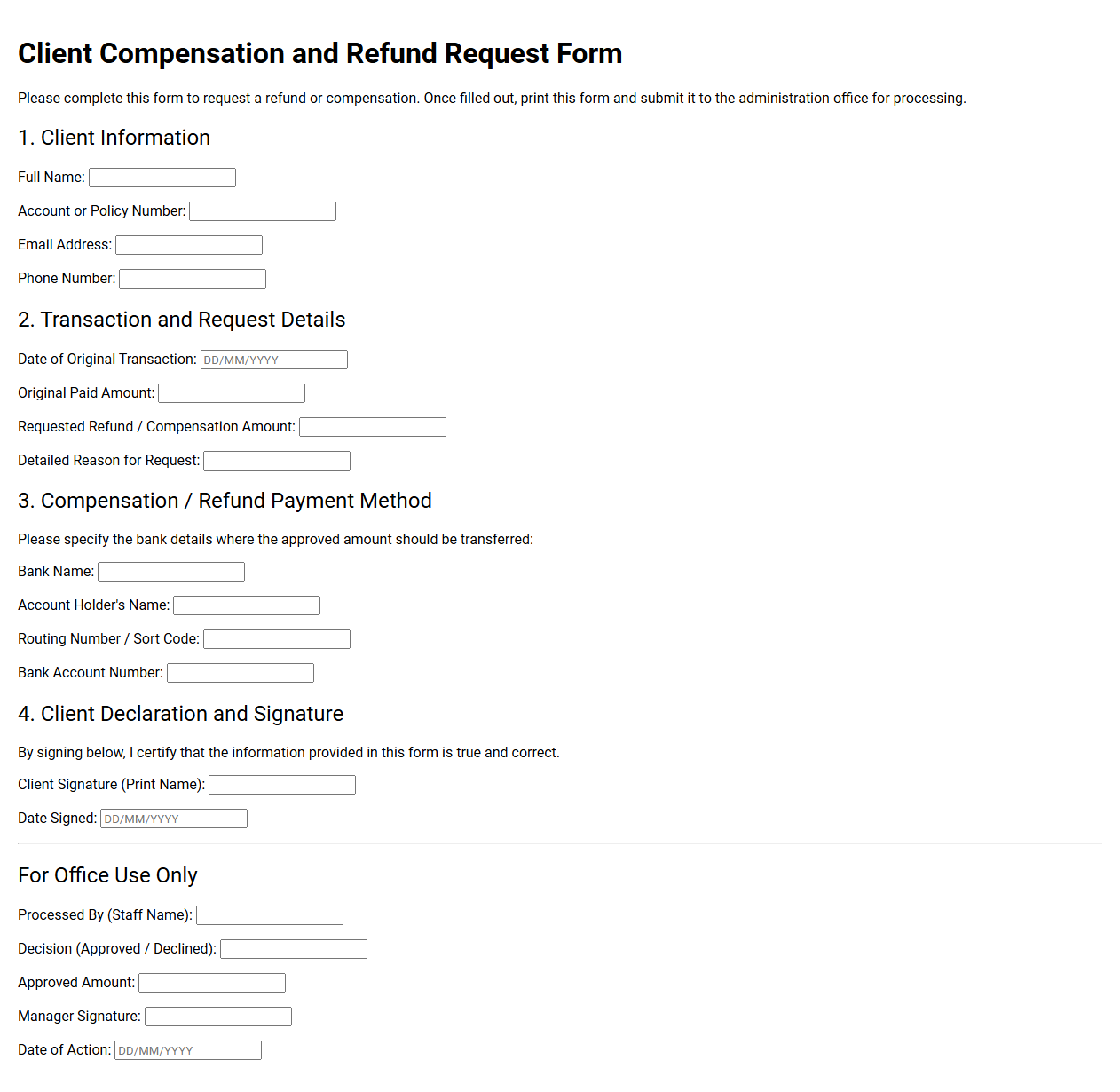
💾 Client Compensation and Refund Request Form .pdf
A client compensation and refund request form is a structured document used by businesses to process financial reimbursement claims. It gathers crucial details, such as transaction history, contact information, and the reason for the request. This formal record ensures accurate processing, maintains clear communication, and helps resolve billing disputes efficiently.
Client Complaint and Feedback Resolution FAQ
Why is a structured complaint resolution process critical for businesses?
A structured process ensures every client grievance is systematically recorded, investigated, and resolved. This consistency builds client trust, protects brand reputation, and prevents issues from escalating. By treating complaints as valuable data, businesses can identify operational weaknesses and continuously improve their overall service delivery.
What is the difference between client feedback and a formal complaint?
Client feedback encompasses general opinions, suggestions, or observations regarding a service or product, often aimed at improvement. A complaint, however, is an explicit expression of dissatisfaction indicating a specific failure, unmet expectation, or breach of agreement that requires a formal response and corrective action.
How does root cause analysis contribute to effective complaint resolution?
Root cause analysis shifts the focus from merely addressing a symptom to identifying the underlying systemic failure. By understanding why an issue occurred, organizations can implement permanent corrective actions, preventing the same complaint from recurring and ultimately enhancing long-term client satisfaction and operational efficiency.
What is an escalation path in the context of dispute resolution?
An escalation path is a defined hierarchical route that a complaint follows when it cannot be resolved at the initial point of contact. This ensures complex or severe issues are progressively directed to senior management or specialized resolution teams, guaranteeing appropriate authority and expertise are applied.
How does resolving individual complaints drive organizational growth?
Resolving individual complaints creates a continuous improvement loop. Analyzing aggregated complaint data highlights recurring trends, training gaps, or product defects. Addressing these systemic issues allows organizations to refine their policies and workflows, resulting in better service quality and higher overall client retention rates.
Disclaimer:
The documents and templates provided on this page are for informational and illustrative purposes only. They do not constitute professional, legal, or financial advice, and should not be relied upon as such. Because individual circumstances and regulatory requirements vary, these materials may not be suitable for your specific needs. We recommend consulting with a qualified professional before adapting or using any of these examples for official or commercial purposes.