
Authorization for Release of Medical Records Template - Streamlining Patient Consent for Protected Health Information (PHI) Disclosure
Managing patient consent for Protected Health Information (PHI) disclosure remains a persistent administrative bottleneck, often fraught with regulatory compliance risks and manual delays. While securing comprehensive medical records is historically critical when coordinating care or routing claims through standard healthcare funding sources, the authorization process itself frequently stalls clinical workflows.
This Patient Power Tool grants organizations a standardized, intuitive template designed to eliminate friction. However, optimal deployment carries the stipulation that providers must align the document with state-specific privacy regulations. In practice, this template successfully secures disclosures for critical use cases, including specialty referrals and legal consultations. Below, we examine how to leverage this resource to streamline compliance, protect patient trust, and accelerate clinical operations.
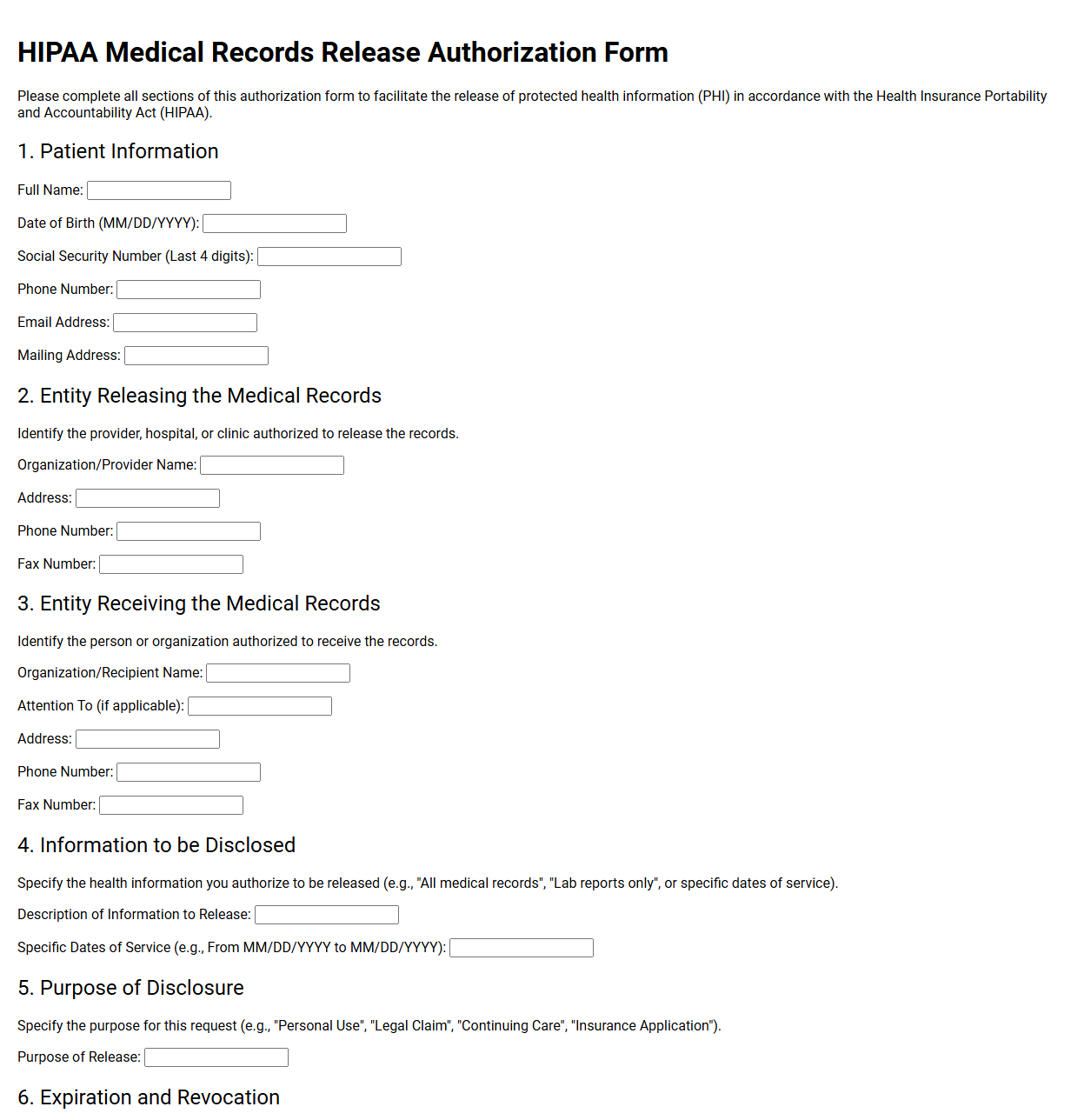
HIPAA Medical Records Release Authorization Form
💾 HIPAA Medical Records Release Authorization Form .pdf
A HIPAA Medical Records Release Authorization Form allows patients to legally authorize the disclosure of their protected health information to third parties. This document specifies the precise data shared, the designated recipients, and an expiration date, ensuring strict confidentiality and compliance with federal privacy regulations.
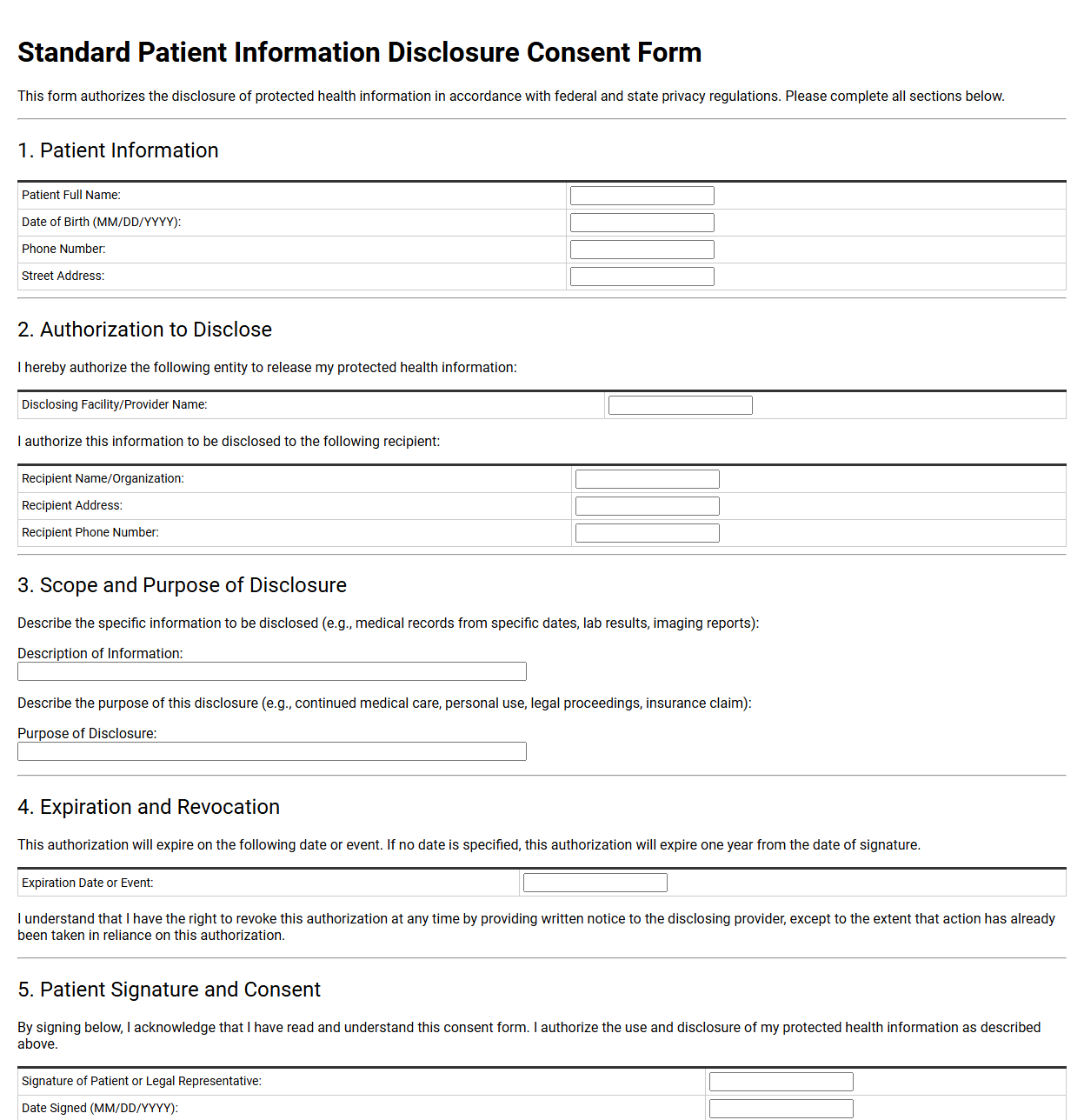
Standard Patient Information Disclosure Consent Form
💾 Standard Patient Information Disclosure Consent Form .pdf
A Standard Patient Information Disclosure Consent Form is a legal document authorizing healthcare providers to share medical records with designated parties. It details what specific data can be released, the purpose of the sharing, and the expiration date of the authorization. This ensures patient privacy compliance under health regulations.
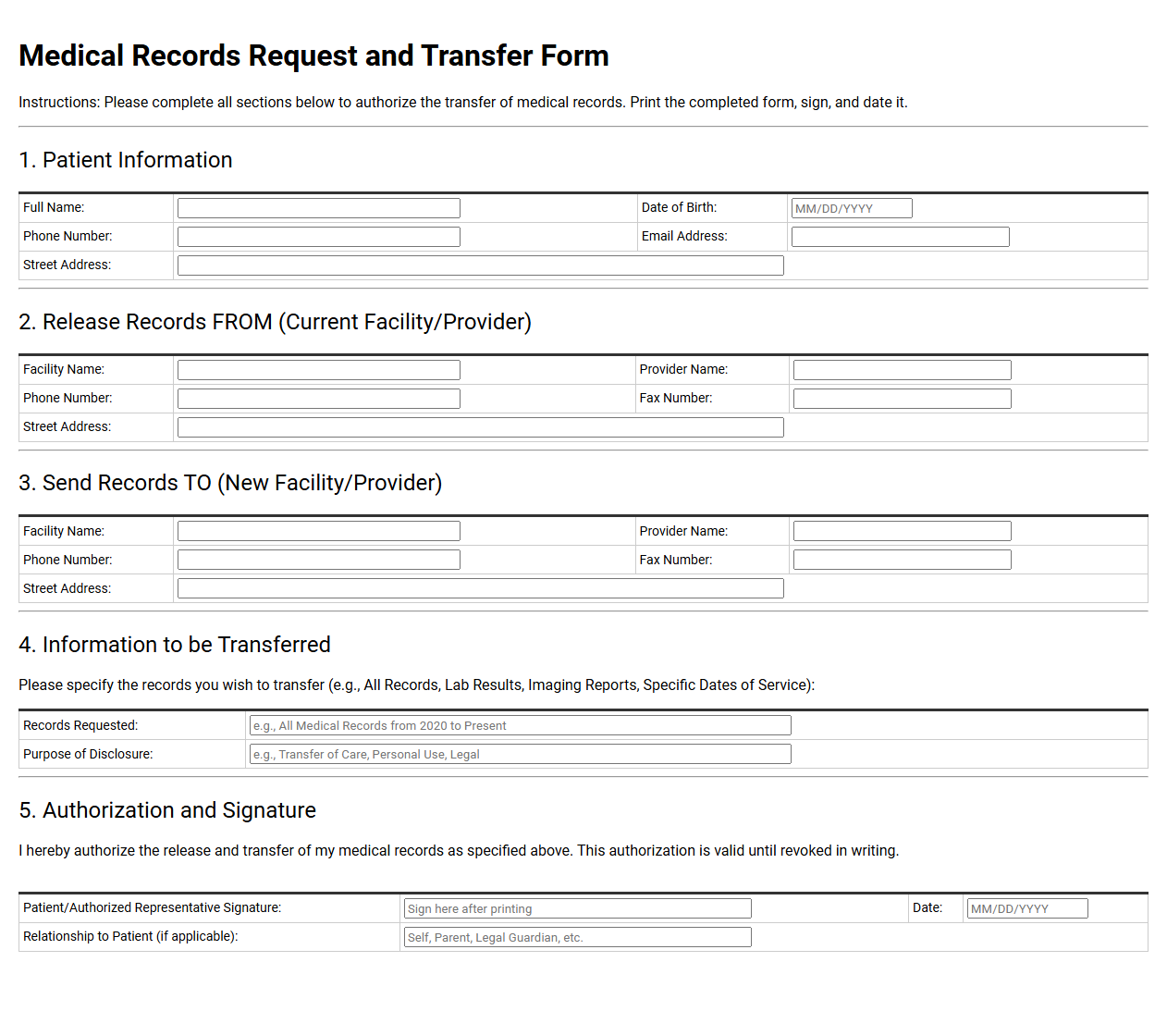
Medical Records Request and Transfer Form
💾 Medical Records Request and Transfer Form .pdf
A medical records request and transfer form is a formal document authorizing the release of personal health information between healthcare providers. It gathers patient details, specific treatment files needed, and required signatures. This process secures patient privacy under legal standards and facilitates continuous, coordinated medical care during provider transitions.
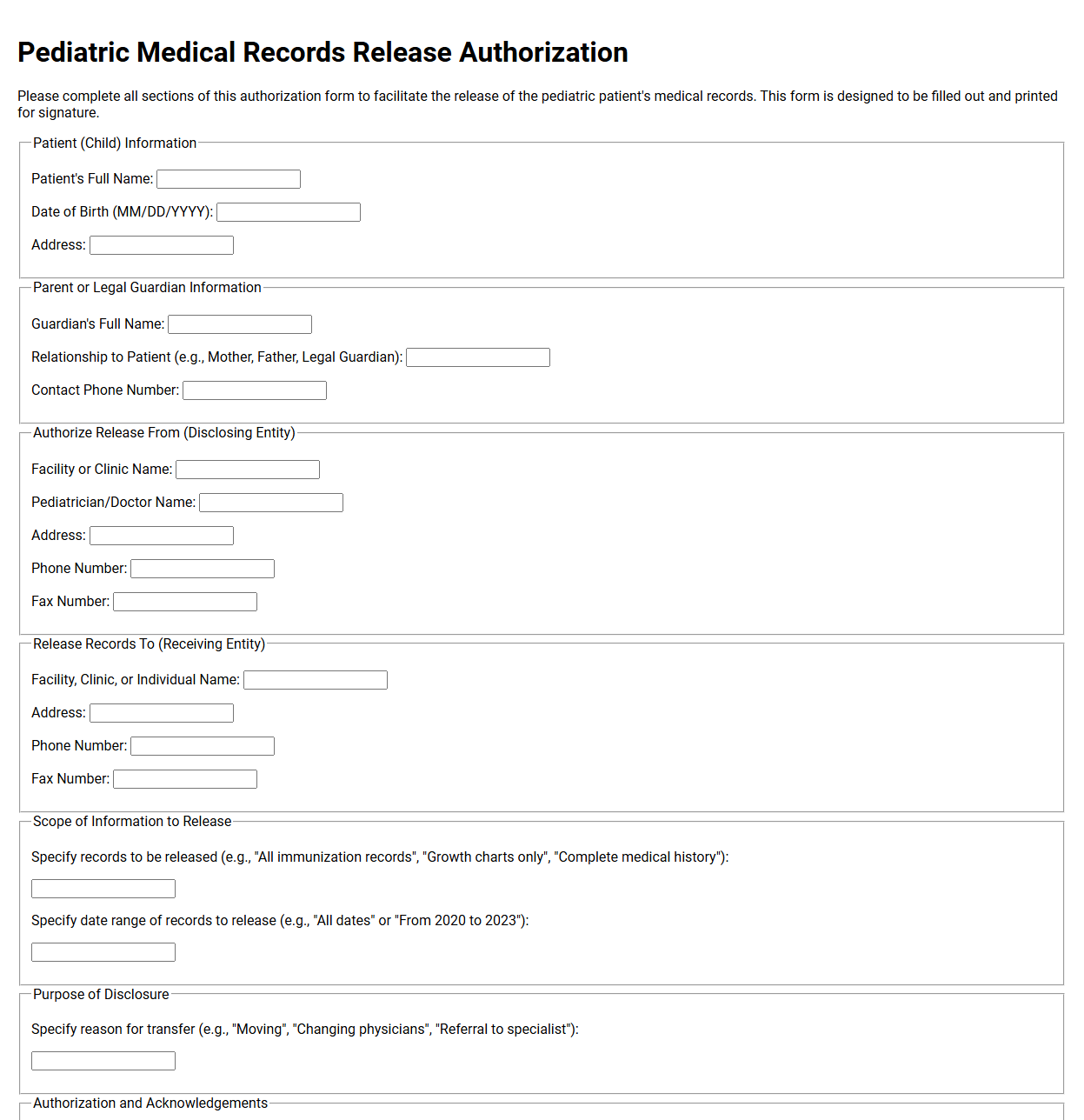
Pediatric Medical Records Release Authorization
💾 Pediatric Medical Records Release Authorization .pdf
A pediatric medical records release authorization is a legal document granting healthcare providers permission to share a child's health history. Parents or authorized legal guardians sign this form to transfer sensitive files between pediatricians, specialists, or schools. It protects patient privacy while ensuring complete continuity of care during important transitions.
Dental Records Transfer Request Form
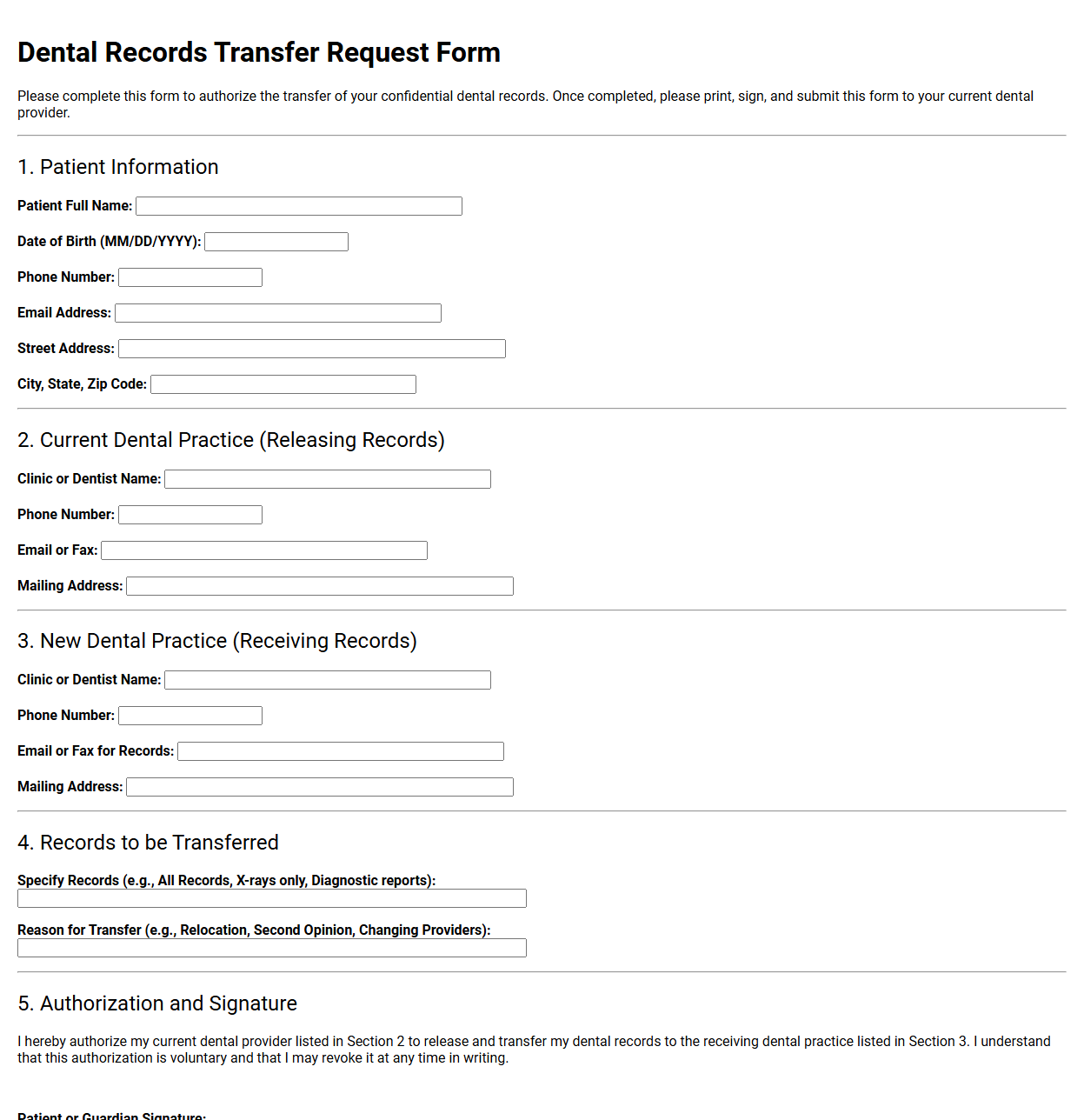
💾 Dental Records Transfer Request Form .pdf
A dental records transfer request form is a formal document used to authorize the release of a patient's medical history, X-rays, and treatment plans from one clinic to another. It requires the patient's signature and contact details, ensuring a smooth transition and continuous, accurate oral healthcare.
Mental Health Record Release Consent Form
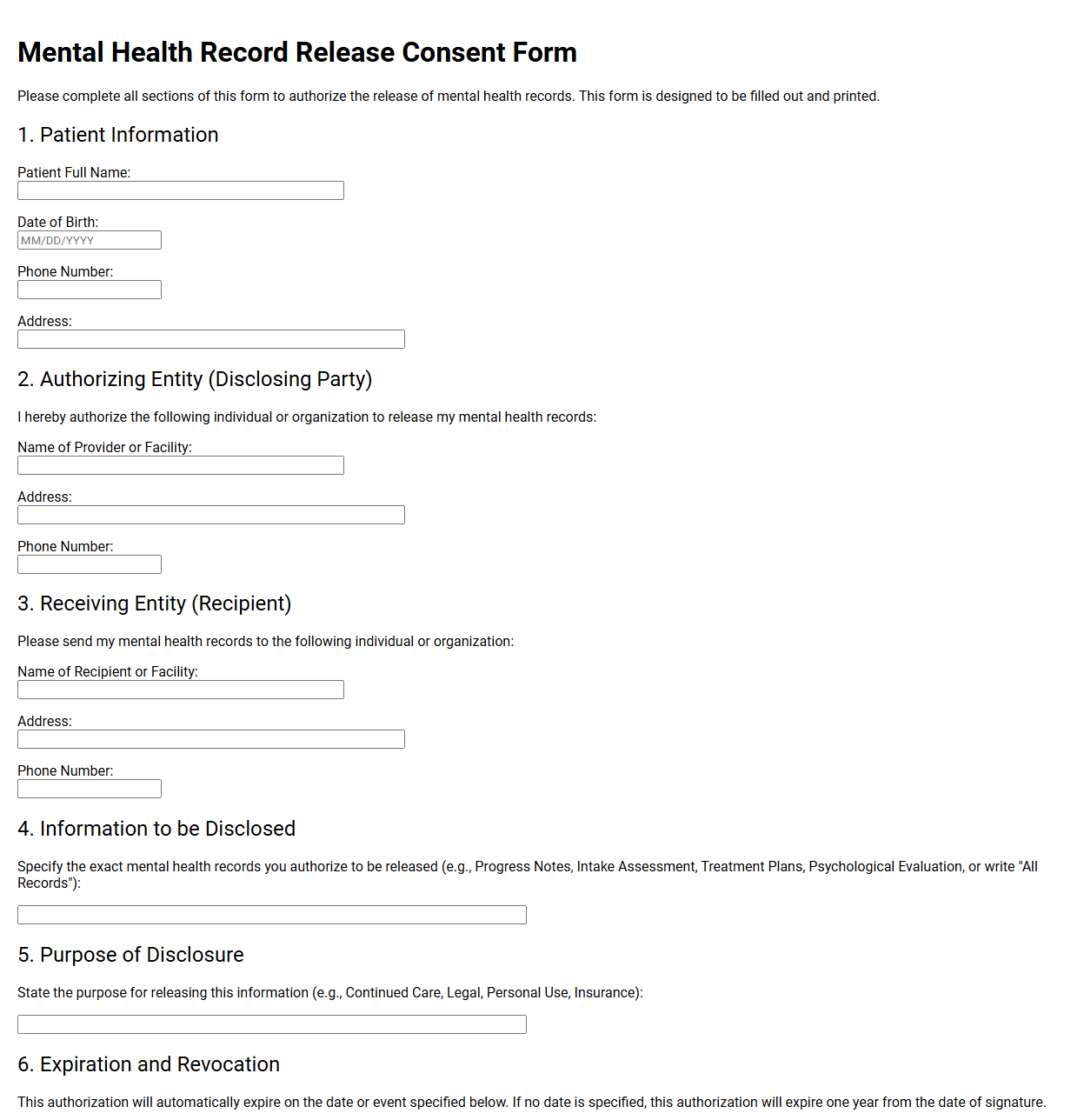
💾 Mental Health Record Release Consent Form .pdf
A mental health record release consent form allows patients to authorize the disclosure of their confidential therapy and psychiatric files. This legal document specifies who receives the information, what details are shared, and the duration of the permission. It protects patient privacy under healthcare regulations while facilitating coordinated medical treatment.
Third Party Medical Information Authorization Form
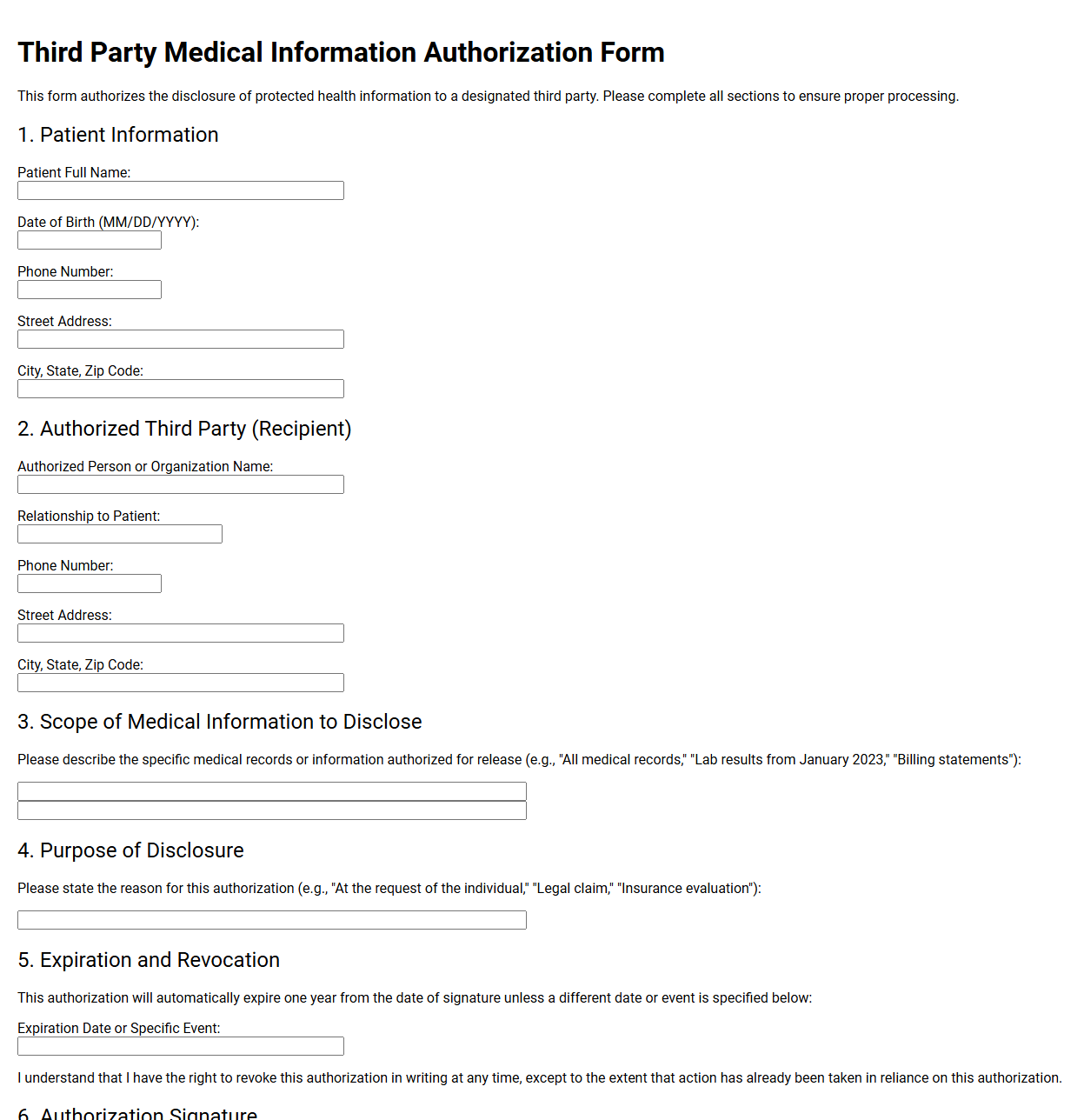
💾 Third Party Medical Information Authorization Form .pdf
A Third Party Medical Information Authorization Form is a legal document allowing healthcare providers to release a patient's protected health records to designated individuals or organizations. This release enables family members, legal representatives, or insurance companies to access vital medical history, ensuring seamless care coordination and accurate insurance processing.
Deceased Patient Medical Record Release Form
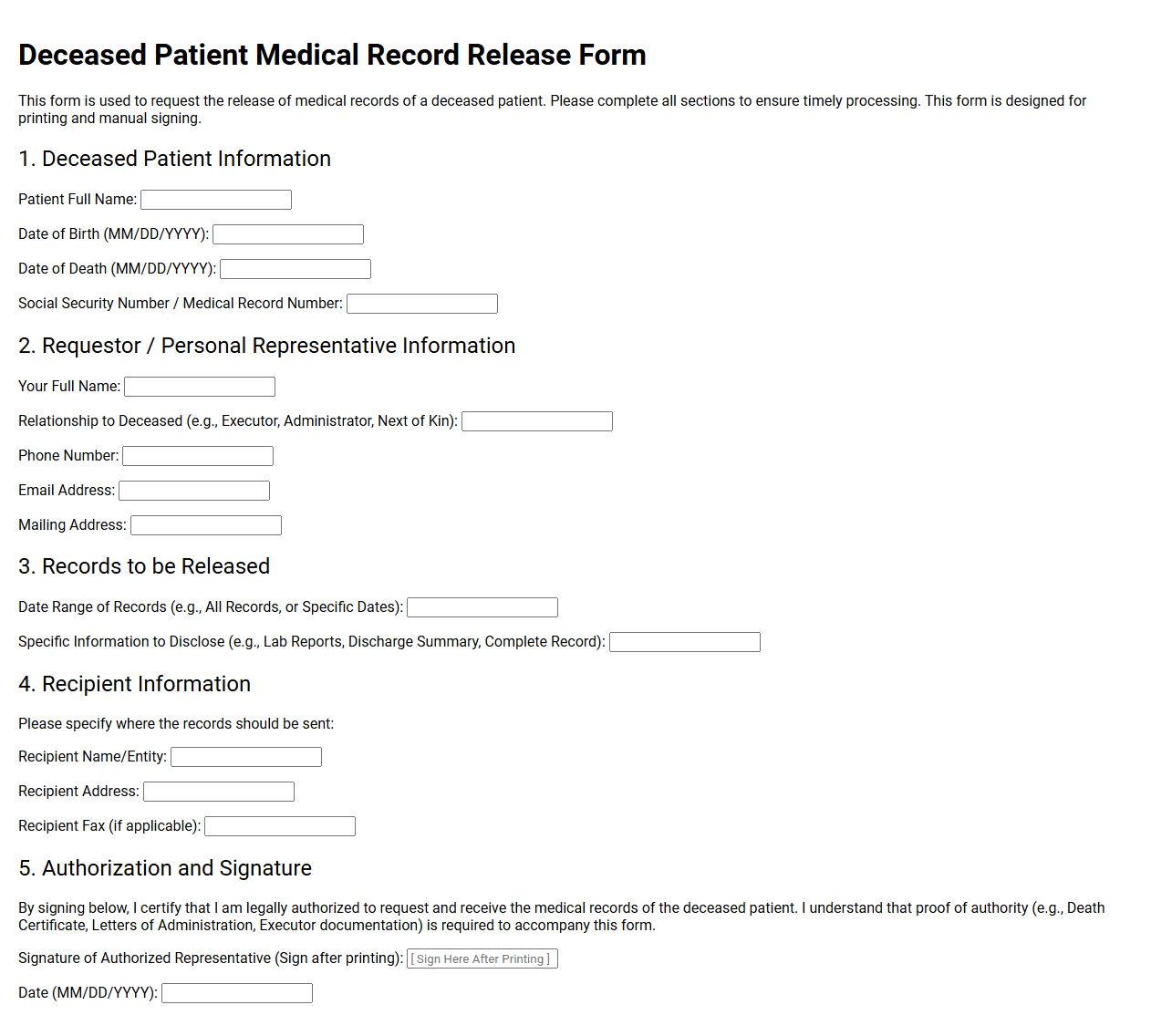
💾 Deceased Patient Medical Record Release Form .pdf
A deceased patient medical record release form is a legal document enabling authorized representatives, such as executors or next of kin, to access a departed individual's protected health history. This paperwork verifies the requester's legal authority, ensuring confidentiality compliance under strict privacy regulations during the transfer of crucial medical information.
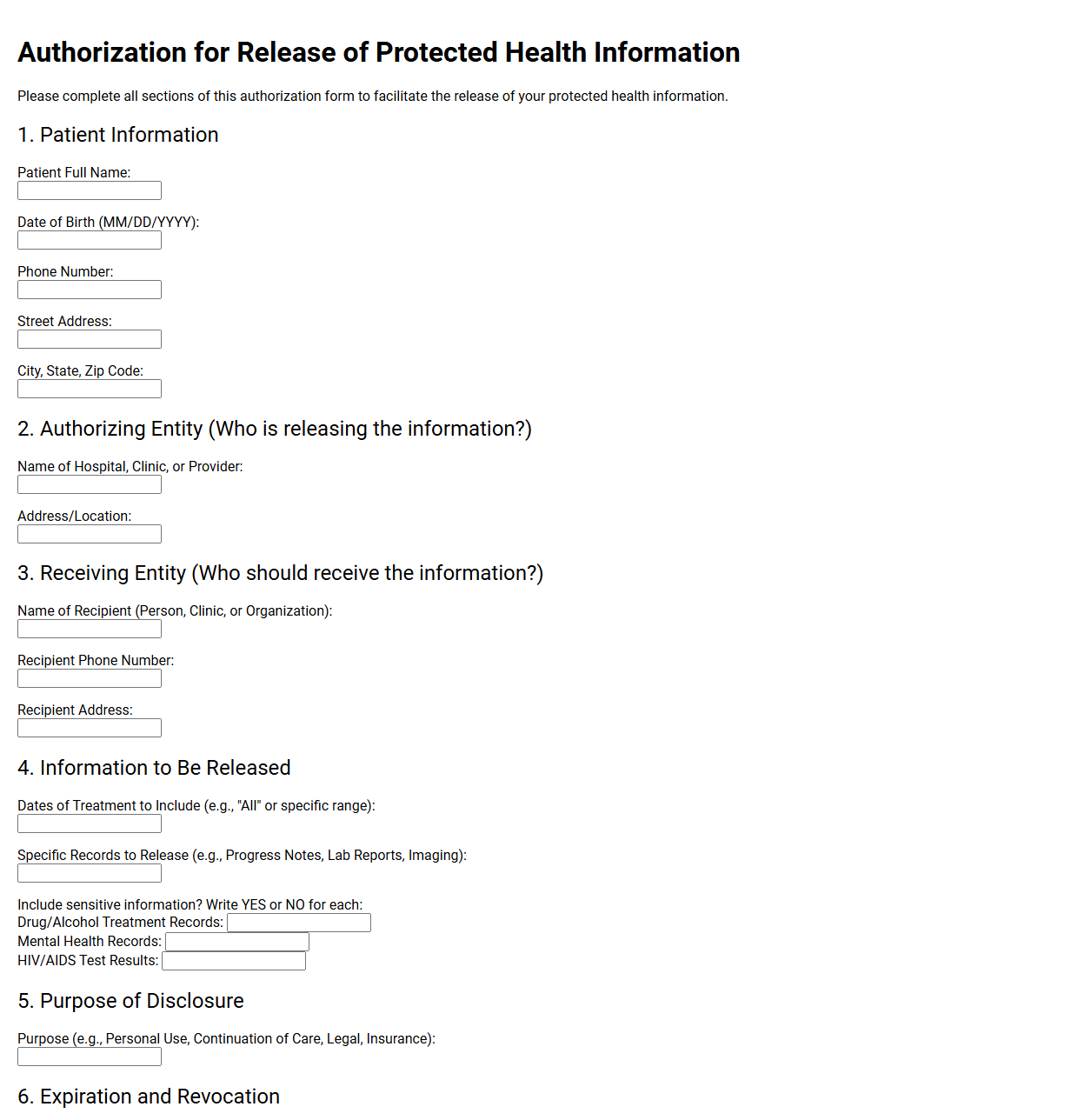
Authorization for Release of Protected Health Information
💾 Authorization for Release of Protected Health Information .pdf
An Authorization for Release of Protected Health Information is a formal document permitting healthcare providers to disclose patient medical records to designated third parties. This form specifies what data to share, who receives it, and the expiration date. It ensures privacy compliance under regulations, protecting sensitive patient data during transfers.
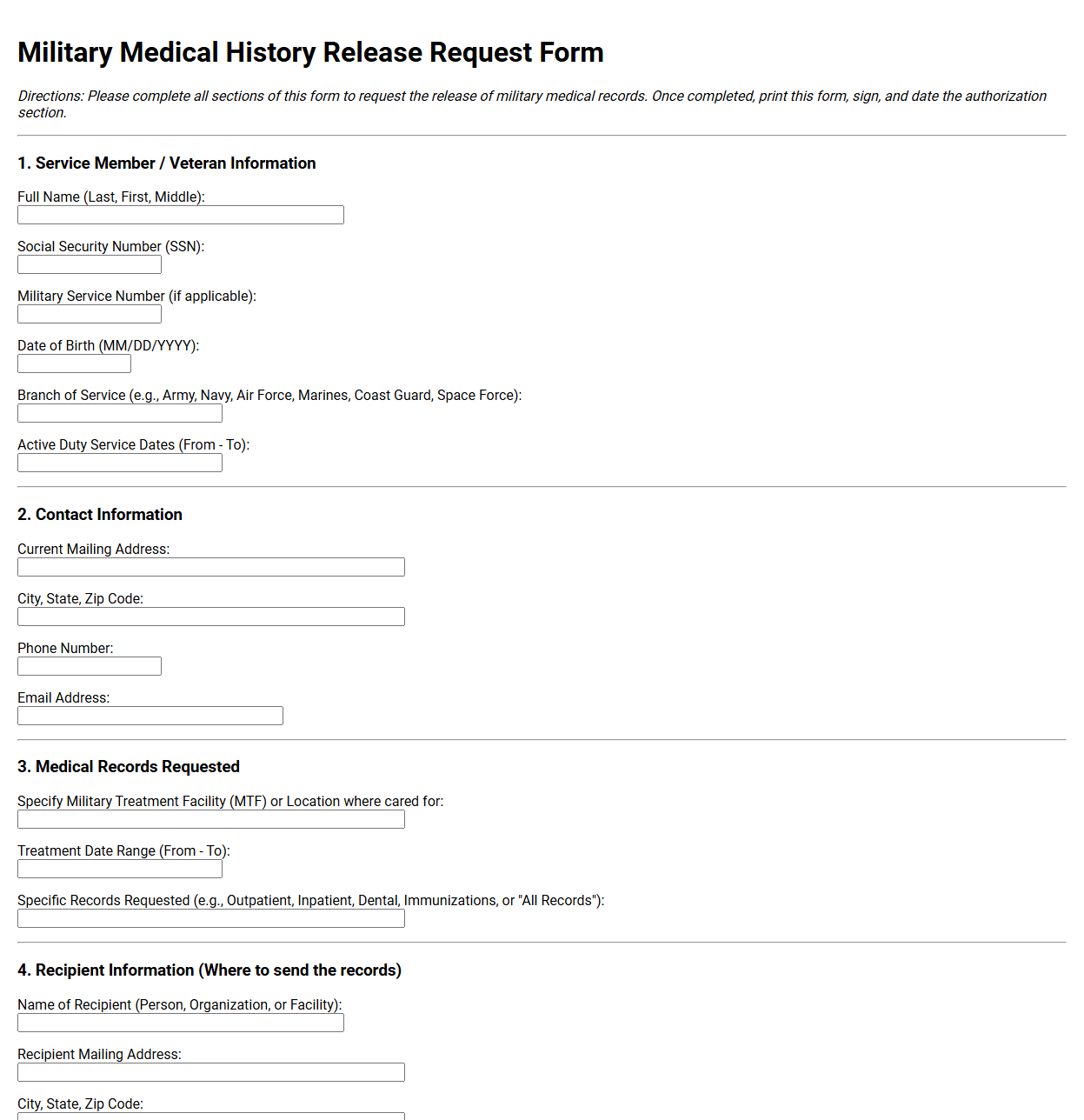
Military Medical History Release Request Form
💾 Military Medical History Release Request Form .pdf
A military medical history release request form is an official document used to authorize the disclosure of service members' health records. It grants healthcare providers permission to share clinical files, treatment logs, and service injury reports with authorized third parties, ensuring continuity of care and accurate veterans benefit claim processing.
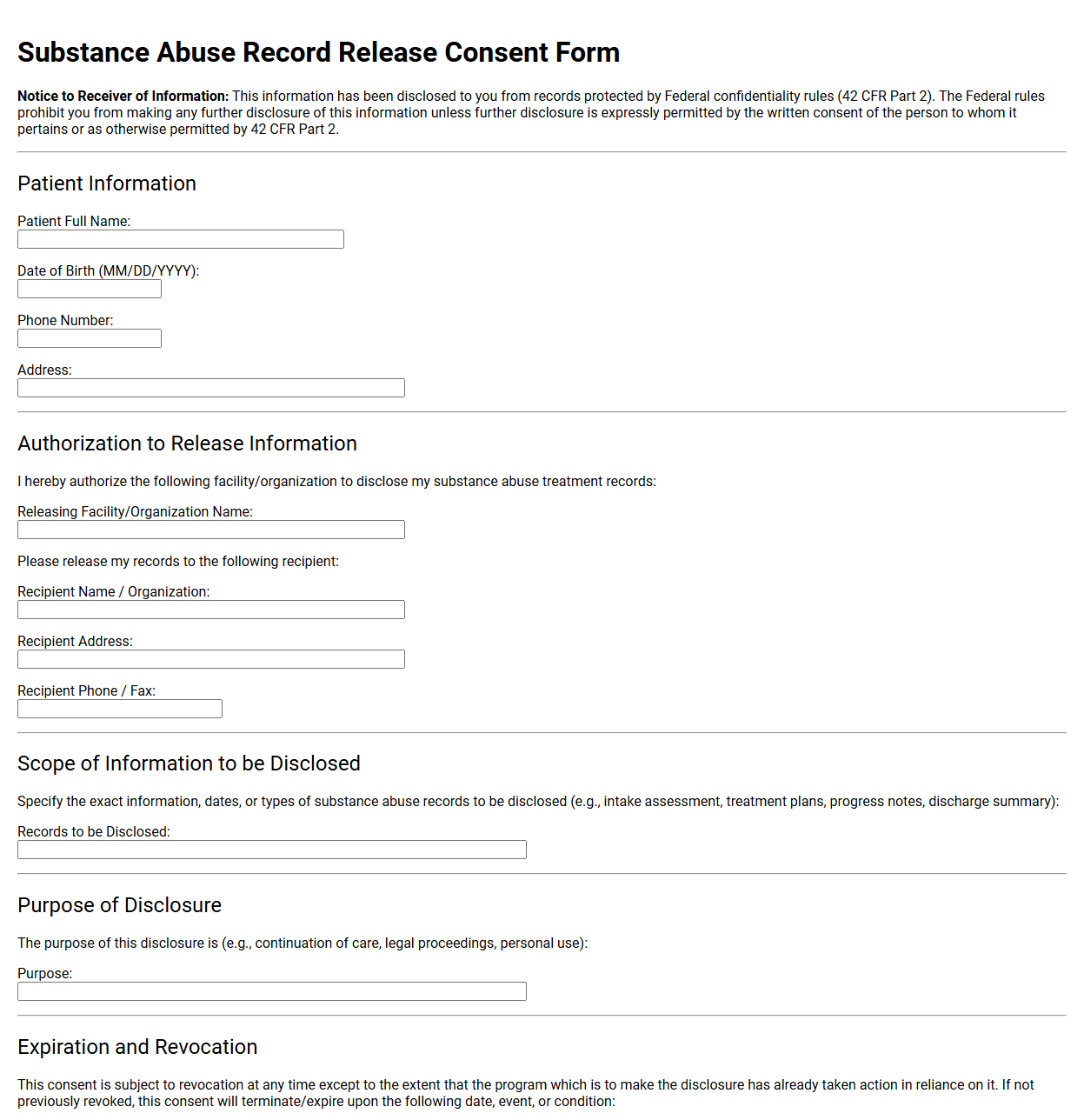
Substance Abuse Record Release Consent Form
💾 Substance Abuse Record Release Consent Form .pdf
A substance abuse record release consent form is a legal document enabling patients to authorize the disclosure of their confidential treatment history. It specifies who receives the data, the exact information shared, and the purpose of the disclosure. This protects patient privacy while facilitating coordinated healthcare and legal compliance.
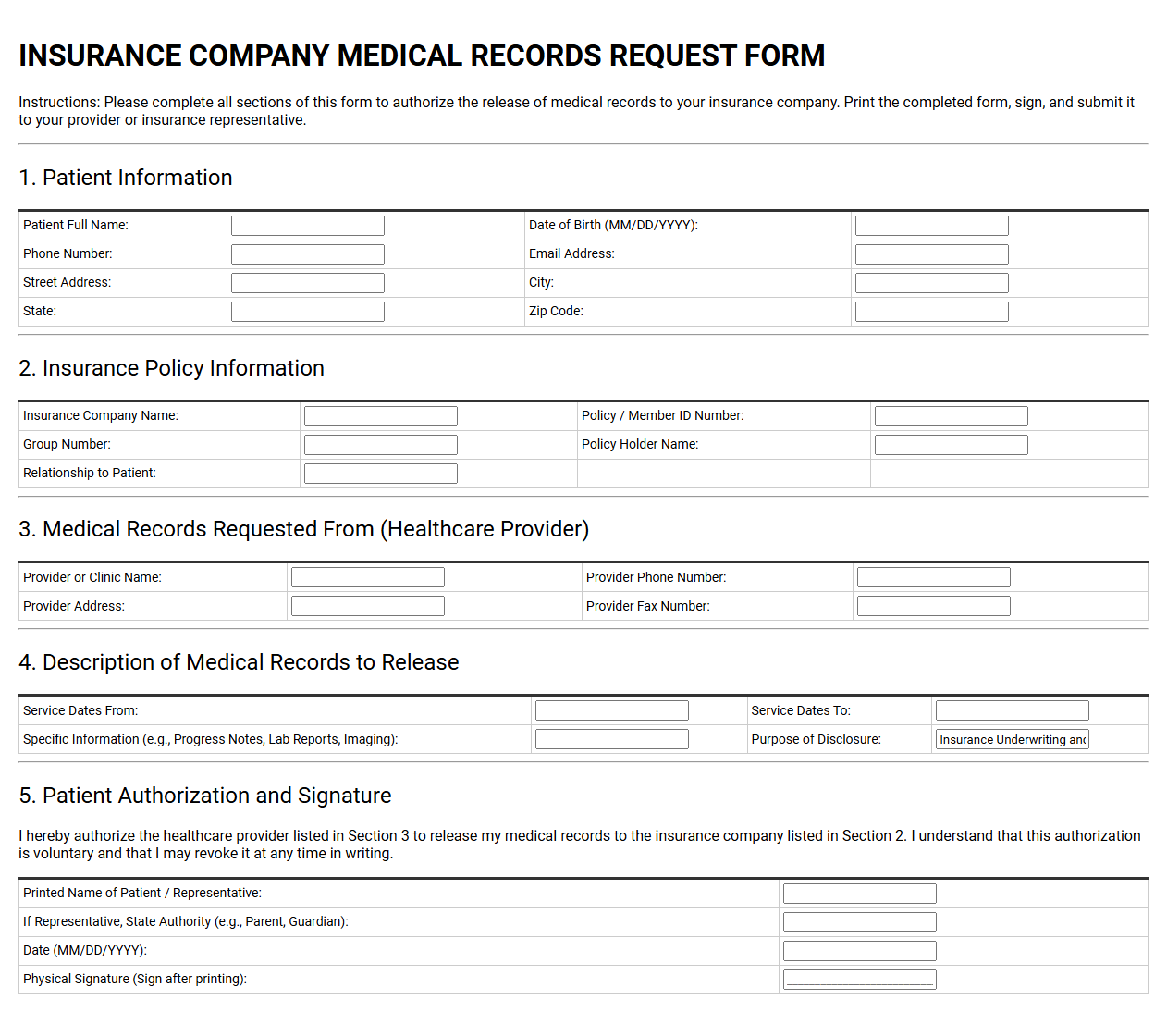
Insurance Company Medical Records Request Form
💾 Insurance Company Medical Records Request Form .pdf
An insurance company medical records request form is a formal document used to authorize the release of a policyholder's health history. It typically requires personal details, policy numbers, specific treatment dates, and a signature, allowing insurers to review claims, assess risk, or verify medical necessity for coverage decisions.
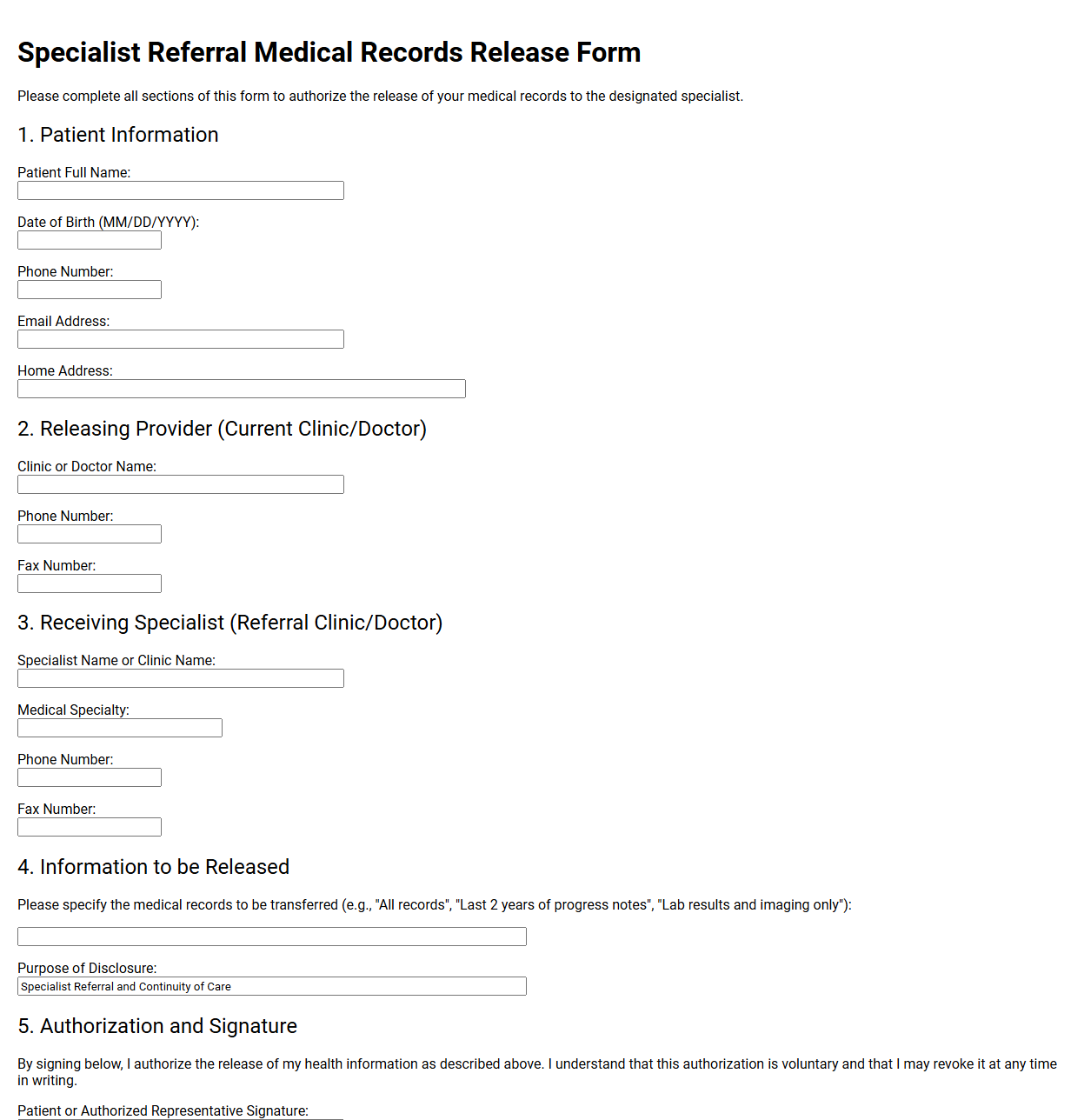
Specialist Referral Medical Records Release Form
💾 Specialist Referral Medical Records Release Form .pdf
A specialist referral medical records release form authorizes the transfer of private health information between primary doctors and specialists. This document secures patient consent, detailing specific files, diagnoses, and treatment histories to share. It maintains legal compliance under privacy laws, ensuring seamless continuity of clinical care during external consultations.
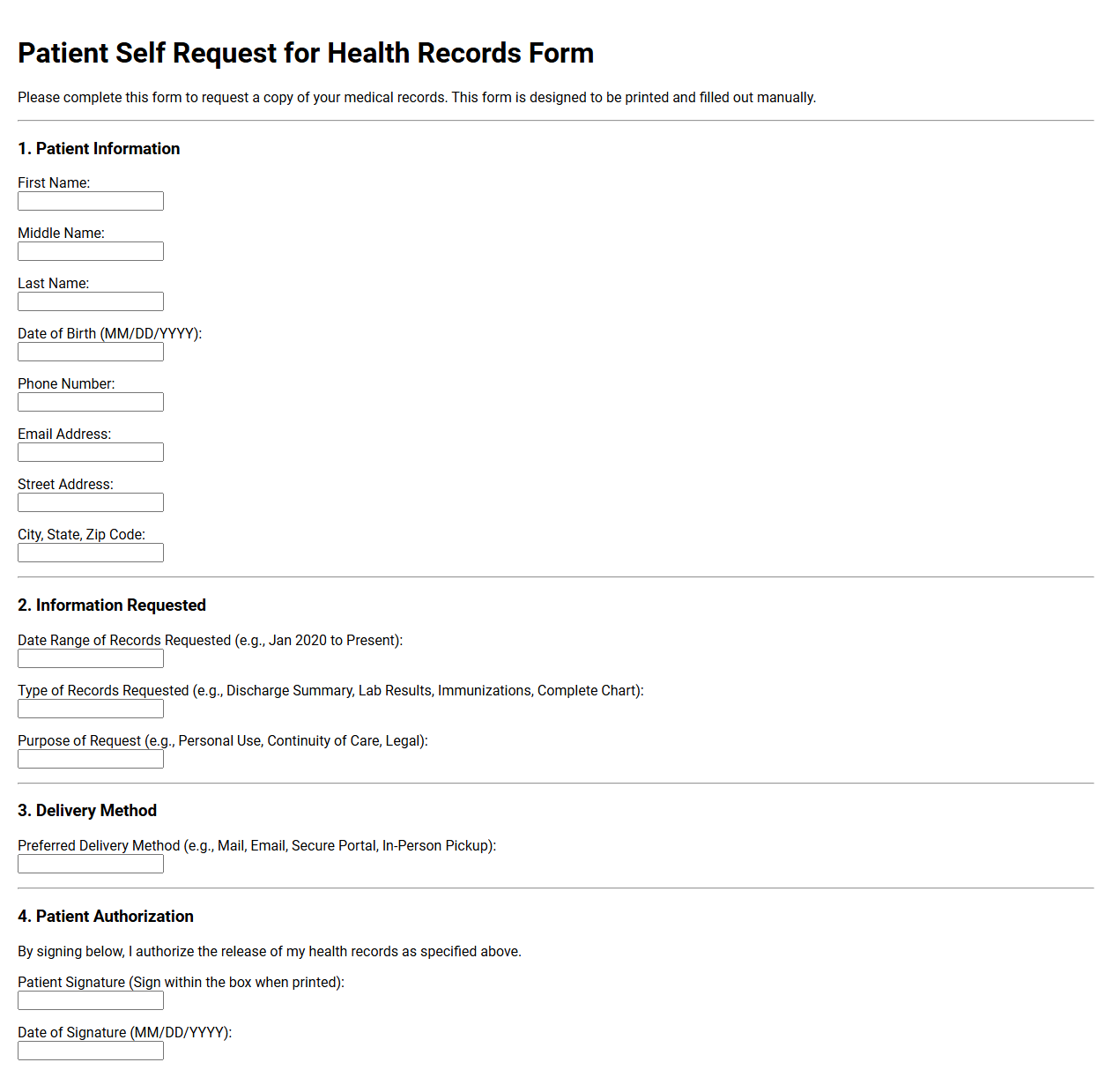
Patient Self Request for Health Records Form
💾 Patient Self Request for Health Records Form .pdf
A Patient Self Request for Health Records Form allows individuals to formally access their personal medical history. This standard document collects necessary patient identifiers, contact details, and specific files needed, such as lab results or immunization histories. It ensures secure, legal retrieval of sensitive data directly from clinical healthcare providers.
Patient Release of Medical Records FAQ
What is a Patient Release of Medical Records Form?
This legally binding document authorizes healthcare providers to share a patient's protected health information (PHI) with designated individuals or organizations. Protected under HIPAA regulations, it ensures patient privacy while facilitating the secure transfer of medical histories, treatment plans, and diagnostic results between authorized parties.
Why is a formal release form required to transfer medical records?
Under federal laws like HIPAA, healthcare providers cannot disclose your private health information without explicit, written consent. A formal release form legally protects your privacy, prevents unauthorized access, and ensures that sensitive data is only shared with authorized entities for continued care, insurance, or legal purposes.
What specific information is typically transferred using this authorization?
This authorization can cover a wide range of sensitive health data, including laboratory reports, diagnostic imaging, billing records, clinical notes, and prescription histories. Patients can specify whether they want to release their entire medical history or restrict the disclosure to specific dates, treatments, or medical conditions.
How long does a medical records release authorization remain valid?
Typically, a release authorization remains valid until a specified expiration date or event occurs, often one year from the signing date. However, patients retain the legal right to revoke this authorization at any time in writing, except to the extent that providers have already acted upon it.
Who is legally authorized to sign a medical records release form?
The patient themselves must sign the form if they are of legal age. For minors or incapacitated individuals, a legally authorized personal representative-such as a parent, legal guardian, or designated healthcare proxy holding power of attorney-must sign to legally permit the release of the records.
Disclaimer:
The documents and templates provided on this page are for informational and illustrative purposes only. They do not constitute professional, legal, or financial advice, and should not be relied upon as such. Because individual circumstances and regulatory requirements vary, these materials may not be suitable for your specific needs. We recommend consulting with a qualified professional before adapting or using any of these examples for official or commercial purposes.