
Patient Registration and Demographics Form Template - Streamlining Patient Intake and Electronic Health Record Integration
Healthcare administrators constantly battle inefficient, paper-based intake processes that delay patient care and introduce costly transcription errors. While clinics traditionally allocate operational funding toward massive EHR software overhauls to resolve these bottlenecks, the root issue remains at the point of data entry. Transitioning to a digitized Patient Registration and Demographics Form Template acts as a critical patient power tool-one that grants administrative staff immediate relief and ensures seamless data flow.
Note: Achieving these results requires strict alignment with existing HL7 standards. Real-world applications in systems like Athenahealth demonstrate that this integration minimizes intake friction. Below, we detail template customization, schema mapping, and EHR deployment strategies.
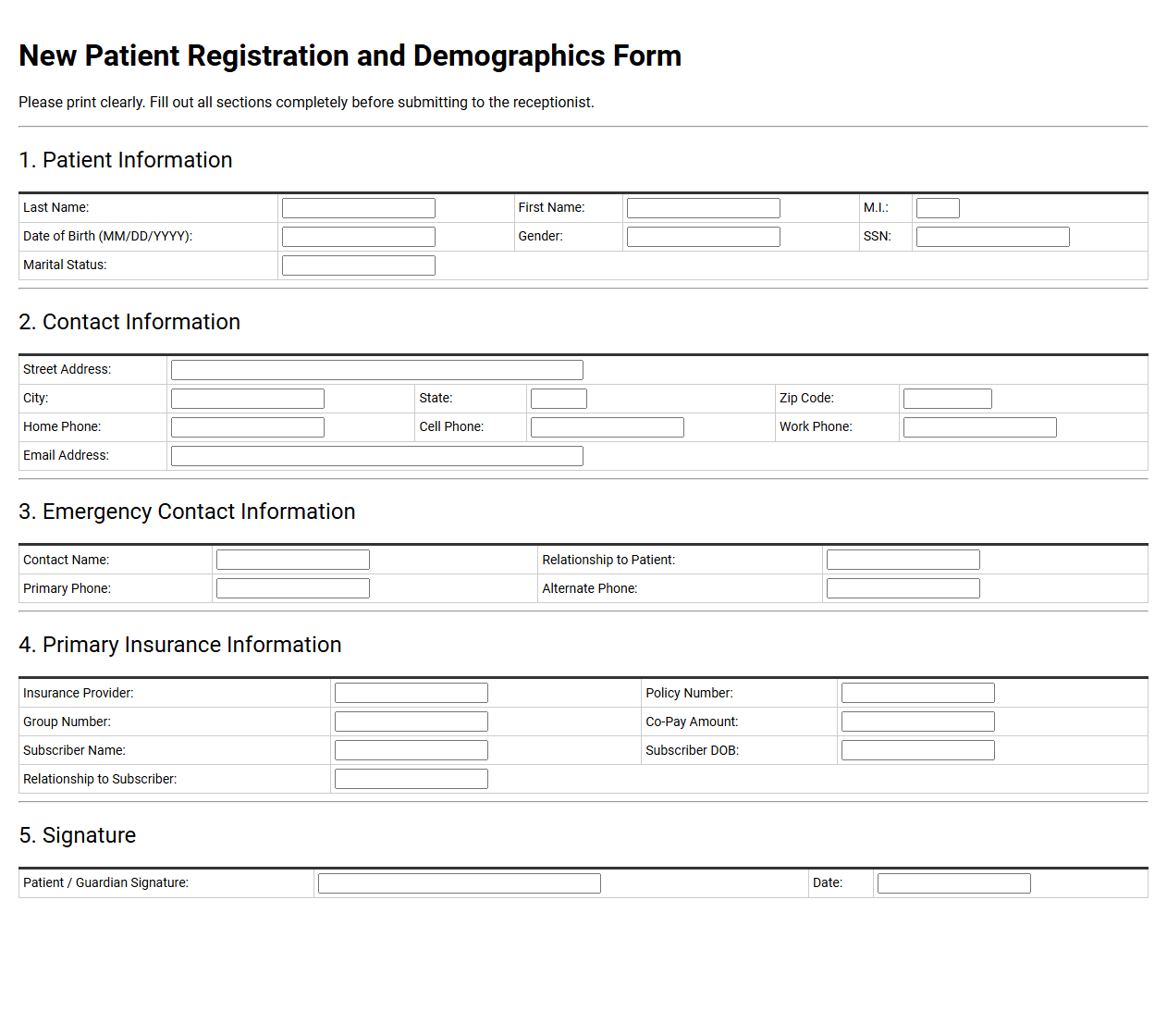
New Patient Registration and Demographics Form
💾 New Patient Registration and Demographics Form .pdf
A new patient registration and demographics form collects crucial administrative and personal details before an initial appointment. This standard document gathers contact details, insurance coverage, emergency contacts, and medical history. Healthcare providers rely on this accurate data to establish patient records, facilitate billing, and ensure seamless communication regarding clinical care.
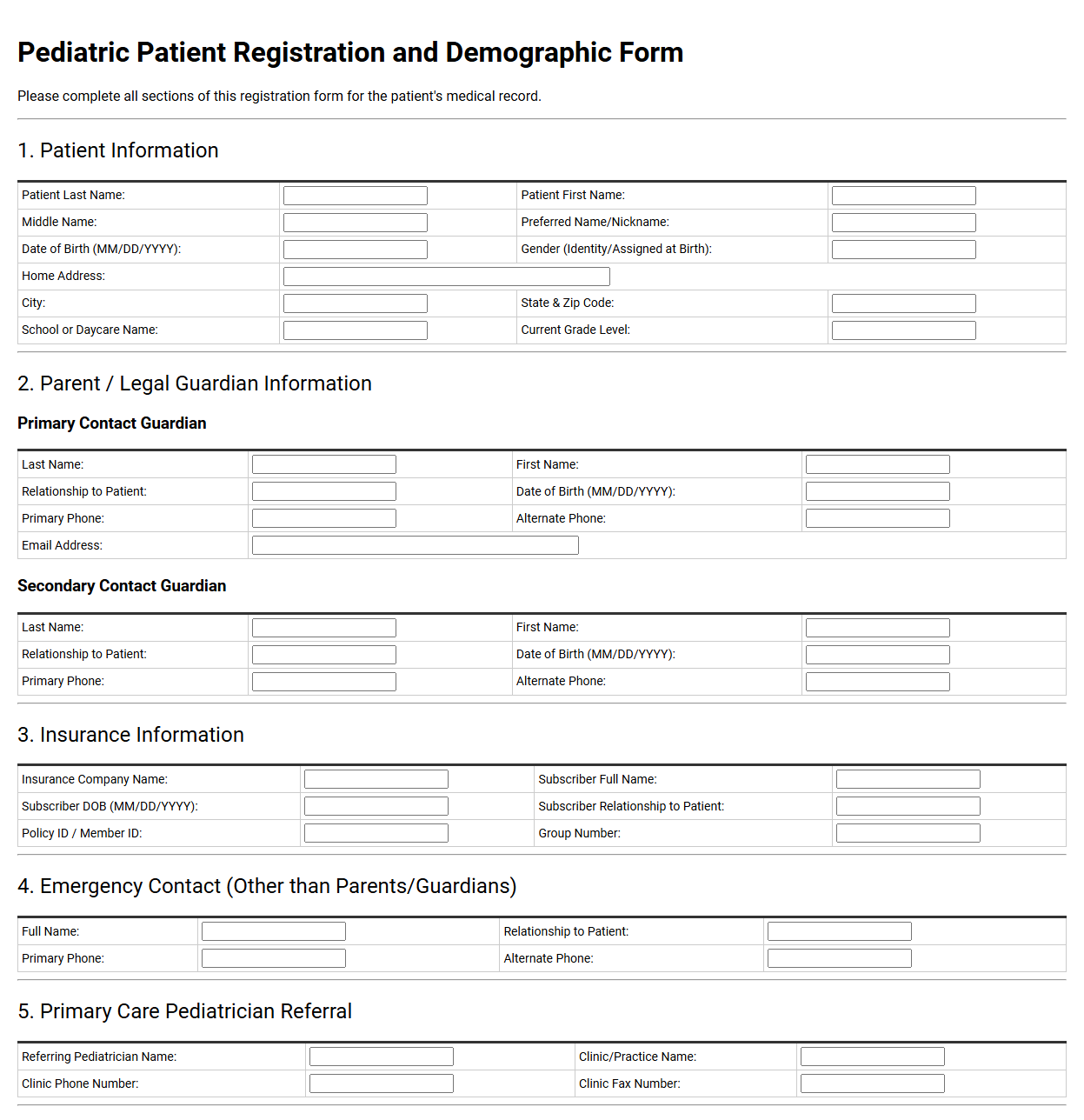
Pediatric Patient Registration and Demographic Template
💾 Pediatric Patient Registration and Demographic Template .pdf
A pediatric patient registration and demographic template captures critical information for young patients. This standardized document records the child's full name, birth date, and gender, alongside guardian contact details, insurance data, and emergency contacts. It ensures healthcare practices gather accurate administrative and clinical baselines for safe, personalized care.
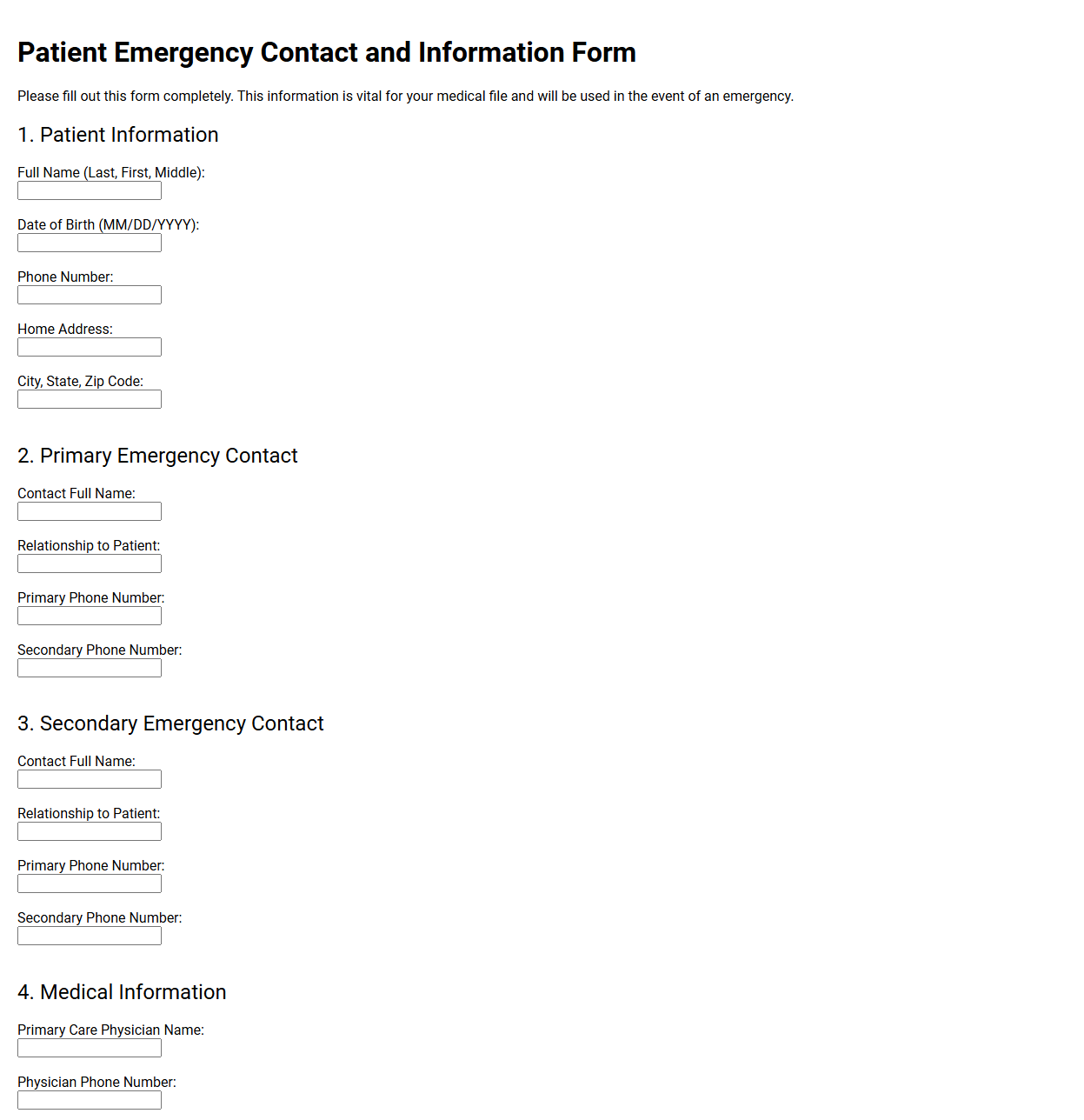
Patient Emergency Contact and Information Form
💾 Patient Emergency Contact and Information Form .pdf
A patient emergency contact and information form collects crucial medical history, active prescriptions, allergies, and important contact details of trusted individuals. Healthcare providers routinely rely on this administrative document during critical situations to make informed decisions and quickly reach family members, ensuring safe, coordinated care during any unexpected medical events.
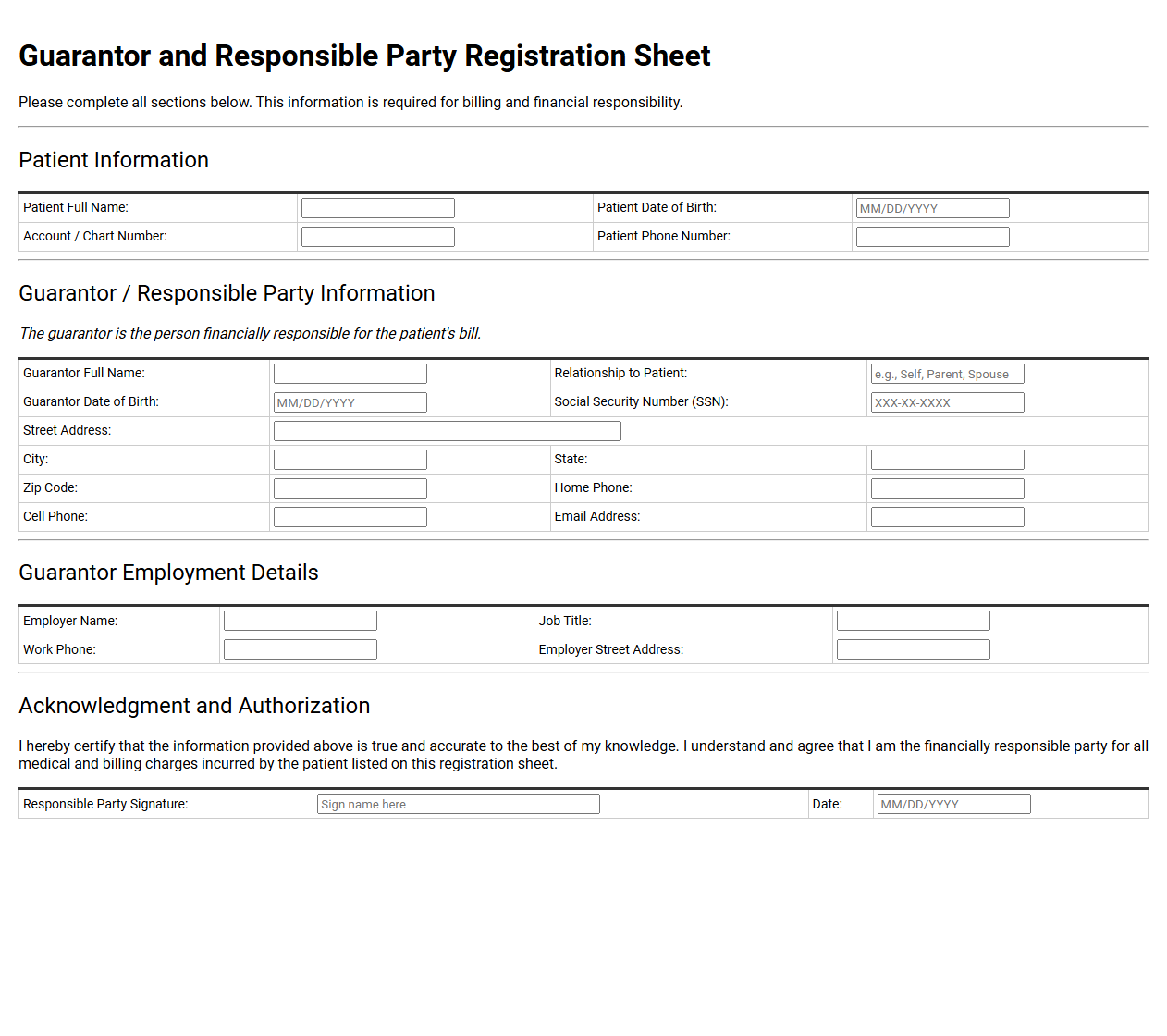
Guarantor and Responsible Party Registration Sheet
💾 Guarantor and Responsible Party Registration Sheet .pdf
This administrative document identifies the individual legally liable for medical or legal financial obligations. It captures contact details, billing information, and relationship to the patient. By signing, the designated guarantor formally accepts accountability for unpaid balances, ensuring clear communication and accurate billing processes between the provider and the responsible party.
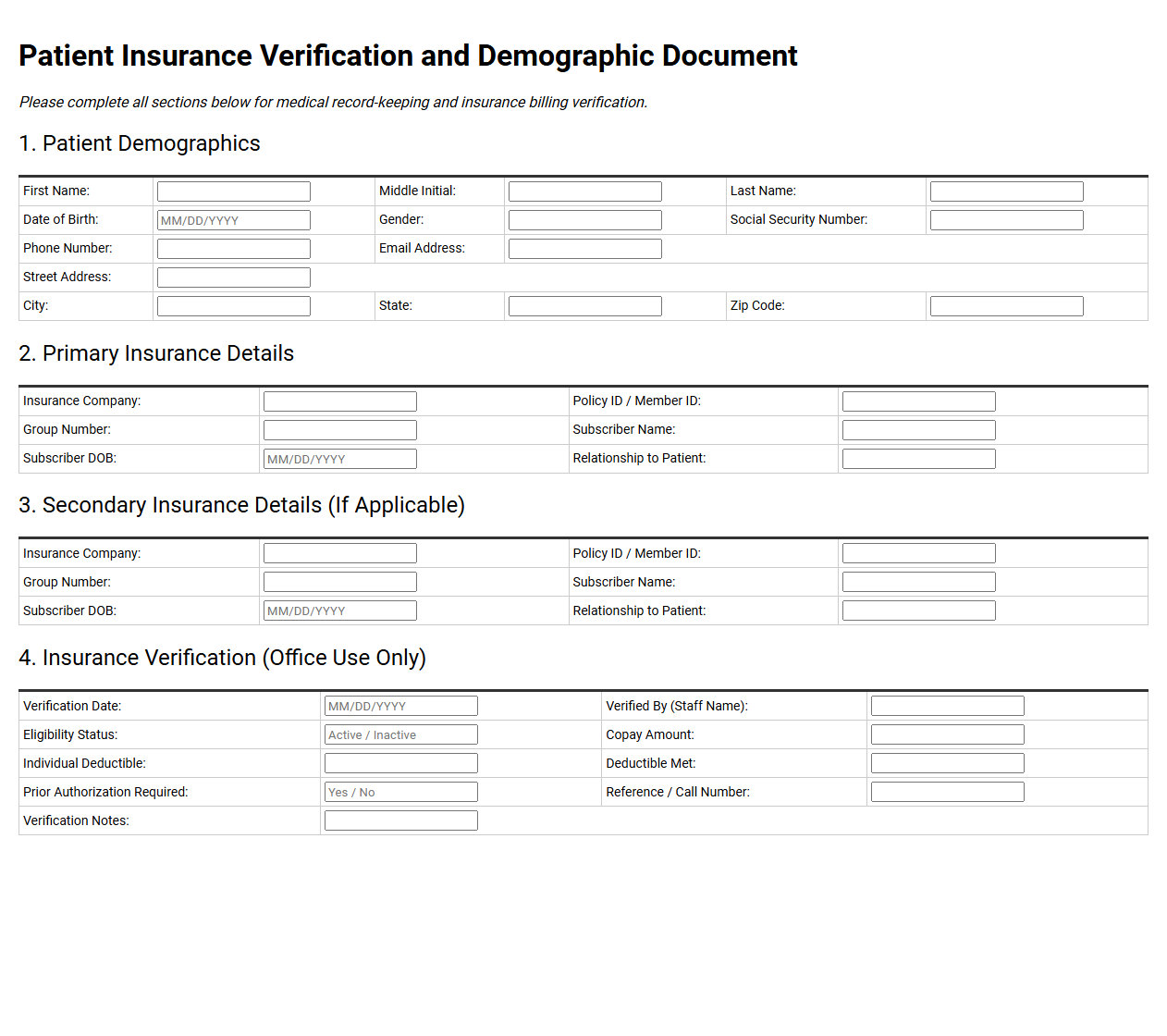
Patient Insurance Verification and Demographic Document
💾 Patient Insurance Verification and Demographic Document .pdf
A patient insurance verification and demographic document captures vital administrative details. It records personal data like name, address, and contact information alongside insurance policy numbers and provider networks. Healthcare staff utilize this record to confirm active coverage, determine co-payments, and facilitate accurate billing before medical appointments.
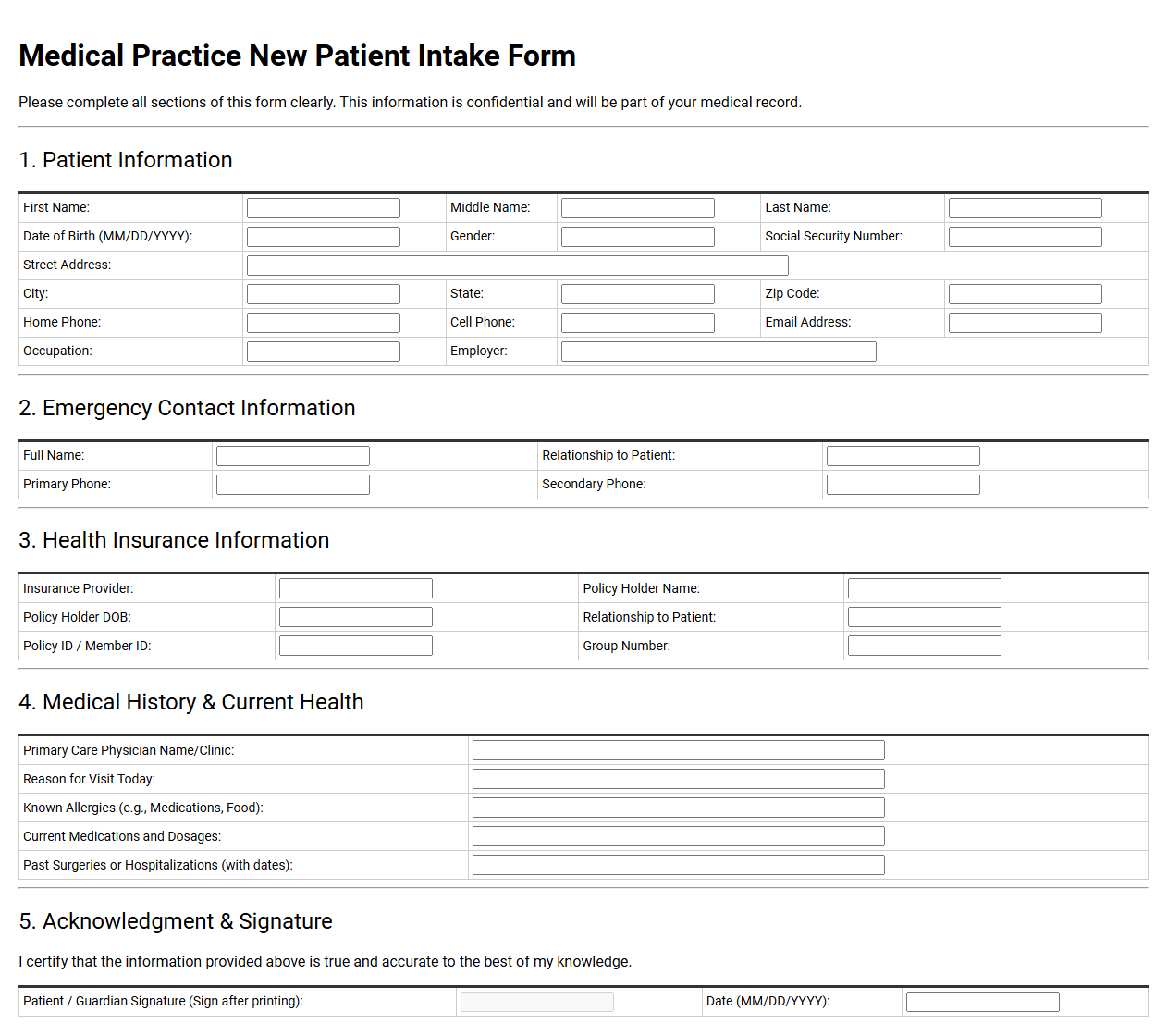
Medical Practice New Patient Intake Form
💾 Medical Practice New Patient Intake Form .pdf
A medical practice new patient intake form gathers critical demographic, insurance, and health history details. This document streamlines administrative processes, ensuring accurate billing and clinical preparedness. Patients record allergies, current medications, and past surgeries, enabling healthcare providers to deliver safe, tailored treatment from their very first appointment.
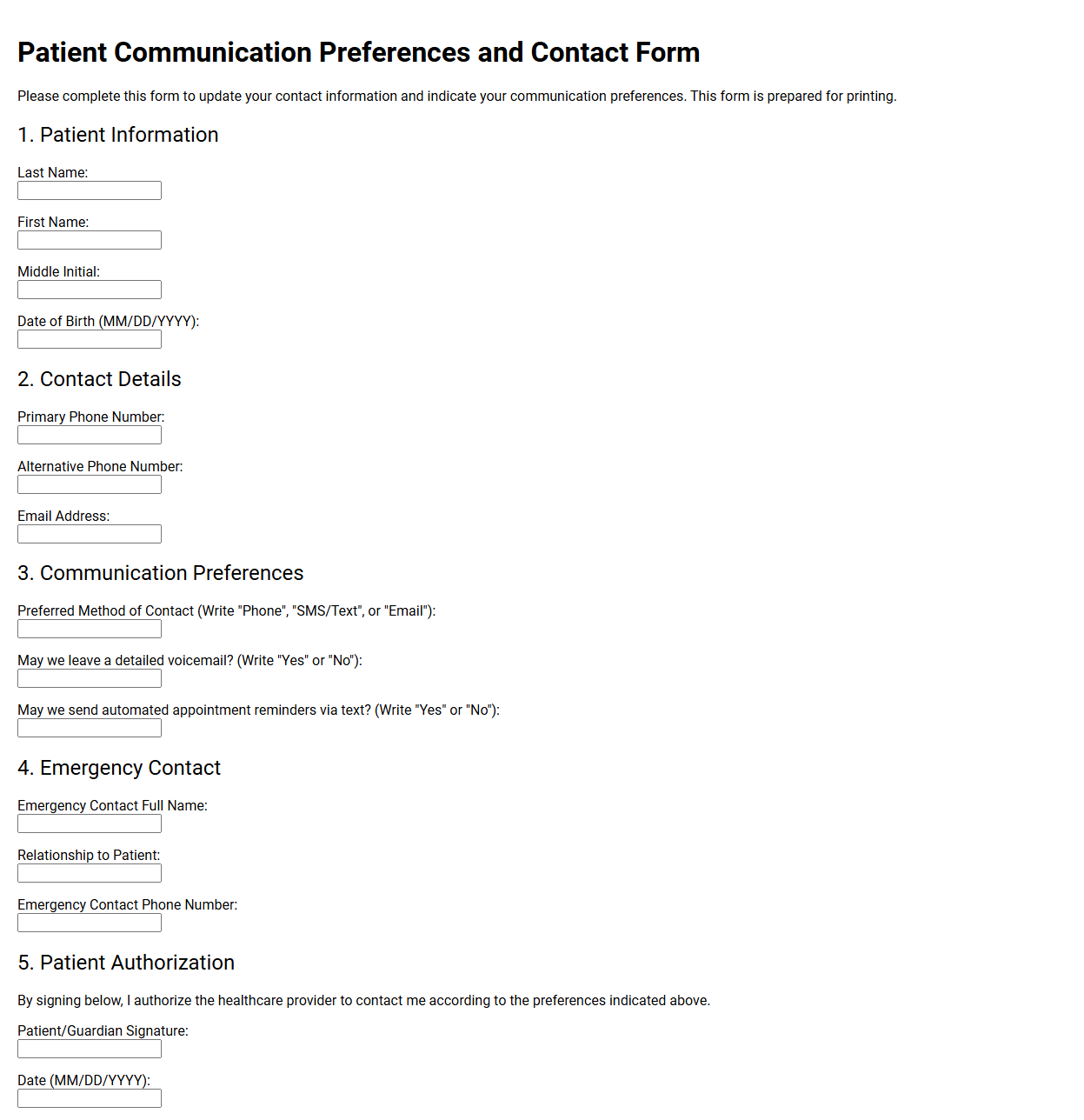
Patient Communication Preferences and Contact Form
💾 Patient Communication Preferences and Contact Form .pdf
A patient communication preferences document outlines how individuals choose to receive medical updates. This form records choices for text messages, emails, or phone calls regarding appointments and billing. It secures consent for digital notifications, helping healthcare providers maintain strict privacy standards while delivering timely, personalized care updates directly to patients.
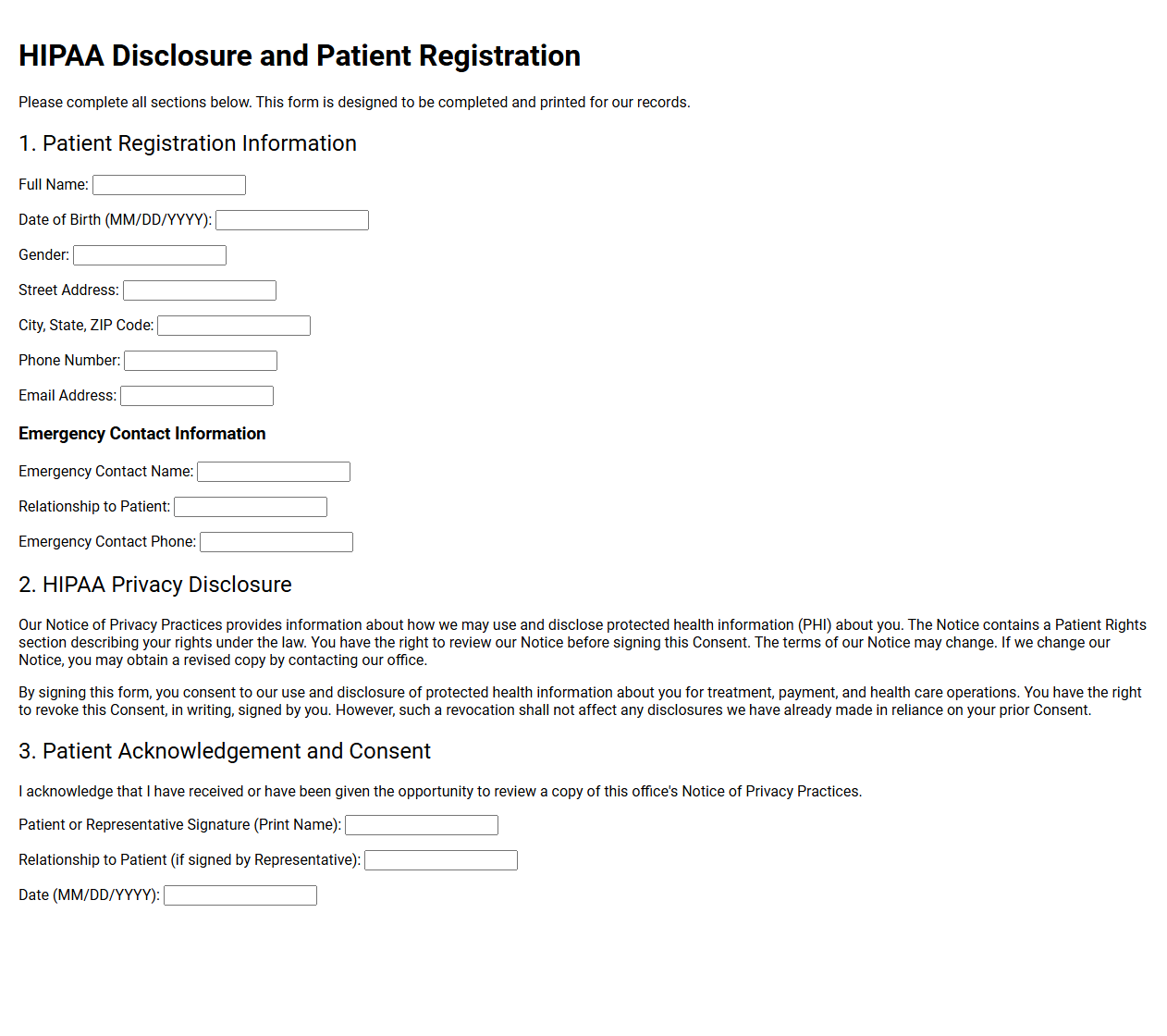
HIPAA Disclosure and Patient Registration Template
💾 HIPAA Disclosure and Patient Registration Template .pdf
This standard intake document combines crucial patient registration with vital HIPAA disclosure terms. It collects demographic details, insurance data, and medical history. Simultaneously, it informs patients of their privacy rights, outlining how their protected health information is secured, shared, and managed by the healthcare provider to ensure legal compliance.
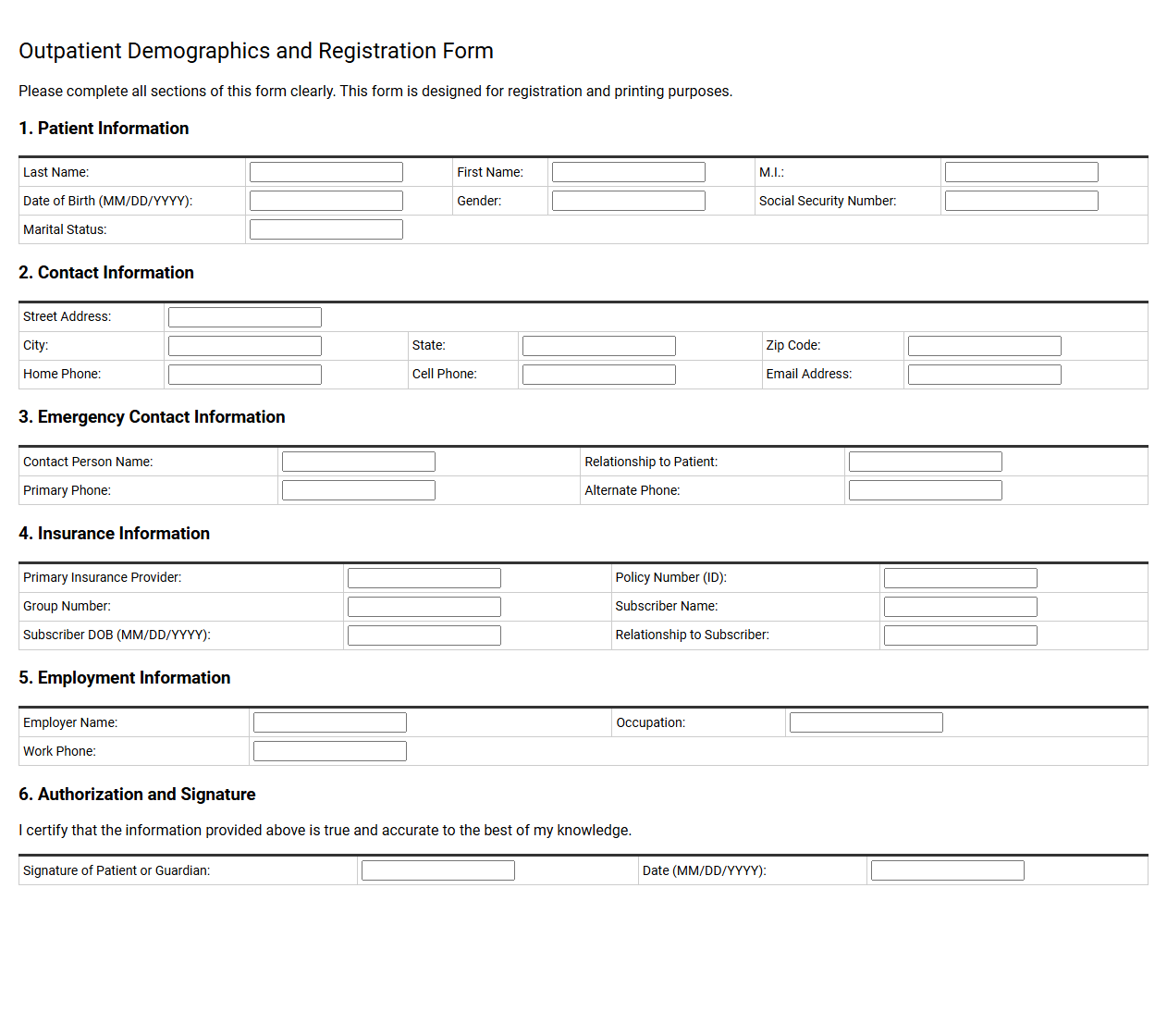
Outpatient Demographics and Registration Form
💾 Outpatient Demographics and Registration Form .pdf
An outpatient demographics and registration form gathers critical patient information before treatment. This document collects personal details, contact data, and insurance coverage. It establishes a secure medical record, coordinates billing processes, and ensures healthcare providers can contact individuals or emergency contacts during the delivery of medical care.
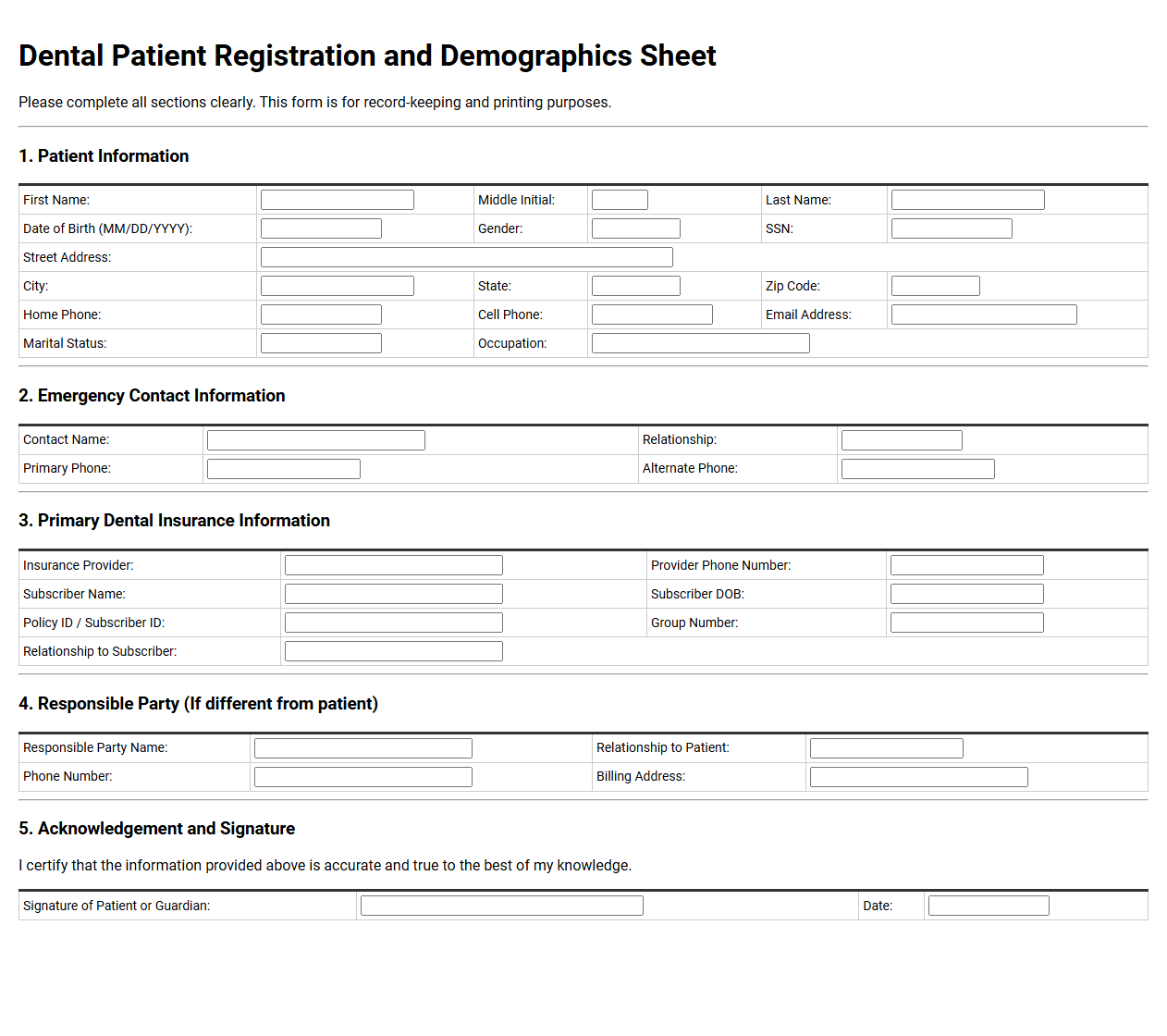
Dental Patient Registration and Demographics Sheet
💾 Dental Patient Registration and Demographics Sheet .pdf
A dental patient registration and demographics sheet gathers crucial background details. This foundational document collects personal contact information, insurance coverage data, and emergency contacts. It ensures accurate medical records, streamlines administrative billing processes, and helps the clinic communicate effectively, laying the groundwork for safe, personalized oral healthcare delivery.
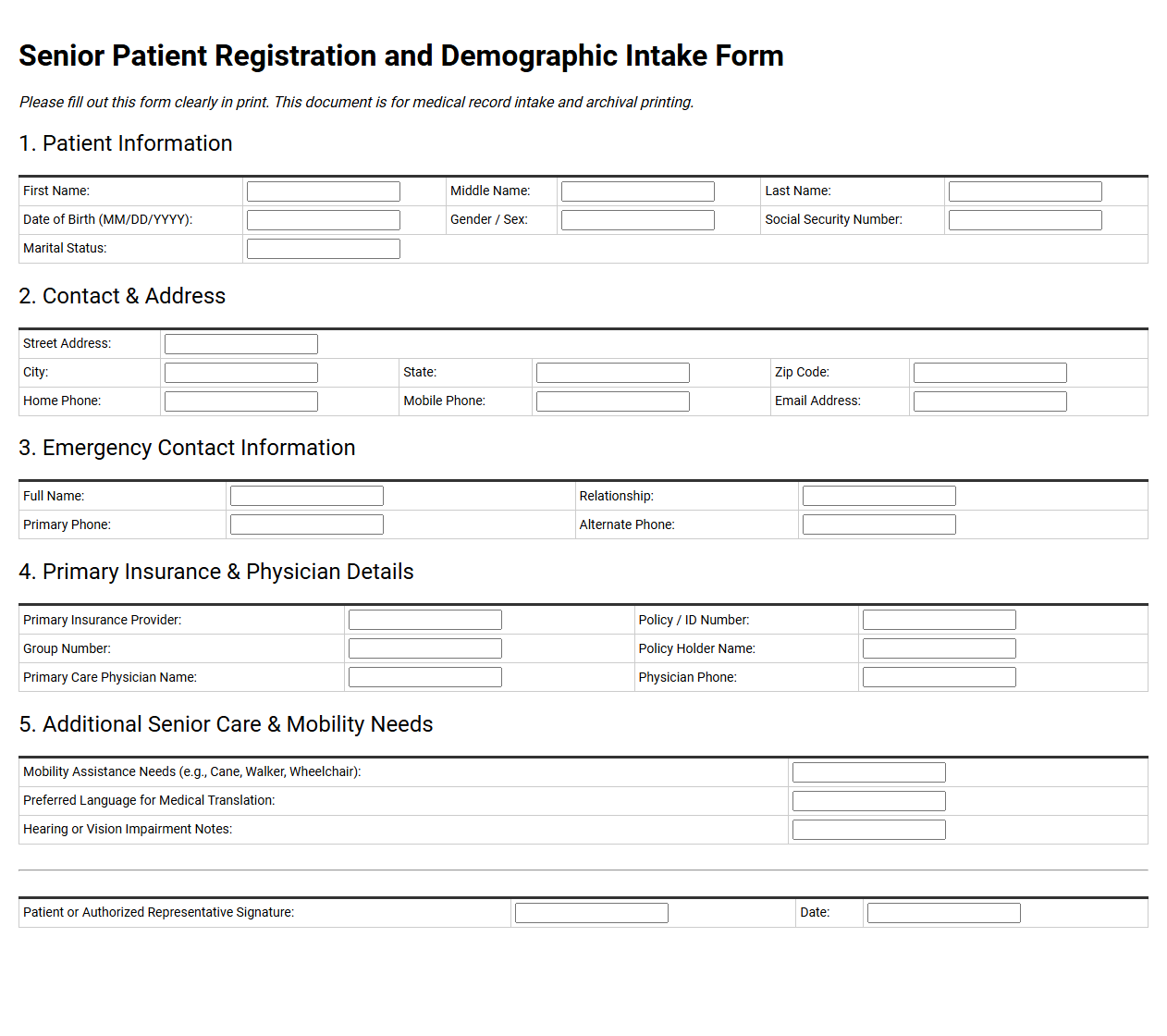
Senior Patient Registration and Demographic Intake Form
💾 Senior Patient Registration and Demographic Intake Form .pdf
A senior patient registration and demographic intake form gathers crucial personal, medical, and insurance information. It captures contact details, emergency contacts, primary care physician data, and Medicare or private insurance specifics. This foundational document streamlines the onboarding process, ensuring healthcare providers deliver tailored, accurate medical care from the very first visit.
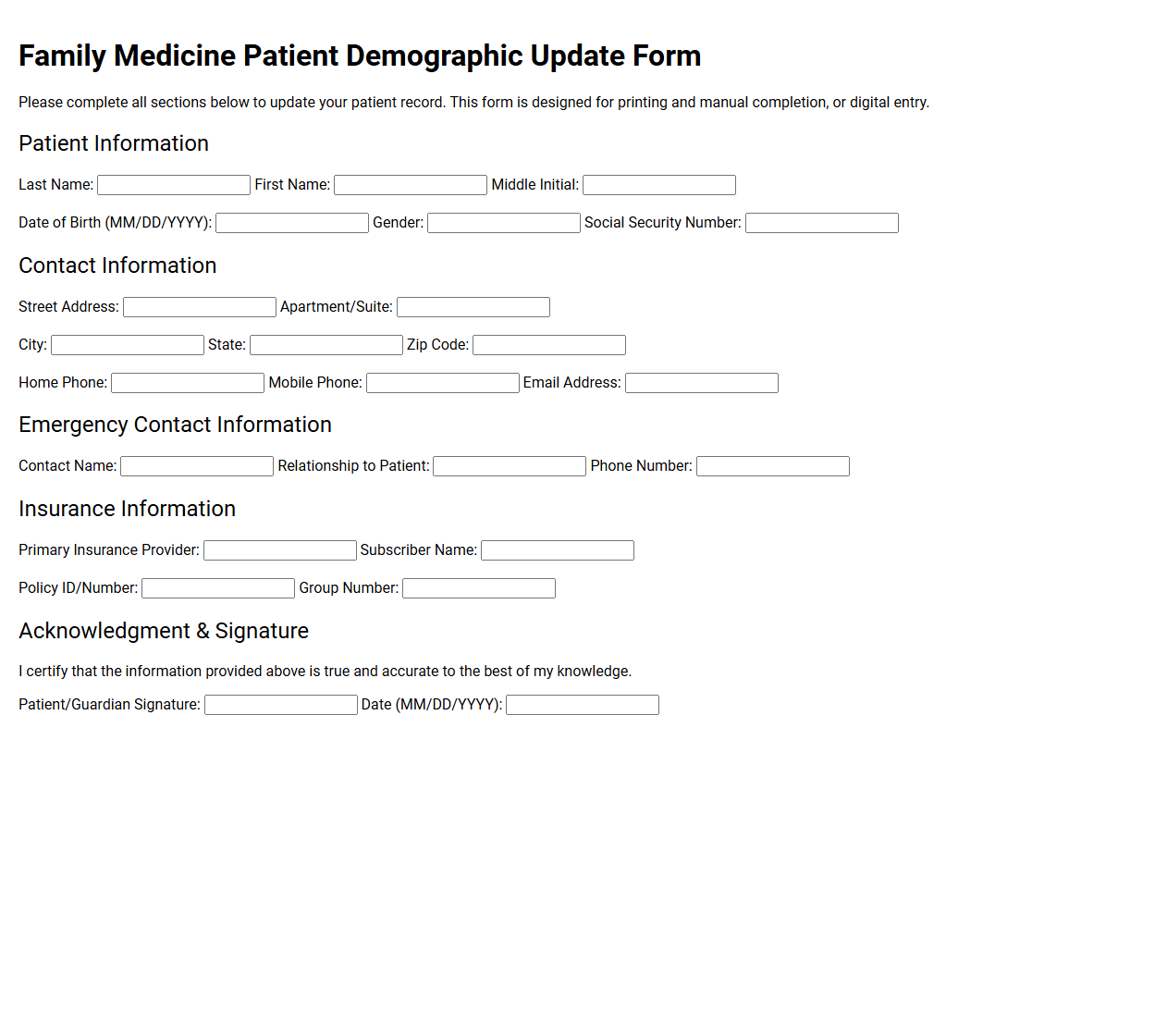
Family Medicine Patient Demographic Update Form
💾 Family Medicine Patient Demographic Update Form .pdf
A Family Medicine Patient Demographic Update Form is a standard document used by healthcare providers to maintain accurate records. It collects current contact details, insurance coverage, emergency contacts, and personal information. Keeping this data current ensures seamless communication, accurate billing, and safe medical care for patients of all ages.
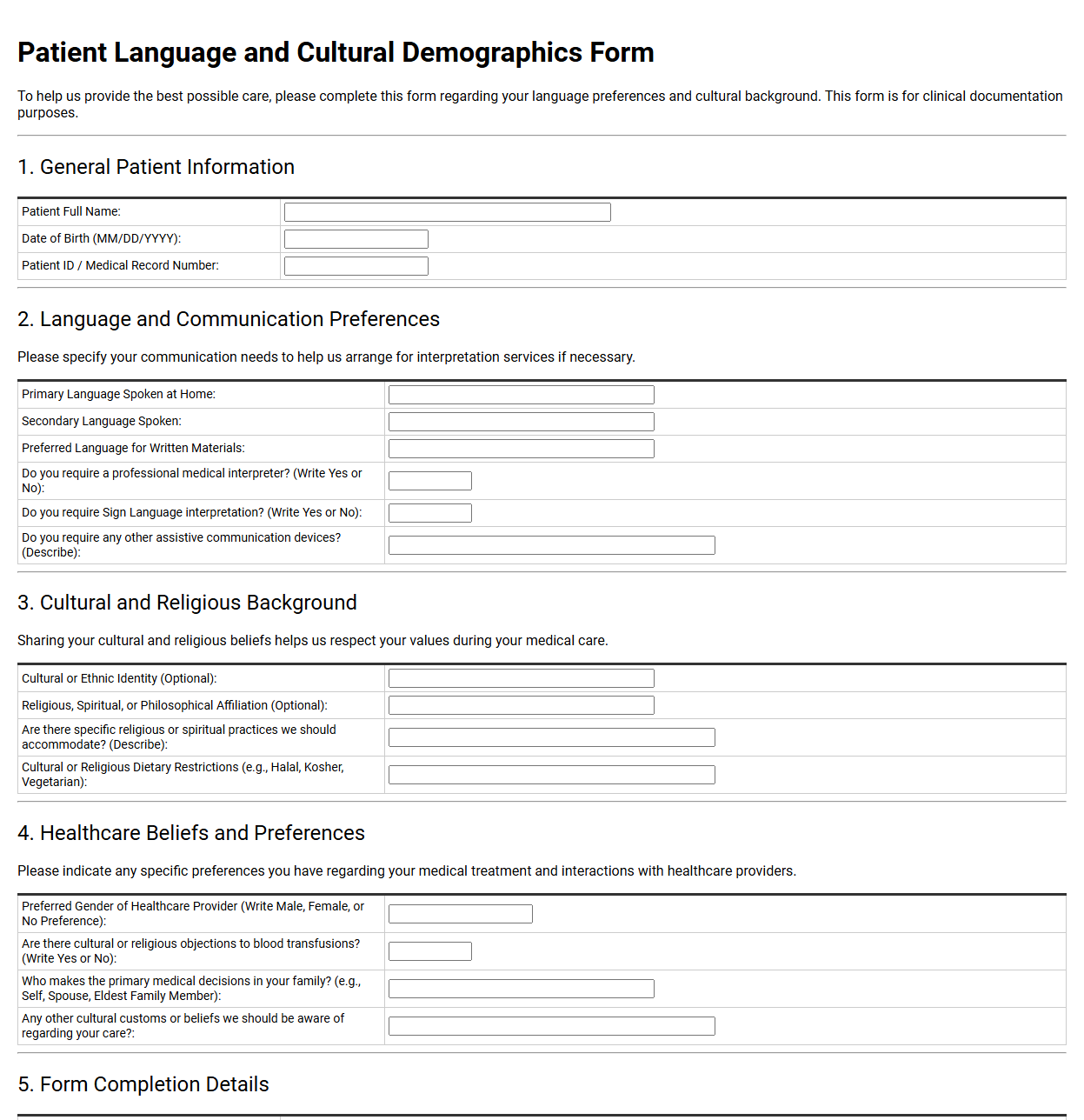
Patient Language and Cultural Demographics Form
💾 Patient Language and Cultural Demographics Form .pdf
The Patient Language and Cultural Demographics Form collects vital information regarding a patient's preferred language, ethnicity, and cultural practices. Healthcare providers utilize this data to deliver highly personalized care, arrange appropriate translation services, and respect cultural traditions, ultimately improving clinical outcomes and fostering stronger trust between patients and medical staff.
Patient Registration and Demographics FAQ
Why do healthcare providers collect patient demographic data?
Patient demographic data includes non-clinical information like age, gender, race, and contact details. Providers collect this to identify patients accurately, ensure safe communication, meet federal reporting mandates, and understand the diverse populations they serve to deliver culturally competent, equitable healthcare.
How does patient registration secure sensitive personal information?
Patient registration forms collect Protected Health Information (PHI) governed by HIPAA regulations. This demographic data is encrypted, stored securely in Electronic Health Records (EHR) systems, and only accessed by authorized personnel to ensure patient privacy, maintain confidentiality, and prevent identity theft within the medical facility.
What is the difference between patient registration and clinical intake?
Patient registration focuses on administrative and demographic details, such as identity, insurance, and emergency contacts. Clinical intake, conversely, gathers medical histories, symptoms, and lifestyle habits. While registration establishes the administrative and financial foundation, clinical intake guides the actual medical diagnosis and treatment planning.
Why is emergency contact information a critical part of patient demographics?
Emergency contacts are vital for patient safety during medical crises when the patient cannot communicate. This demographic detail allows healthcare providers to quickly notify designated individuals, obtain surrogate consent for urgent procedures, and coordinate discharge planning with trusted family members or guardians.
How do demographic details facilitate medical billing and insurance processing?
Accurate demographic information, such as legal name, date of birth, and policy numbers, directly links patients to their insurance providers. Clean demographic data prevents claim denials, ensures precise eligibility verification, reduces billing errors, and guarantees that financial responsibilities are correctly assigned to either the insurer or the patient.
Disclaimer:
The documents and templates provided on this page are for informational and illustrative purposes only. They do not constitute professional, legal, or financial advice, and should not be relied upon as such. Because individual circumstances and regulatory requirements vary, these materials may not be suitable for your specific needs. We recommend consulting with a qualified professional before adapting or using any of these examples for official or commercial purposes.