
Patient Informed Consent and Financial Agreement Template - Streamlining Clinical Onboarding and Financial Liability for the Patient (Healthcare Recipient)
Navigating clinical onboarding often introduces significant friction, as healthcare providers struggle to balance rigorous regulatory compliance with patient clarity regarding out-of-pocket costs. While standard insurance reimbursements and government funding sources cover core clinical services, patients increasingly face complex deductibles and private-pay responsibilities. By deploying a unified Patient Informed Consent and Financial Agreement Template, practices grant patients complete financial transparency up front, dramatically reducing billing disputes.
To manage expectations, this power tool must stipulate that signing does not guarantee insurance coverage, but rather establishes clear terms of personal liability for services, such as elective outpatient therapies. Below, we examine how this essential template streamlines clinical onboarding, protects practice revenue, and empowers patients.
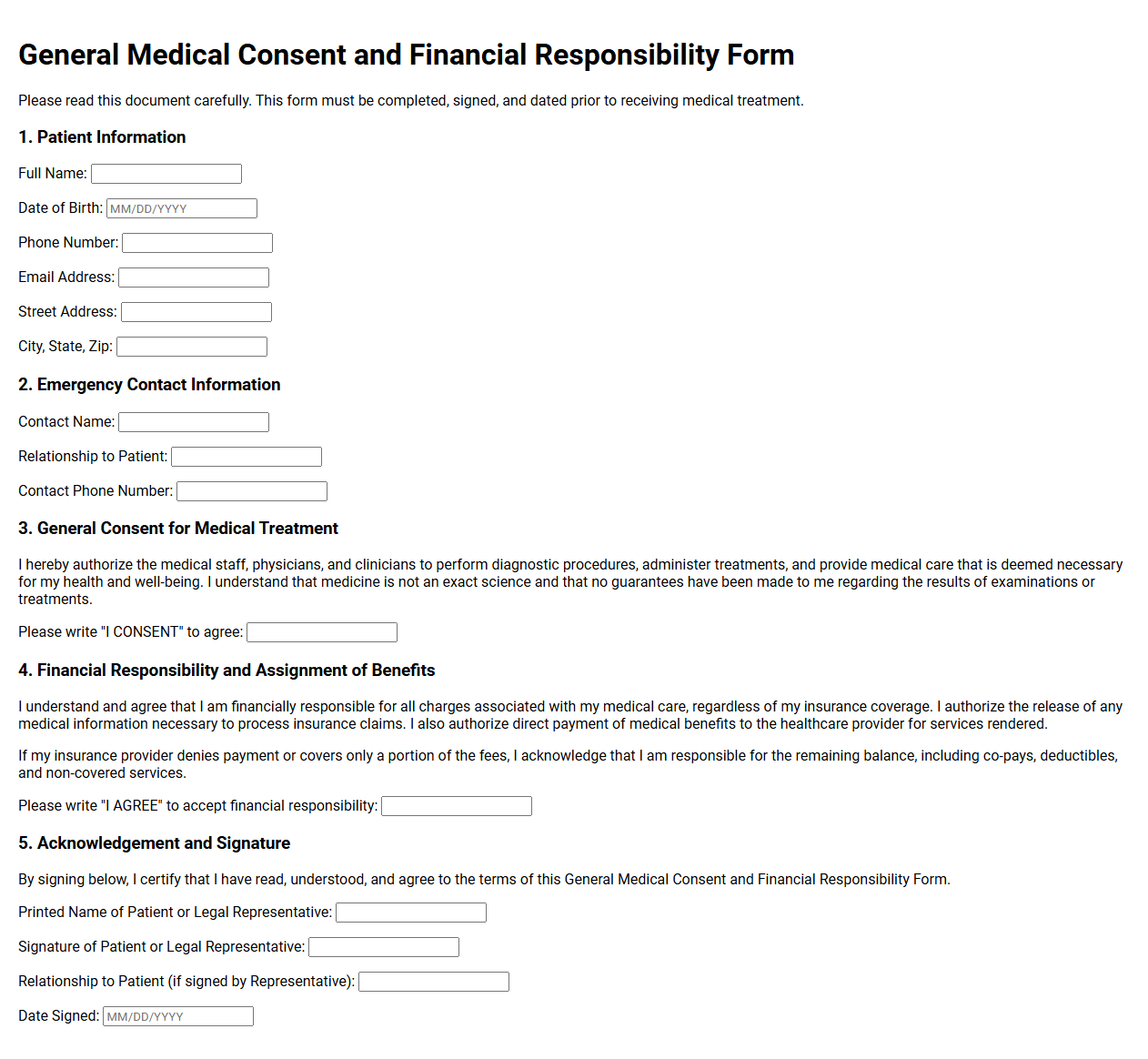
General Medical Consent and Financial Responsibility Form
💾 General Medical Consent and Financial Responsibility Form .pdf
A general medical consent and financial responsibility form is a standard healthcare document. It authorizes practitioners to provide necessary medical care and treatment. Additionally, it establishes the patient's agreement to pay for services rendered, clarifying billing procedures and insurance utilization to guarantee clear communication regarding healthcare costs and treatment authorization.
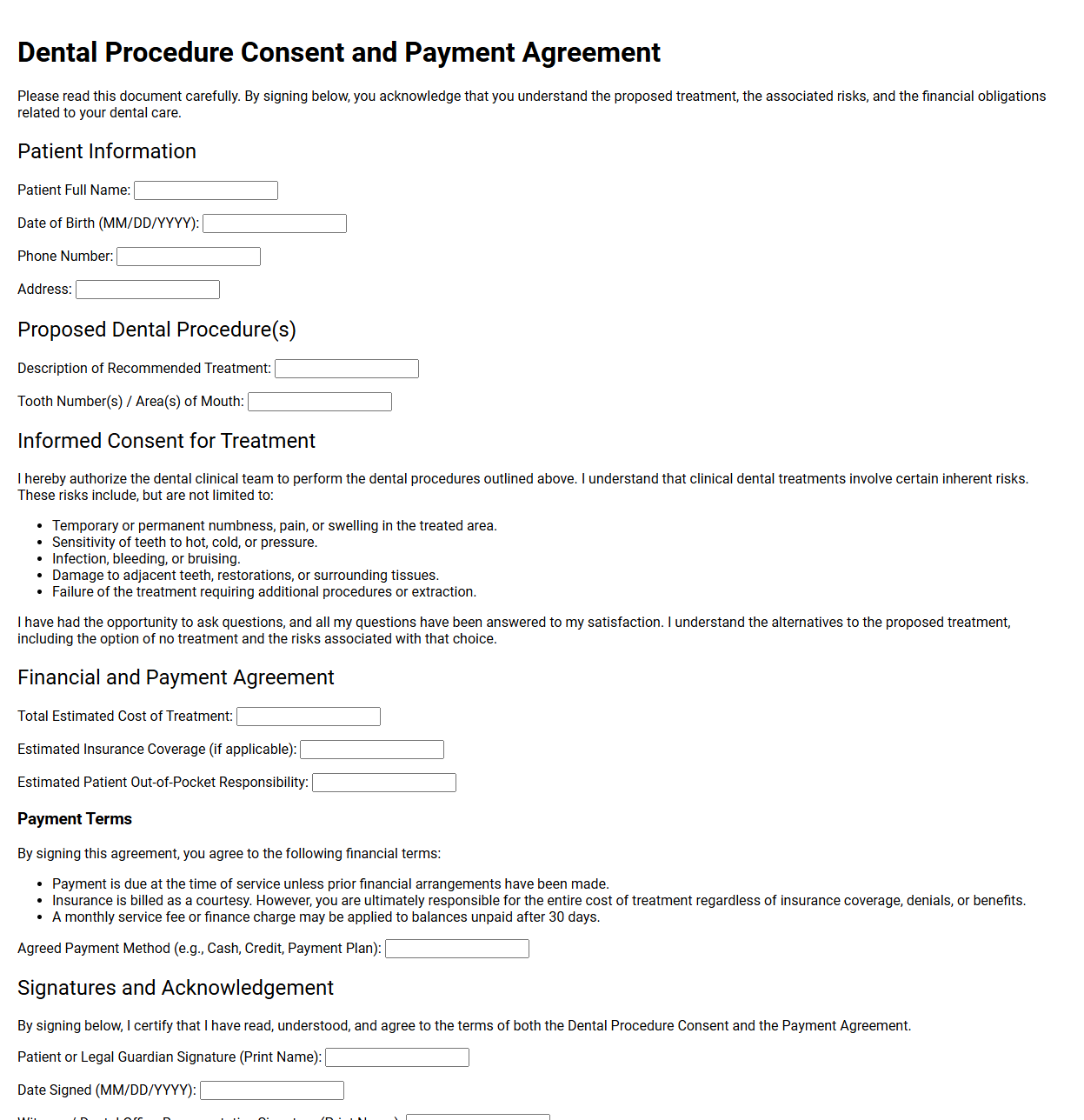
Dental Procedure Consent and Payment Agreement
💾 Dental Procedure Consent and Payment Agreement .pdf
A dental procedure consent and payment agreement outlines proposed treatments, associated risks, and expected outcomes. It secures patient authorization for clinical care while defining financial responsibilities, including insurance billing, co-payments, and payment schedules. This dual-purpose document ensures clear communication, protecting both patients and practitioners prior to commencing treatment.
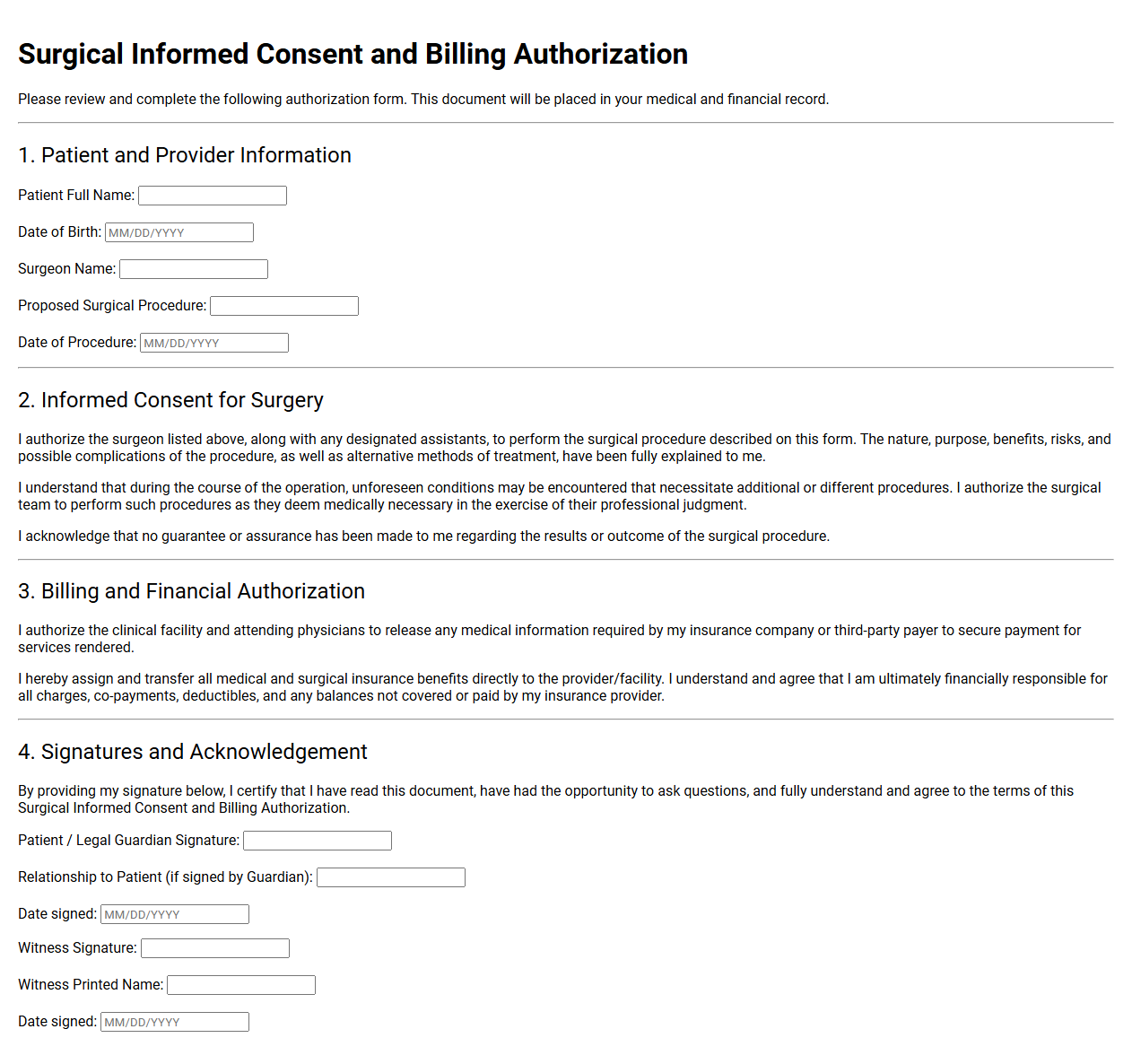
Surgical Informed Consent and Billing Authorization
💾 Surgical Informed Consent and Billing Authorization .pdf
This document outlines planned surgical procedures, potential risks, benefits, and alternative treatments, ensuring patients make informed healthcare decisions. It also includes financial agreements, granting the facility permission to bill insurance providers directly and establishing the patient's responsibility for any remaining balances or copayments prior to the scheduled operation.
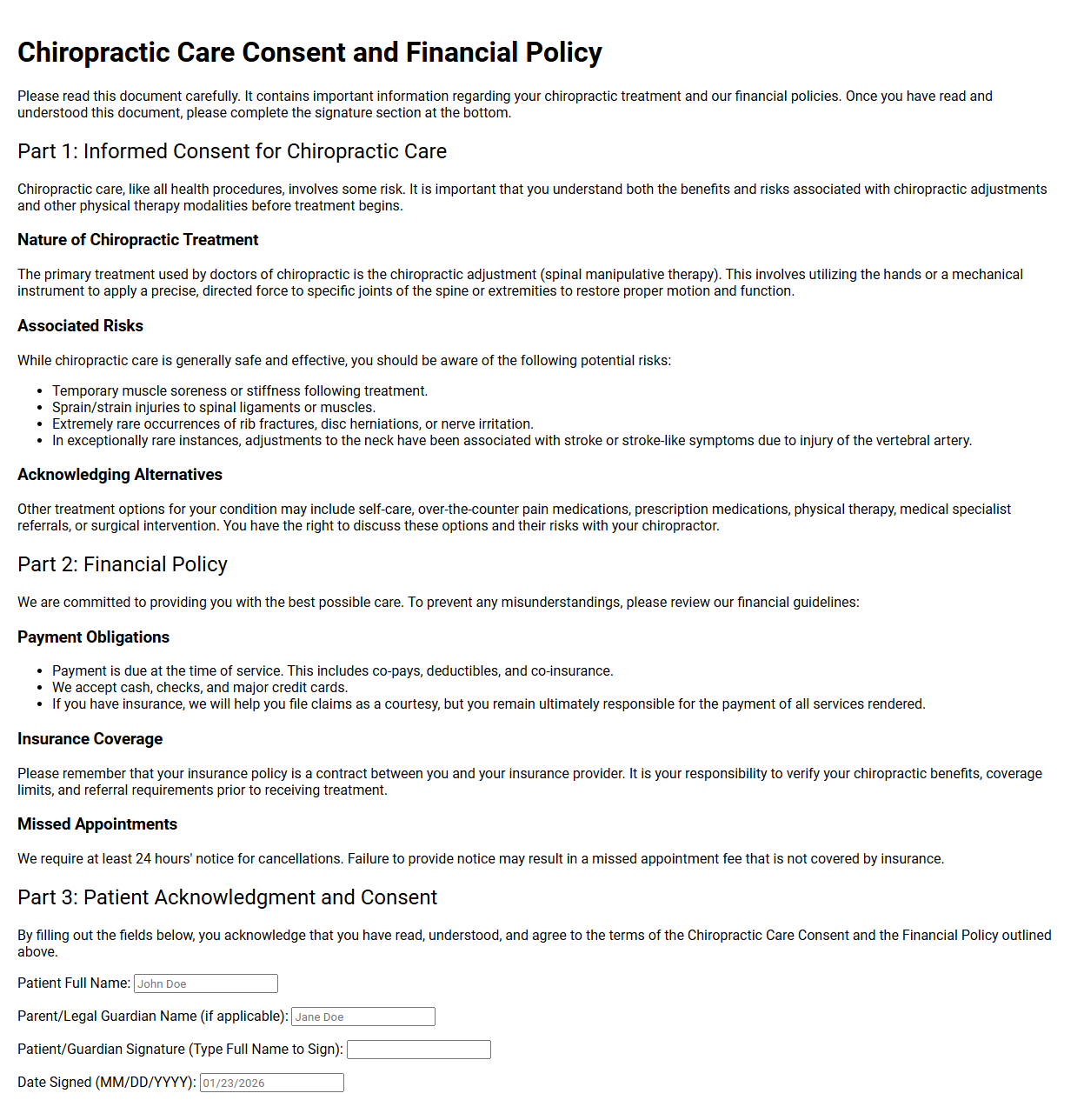
Chiropractic Care Consent and Financial Policy
💾 Chiropractic Care Consent and Financial Policy .pdf
A chiropractic consent and financial policy outlines treatment risks, benefits, and clinical methods. Patients sign to authorize care and acknowledge their financial responsibilities. This document clarifies payment terms, insurance billing procedures, and cancellation fees, ensuring a transparent relationship between the clinic and the patient before starting spinal adjustments.
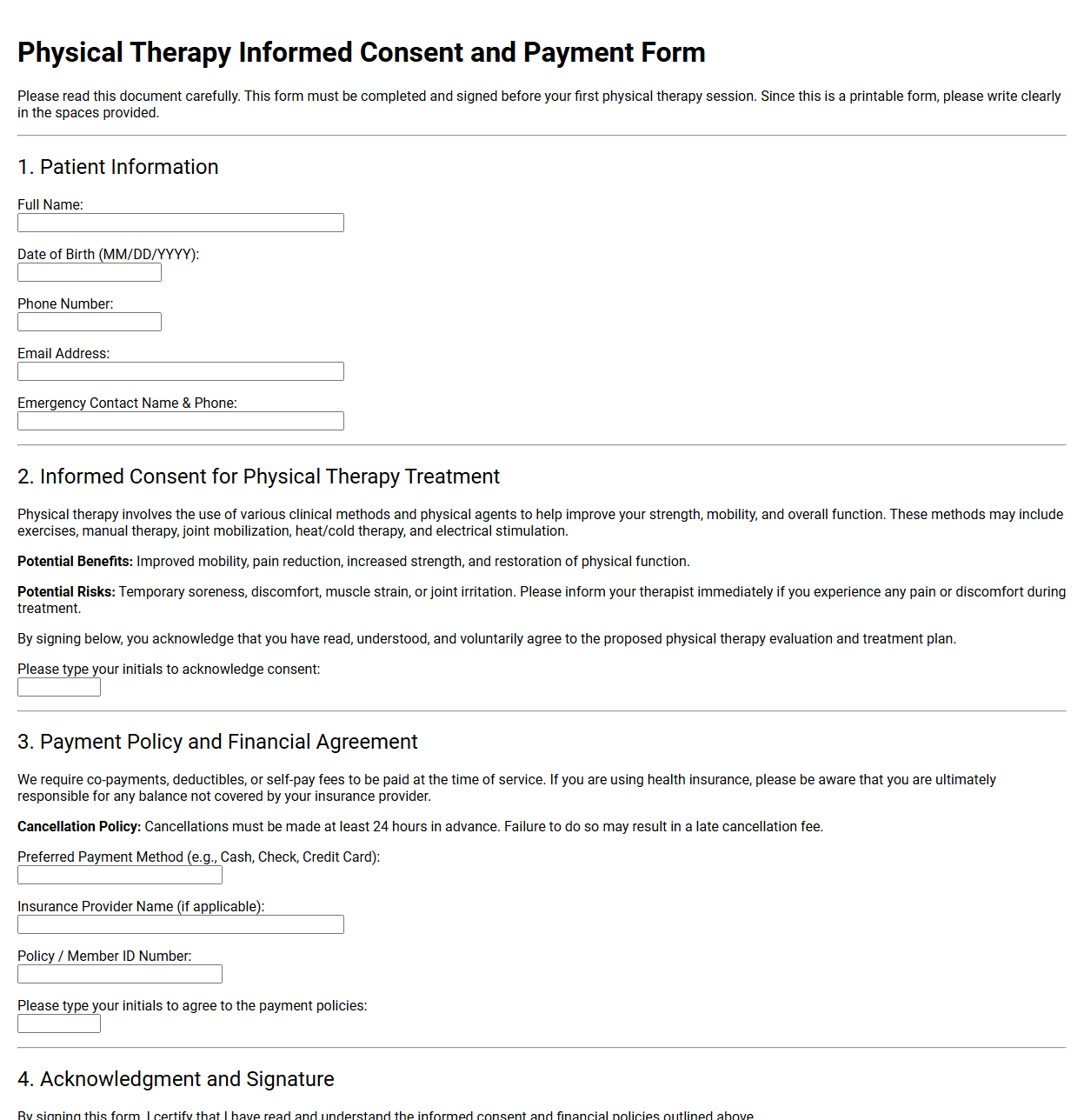
Physical Therapy Informed Consent and Payment Form
💾 Physical Therapy Informed Consent and Payment Form .pdf
A physical therapy informed consent and payment form is a standard intake document. It outlines proposed treatment plans, potential risks, and expected benefits. Additionally, it details financial policies, insurance billing procedures, and co-payment obligations. Patients sign to authorize care and accept financial responsibility before starting their rehabilitation sessions.
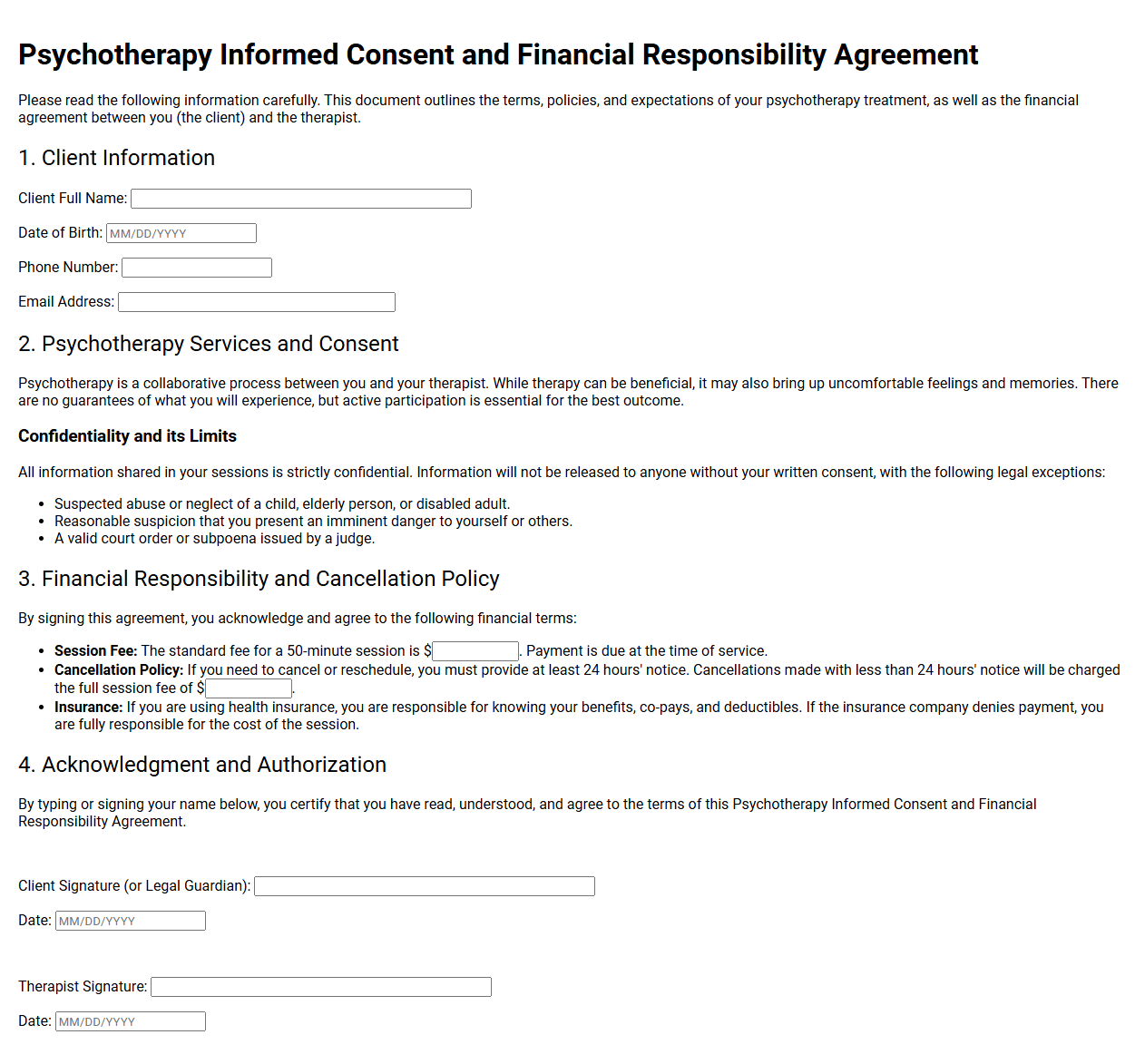
Psychotherapy Informed Consent and Financial Responsibility Agreement
💾 Psychotherapy Informed Consent and Financial Responsibility Agreement .pdf
This standard intake document outlines the therapeutic relationship's core boundaries. It details treatment procedures, potential risks, and strict confidentiality limits, ensuring patients fully understand their rights. Additionally, the agreement clarifies payment policies, hourly fees, cancellation penalties, and insurance billing procedures, establishing clear financial expectations before professional clinical therapy officially begins.
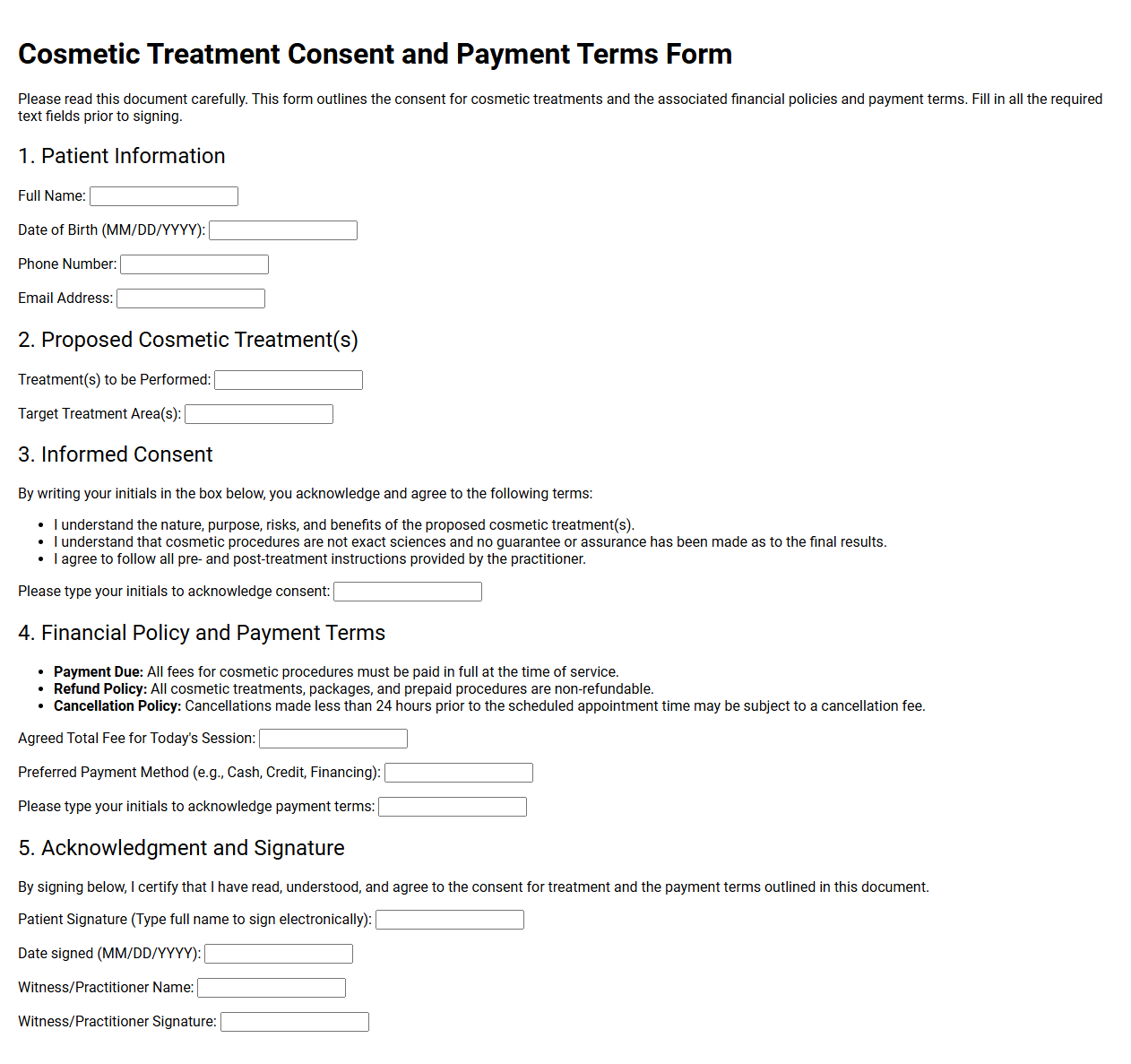
Cosmetic Treatment Consent and Payment Terms Form
💾 Cosmetic Treatment Consent and Payment Terms Form .pdf
This formal document outlines the specific procedures, potential risks, and expected outcomes of cosmetic therapies. It ensures clients understand their chosen options before proceeding. Additionally, it clarifies financial obligations, detailing costs, non-refundable deposits, and cancellation policies, establishing clear boundaries and mutual understanding between practitioners and patients prior to clinical care.
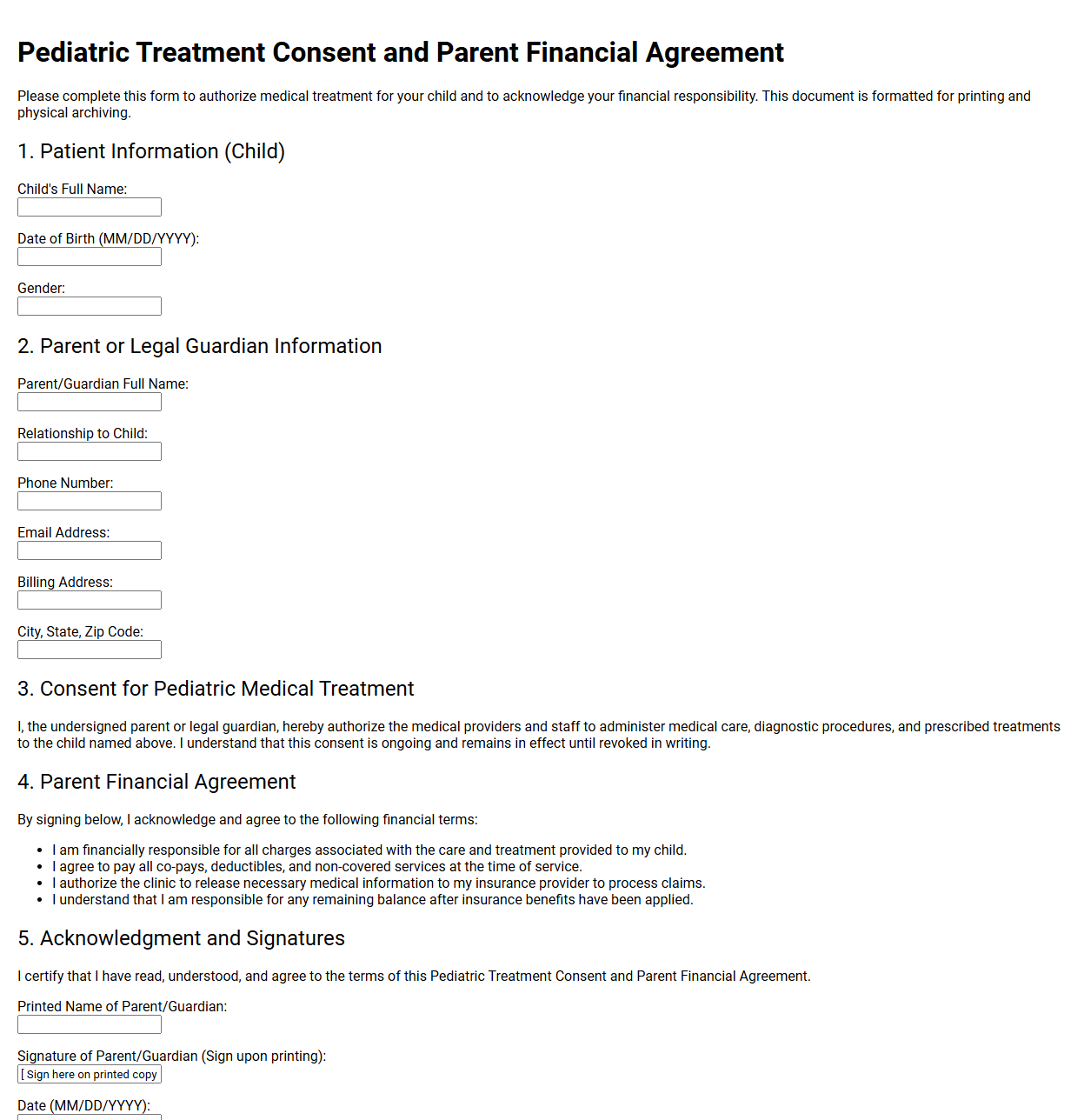
Pediatric Treatment Consent and Parent Financial Agreement
💾 Pediatric Treatment Consent and Parent Financial Agreement .pdf
This standard medical document authorizes healthcare providers to administer necessary care to minor patients. By signing, parents or legal guardians grant permission for clinical evaluations, routine procedures, and emergency vaccinations. Additionally, the agreement establishes clear financial responsibility for all associated healthcare costs, co-payments, deductibles, and outstanding insurance balances.
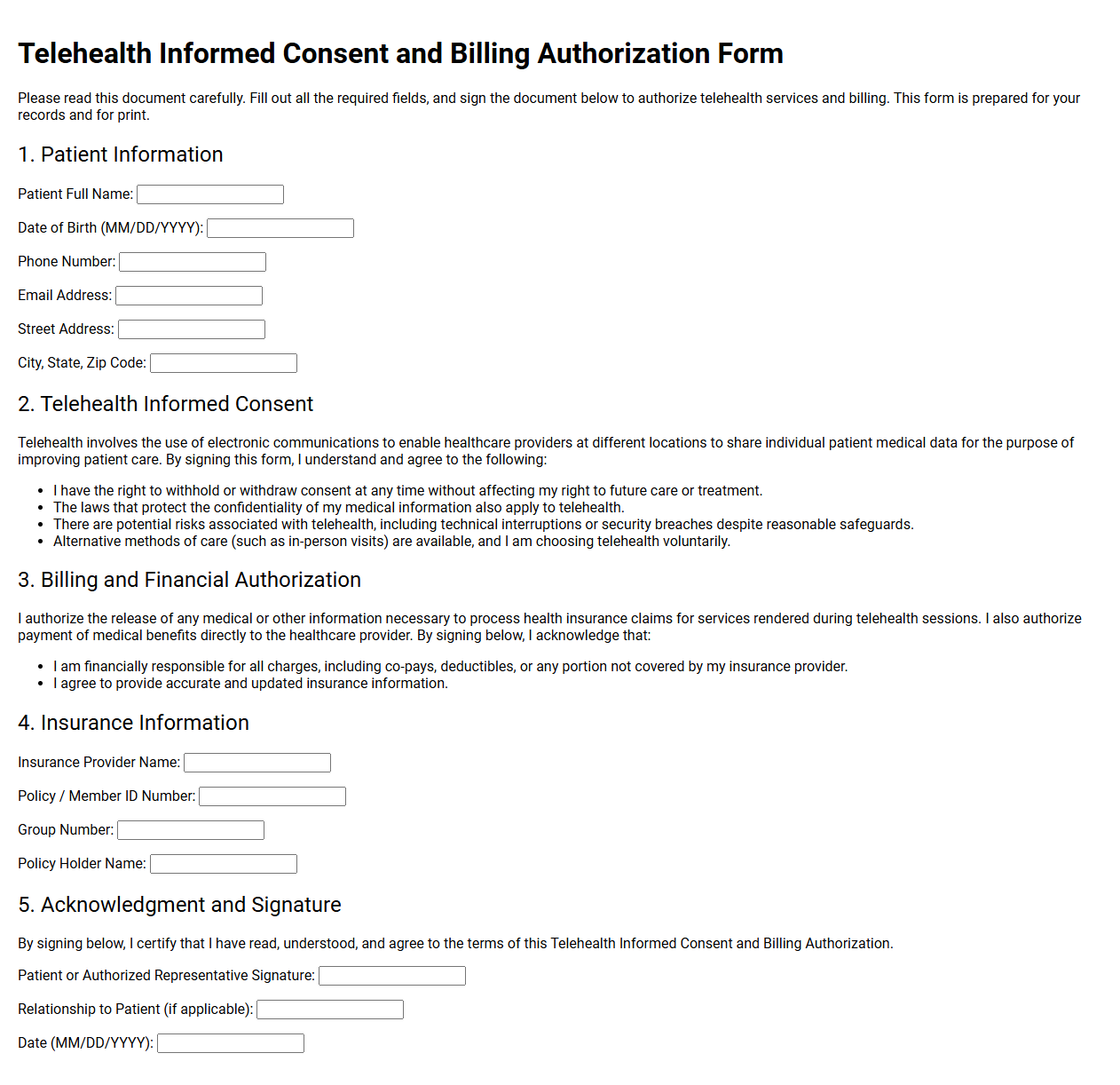
Telehealth Informed Consent and Billing Authorization Form
💾 Telehealth Informed Consent and Billing Authorization Form .pdf
This formal agreement outlines the terms of virtual medical care, detailing how digital consultations operate. It secures patient agreement for remote treatment while explaining privacy risks. Additionally, the document authorizes healthcare providers to bill insurance companies or process direct payments for all telehealth services received during these remote clinical sessions.
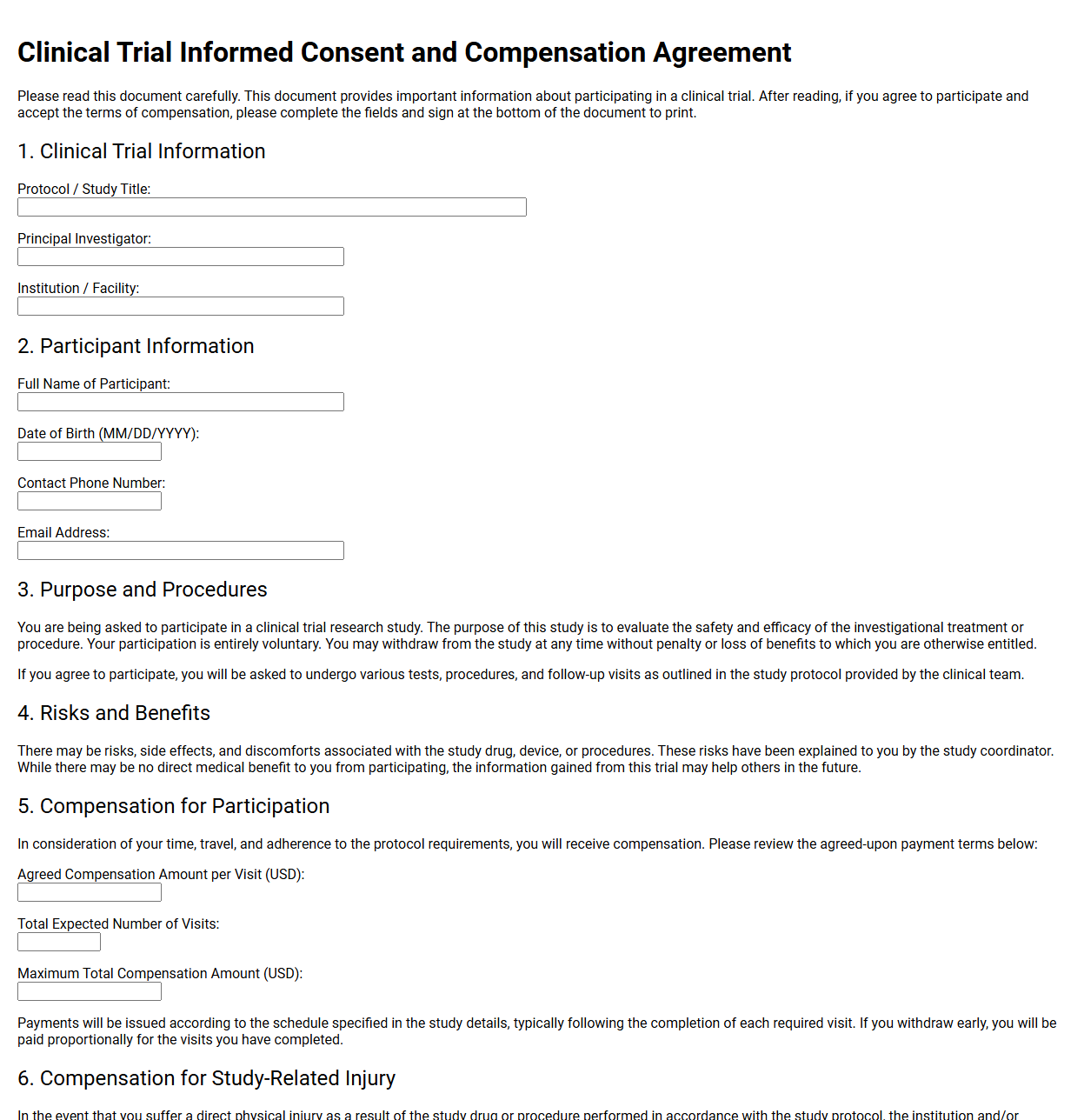
Clinical Trial Informed Consent and Compensation Agreement
💾 Clinical Trial Informed Consent and Compensation Agreement .pdf
This crucial document details the clinical trial's procedures, potential risks, and expected benefits, ensuring participants make knowledgeable decisions. It outlines financial reimbursement for time and travel, alongside potential compensation for study-related injuries. Signing confirms voluntary participation and a clear understanding of all rights, safeguarding volunteer welfare throughout the medical study.
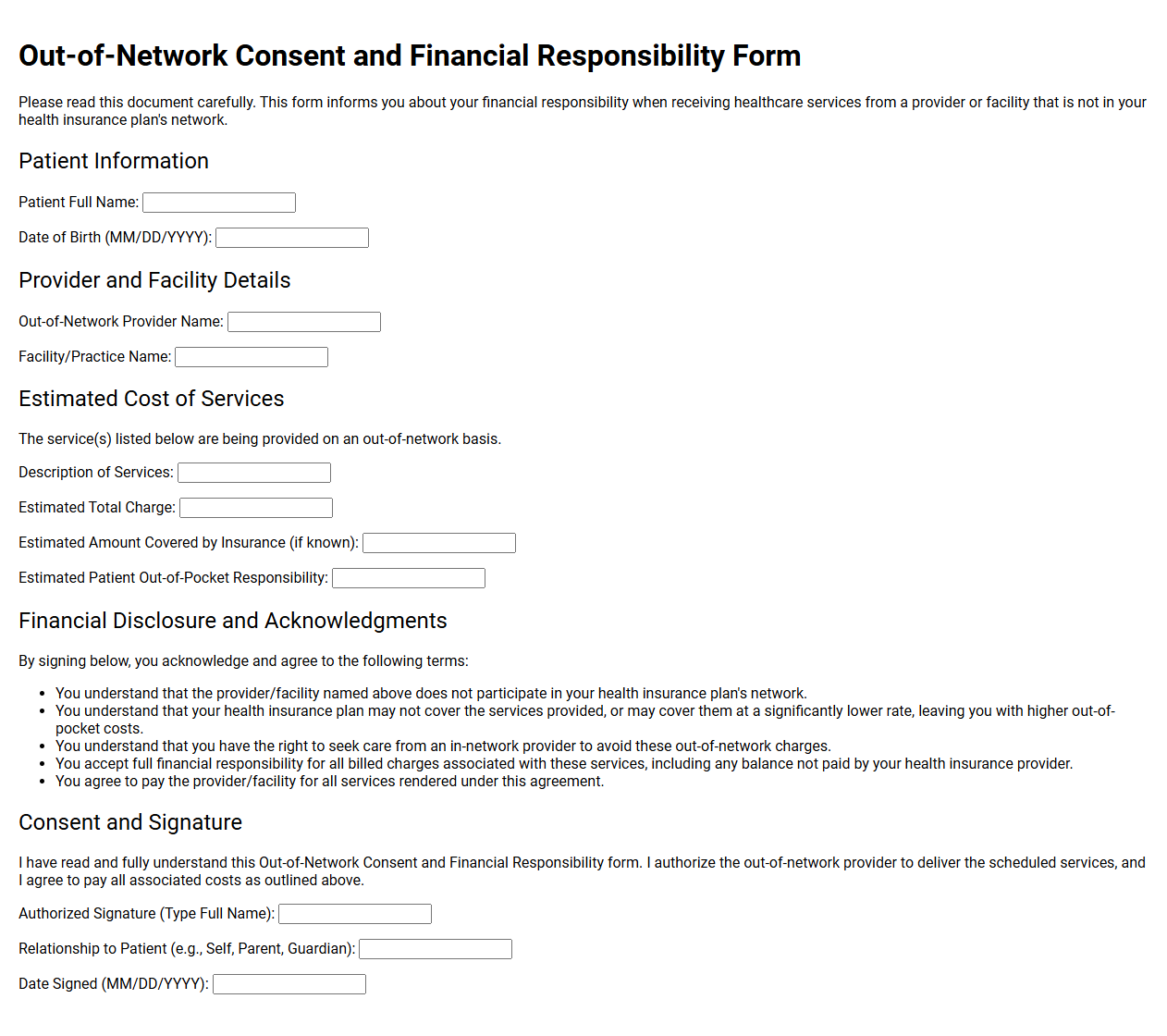
Out of Network Consent and Financial Responsibility
💾 Out of Network Consent and Financial Responsibility .pdf
This document informs patients that a healthcare provider does not participate in their insurance network. By signing, individuals acknowledge personal liability for all future incurred charges. It details estimated costs, outlines billing procedures, and confirms agreement to pay outstanding balances that insurance declines to cover during the scheduled medical care.
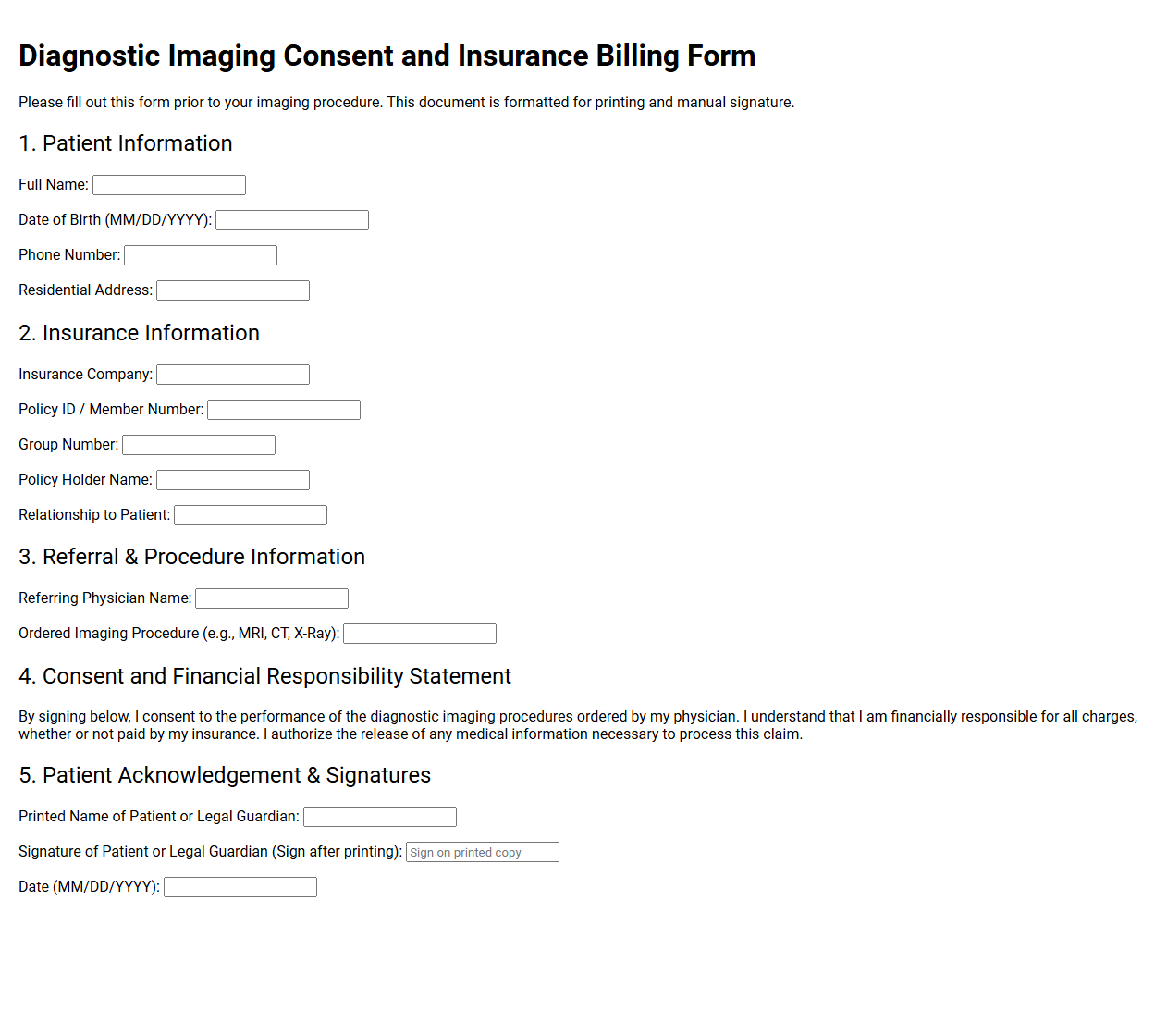
Diagnostic Imaging Consent and Insurance Billing Form
💾 Diagnostic Imaging Consent and Insurance Billing Form .pdf
This standard medical document authorizes healthcare providers to perform prescribed diagnostic scans, such as X-rays or MRIs. It outlines procedure risks, secures patient agreement, and collects vital insurance details. By signing, patients confirm their direct financial responsibility for any remaining balances that are not covered by their primary insurance plans.
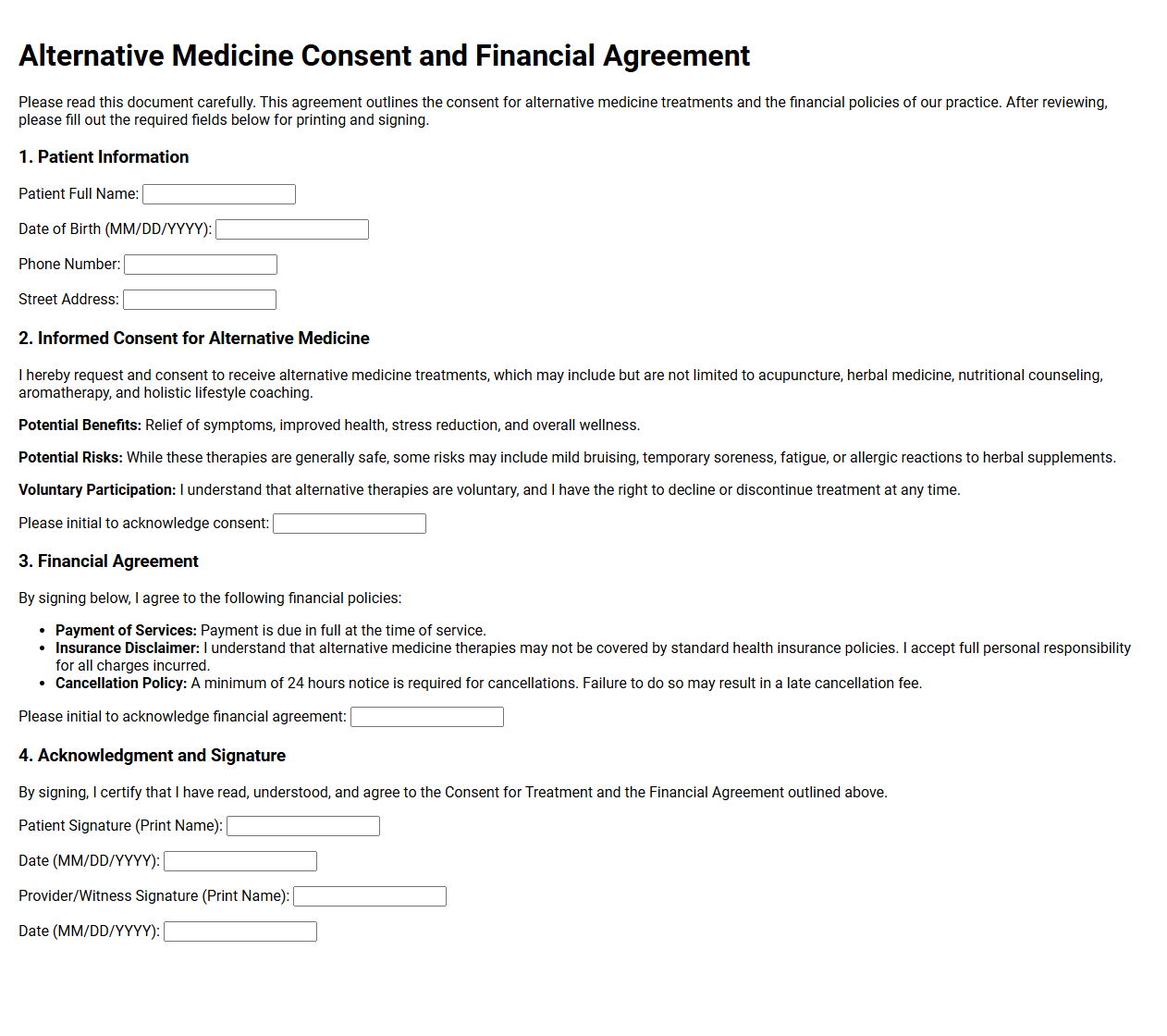
Alternative Medicine Consent and Financial Agreement
💾 Alternative Medicine Consent and Financial Agreement .pdf
This standard document outlines the specific risks and benefits of holistic therapies, securing your informed consent before treatment begins. It clearly details your financial responsibilities, including service fees, insurance limitations, and cancellation policies. Your signature confirms you understand the voluntary nature of these procedures and agree to all associated costs.
Patient Informed Consent and Financial Agreement FAQ
What is the purpose of a Patient Informed Consent and Financial Agreement?
This document establishes a transparent relationship between the patient and healthcare provider. It ensures the patient understands the proposed medical treatment risks, benefits, and alternatives (informed consent), while concurrently clarifying their financial responsibilities, payment policies, and insurance billing authorizations before services are rendered.
Why is informed consent legally and ethically necessary?
Informed consent is a fundamental patient right that protects autonomy. Legally and ethically, healthcare providers must disclose material risks and treatment benefits so patients can make voluntary, educated decisions about their care, thereby preventing unauthorized medical interventions and fostering mutual trust.
What financial obligations does the agreement typically cover?
The financial agreement outlines the patient's responsibility for co-pays, deductibles, and non-covered services. It details billing procedures, accepted payment methods, late fees, and insurance claims processing, ensuring patients understand their personal financial liabilities and the clinic's payment timelines prior to receiving treatment.
Can a patient revoke informed consent after signing the agreement?
Yes, a patient has the legal right to withdraw or revoke their consent to medical treatment at any time, even after signing. However, revocation only applies to future procedures; patients remain financially responsible for any medical services already rendered before the consent was officially withdrawn.
How does insurance coverage interact with the financial agreement?
While the agreement allows the provider to bill insurance on the patient's behalf, it states that the patient is ultimately responsible for all costs. Insurance is a contract between the patient and their carrier; any unpaid balances due to coverage denials remain the patient's direct obligation.
Disclaimer:
The documents and templates provided on this page are for informational and illustrative purposes only. They do not constitute professional, legal, or financial advice, and should not be relied upon as such. Because individual circumstances and regulatory requirements vary, these materials may not be suitable for your specific needs. We recommend consulting with a qualified professional before adapting or using any of these examples for official or commercial purposes.