
Employee Remote Work Agreement Form Template - Formalizing Guidelines for Employee Telecommuting Arrangements
Managing a distributed workforce often introduces operational friction, as organizations struggle to maintain compliance and clear expectations across various jurisdictions. While standard operational budgets and technology funding sources easily cover hardware, they fail to address policy misalignment. Our Employee Remote Work Agreement Form Template bridges this gap, granting employers absolute legal clarity and structured accountability. Under the stipulation that organizations must adapt specific clauses to local labor laws, this tool establishes concrete guidelines for core working hours and data security protocols. Below, we outline how to implement this framework to secure your remote operations.
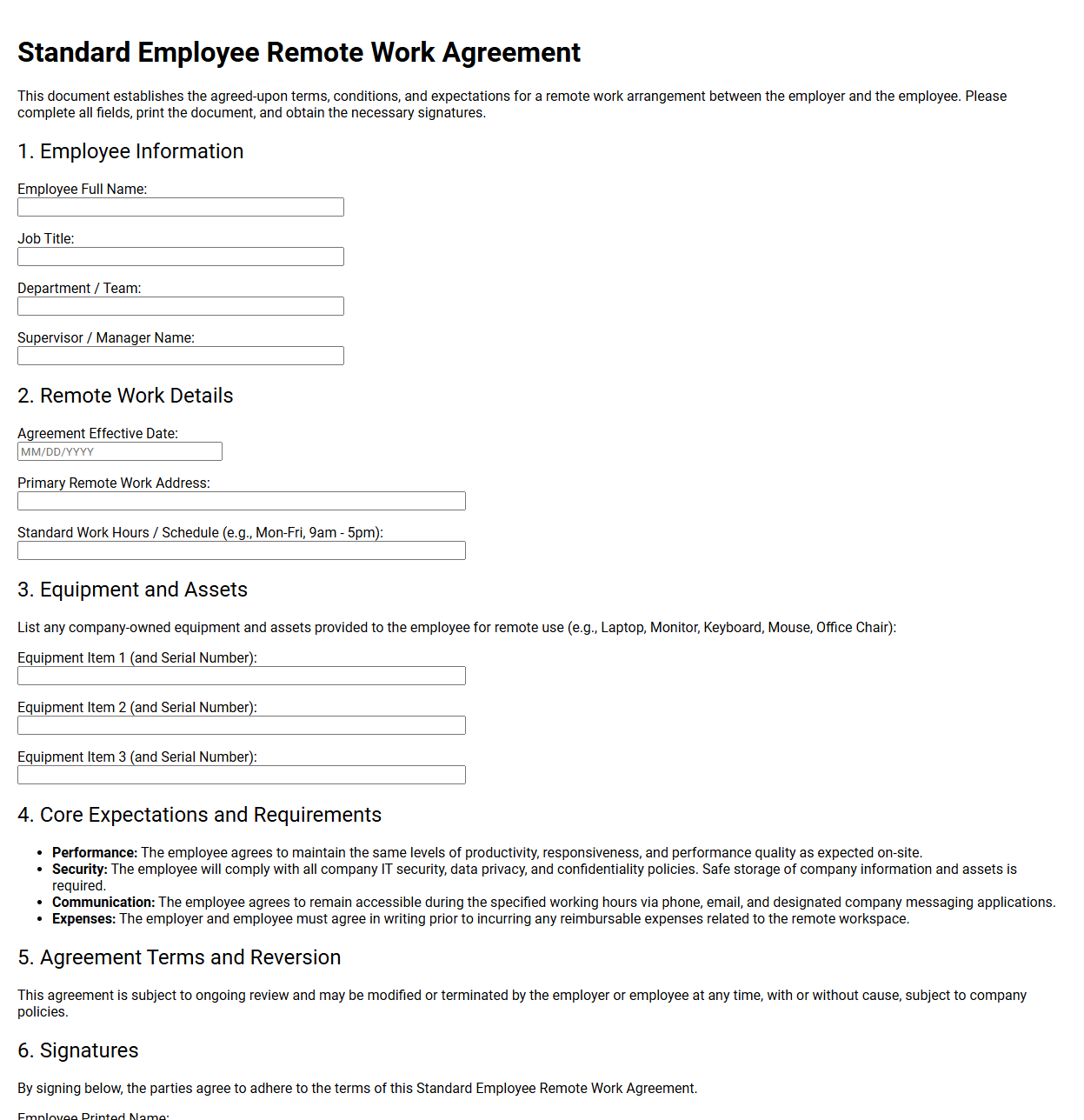
Standard Employee Remote Work Agreement Form
💾 Standard Employee Remote Work Agreement Form .pdf
A standard employee remote work agreement form outlines the terms of off-site employment. This document establishes clear expectations regarding work hours, job duties, data security, and communication protocols. It ensures both the employer and staff member align on performance standards, equipment use, and liability while working from home.
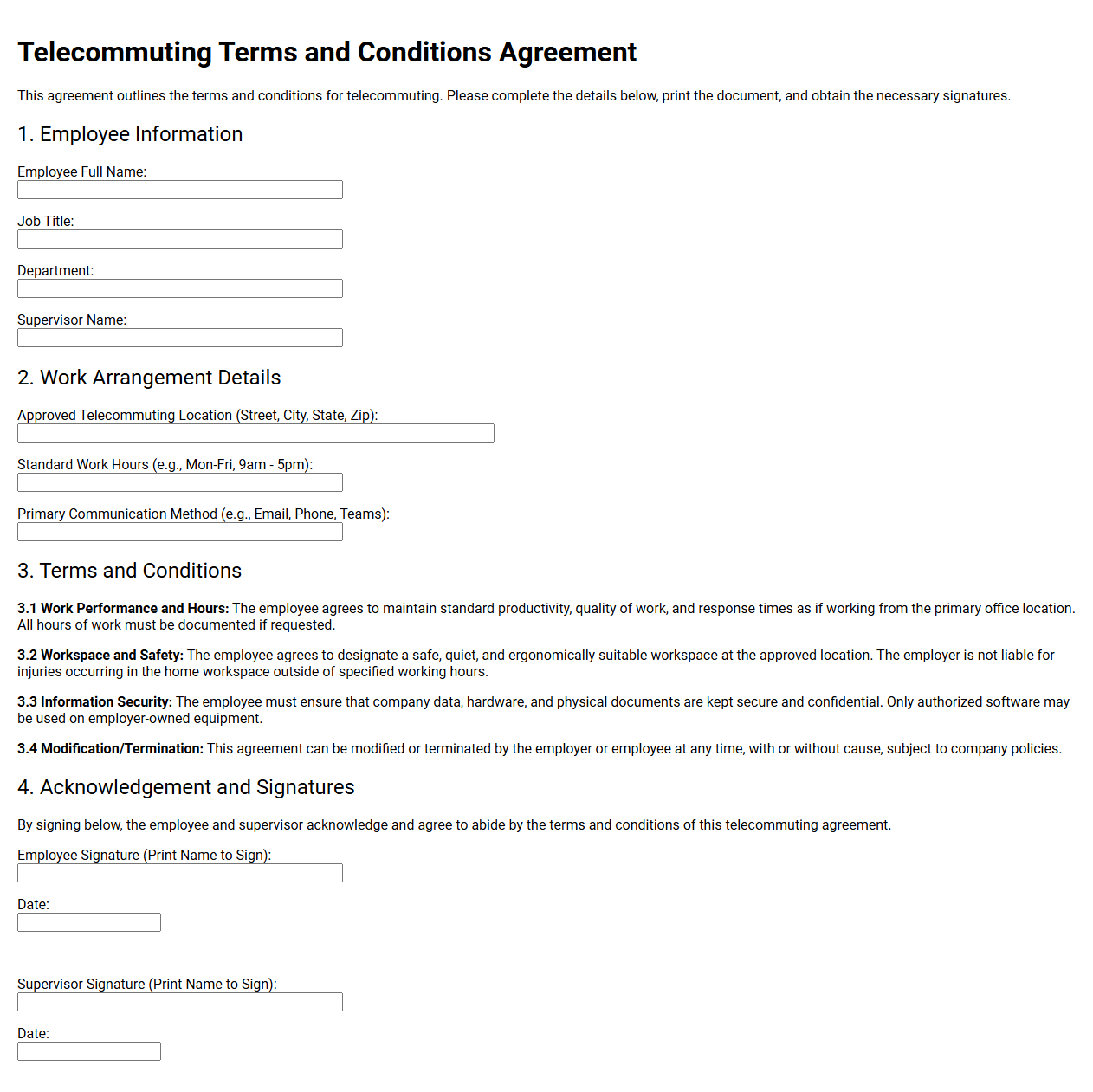
Telecommuting Terms and Conditions Agreement
💾 Telecommuting Terms and Conditions Agreement .pdf
A telecommuting terms and conditions agreement outlines the remote work arrangement between an employer and employee. This document specifies core work hours, communication expectations, and cybersecurity protocols. It defines equipment ownership, expense reimbursement policies, and performance evaluation metrics, ensuring both parties understand their rights and responsibilities during remote employment.
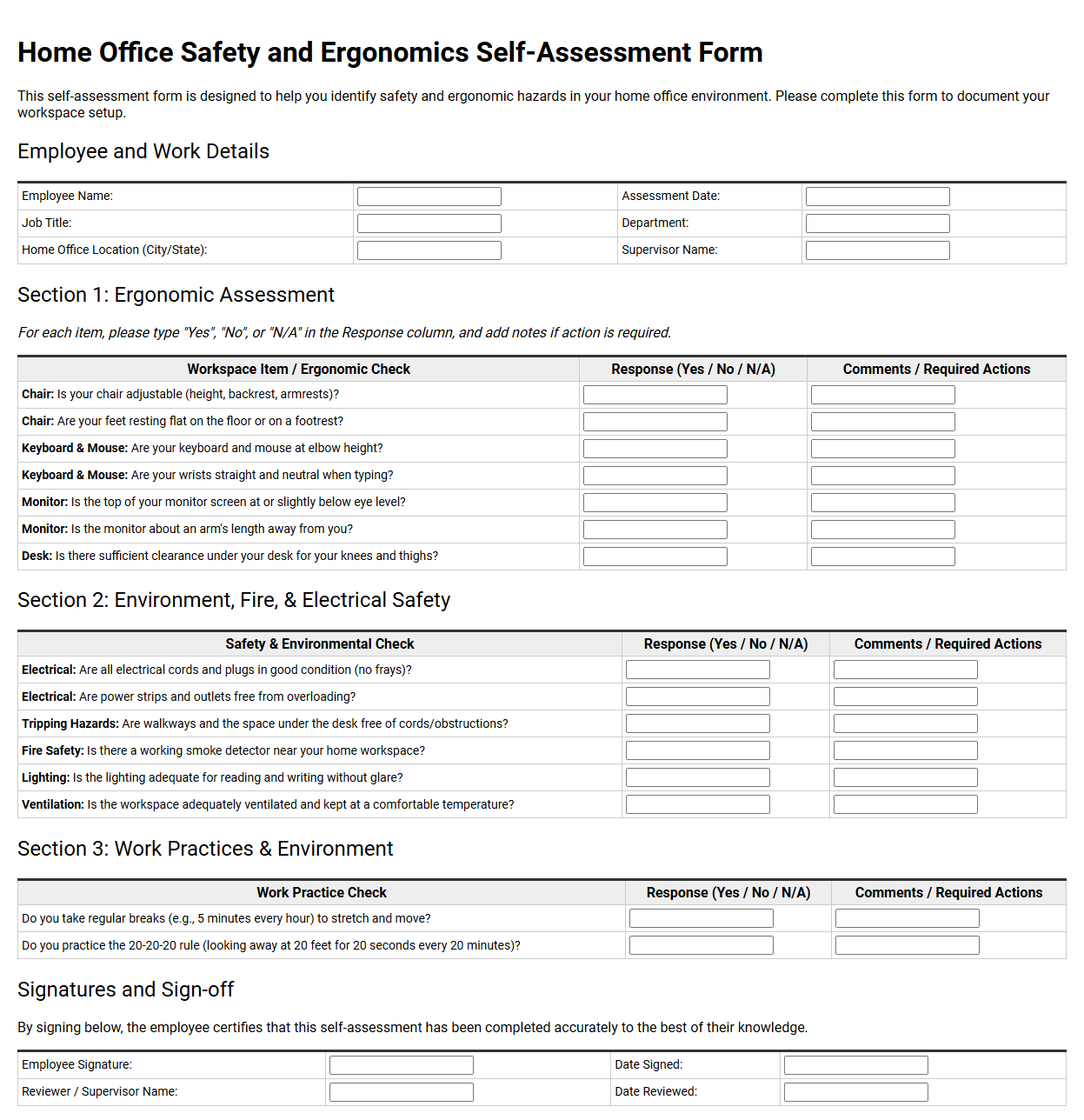
Home Office Safety and Ergonomics Self-Assessment Form
💾 Home Office Safety and Ergonomics Self-Assessment Form .pdf
This evaluation checklist helps remote employees review their workspaces for health hazards. It guides users through adjusting chair height, screen positioning, and lighting, while identifying tripping hazards. Regular use of this document prevents chronic strain and supports their overall well-being, ensuring a secure and physically supportive home office working environment.
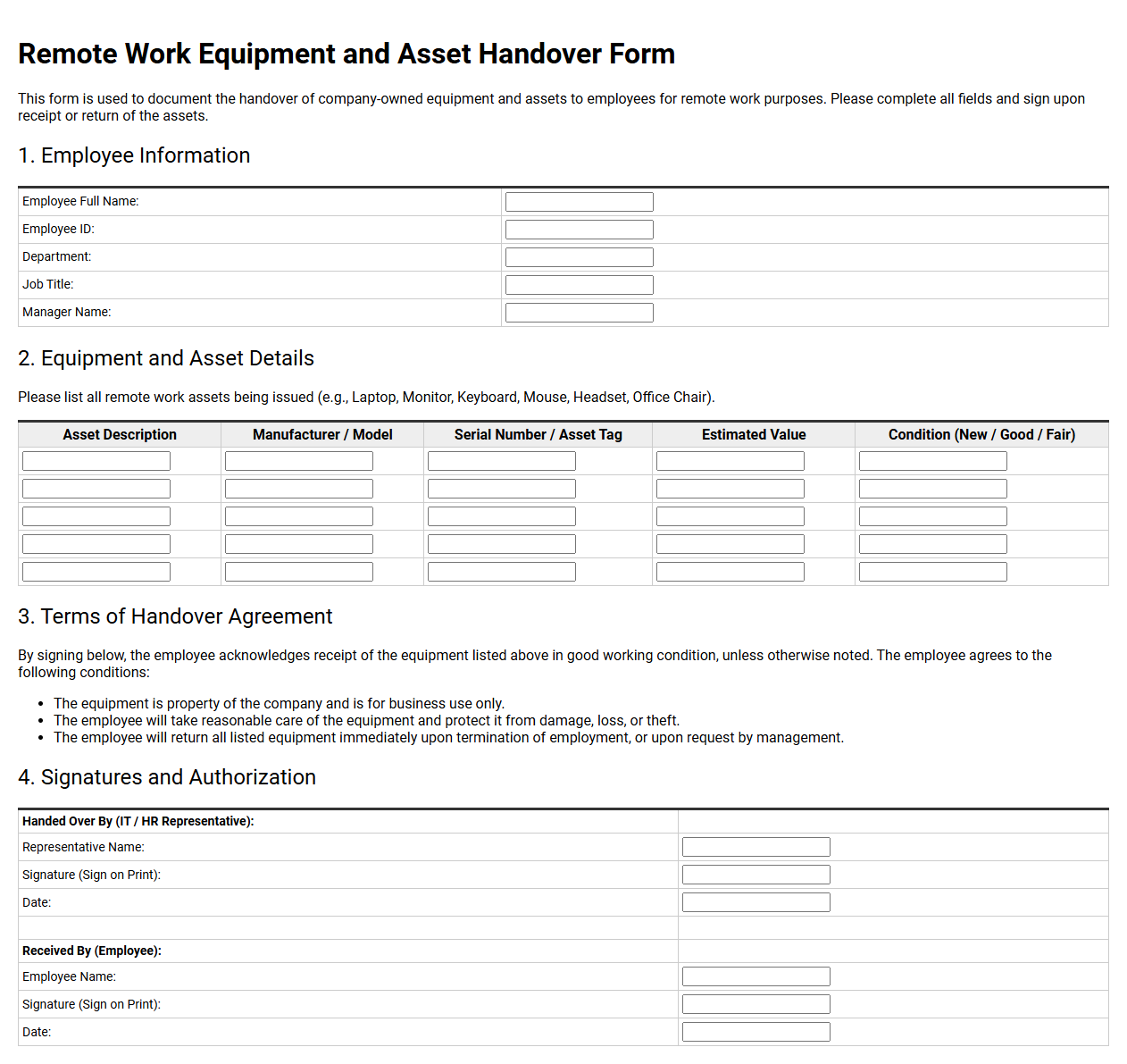
Remote Work Equipment and Asset Handover Form
💾 Remote Work Equipment and Asset Handover Form .pdf
A remote work equipment and asset handover form formally documents the transfer of company-owned hardware to offsite employees. This vital record tracks assigned devices like laptops, monitors, and secure peripherals, establishing clear accountability. It protects organizational property, confirms receipt of functional technology, and details the return process upon contract termination.
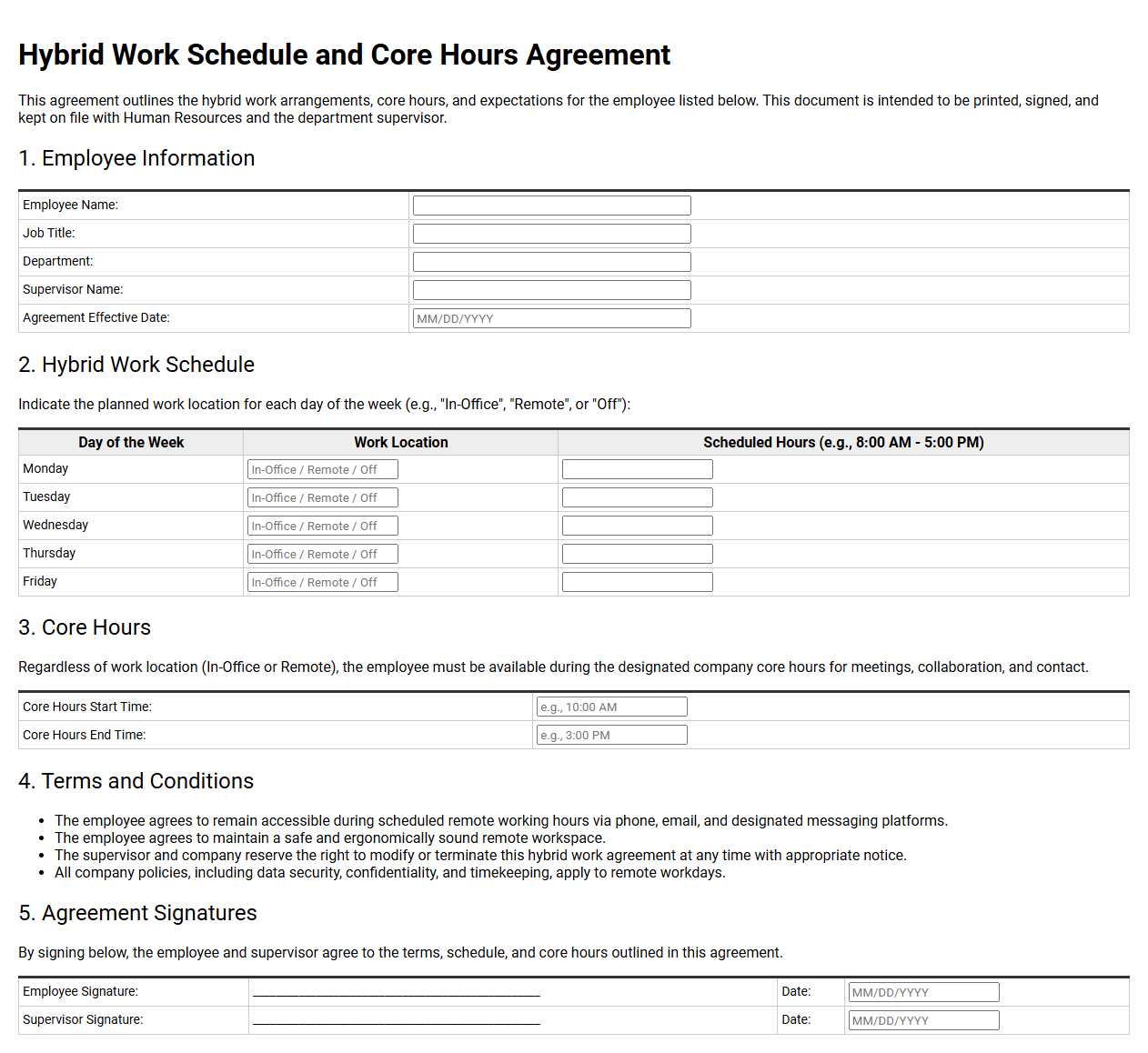
Hybrid Work Schedule and Core Hours Agreement
💾 Hybrid Work Schedule and Core Hours Agreement .pdf
A hybrid work schedule and core hours agreement outlines when and where employees must perform their duties. This formal document establishes mandatory collaboration periods while granting flexibility for remote tasks. It defines communication expectations, ensures adequate team coverage, and serves as a binding operational guideline for modern, flexible workplaces.
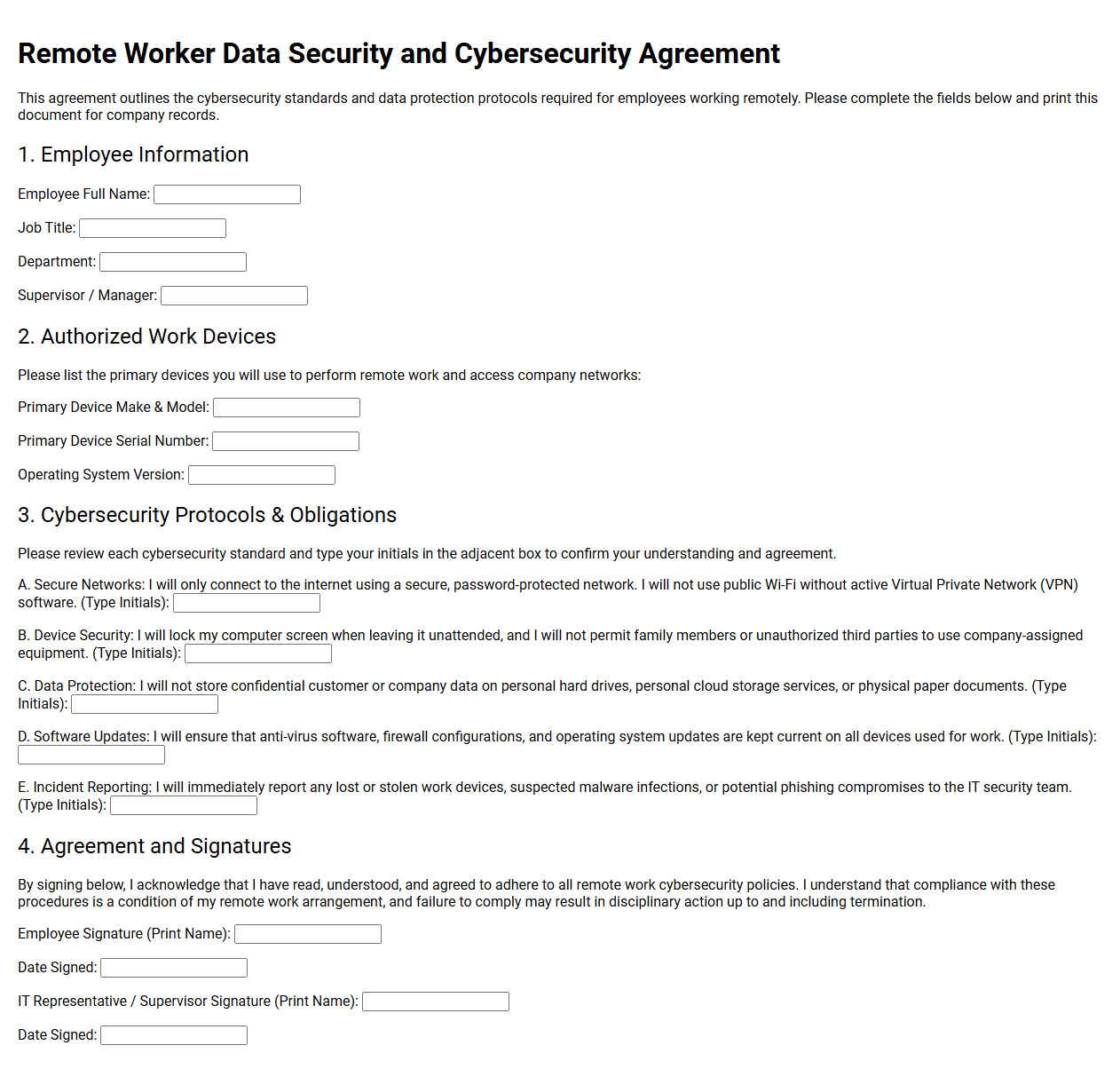
Remote Worker Data Security and Cybersecurity Agreement
💾 Remote Worker Data Security and Cybersecurity Agreement .pdf
A Remote Worker Data Security and Cybersecurity Agreement outlines protocols for protecting sensitive company information outside the traditional office. It defines guidelines for secure network access, password management, and device handling. By signing, employees commit to safeguarding digital assets, preventing data breaches, and maintaining compliance with privacy regulations.
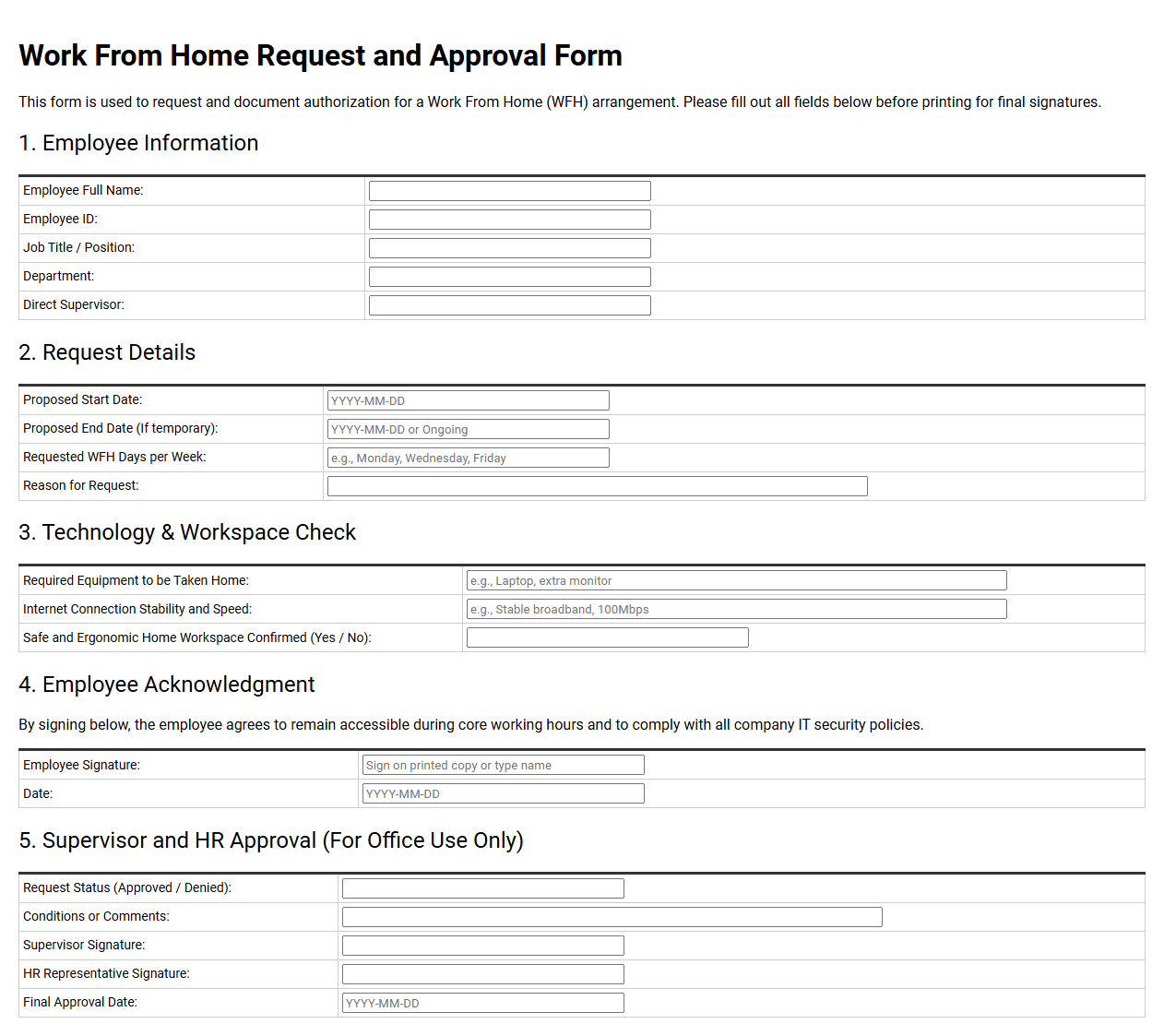
Work From Home Request and Approval Form
💾 Work From Home Request and Approval Form .pdf
A work from home request and approval form establishes formal remote arrangements. It documents proposed schedules, communication methods, and task management. Completed by employees and authorized by supervisors, this tool secures mutual agreement on job performance expectations and company policy compliance, facilitating a smooth transition to telecommuting.
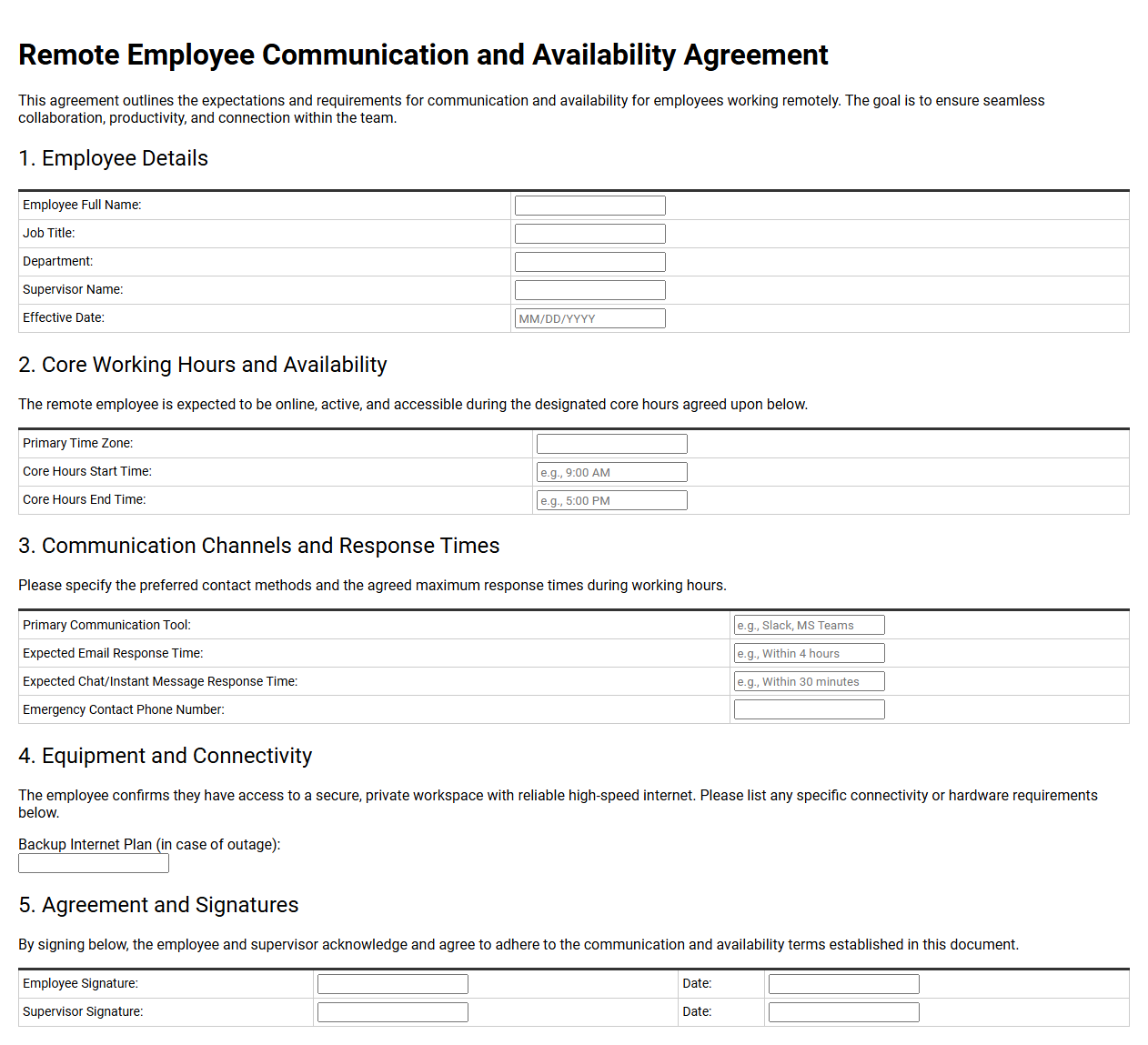
Remote Employee Communication and Availability Agreement
💾 Remote Employee Communication and Availability Agreement .pdf
A remote employee communication and availability agreement defines core working hours, expected response times, and preferred contact channels. This document ensures remote staff remain accessible during business hours, facilitating seamless collaboration. It establishes clear guidelines for virtual meetings, status updates, and urgent reach-outs, helping distributed teams maintain high productivity.
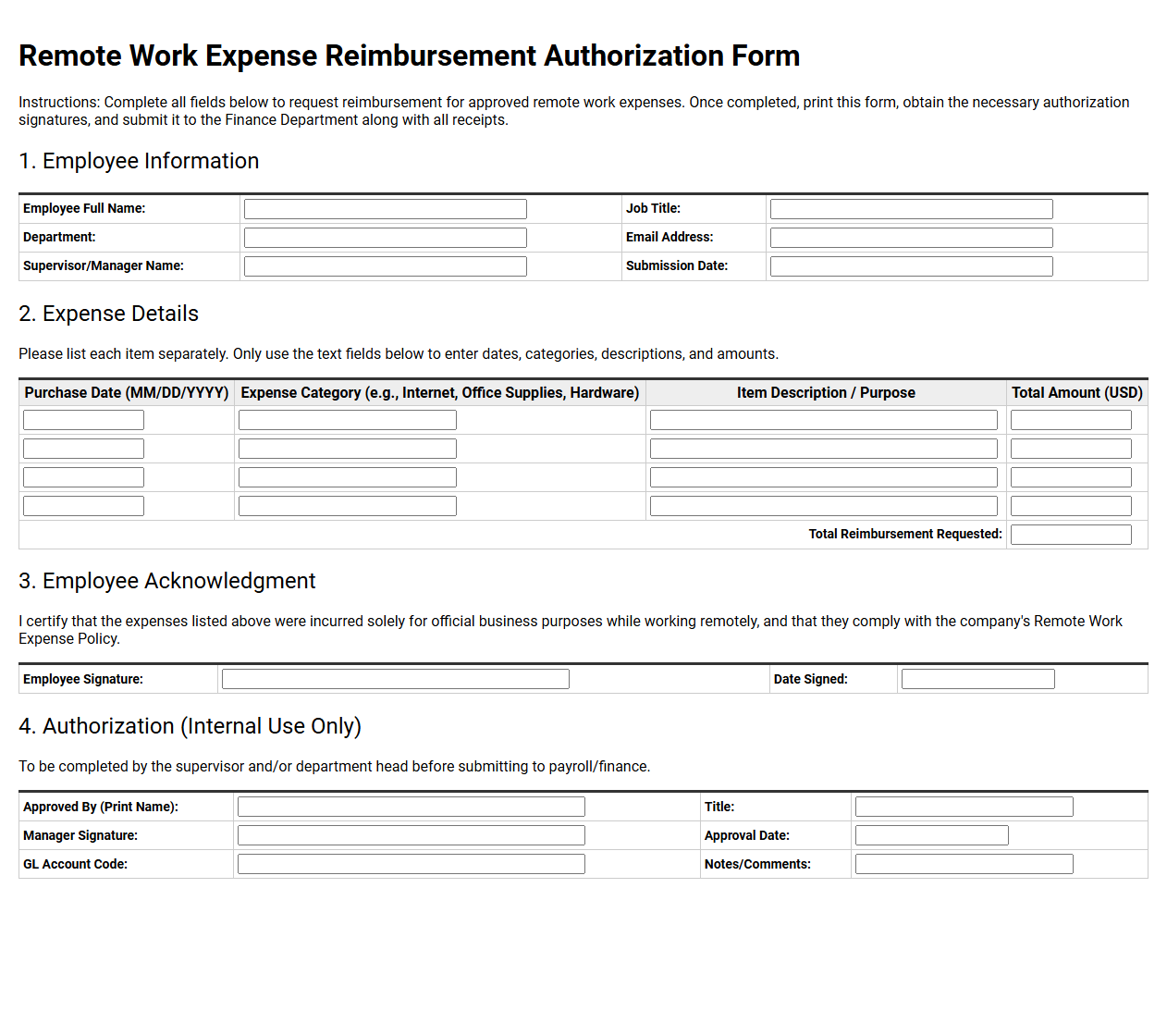
Remote Work Expense Reimbursement Authorization Form
💾 Remote Work Expense Reimbursement Authorization Form .pdf
A remote work expense reimbursement authorization form formalizes the process for employees seeking repayment of home office costs. This document details eligible purchases, such as internet, hardware, and office supplies. It requires manager approval, itemized receipts, and clear business justification, ensuring accurate company accounting and compliance with corporate policies.
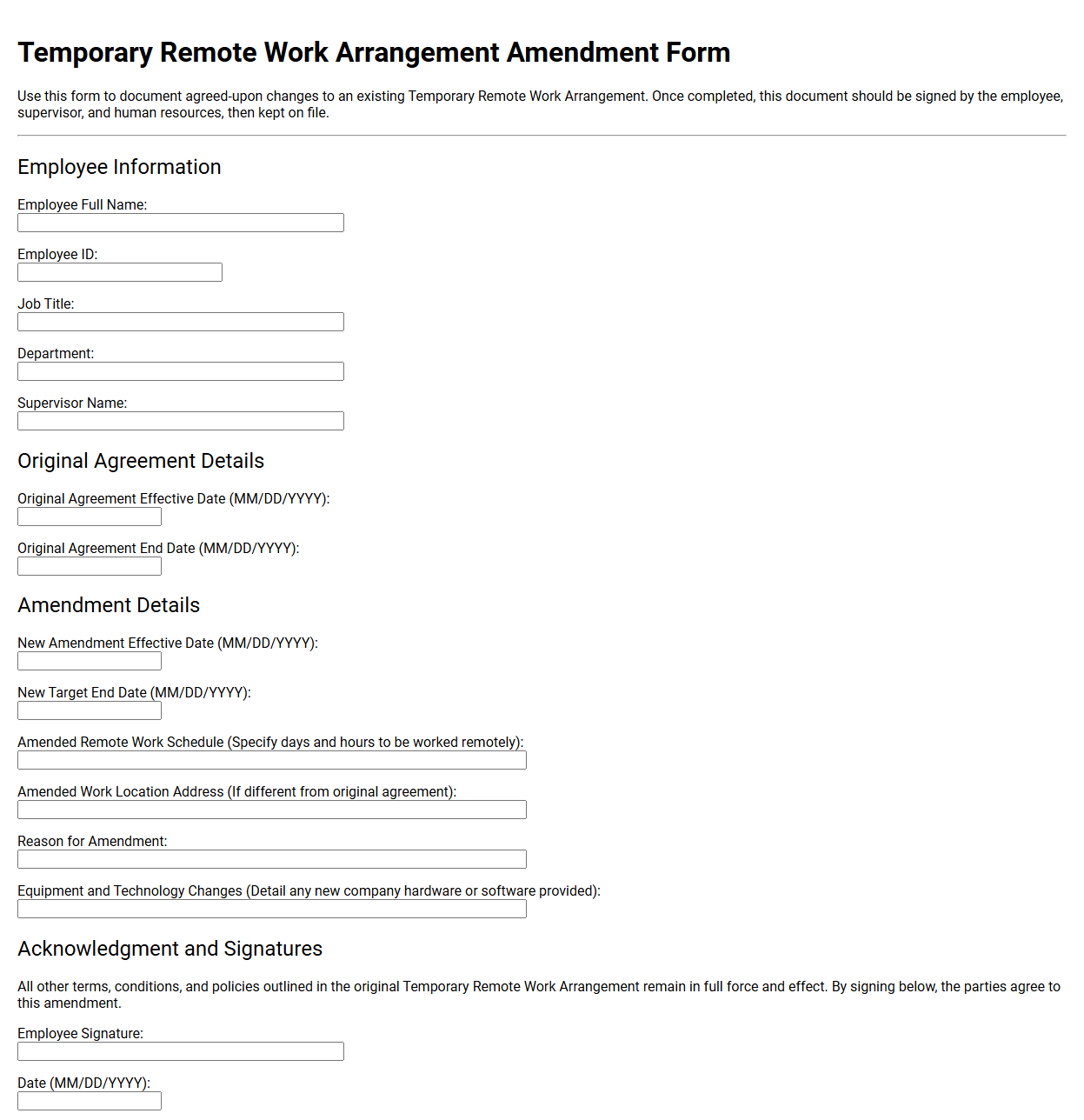
Temporary Remote Work Arrangement Amendment Form
💾 Temporary Remote Work Arrangement Amendment Form .pdf
A Temporary Remote Work Arrangement Amendment Form modifies an existing employment agreement. This document formalizes a temporary transition to off-site work, specifying start and end dates. It outlines employee responsibilities, communication protocols, and equipment details, ensuring clarity during the remote period and establishing a clear path for returning to the office.
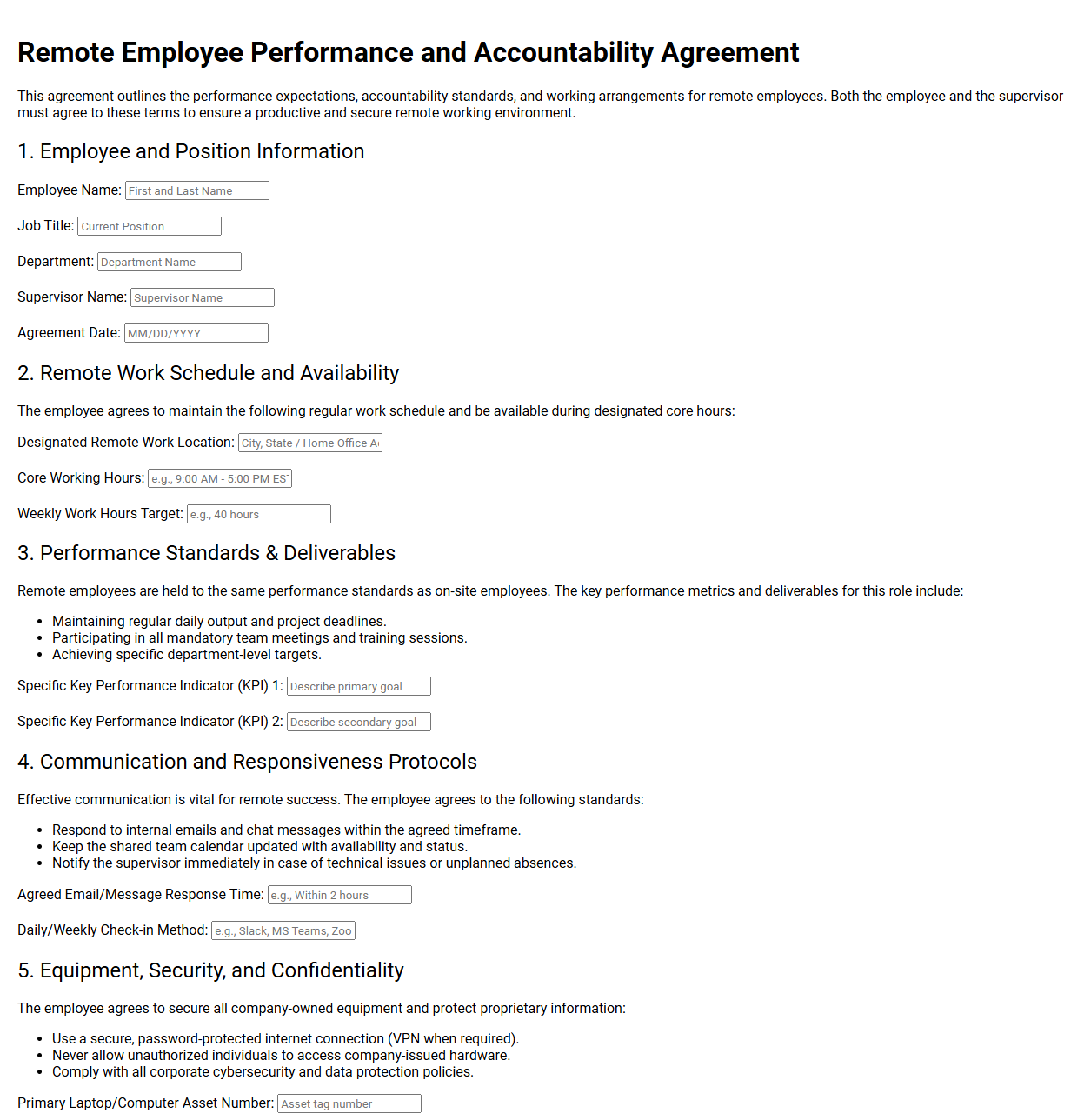
Remote Employee Performance and Accountability Agreement
💾 Remote Employee Performance and Accountability Agreement .pdf
A Remote Employee Performance and Accountability Agreement defines working hours, communication channels, and deliverables for off-site staff. It establishes measurable performance standards and mandates data security protocols. This formal document aligns organizational expectations with independent workflows, fostering productivity, operational transparency, and trust between employers and their distributed workforce.
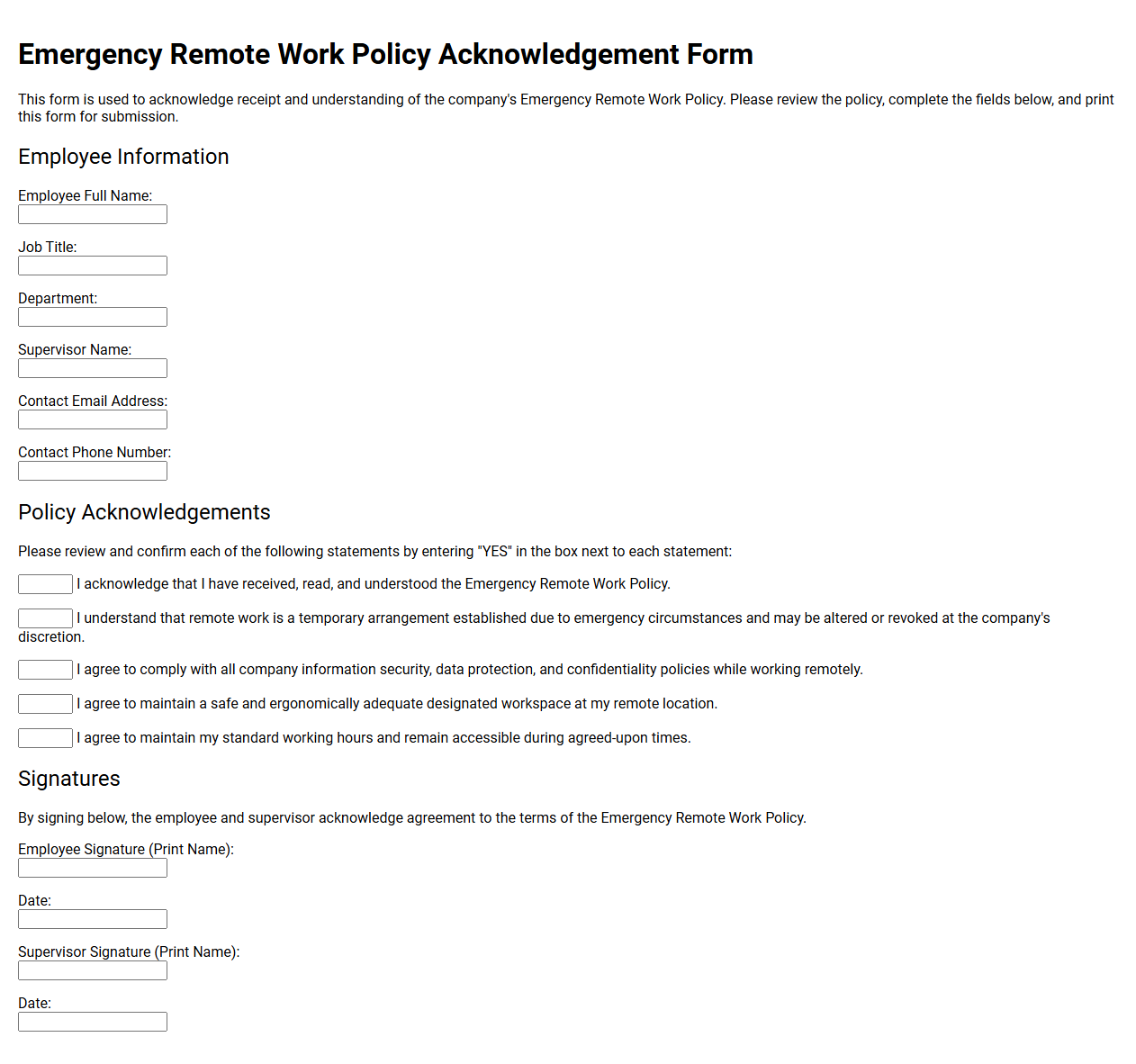
Emergency Remote Work Policy Acknowledgement Form
💾 Emergency Remote Work Policy Acknowledgement Form .pdf
The Emergency Remote Work Policy Acknowledgement Form is a formal document verifying that employees understand and agree to temporary off-site work guidelines. It outlines data security protocols, communication expectations, and equipment responsibilities during crises. Signing confirms compliance with these operational standards, ensuring seamless business continuity and accountability during unexpected disruptions.
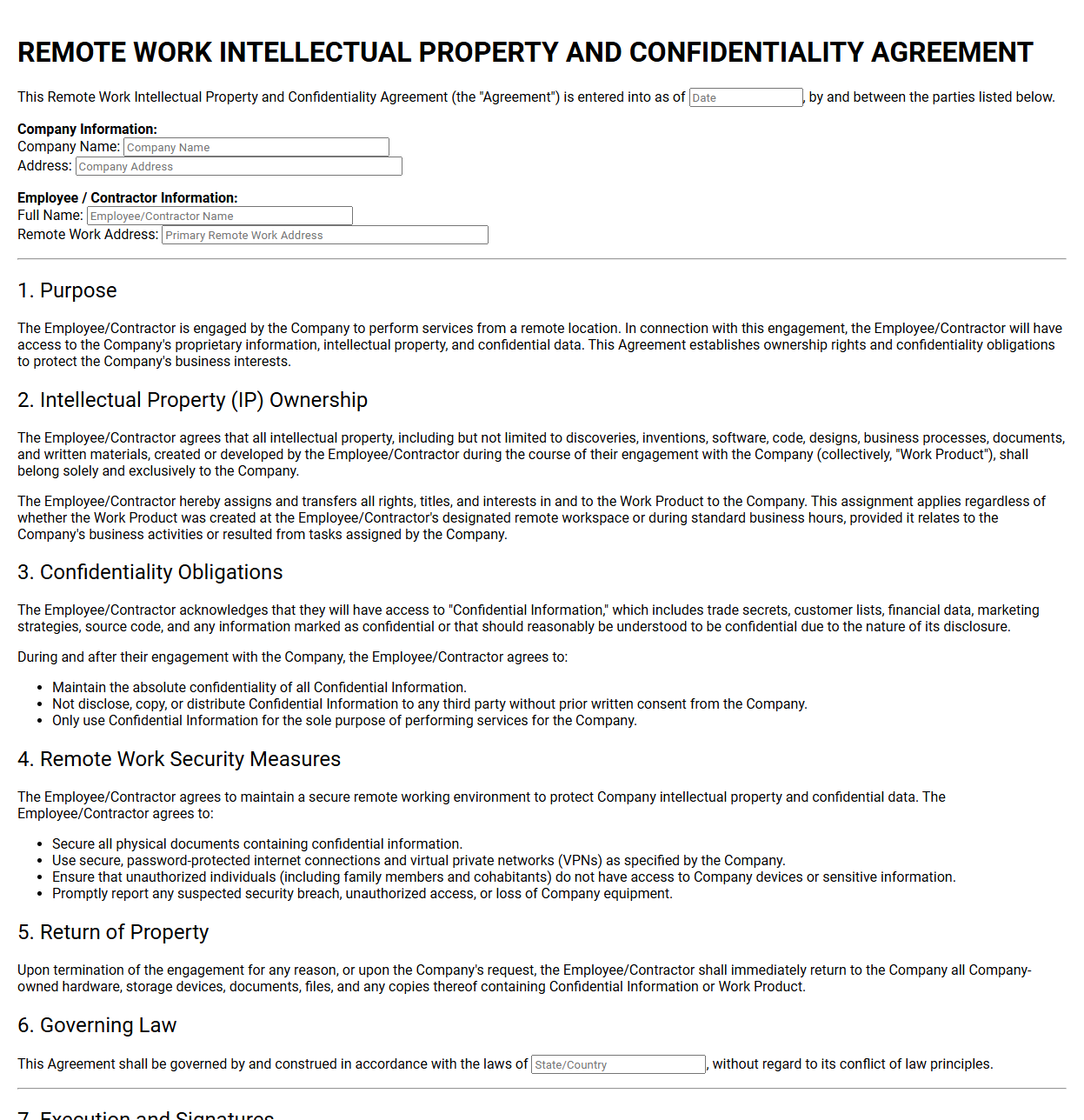
Remote Work Intellectual Property and Confidentiality Agreement
💾 Remote Work Intellectual Property and Confidentiality Agreement .pdf
A remote work intellectual property and confidentiality agreement protects sensitive business data and proprietary creations. This contract establishes clear guidelines for safeguarding trade secrets outside the traditional office. It ensures that any concepts, code, or materials developed by off-site employees during their employment belong exclusively to the employer.
Employee Remote Work Agreement FAQ
What is the purpose of an Employee Remote Work Agreement?
This agreement establishes clear expectations, responsibilities, and guidelines for employees working outside the traditional office. It defines work hours, communication protocols, performance standards, and security requirements, ensuring both the employer and employee are aligned on remote work policies and operational standards.
Is a remote work agreement legally binding for both parties?
Yes, once signed, it serves as a legally binding document that outlines the terms of employment for remote scenarios. It protects the company's proprietary data and defines the employee's rights, helping prevent future disputes regarding working hours, compensation, and work-related expenses.
How does the agreement address cybersecurity and company equipment?
The agreement specifies who provides the necessary technology and outlines strict protocols for data security. It mandates the use of secure networks, VPNs, and confidential data handling practices to protect sensitive company information from potential breaches while employees work from remote locations.
Can a remote work agreement be terminated or modified?
Yes. Most agreements include a clause stating the arrangement is flexible and can be modified or revoked by the employer with reasonable notice. This allows companies to recall employees to the physical office if business needs change or performance standards are not met.
Does a remote work agreement cover liability and workers' compensation?
Yes, it clarifies the employer's liability for work-related injuries sustained during designated working hours in the remote workspace. It establishes that workers' compensation laws still apply, provided the injury occurred directly in the course of performing official business duties at home.
Disclaimer:
The documents and templates provided on this page are for informational and illustrative purposes only. They do not constitute professional, legal, or financial advice, and should not be relied upon as such. Because individual circumstances and regulatory requirements vary, these materials may not be suitable for your specific needs. We recommend consulting with a qualified professional before adapting or using any of these examples for official or commercial purposes.