
Customer Complaint and Resolution Form Template - A Standardized Tool for Managing Customer Grievances
Managing customer grievances effectively is a persistent operational challenge that can quickly drain organizational resources. While businesses frequently secure standard funding sources for expensive CRM software or external consulting to bridge this gap, technology alone rarely resolves chaotic intake processes. Our standardized Customer Complaint and Resolution Form Template serves as a high-value tool, granting teams immediate structural clarity. Under the stipulation that templates require consistent staff adherence to succeed, establishing clear process expectations is vital. Similar to ISO 9001-aligned quality management systems, this tool ensures systematic logging. Below, we examine the template's key components and deployment strategies.
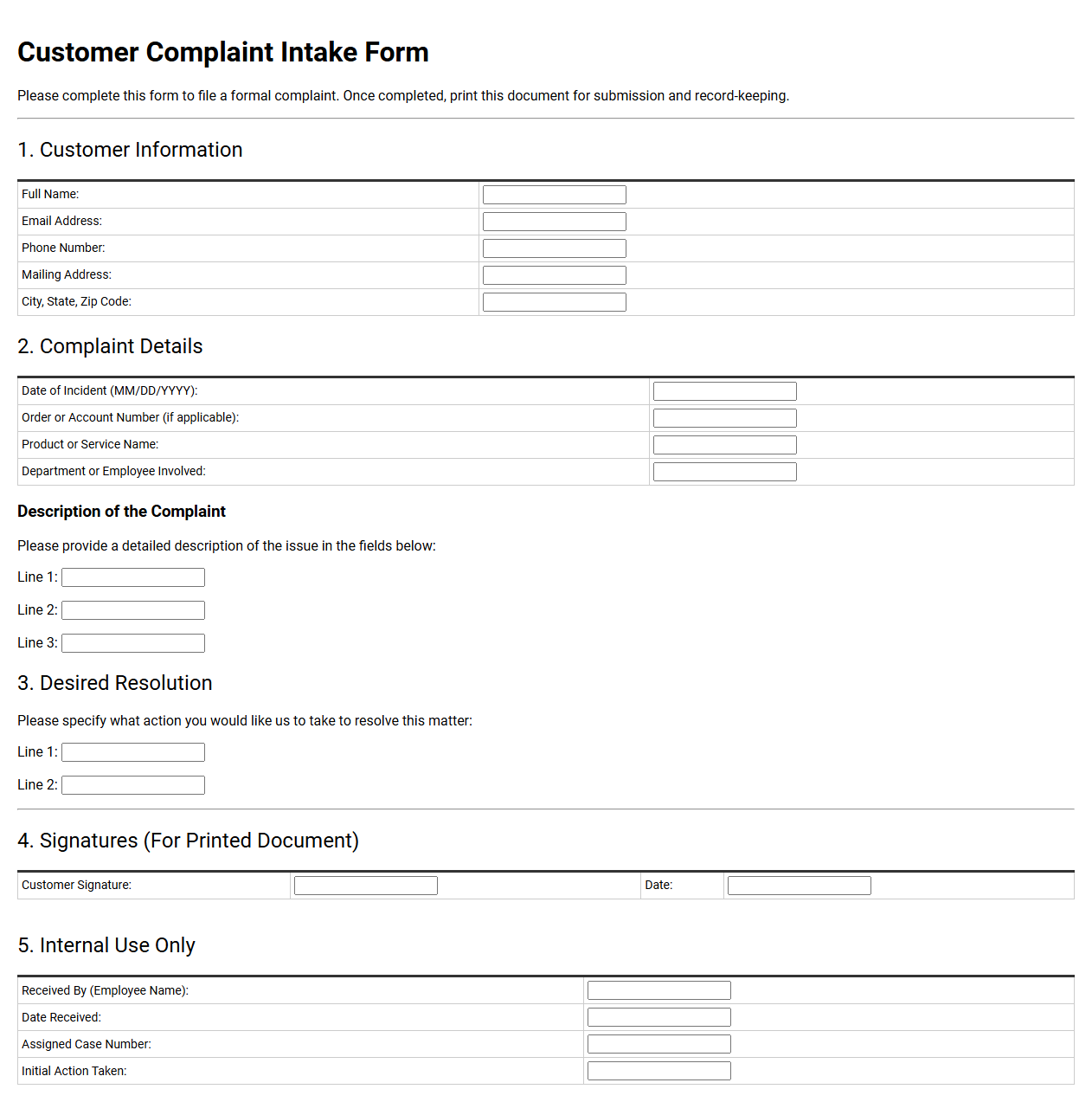
Customer Complaint Intake Form
💾 Customer Complaint Intake Form .pdf
A customer complaint intake form is a structured document used by businesses to record client grievances systematically. It captures crucial details, including contact information, incident dates, and specific issue descriptions. This structured tool ensures support teams gather accurate data to resolve problems efficiently and improve overall service quality.
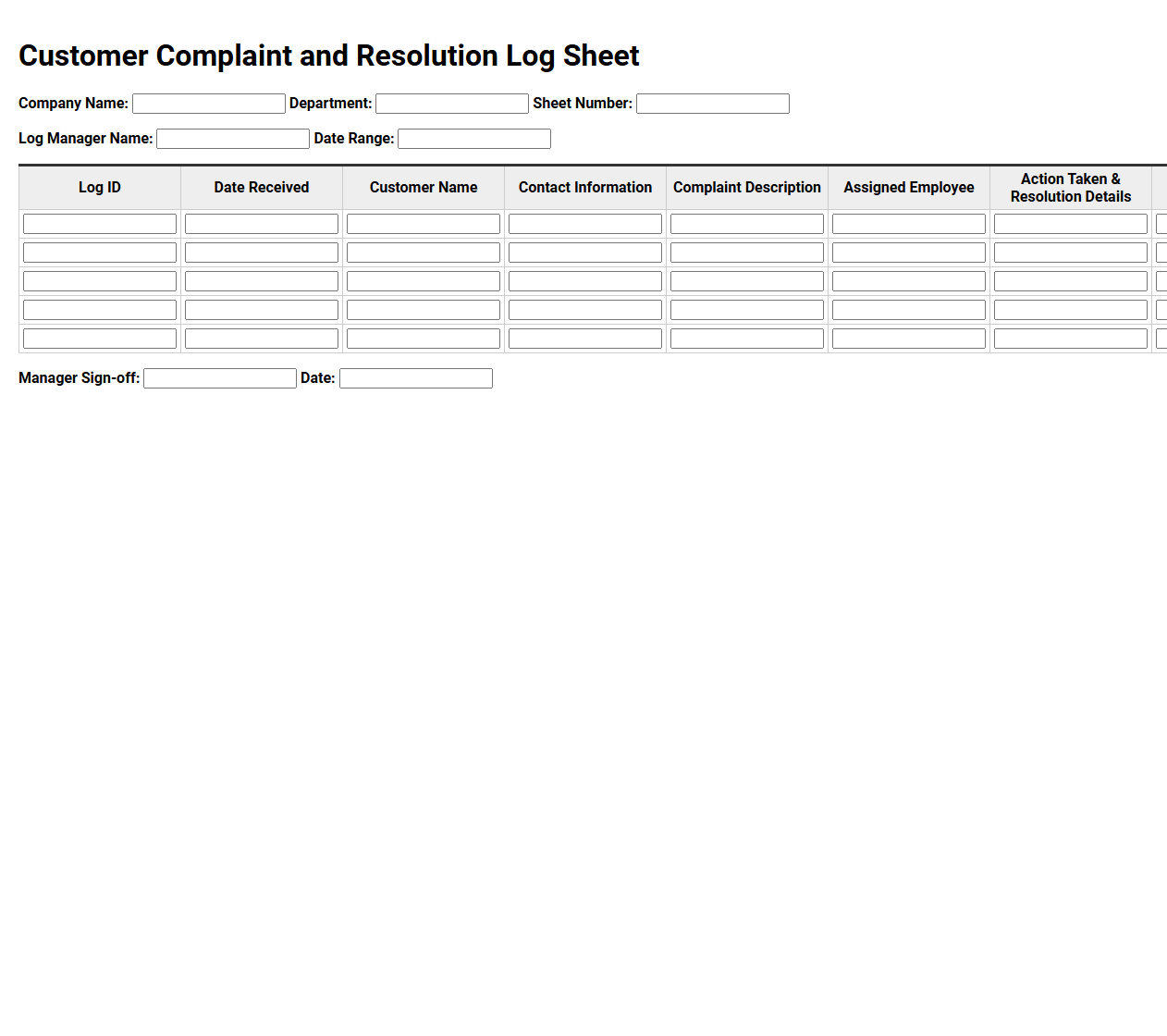
Customer Complaint and Resolution Log Sheet
💾 Customer Complaint and Resolution Log Sheet .pdf
A customer complaint and resolution log sheet tracks client feedback systematically. It records the date, customer details, nature of the issue, assigned staff, and corrective actions taken. This practical document helps businesses identify recurring service flaws, improve overall quality, and ensure timely follow-ups, fostering stronger loyalty through organized issue tracking.
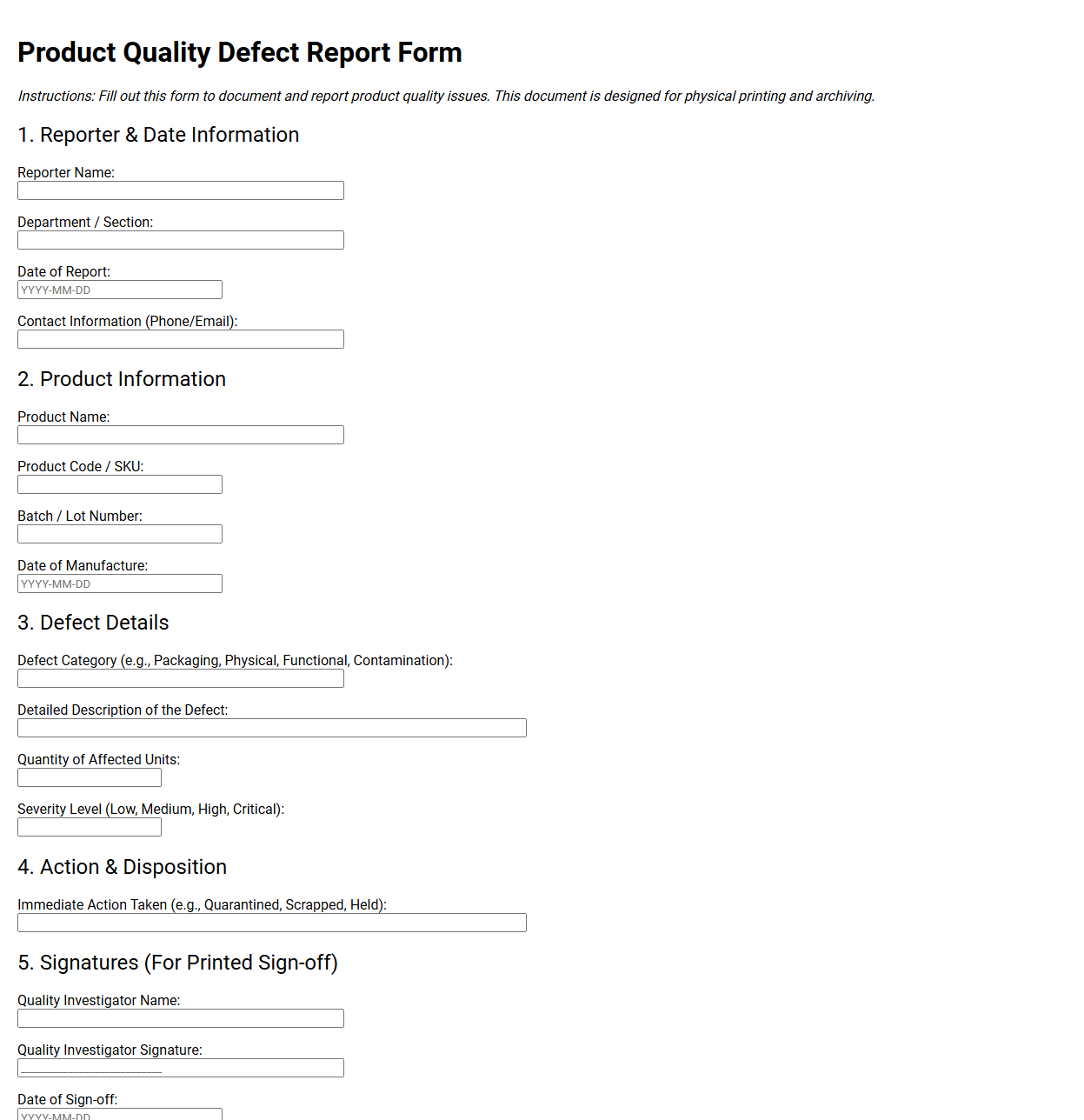
Product Quality Defect Report Form
💾 Product Quality Defect Report Form .pdf
A Product Quality Defect Report Form is a vital document used by manufacturing and quality assurance teams to record, analyze, and resolve product abnormalities. It captures critical details such as batch numbers, defect descriptions, and photographic evidence. This structured record ensures thorough investigations, tracking patterns to prevent future production failures.
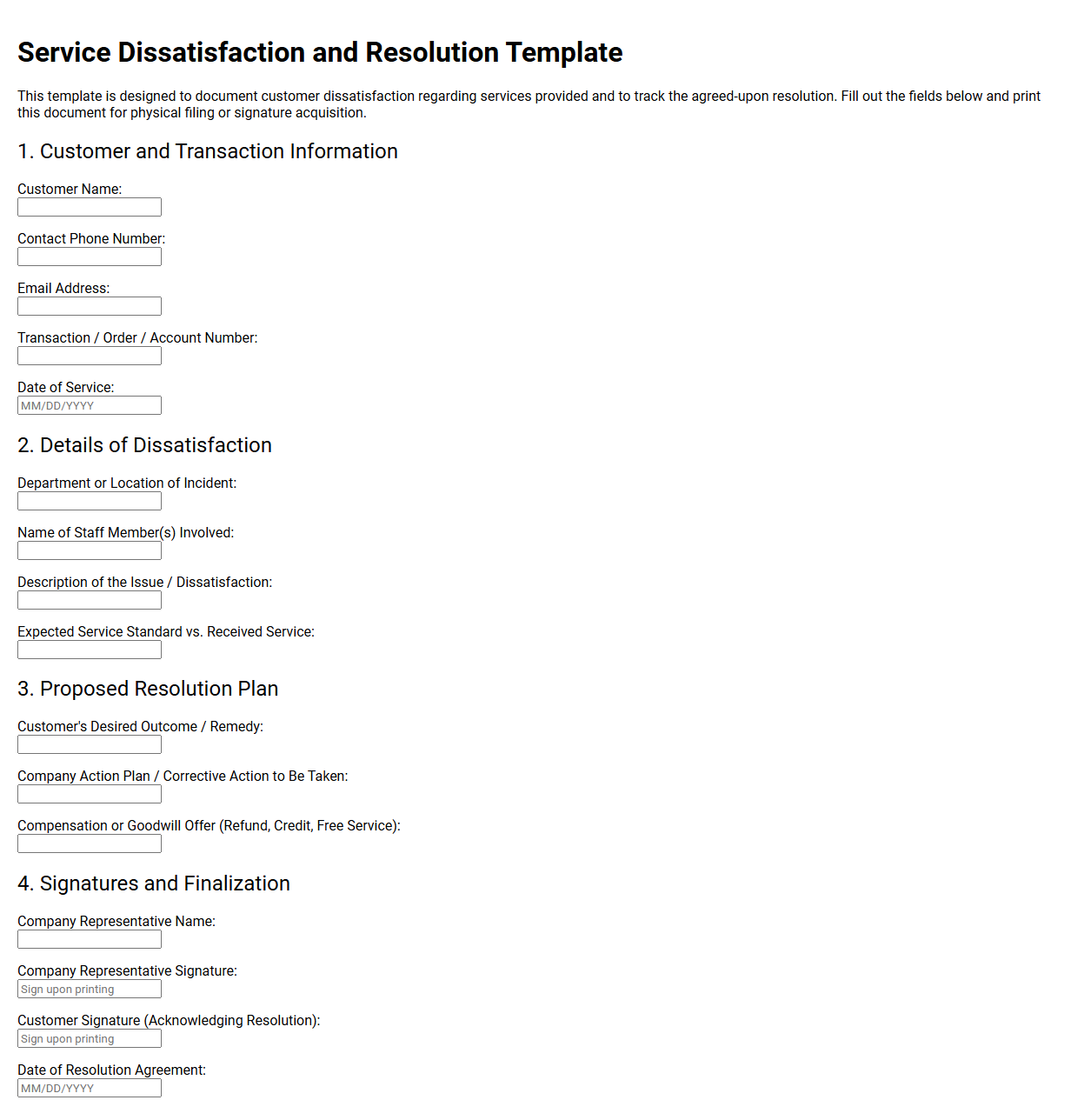
Service Dissatisfaction and Resolution Template
💾 Service Dissatisfaction and Resolution Template .pdf
This formal document structures customer grievances regarding inadequate service quality. It outlines specific issues encountered, logs the timeline of events, and proposes actionable remedies. By establishing a clear path for professional communication, this tool helps organizations address operational shortcomings, restore damaged client trust, and implement lasting service improvements.
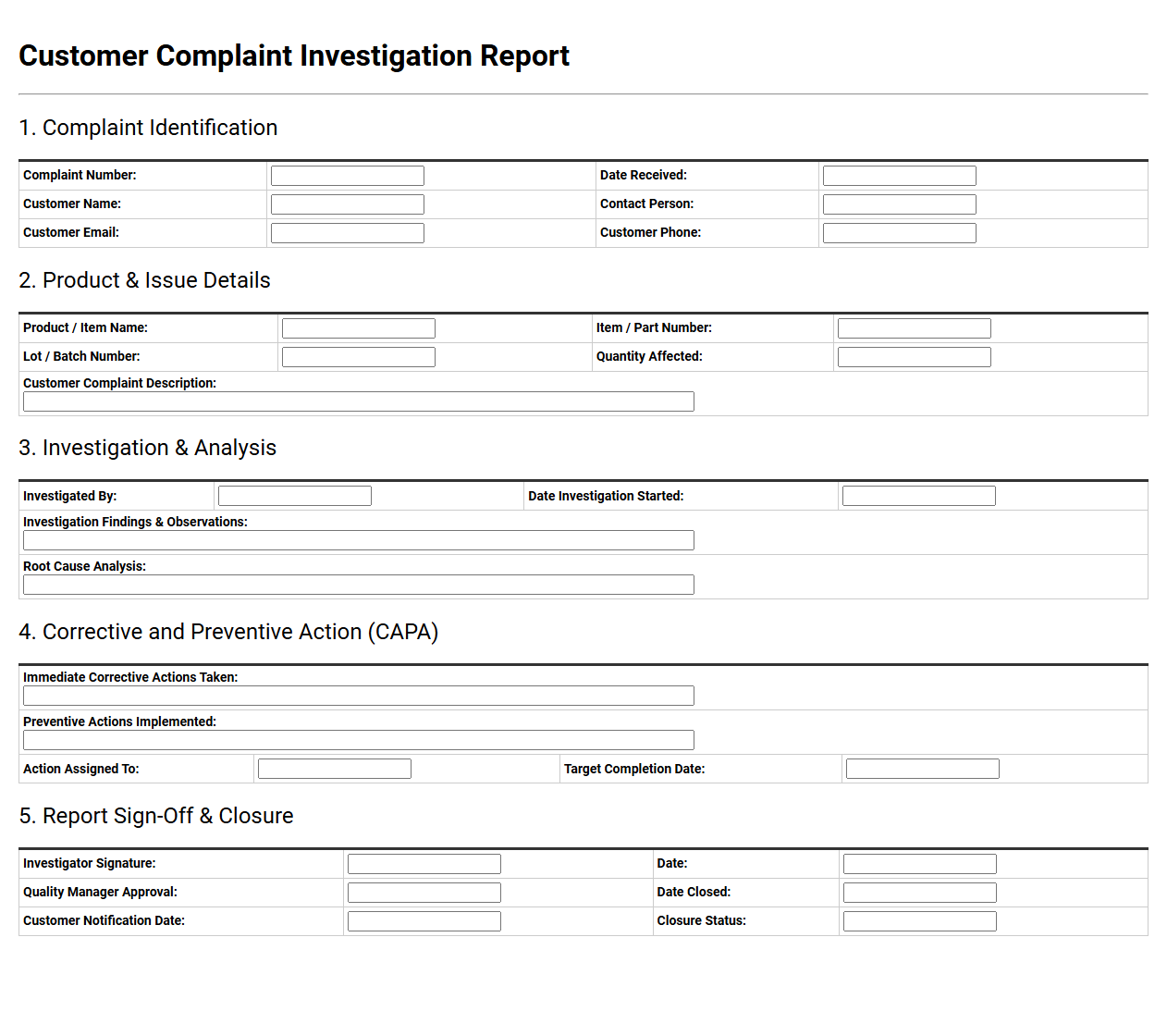
Customer Complaint Investigation Report
💾 Customer Complaint Investigation Report .pdf
A Customer Complaint Investigation Report is a formal document used by businesses to document, analyze, and resolve customer grievances. It details the initial issue, captures evidence, outlines the investigation process, and proposes corrective actions. This systematic record helps organizations improve service quality and prevent future occurrences of similar problems.
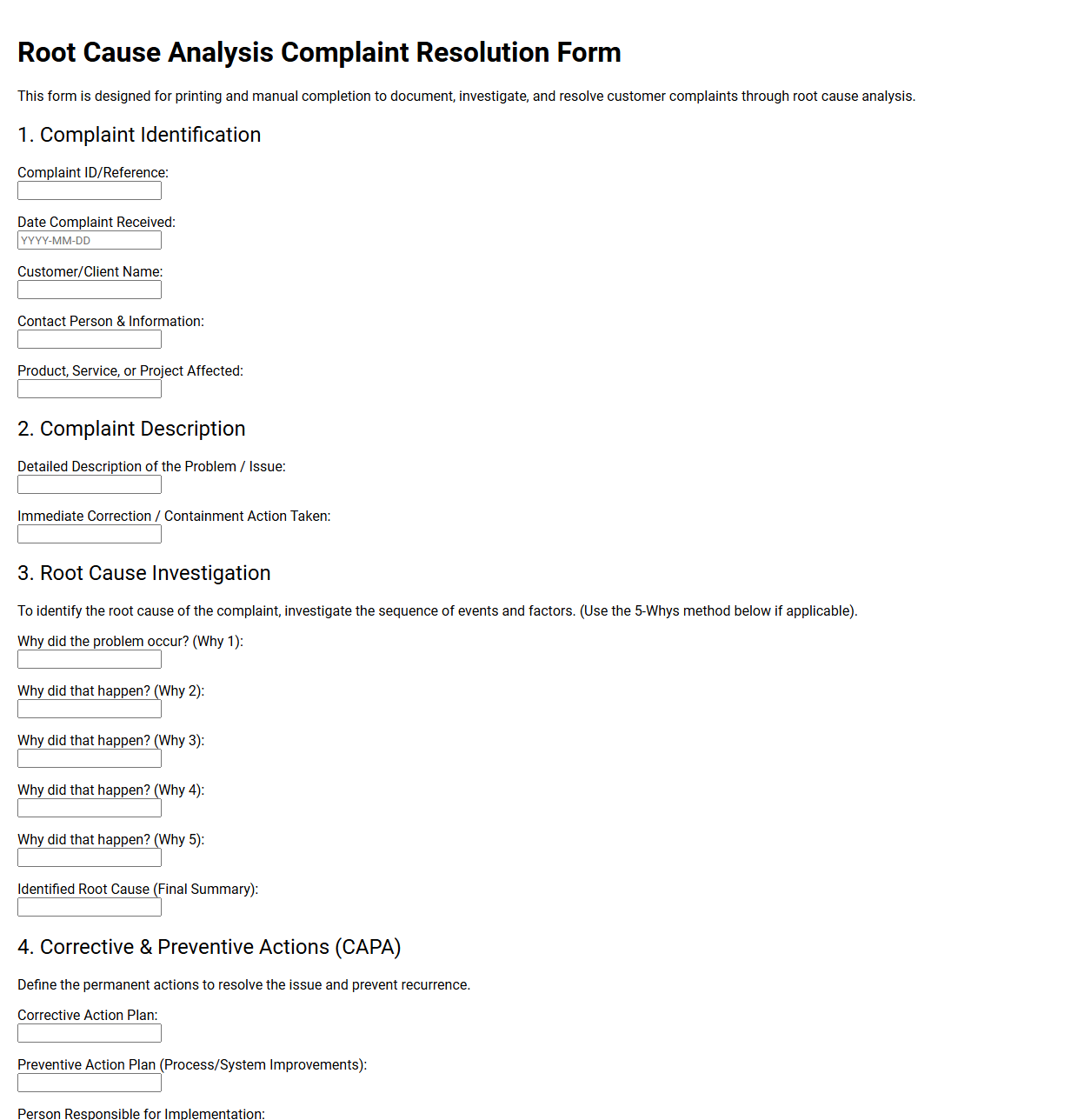
Root Cause Analysis Complaint Resolution Form
💾 Root Cause Analysis Complaint Resolution Form .pdf
A Root Cause Analysis Complaint Resolution Form is a structured document used by organizations to investigate customer grievances. It helps teams identify the core issues behind a problem, rather than just addressing surface symptoms. The document typically records incident details, containment actions, investigative steps, and long-term corrective measures to prevent recurrence.
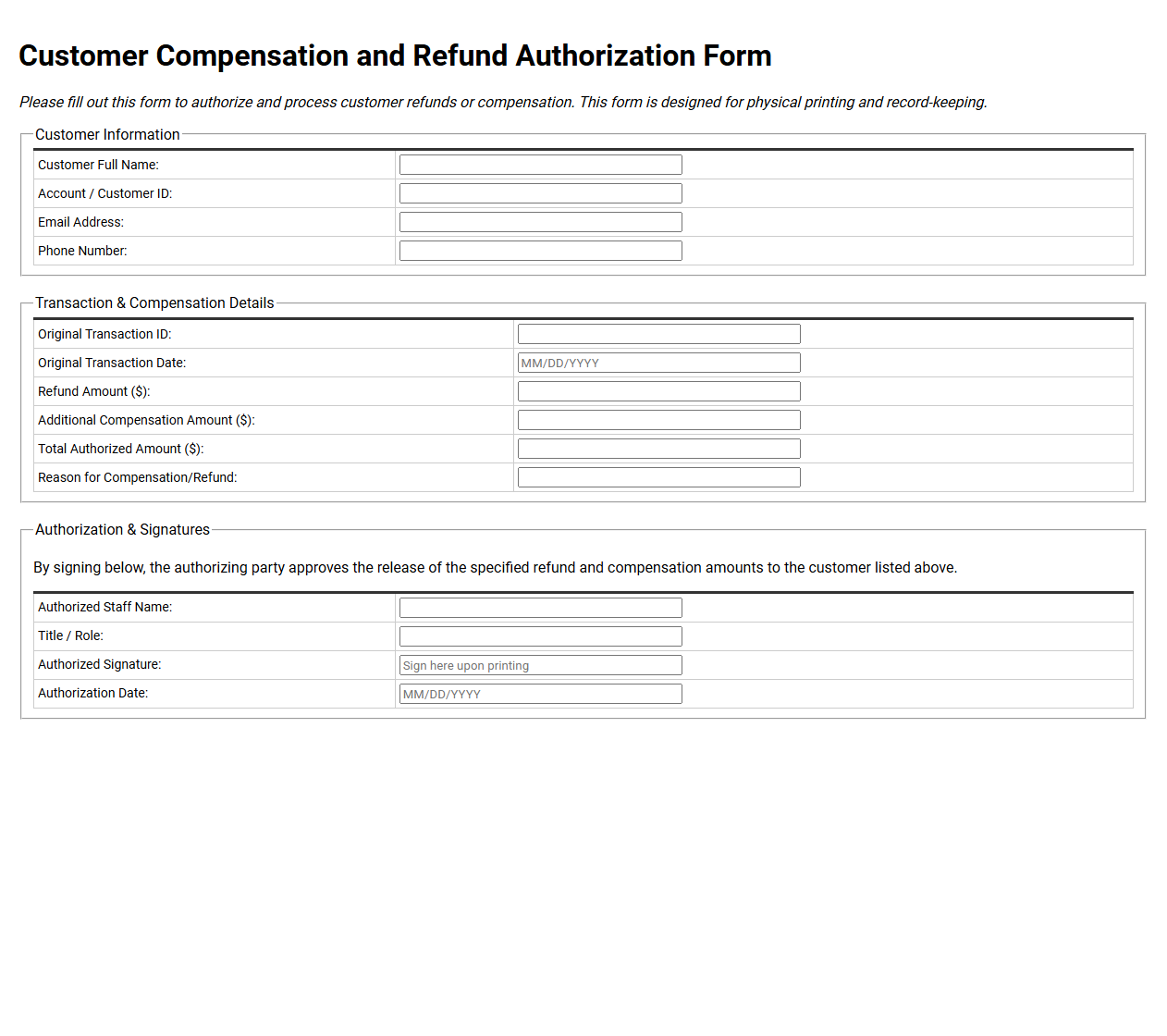
Customer Compensation and Refund Authorization Form
💾 Customer Compensation and Refund Authorization Form .pdf
A Customer Compensation and Refund Authorization Form is a formal document used by businesses to process financial returns or goodwill payments. This record details transaction history, approval signatures, and payment methods. It ensures accurate accounting, protects against fraud, and verifies that appropriate staff authorize every disbursement to dissatisfied clients.
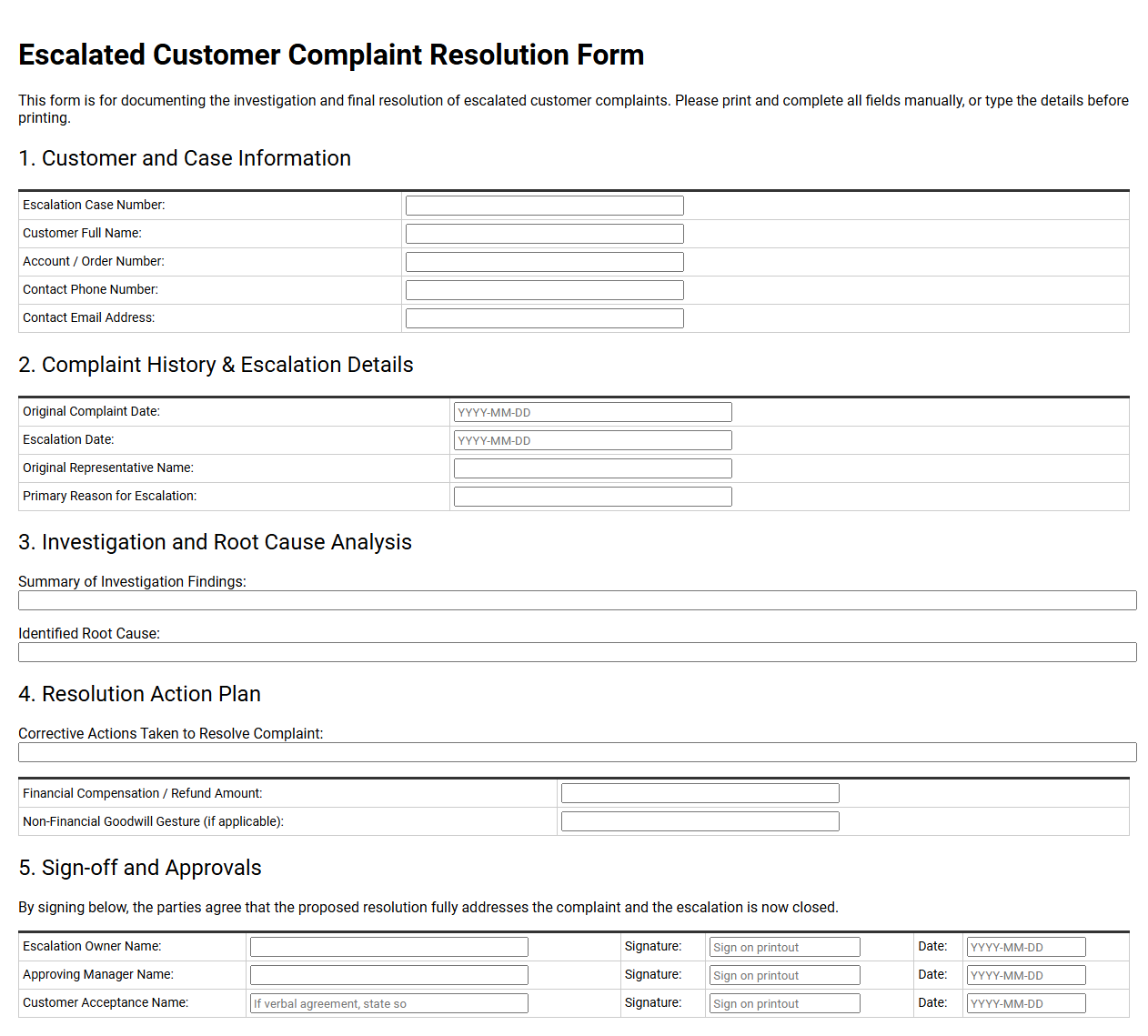
Escalated Customer Complaint Resolution Form
💾 Escalated Customer Complaint Resolution Form .pdf
An Escalated Customer Complaint Resolution Form is a formal document used by support teams to document, track, and resolve high-priority customer issues. It captures critical details, including customer information, event timelines, previous interactions, and corrective actions taken, ensuring a structured approach to restoring satisfaction and improving service quality.
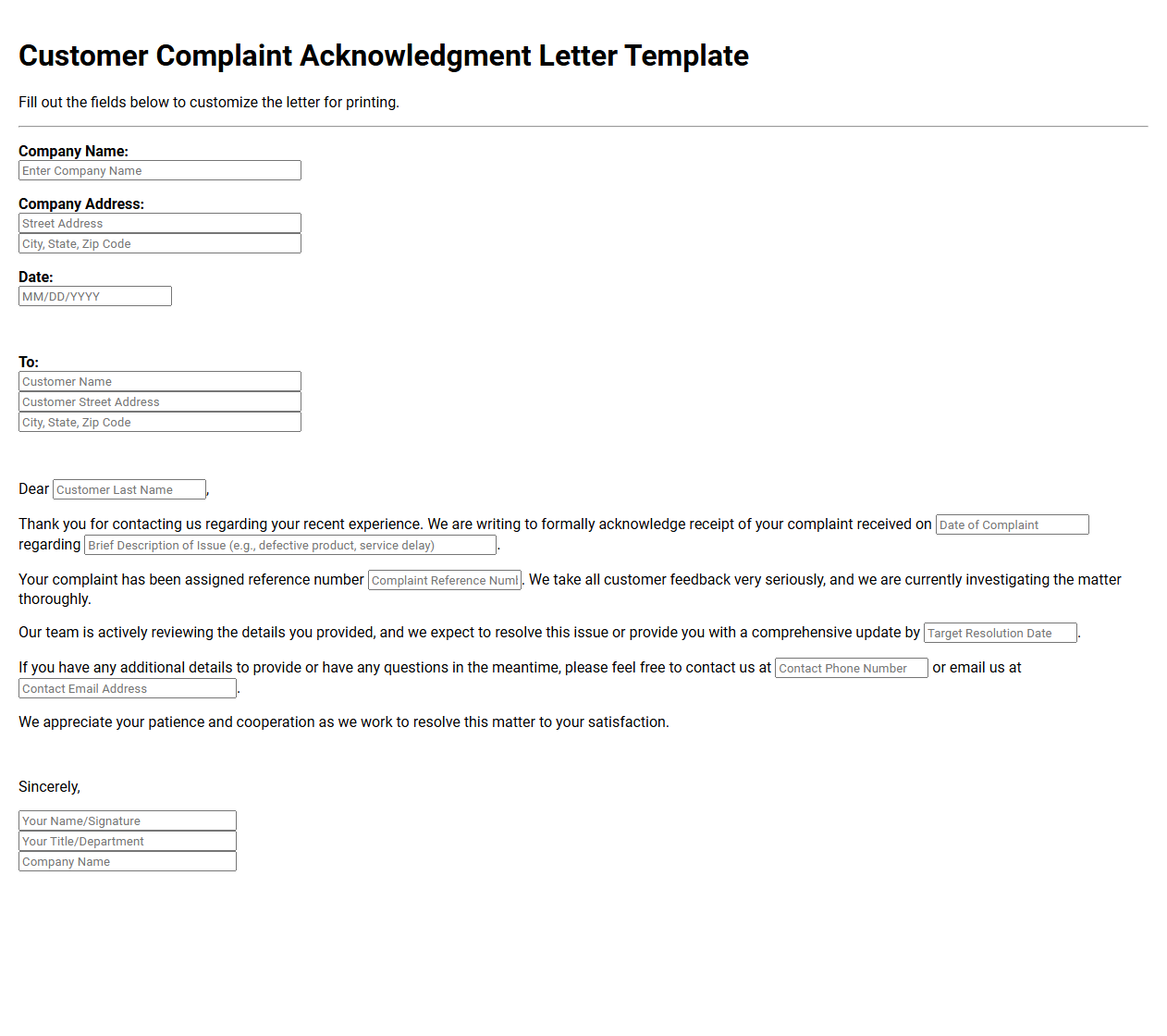
Customer Complaint Acknowledgment Letter Template
💾 Customer Complaint Acknowledgment Letter Template .pdf
A customer complaint acknowledgment letter template provides a structured format for businesses to formally recognize client feedback. This document validates the customer's issue, provides a reference tracking number, and outlines the next steps for resolution. It helps maintain trust by showing prompt, professional dedication to resolving service or product concerns.
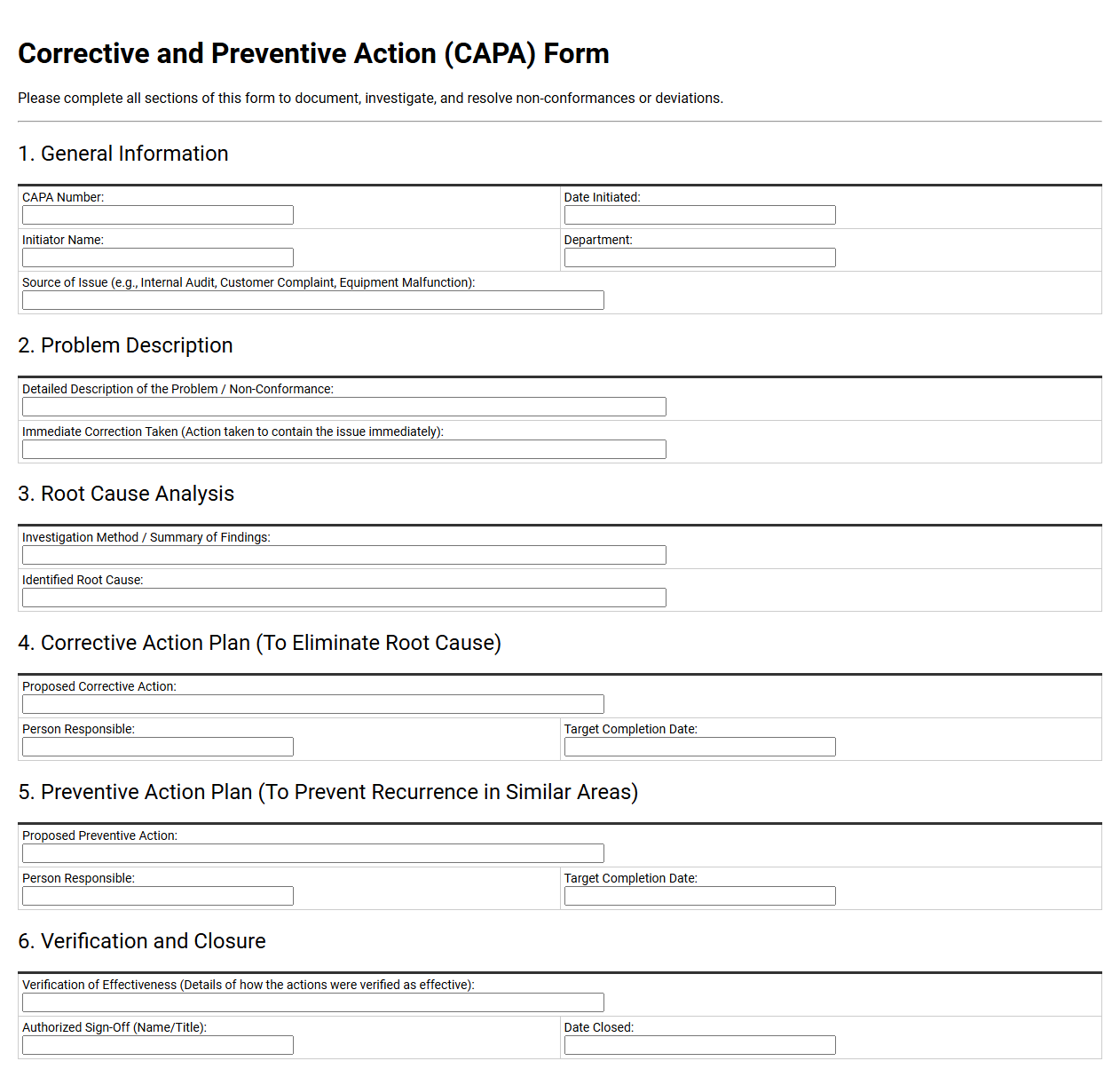
Corrective and Preventive Action CAPA Form
💾 Corrective and Preventive Action CAPA Form .pdf
A typical Corrective and Preventive Action (CAPA) form is a structured quality management document. It records systemic issues, identifies root causes, and outlines corrective steps to eliminate existing discrepancies. Additionally, it details preventive measures to mitigate future risks, ensuring continuous organizational improvement and compliance with industry standards.
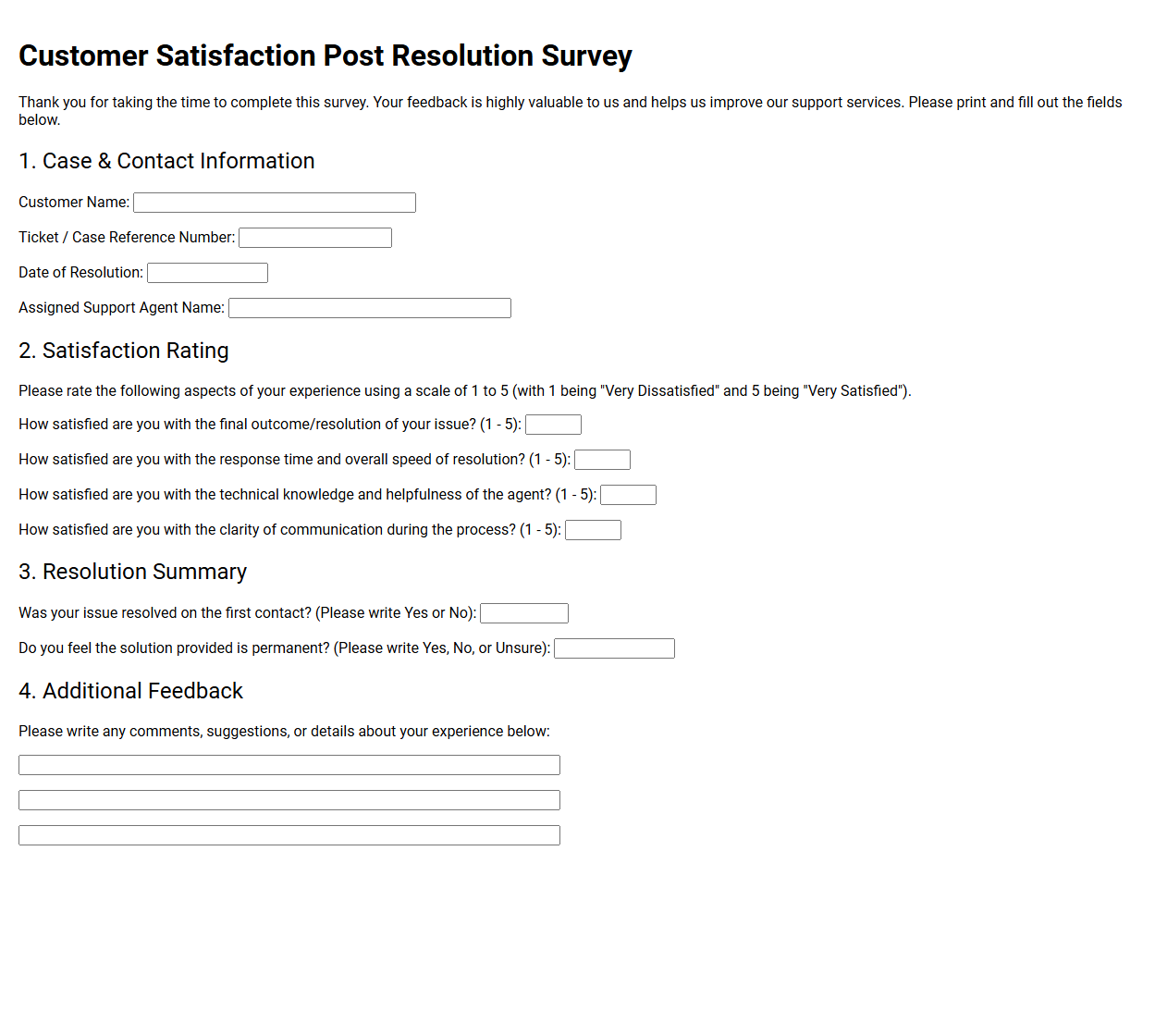
Customer Satisfaction Post Resolution Survey
💾 Customer Satisfaction Post Resolution Survey .pdf
A customer satisfaction post resolution survey is a vital document sent to clients immediately after resolving their support cases. This instrument measures service quality, agent performance, and overall satisfaction. By gathering direct feedback, organizations successfully identify operational weaknesses, refine support strategies, and foster stronger, long term relationships with their base.
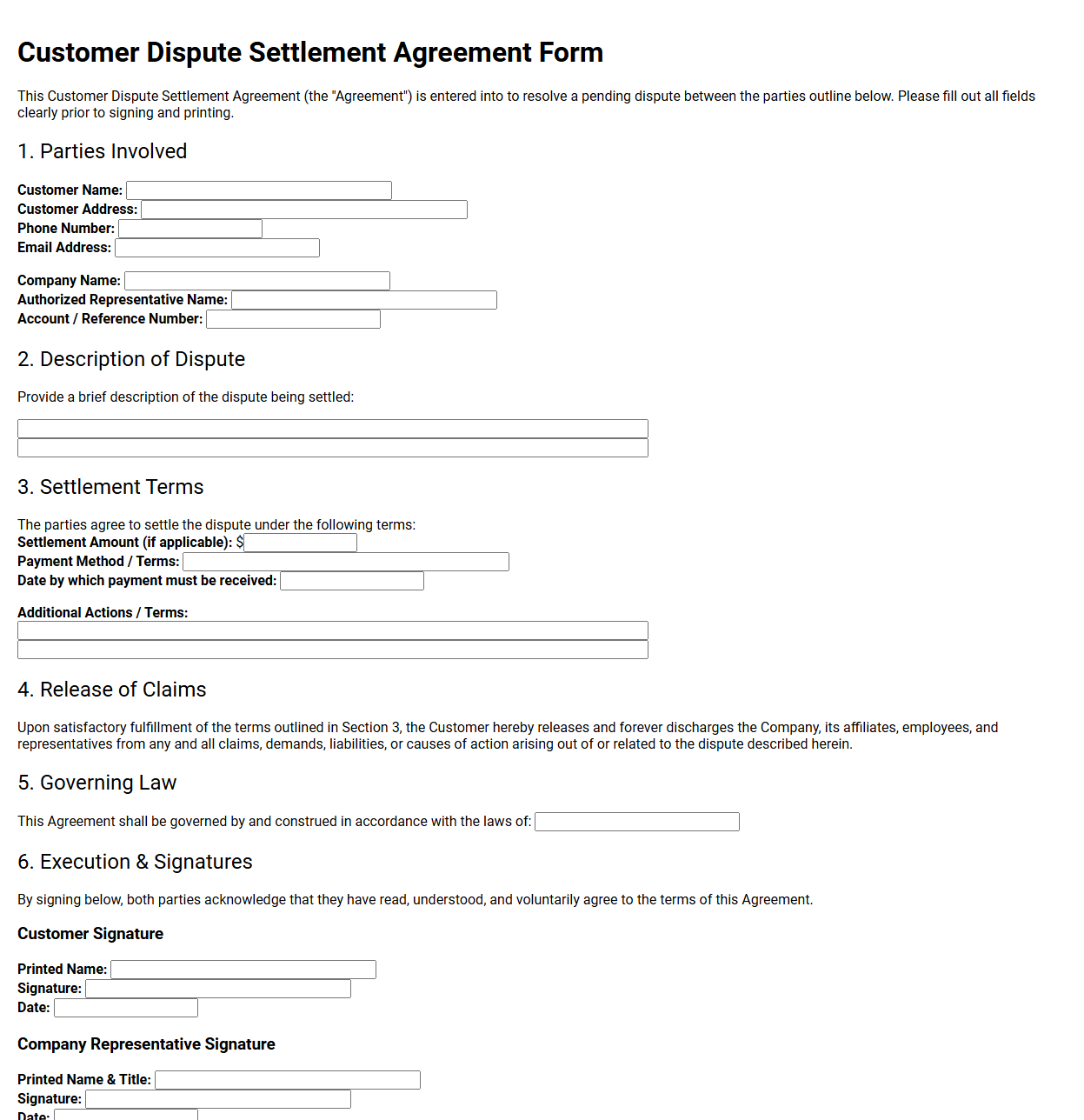
Customer Dispute Settlement Agreement Form
💾 Customer Dispute Settlement Agreement Form .pdf
A customer dispute settlement agreement form is a formal document designed to resolve conflicts between businesses and clients. This contract outlines mutually agreed-upon terms, financial compensation, or service adjustments. By signing, both parties release each other from future legal claims, establishing a clear, binding resolution to the specified grievance.
Monthly Customer Complaint Summary Report Template
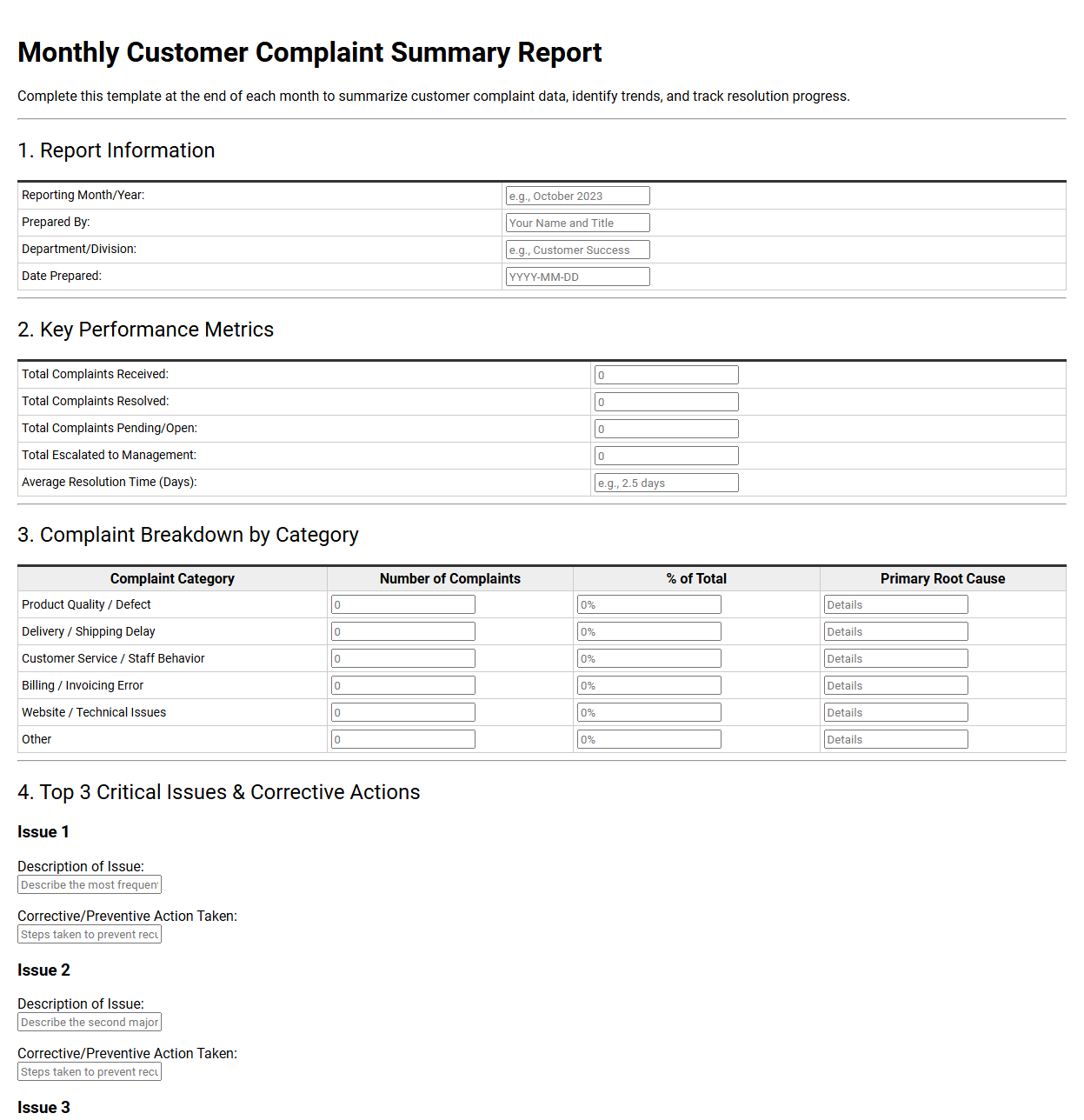
💾 Monthly Customer Complaint Summary Report Template .pdf
A monthly customer complaint summary report template helps businesses track, analyze, and resolve customer issues. It organizes feedback by category, severity, and resolution status. This structured document enables teams to identify recurring problems, monitor response times, and implement targeted improvements to enhance overall satisfaction and service quality.
Customer Complaint and Resolution FAQ
Why is a formal complaint resolution process critical for maintaining customer loyalty?
A structured complaint resolution process demonstrates that a business values customer feedback. Resolving issues promptly and professionally turns negative experiences into positive outcomes, fostering long-term trust, improving customer retention, and showing a genuine commitment to continuous service improvement.
How does root-cause analysis contribute to effective complaint resolution?
Root-cause analysis identifies the underlying operational failures behind a customer's grievance. By addressing the source of the issue rather than just the immediate symptom, organizations prevent recurring complaints, improve overall service quality, and ensure systemic, long-term business improvements.
What is the difference between immediate service recovery and systemic resolution?
Service recovery focuses on appeasing the affected customer immediately through refunds or apologies. Systemic resolution involves analyzing the complaint to modify internal processes, ensuring the same failure does not affect future customers, thus addressing the problem at an organizational level.
Why do some customer complaints require formal escalation to higher management?
Escalation occurs when front-line staff lack the authority or resources to resolve complex issues. Formal escalation ensures senior oversight for high-risk grievances, guarantees legal or financial compliance, and facilitates executive-level decision-making for severe or unprecedented customer disputes.
How does detailed documentation of a complaint resolution protect both parties?
Documenting the resolution creates an official, transparent record of agreed-upon solutions, such as refunds or replacements. This protects businesses from duplicate claims, provides customers with written assurance of action, and offers valuable data for future customer service training and audits.
Disclaimer:
The documents and templates provided on this page are for informational and illustrative purposes only. They do not constitute professional, legal, or financial advice, and should not be relied upon as such. Because individual circumstances and regulatory requirements vary, these materials may not be suitable for your specific needs. We recommend consulting with a qualified professional before adapting or using any of these examples for official or commercial purposes.