
Employment Application Form Template - Streamlining Applicant Screening for Talent Acquisition
Talent acquisition teams constantly battle the administrative burden of manual resume screening, a bottleneck that routinely delays critical hires. While organizations typically allocate their recruitment budgets to expensive external sourcing channels, deploying an optimized Employment Application Form Template grants immediate, structured visibility into core candidate qualifications. However, maximizing this operational efficiency stipulates that screening forms are precisely aligned with role-specific competencies. For instance, scaling enterprises successfully utilize these targeted templates to filter high-volume applicant pools. Below, we examine how implementing this essential applicant power tool streamlines your screening workflow and elevates overall hire quality.
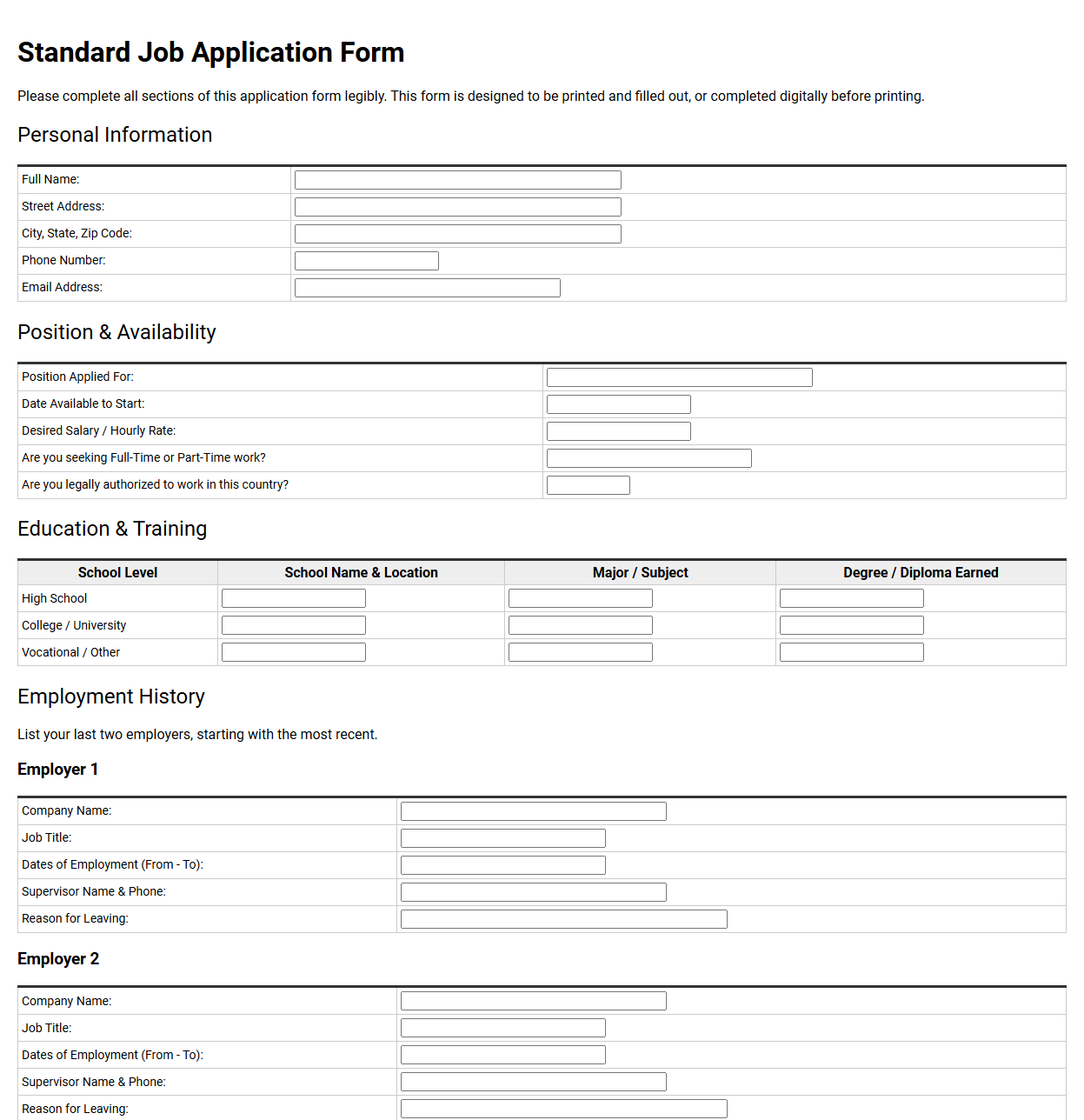
Standard Job Application Form
💾 Standard Job Application Form .pdf
A standard job application form is a structured document employers use to gather consistent information from candidates. It collects personal details, employment history, educational background, and relevant skills. This standardized format allows hiring managers to compare applicants objectively, ensuring a fair evaluation process during the recruitment cycle.
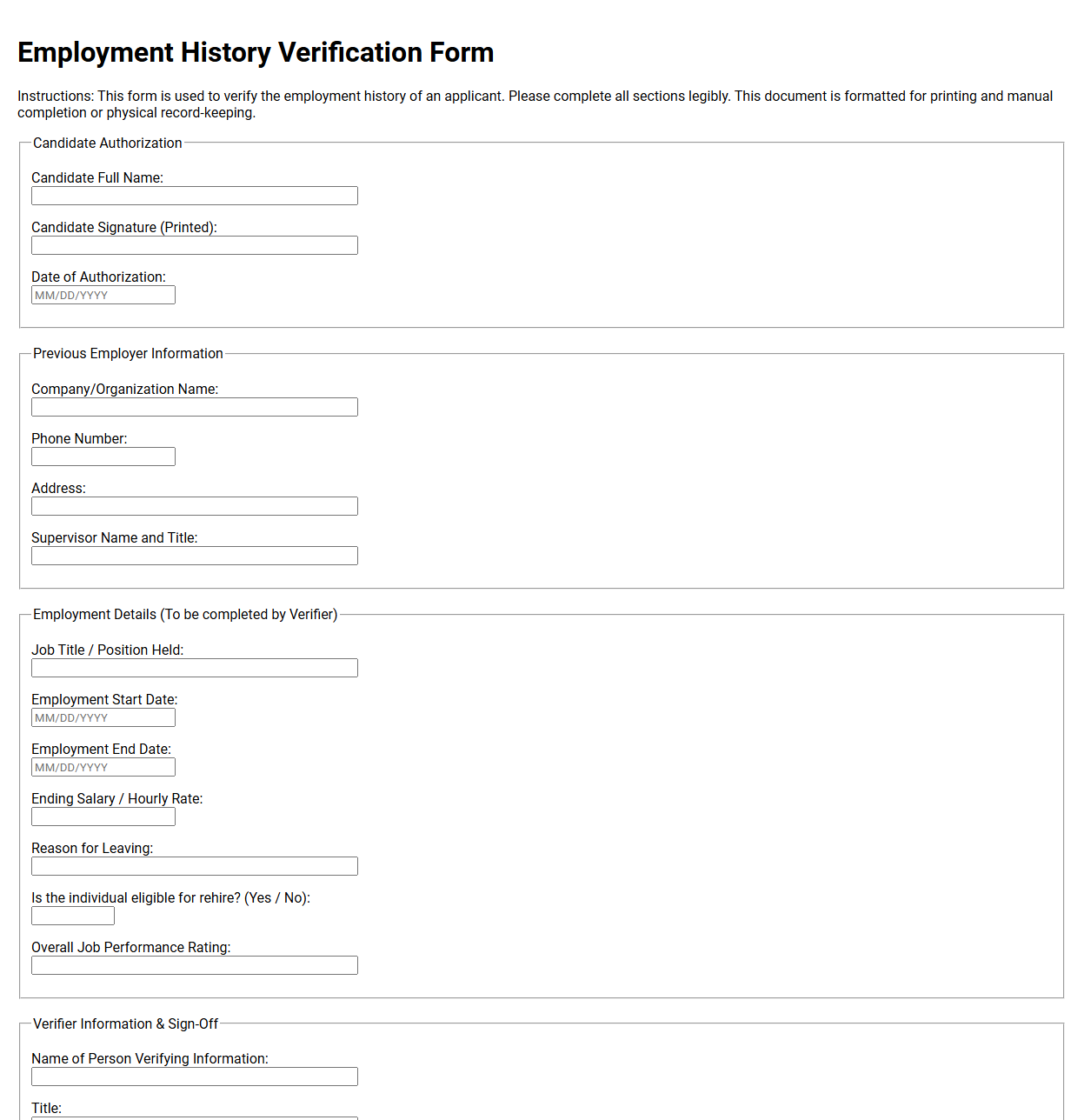
Employment History Verification Form
💾 Employment History Verification Form .pdf
An employment history verification form is a formal document used by employers to confirm a candidate's past work experience. It typically requests job titles, employment dates, salary history, and reason for leaving. This process helps organizations validate resume accuracy, ensuring informed and secure hiring decisions during the recruitment phase.
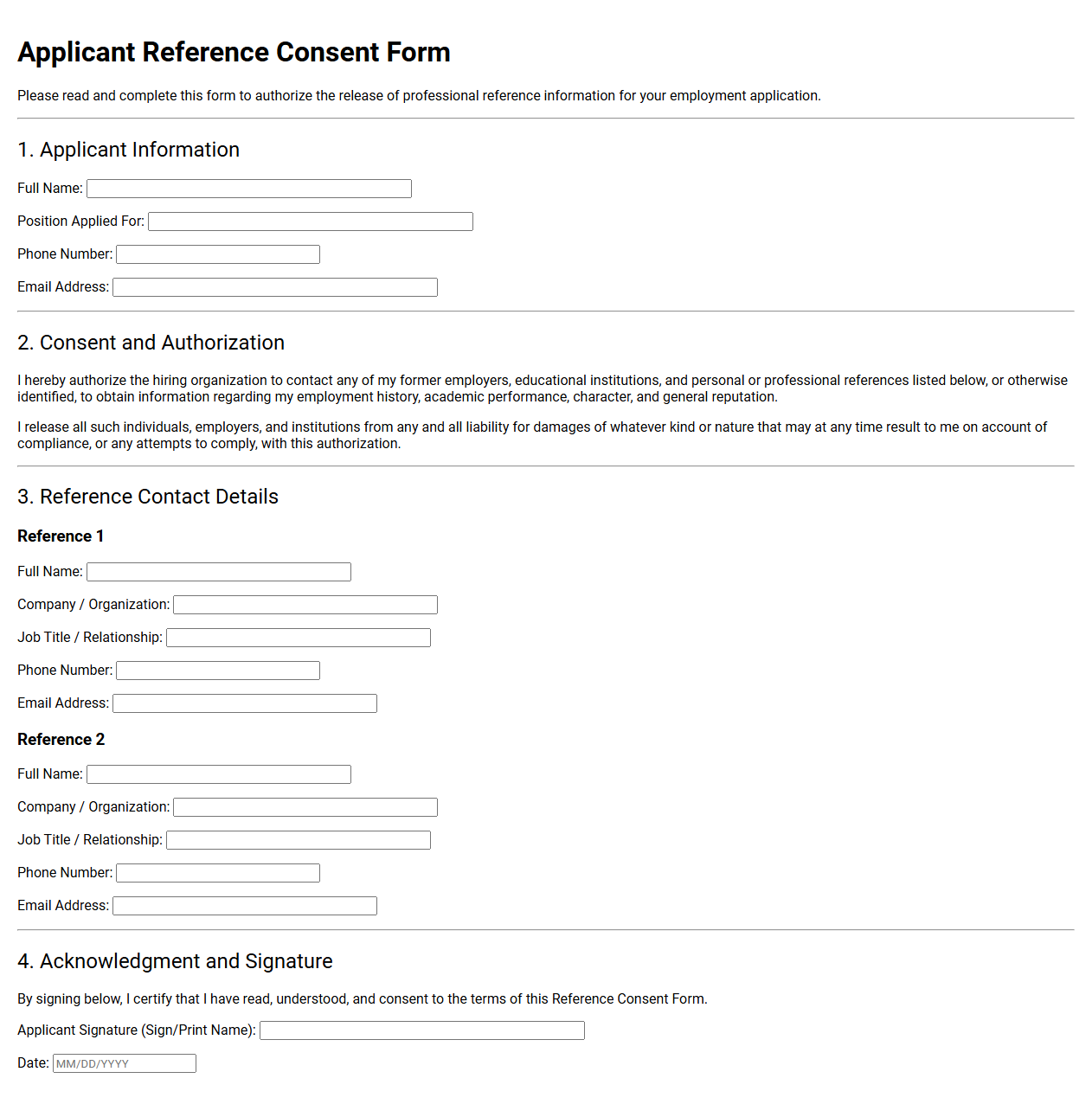
Applicant Reference Consent Form
💾 Applicant Reference Consent Form .pdf
An applicant reference consent form is a crucial legal document used during hiring. It grants employers permission to contact past supervisors, academic institutions, or personal contacts to verify employment history, qualifications, and character. By signing, candidates authorize the release of background details, ensuring a transparent and secure recruitment process for all parties.
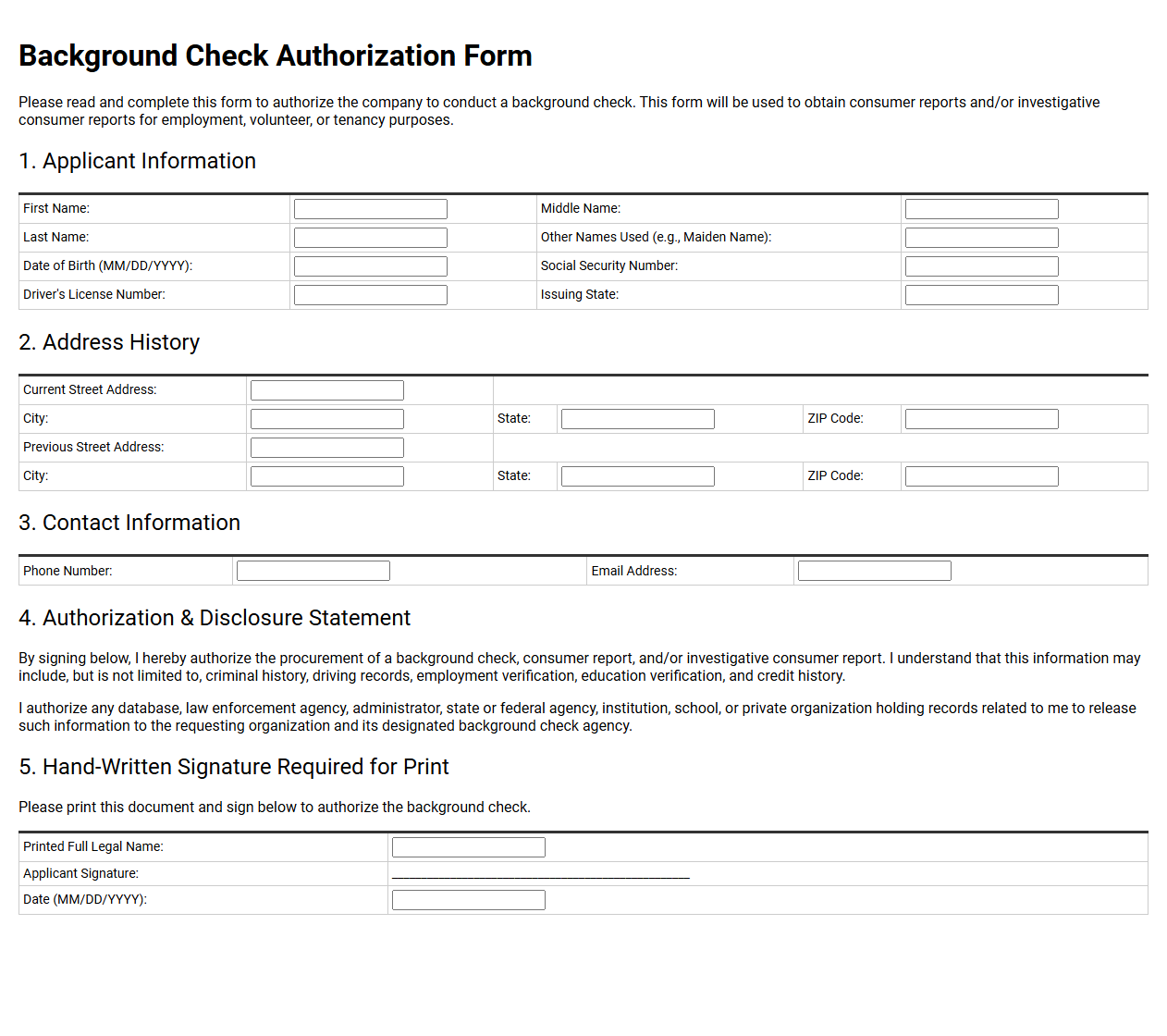
Background Check Authorization Form
💾 Background Check Authorization Form .pdf
A background check authorization form is a legal document where an applicant grants employers permission to verify their history. It typically covers criminal records, employment history, education, and credit reports. Signing this form ensures compliance with federal laws, protecting applicant privacy while allowing organizations to make informed hiring decisions.
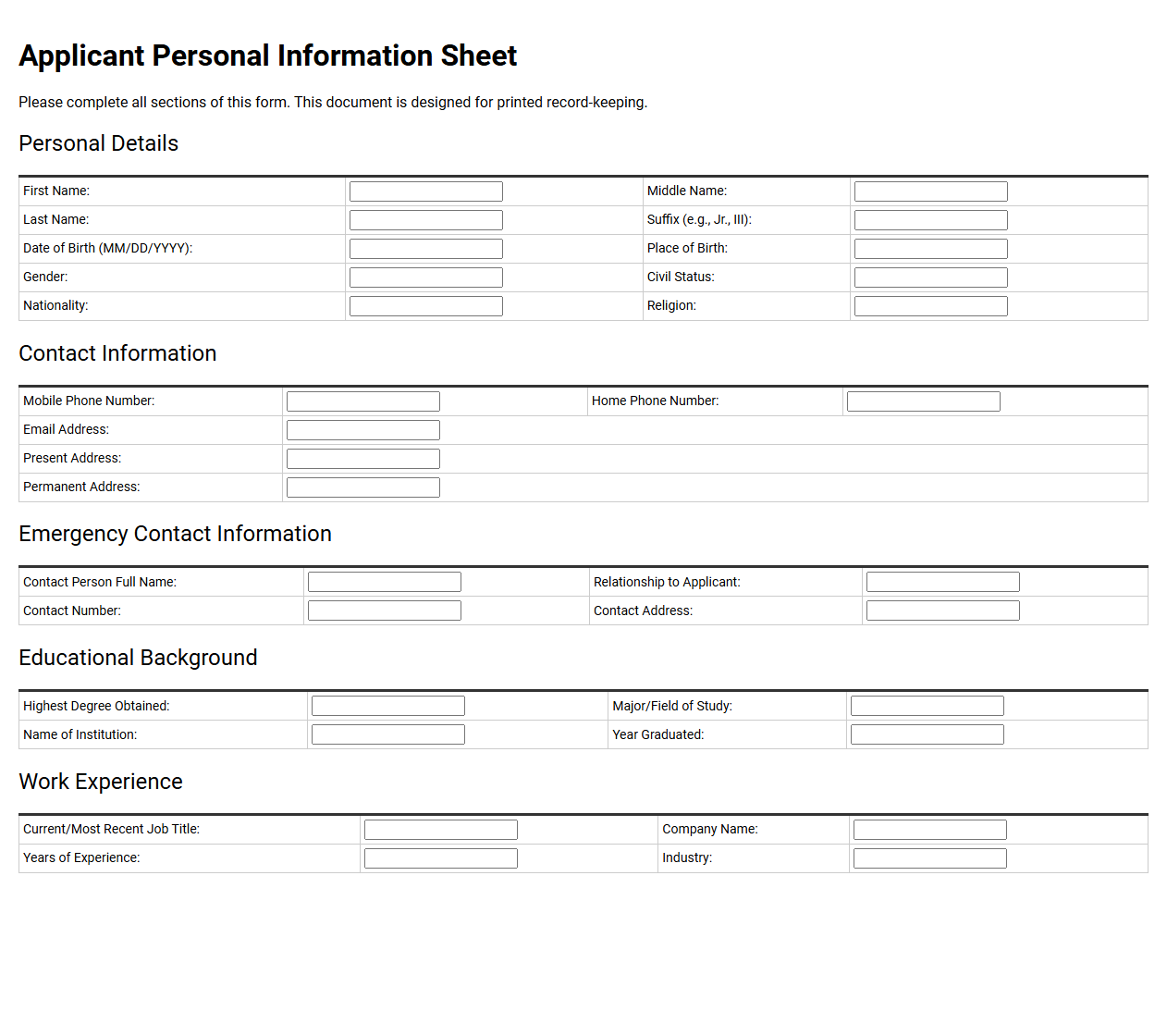
Applicant Personal Information Sheet
💾 Applicant Personal Information Sheet .pdf
An applicant personal information sheet is a standard organizational document used to collect primary details from job candidates. It typically gathers contact data, employment history, and educational background. This structured record helps employers streamline their recruitment workflow, verify background credentials, and maintain accurate files for candidates throughout the hiring process.
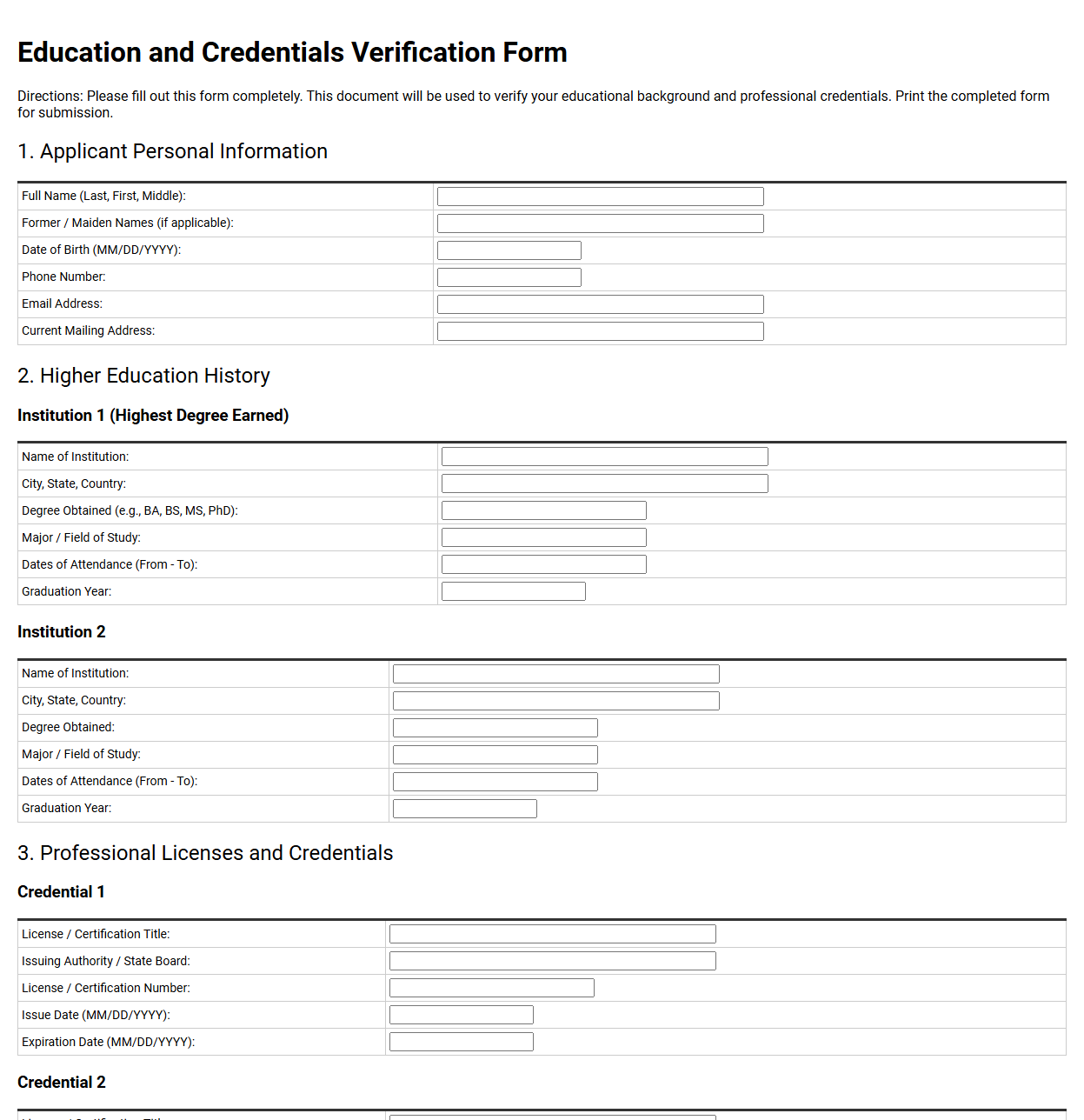
Education and Credentials Verification Form
💾 Education and Credentials Verification Form .pdf
An education and credentials verification form is a standard document used by employers and institutions to confirm an applicant's academic history. It authorizes the release of degrees, transcripts, and professional licenses. This process ensures qualifications are accurate, safeguarding organizational integrity and confirming that candidates truly possess the required professional expertise.
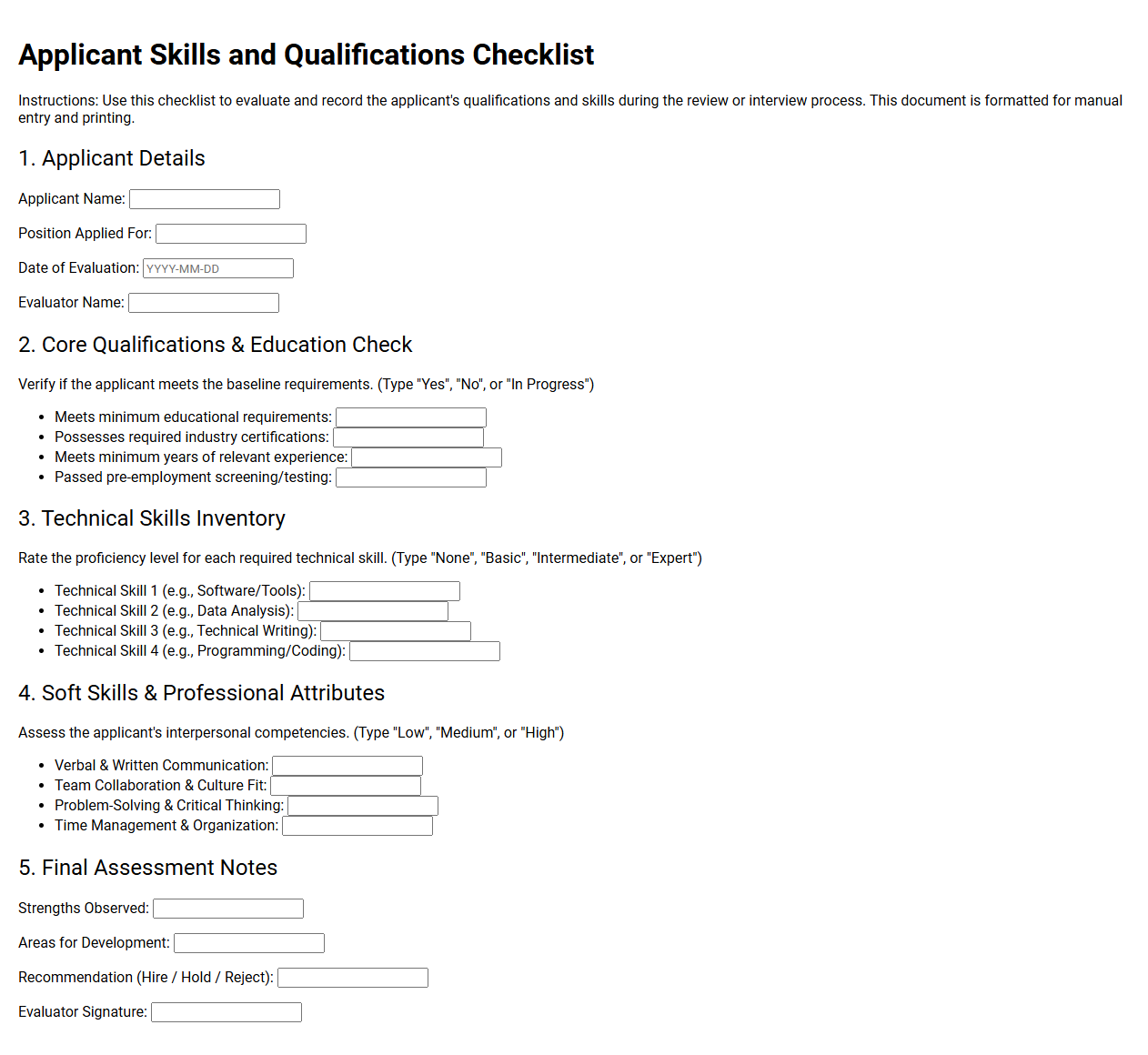
Applicant Skills and Qualifications Checklist
💾 Applicant Skills and Qualifications Checklist .pdf
An applicant skills and qualifications checklist serves as a vital tool during recruitment. It outlines the core competencies, educational background, and technical abilities required for a role. Hiring managers use this document to systematically evaluate candidates, ensuring objective comparisons and identifying the most suitable talent for the organization.
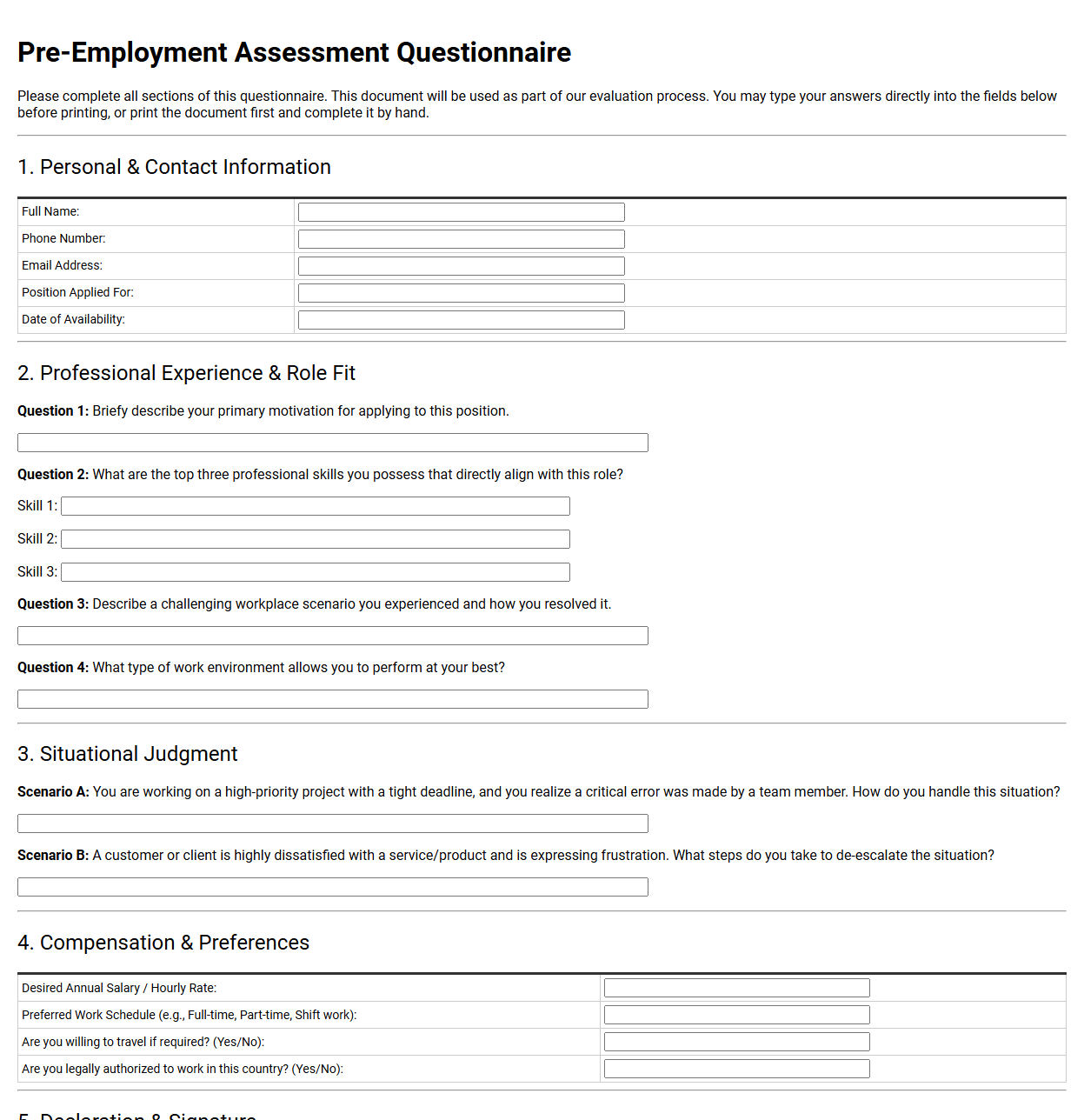
Pre Employment Assessment Questionnaire
💾 Pre Employment Assessment Questionnaire .pdf
A pre-employment assessment questionnaire is a standardized tool used by employers to evaluate job candidates. This document measures specific skills, personality traits, and cognitive abilities. By gathering objective data, organizations can determine a candidate's suitability for a role, ensuring a strong match before scheduling formal interviews.
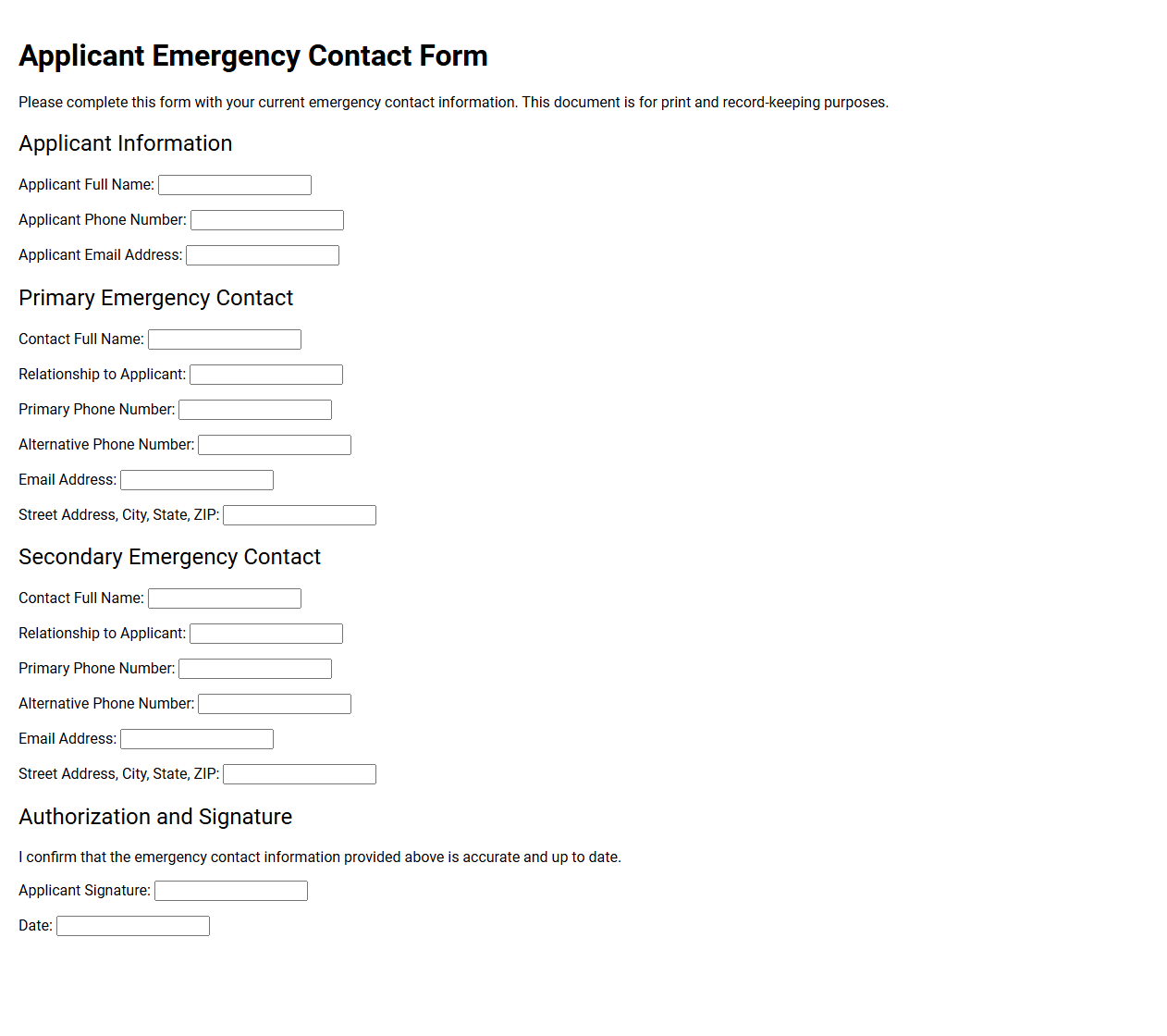
Applicant Emergency Contact Form
💾 Applicant Emergency Contact Form .pdf
An applicant emergency contact form collects vital information about individuals to notify during urgent situations. This standard document gathers names, relationships, phone numbers, and alternative communication methods. Employers or institutions maintain these records to guarantee rapid response and ensure safety protocols are followed in case of a workplace incident.
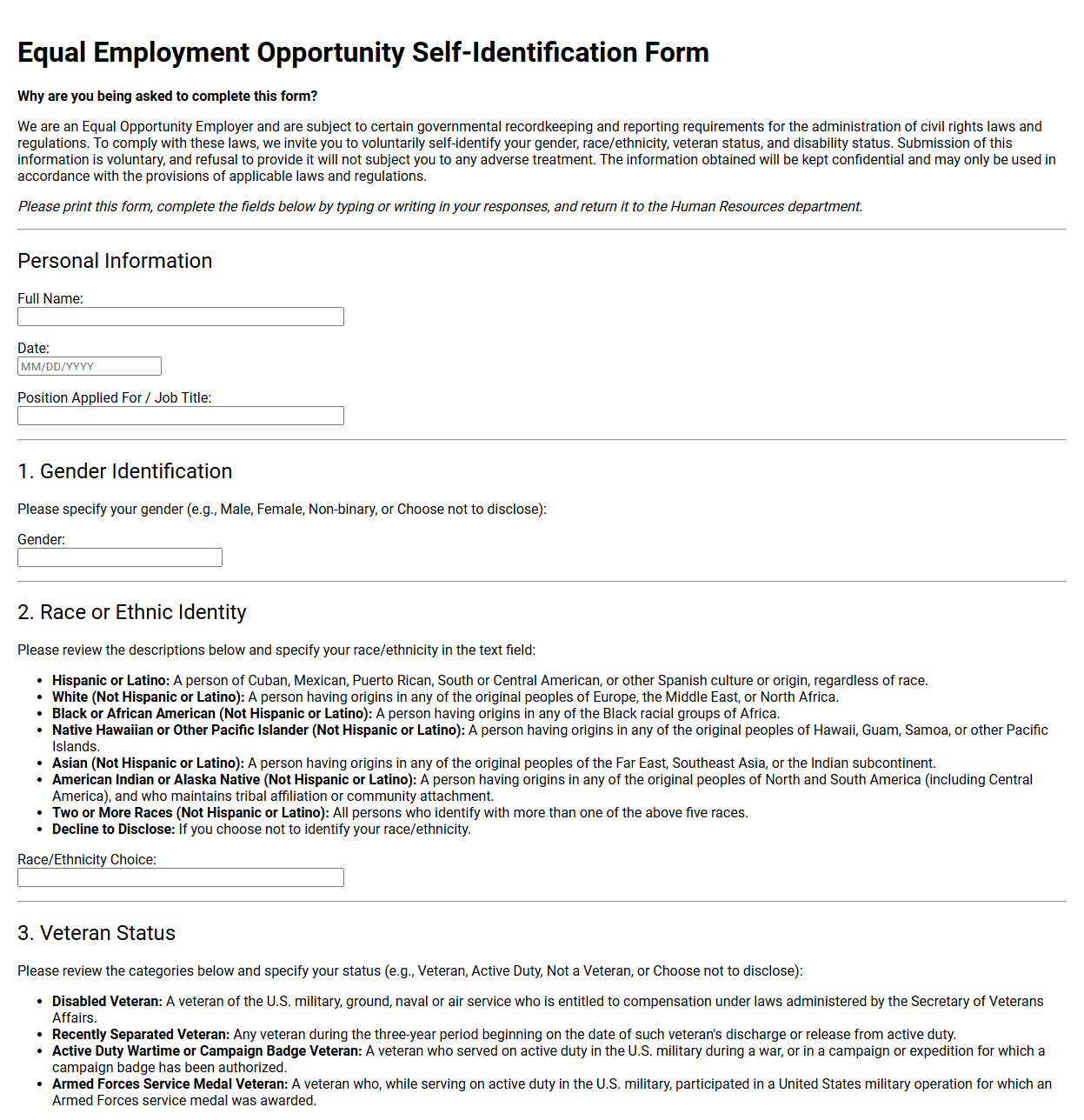
Equal Employment Opportunity Self Identification Form
💾 Equal Employment Opportunity Self Identification Form .pdf
An Equal Employment Opportunity self-identification form is a voluntary document that employers use to gather demographic data. It typically requests information regarding race, gender, veteran status, and disability. Organizations collect these confidential details to monitor workforce diversity, support inclusive hiring practices, and comply with federal government reporting regulations.
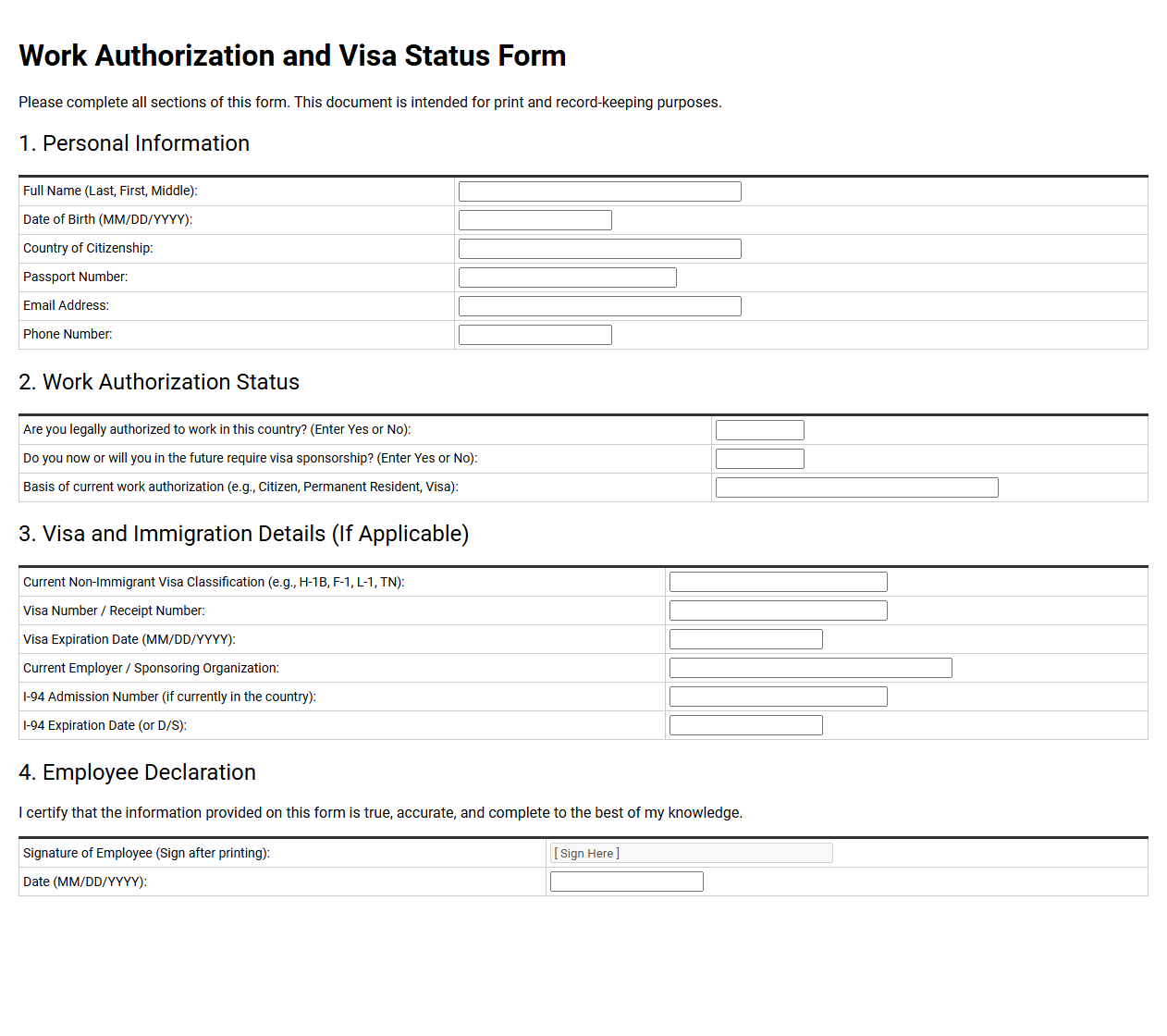
Work Authorization and Visa Status Form
💾 Work Authorization and Visa Status Form .pdf
A Work Authorization and Visa Status Form collects crucial employment eligibility data. Employers utilize this document to verify a candidate's legal right to work in a specific country. It captures citizenship details, visa types, sponsor information, and expiration dates, ensuring compliance with national immigration laws during the formal onboarding process.
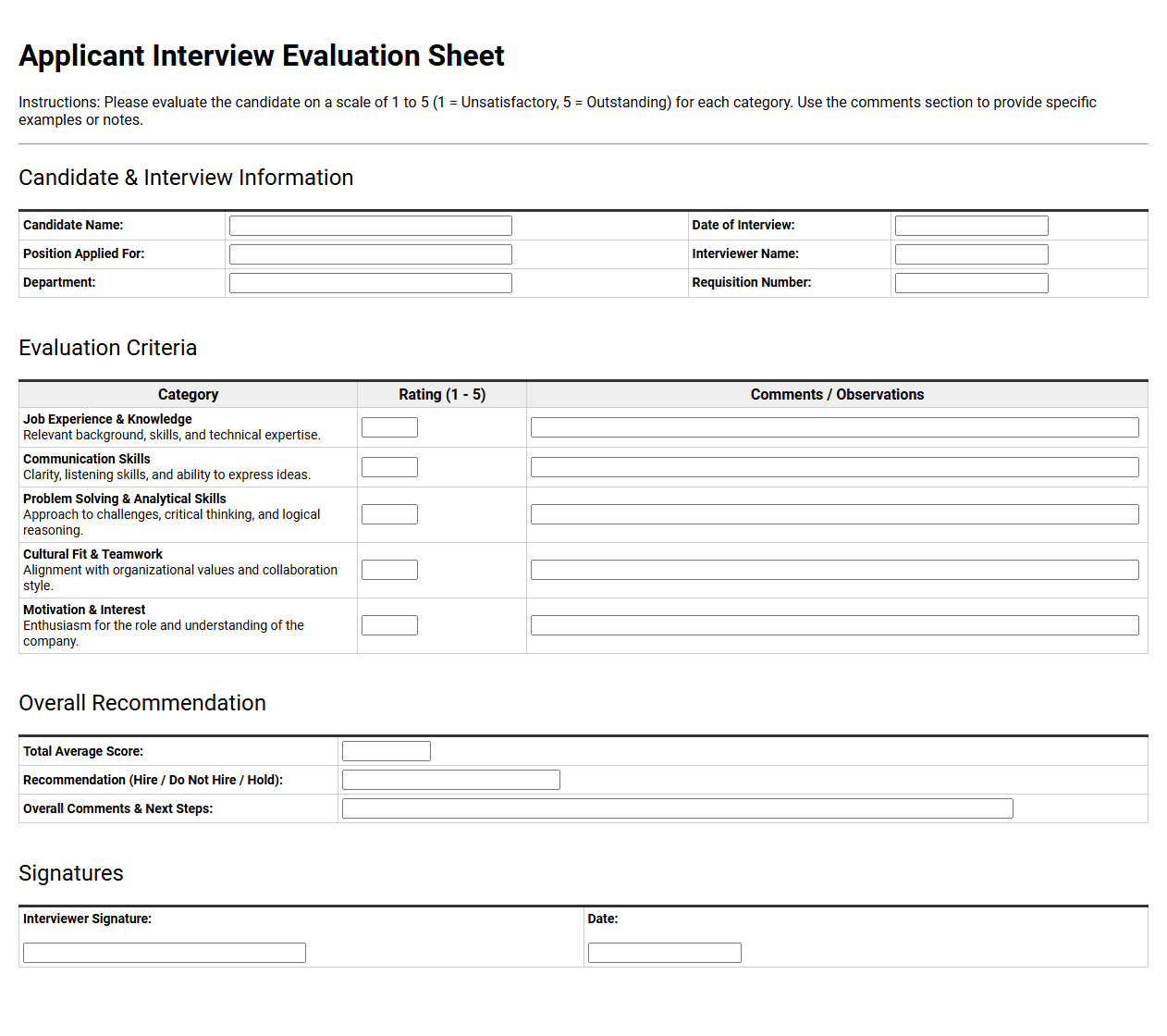
Applicant Interview Evaluation Sheet
💾 Applicant Interview Evaluation Sheet .pdf
An applicant interview evaluation sheet is a standardized tool used by hiring managers to assess job candidates consistently. It features specific criteria such as technical skills, communication abilities, and cultural fit. By scoring each category, interviewers can objectively compare prospects, ensuring a fair, highly organized, and effective overall selection process.
Declaration of Truth and Signature Form
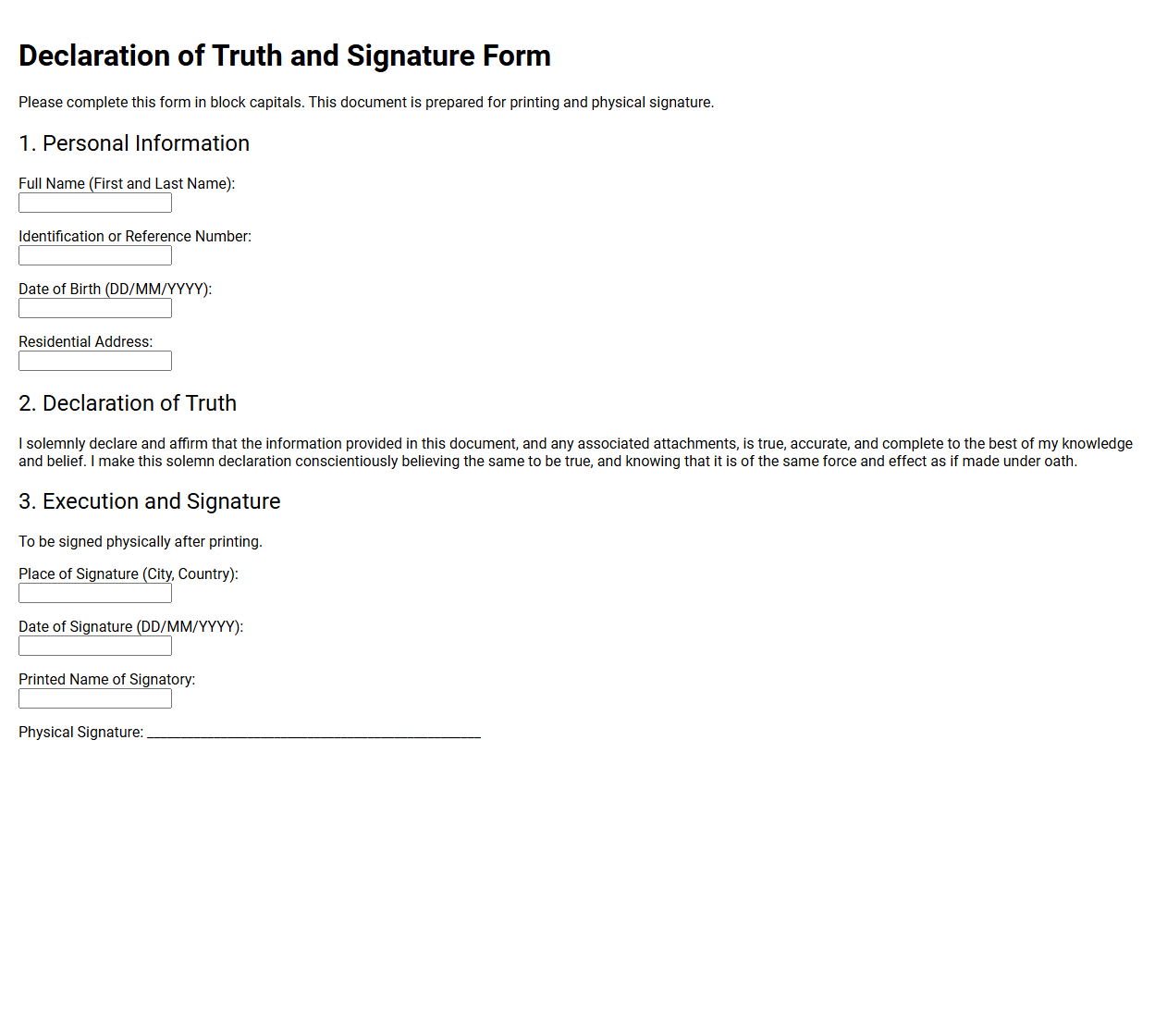
💾 Declaration of Truth and Signature Form .pdf
A Declaration of Truth and Signature Form is a legal instrument confirming that the provided information is accurate and honest. Signatories formally attest to the validity of their statements under penalty of perjury. This document serves as a critical safeguard in administrative, financial, and judicial proceedings.
Applicant Job Employment FAQ
How does a formal job application differ from a standard professional resume?
While resumes highlight self-selected achievements, a standardized job application ensures uniform data collection for all candidates. It serves as a legally binding document where applicants verify the accuracy of their employment history, educational background, and professional references under penalty of disqualification or future termination.
What legal regulations govern the questions asked on an employment application?
Employment applications must comply with federal and state labor laws, including EEOC guidelines. Employers cannot inquire about protected characteristics such as age, race, religion, gender, or disability. The form must focus solely on job-related qualifications, past work experience, and necessary professional certifications.
Why do job applications include authorization for background and reference checks?
Employers utilize background check authorizations to legally verify an applicant's criminal history, credit report, and prior employment. Under the Fair Credit Reporting Act (FCRA), obtaining written consent on the application is a mandatory step before any third-party screening or credential verification can be conducted.
What is the significance of the "At-Will" employment statement on an application?
The "at-will" disclaimer clarifies that the application is not an employment contract. It establishes that, if hired, either the employer or the employee can terminate the work relationship at any time, for any lawful reason, without prior notice, protecting both parties' legal flexibility.
How are candidate privacy and data security handled during the application process?
Job applications collect highly sensitive personal information, making data privacy critical. Employers are legally obligated to store these documents securely, limiting access to hiring managers and HR personnel. Standard corporate policies typically require retaining unsuccessful application data for one to three years for legal compliance.
Disclaimer:
The documents and templates provided on this page are for informational and illustrative purposes only. They do not constitute professional, legal, or financial advice, and should not be relied upon as such. Because individual circumstances and regulatory requirements vary, these materials may not be suitable for your specific needs. We recommend consulting with a qualified professional before adapting or using any of these examples for official or commercial purposes.